Israel Hayom is a media organization founded on the belief that the Israeli public deserves better journalism—more balanced, more accurate, and more reliable. Journalism that speaks rather than shouts. Journalism that is trustworthy, objective, and matter-of-fact. A different kind of journalism, offered free of charge. The first print edition was published on July 30, 2007, and in 2010 Israel Hayom became the Israeli newspaper with the highest weekday readership. The newspaper’s publisher is Dr. Miriam Adelson. Its Editor-in-Chief is Omar Lachmanovitch, and its founding editor is Amos Regev. Israel Hayom’s Hebrew and English websites, as well as its Android and iOS applications, provide around-the-clock news coverage, exclusive content, breaking news and updates, analysis and commentary, video, podcasts, and live broadcasts. The digital platforms of Israel Hayom include news and opinion channels covering culture and entertainment, lifestyle, technology, sports, business and consumer affairs, health, military affairs, food, Judaism, tourism, and automobiles. In 2021, a new Hebrew-language website and mobile application were launched to provide users with a fast, up-to-date, secure, and convenient experience. The content of the newspaper’s print edition is also available online through a daily digital edition and can be received via newsletter. “The Israel Hayom Clique,” the publication’s exclusive benefits club, offers website users discounts and special promotions on products and services. Israel Hayom welcomes feedback, criticism, and suggestions for improvement from its readers. You can contact the organization by email at hayom@israelhayom.co.il

Tuesday Aug 11, 2026
NEWSLETTER
www.israelhayom.com
  • Home
  • News
    • Israel
    • Israel at War
    • Middle East
    • United States
  • Opinions
  • Jewish World
    • Archaeology
    • Antisemitism
  • Lifestyle
    • Food
    • Travel
    • Fashion
    • Culture
  • Magazine
    • Feature
    • Analysis
    • Explainer
  • In Memoriam
www.israelhayom.com
  • Home
  • News
    • Israel
    • Israel at War
    • Middle East
    • United States
  • Opinions
  • Jewish World
    • Archaeology
    • Antisemitism
  • Lifestyle
    • Food
    • Travel
    • Fashion
    • Culture
  • Magazine
    • Feature
    • Analysis
    • Explainer
  • In Memoriam
www.israelhayom.com
Home Commentary Guest Column

'Jews were part of our identity': University of Haifa's Moroccan students explore shared memory

Students from Morocco share how their country's recently established diplomatic ties with Israel have paved the way for new academic opportunities at the University of Haifa.

by  Noa Amouyal
Published on  01-22-2023 12:22
Last modified: 01-23-2023 08:32
'Jews were part of our identity': University of Haifa's Moroccan students explore shared memoryGetty Images/iStockphoto/Evgeny Sergeev

Morocco and Israel established ties under the 2020 Abraham Accords | Photo: Getty Images/iStockphoto/Evgeny Sergeev

Share on FacebookShare on Twitter

Atman Errachid found himself surrounded by a cheering crowd as he watched his home country of Morocco play Spain in the World Cup. Such exuberance would have made sense back home, but Errachid was delighted to see such enthusiasm from an audience one wouldn't assume would be so thrilled about their victory – Israelis.

Follow Israel Hayom on Facebook, Twitter, and Instagram

Errachid is in Israel currently earning his master's degree in Jewish Studies at the University of Haifa, a campus that is home to a diverse student body. There, shared society is not a theory or an elusive dream one hopes for – but a reality.

Errachid is leaning into this unique aspect of the campus and has become a coexistence advocate of sorts. Always open to hosting Shabbat dinners at his campus dorms – where all faiths are welcome – as a visitor in Israel, Errachid is fascinated by Israel and Jewish life and culture. But most importantly, he longs for the day that Jews and Muslims can have open and honest conversations with each other without letting political conflict get in the way.
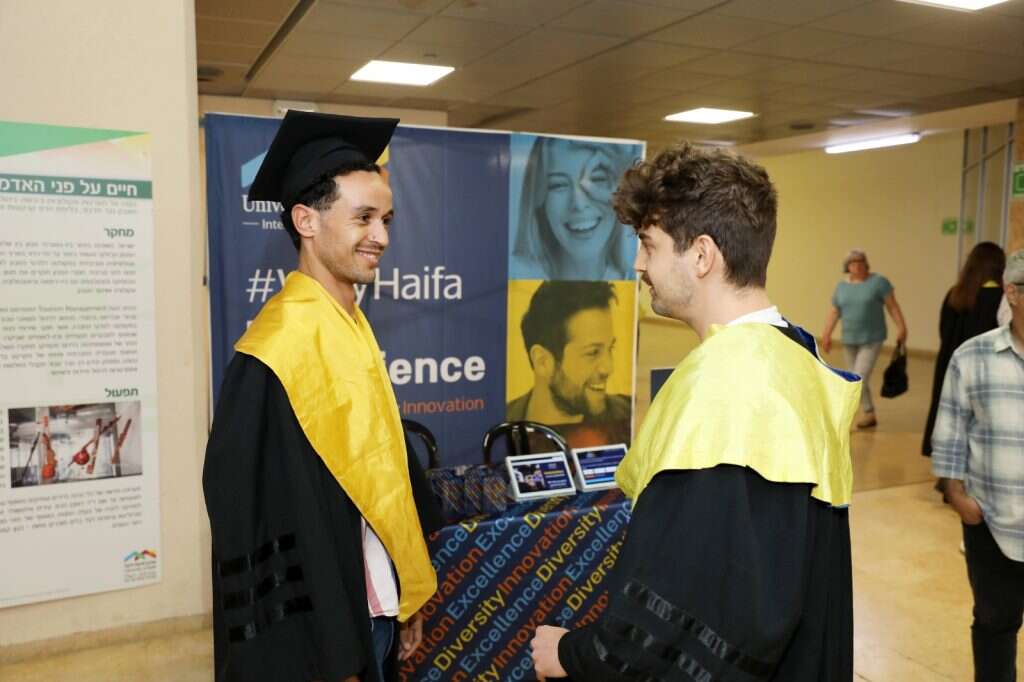
​​"We're delighted to host students from Morocco at the University of Haifa," said Naomi Reinharz, CEO of the American Society of the University of Haifa (ASUH). 'The school is a beacon of diversity, where Jewish students, Arab students, and students from many other backgrounds study side by side. Including peers from Abraham Accords countries further enhances our vision for a shared society, not just for Israel, but the world.'

This is all the more reason why being engulfed by a cheering crowd for his home country made Errachid feel that dream may not be so far-fetched. "Those watching the games with me were from all walks of life – Arabs, Jews, Christians," he marveled. "I'm proud to be from Morocco – it truly is one of the few places where Jews and Muslims are proud of its success." "I'll remember that night forever," he said, recalling how he sat on the campus' grassy knoll and students of all backgrounds came to take pictures of Errachid, beaming and holding a Moroccan flag.

The wide-ranging support in Israel for Morocco is not limited to the world of sports. Given Israel's significant Muslim minority and the notable community of Jews of Moroccan descent, many Israelis had a soft spot for the African country long before normalization became official. In contrast to the other Abraham Accords agreements, the joint declaration signed by Israel and Morocco in December 2020 represented a restoration of ties rather than a first-time normalization deal.
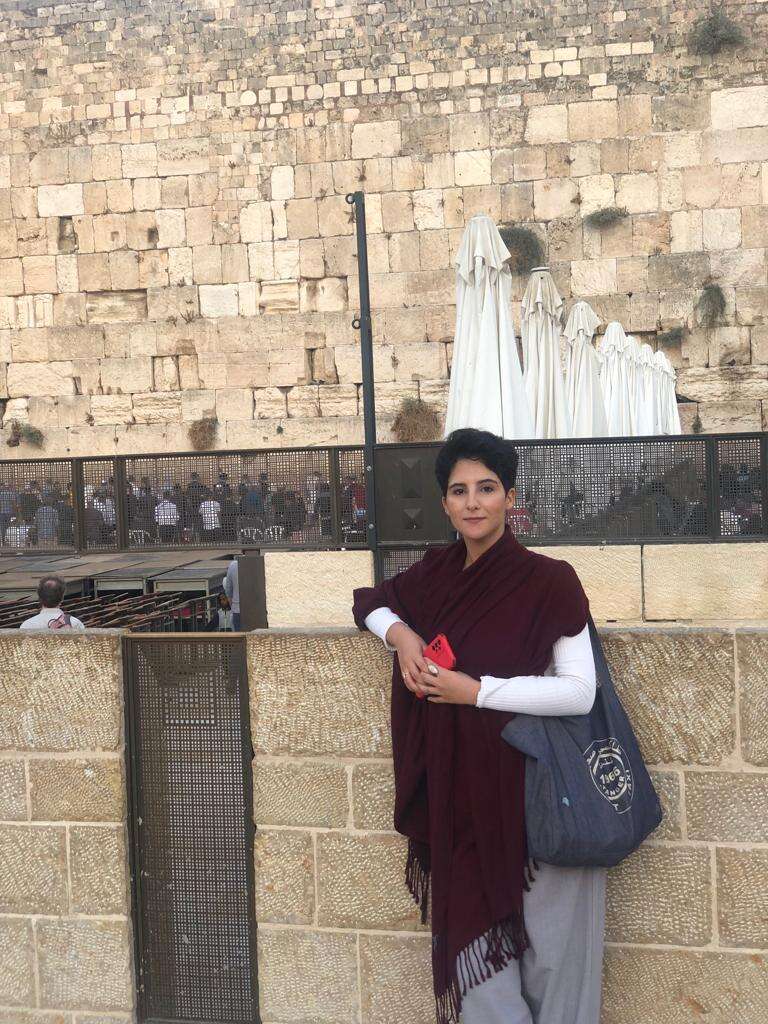
In fact, the abundance of Moroccan history in Israel courtesy of Jews who left the country in the mid-20th century is one reason why Errachid wanted to study here. "I'm interested in our history – our shared history between Muslims and Jews – and a lot of that can be explained by generations of Jewish Moroccans who are now here. We all have a collective memory, which is worth exploring," he said.

Errachid is one of the first Moroccan students to ever be granted a student visa to study in Israel, with others following shortly after. Nacima Kerouad, from Tangier, is one of them. Kerouad is a master's degree student studying diplomacy at the university, who also wants to know more about Jewish culture. "I want to discover Israel by myself, on my own terms, without people telling me what I should think about the country," she said, "I wanted to see for myself what it's like being here."
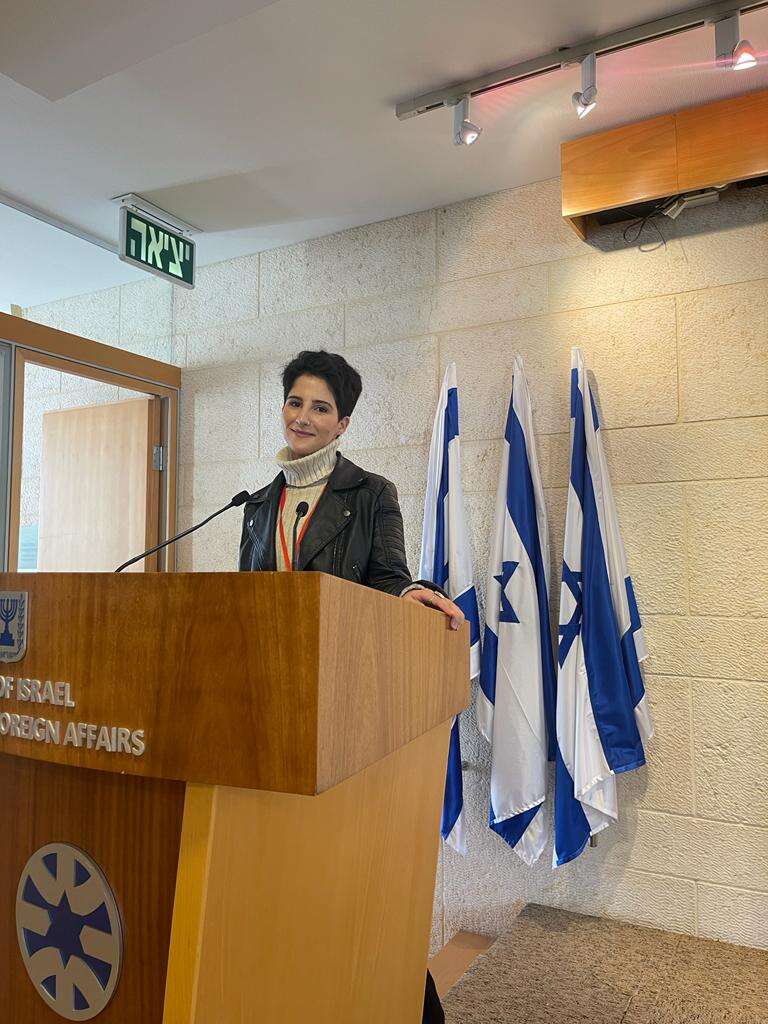
And so far, she's fascinated by what she's seen. "I get to meet a lot of people – Jewish, Arab Israelis, Druze. When I speak to them, it's very enlightening because everyone has their own opinion about Israeli society, politics, and conflict. Yes, these opinions sometimes clash, but they are all legitimate parts of the diverse Israeli society. There's more that brings them together than drives them apart."

Although Kerouad can't pinpoint the exact moment she became fascinated with Jewish culture, she knows it happened thanks to her father. "When I was a teenager my father used to buy books about the history of Morocco and those books would discuss our Jewish community," she said of the community which at its peak was some 250,000. "This wasn't some insignificant minority. They were part of our identity. They were part of us."
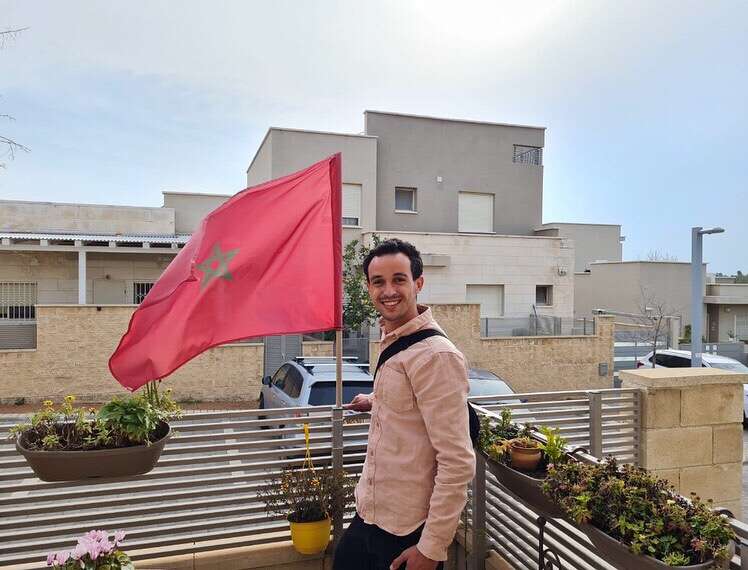
After spending time across the country – Tel Aviv, Jerusalem and the Golan to name a few – she feels most at home in Haifa, which reminds her of her beloved Tangier. "Haifa has this special energy to it – it's indescribable. It's a wonderful city that has its own charm," she said.

Subscribe to Israel Hayom's daily newsletter and never miss our top stories!

Related Posts

Donald Trump

What Backgammon can teach Washington about Iran

by Liron Rose and Amit Shabi

Iran's survival is not accidental. It is the structural foundation of Tehran's strategy. For decades, Washington has asked the wrong...

Israeli ally fumes: 'Reconsider recognition of Armenian genocide'Shalev Man

Jerusalem and Baku owe each other loyalty, not sovereignty

by Shay Gal

The Jewish state does not bargain over truth – and Azerbaijan deserves Israel’s loyalty, not a veto over its memory.

'Favorite Jewish uncle' and the limits of learning from NazismSarah Rice/Getty Images/AFP

'Favorite Jewish uncle' and the limits of learning from Nazism

by Josh Warhit

The postwar West learned to recognize anti-Jewish bigotry through Nazism’s form rather than its function.

Menu

Analysis 

Archaeology

Blogpost

Business & Finance

Culture

Exclusive

Explainer

Environment


Features

Health

In Brief

Jewish World

Judea and Samaria

Lifestyle

Cyber & Internet

Sports


Diplomacy 

Iran & The Gulf

Gaza Strip

Politics

Shopping

Terms of use

Privacy Policy

Submissions

Contact Us

About Us

The first issue of Israel Hayom appeared on July 30, 2007. Israel Hayom was founded on the belief that the Israeli public deserves better, more balanced and more accurate journalism. Journalism that speaks, not shouts. Journalism of a different kind. And free of charge.

All rights reserved to Israel Hayom

Hosted by sPD.co.il

  • Home
  • News
    • Israel at War
    • Israel
    • United States
    • Middle East
    • Sports
  • Opinions
  • Jewish World
    • Archaeology
    • Antisemitism
  • Lifestyle
    • Food
    • Travel
    • Fashion
    • Culture
  • Magazine
    • Feature
    • Analysis
    • Explainer
    • Environment & Wildlife
    • Health & Wellness
  • In Memoriam
  • Subscribe to Newsletter
  • Submit your opinion
  • Terms and conditions

All rights reserved to Israel Hayom

Hosted by sPD.co.il

Newsletter

[contact-form-7 id=”508379″ html_id=”isrh_form_Newsletter_en” title=”newsletter_subscribe”]

  • Home
  • News
    • Israel at War
    • Israel
    • United States
    • Middle East
    • Sports
  • Opinions
  • Jewish World
    • Archaeology
    • Antisemitism
  • Lifestyle
    • Food
    • Travel
    • Fashion
    • Culture
  • Magazine
    • Feature
    • Analysis
    • Explainer
    • Environment & Wildlife
    • Health & Wellness
  • In Memoriam
  • Subscribe to Newsletter
  • Submit your opinion
  • Terms and conditions

All rights reserved to Israel Hayom

Hosted by sPD.co.il