Israel Hayom is a media organization founded on the belief that the Israeli public deserves better journalism—more balanced, more accurate, and more reliable. Journalism that speaks rather than shouts. Journalism that is trustworthy, objective, and matter-of-fact. A different kind of journalism, offered free of charge. The first print edition was published on July 30, 2007, and in 2010 Israel Hayom became the Israeli newspaper with the highest weekday readership. The newspaper’s publisher is Dr. Miriam Adelson. Its Editor-in-Chief is Omar Lachmanovitch, and its founding editor is Amos Regev. Israel Hayom’s Hebrew and English websites, as well as its Android and iOS applications, provide around-the-clock news coverage, exclusive content, breaking news and updates, analysis and commentary, video, podcasts, and live broadcasts. The digital platforms of Israel Hayom include news and opinion channels covering culture and entertainment, lifestyle, technology, sports, business and consumer affairs, health, military affairs, food, Judaism, tourism, and automobiles. In 2021, a new Hebrew-language website and mobile application were launched to provide users with a fast, up-to-date, secure, and convenient experience. The content of the newspaper’s print edition is also available online through a daily digital edition and can be received via newsletter. “The Israel Hayom Clique,” the publication’s exclusive benefits club, offers website users discounts and special promotions on products and services. Israel Hayom welcomes feedback, criticism, and suggestions for improvement from its readers. You can contact the organization by email at hayom@israelhayom.co.il

Sunday Jul 19, 2026
NEWSLETTER
www.israelhayom.com
  • Home
  • News
    • Israel
    • Israel at War
    • Middle East
    • United States
  • Opinions
  • Jewish World
    • Archaeology
    • Antisemitism
  • Lifestyle
    • Food
    • Travel
    • Fashion
    • Culture
  • Magazine
    • Feature
    • Analysis
    • Explainer
  • In Memoriam
www.israelhayom.com
Home News World News

Imprisoned Russian opposition leader Navalny dies

In Putin's Russia, political opponents often faded amid factional disputes or went into exile after imprisonment, suspected poisonings or other heavy repression. But Navalny grew consistently stronger and reached the apex of the opposition through grit, bravado and an acute understanding of how social media could circumvent the Kremlin's suffocation of independent news outlets.

by  AP and ILH Staff
Published on  02-16-2024 14:03
Last modified: 02-16-2024 14:04
EU rights prize given to imprisoned Kremlin critic Alexei NavalnyMoscow City Court via AP

Russian opposition leader Alexei Navalny during a hearing at the City Court in Moscow, Russia | File photo: Moscow City Court via AP

Share on FacebookShare on Twitter

Alexei Navalny, the fiercest foe of Russian President Vladimir Putin who crusaded against official corruption and staged massive anti-Kremlin protests, died in prison Friday, Russia's prison agency said. He was 47.
The Federal Prison Service said in a statement that Navalny felt unwell after a walk on Friday and lost consciousness. An ambulance arrived to try to rehabilitate him, but he died.
Navalny's spokeswoman Kira Yarmysh said on X, the platform formerly known as Twitter, that the politician's team had no confirmation of his death so far and that his lawyer was traveling to the town where he was held.

Follow Israel Hayom on Facebook, Twitter, and Instagram

Navalny, who was serving a 19-year sentence on charges of extremism, was moved in December from his former prison in the Vladimir region of central Russia to to a "special regime" penal colony – the highest security level of prisons in Russia – above the Arctic Circle.

His allies decried the transfer to a colony in the town of Kharp, in the Yamalo-Nenets region about 1,900 kilometers (1,200 miles) northeast of Moscow, as yet another attempt to force Navalny into silence.
The remote region is notorious for long and severe winters. Kharp is about 100 kilometers (60 miles) from Vorkuta, whose coal mines were part of the Soviet gulag prison camp system.
Navalny had been behind bars since January 2021, when he returned to Moscow after recuperating in Germany from nerve agent poisoning that he blamed on the Kremlin. Before his arrest, he campaigned against official corruption, organized major anti-Kremlin protests, and ran for public office.

He had since received three prison sentences, all of which he rejected as politically motivated.

In Putin's Russia, political opponents often faded amid factional disputes or went into exile after imprisonment, suspected poisonings, or other heavy repression. But Navalny grew consistently stronger and reached the apex of the opposition through grit, bravado, and an acute understanding of how social media could circumvent the Kremlin's suffocation of independent news outlets.
He faced each setback – whether it was a physical assault or imprisonment – with an intense devotion, confronting dangers with a sardonic wit. That drove him to the bold and fateful move of returning from Germany to Russia and certain arrests.

Navalny was born in Butyn, about 40 kilometers (25 miles) outside Moscow. He received a law degree from People's Friendship University in 1998 and did a fellowship at Yale in 2010.
He gained attention by focusing on corruption in Russia's murky mix of politicians and businesses; one of his early moves was to buy a stake in Russian oil and gas companies to become an activist shareholder and push for transparency. By concentrating on corruption, Navalny's work had a pocketbook appeal to Russians' widespread sense of being cheated, and he carried stronger resonance than more abstract and philosophical concerns about democratic ideals and human rights.

He was convicted in 2013 of embezzlement on what he called a politically motivated prosecution and was sentenced to five years in prison, but the prosecutor's office later surprisingly demanded his release pending appeal. A higher court later gave him a suspended sentence.

The day before the sentence, Navalny had registered as a candidate for Moscow mayor. The opposition saw his release as the result of large protests in the capital of his sentence, but many observers attributed it to a desire by authorities to add a tinge of legitimacy to the mayoral election.

Navalny finished second, an impressive performance against the incumbent who had the backing of Putin's political machine and was popular for improving the capital's infrastructure and aesthetics.
Navalny's popularity increased after the leading charismatic politician, Boris Nemtsov, was shot and killed in 2015 on a bridge near the Kremlin.

Whenever Putin spoke about Navalny, he made it a point to never mention the activist by name, referring to him as "that person" or similar wording, in an apparent effort to diminish his importance.

Subscribe to Israel Hayom's daily newsletter and never miss our top stories!

Tags: Russia

Related Posts

Andy Burnham declared Labor Party leader following Starmer collapseAP Photo/Jon Super

Andy Burnham declared Labor Party leader following Starmer collapse

by Bar Shaffer

The transition comes after outgoing Prime Minister Keir Starmer resigned under intense party pressure following just two years in office.

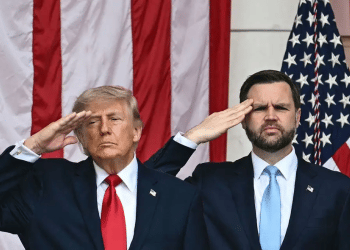
White House denies rift between Trump, Vance over Iran policyAFP

White House denies rift between Trump, Vance over Iran policy

by Or Shaked and Adi Nirman

Press Secretary Karoline Leavitt stated that differing remarks on negotiations occurred at different times, emphasizing that the administration remains unified.

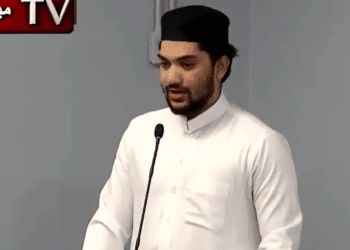
Illinois imam calls to kill Zionists 'one by one'MEMRI

Illinois imam calls to kill Zionists 'one by one'

by Neta Bar

Local Chicago-area imam delivers a radical sermon inciting violence against Israelis, reminding community members of the congregation's historical ties to...

Menu

Analysis 

Archaeology

Blogpost

Business & Finance

Culture

Exclusive

Explainer

Environment


Features

Health

In Brief

Jewish World

Judea and Samaria

Lifestyle

Cyber & Internet

Sports


Diplomacy 

Iran & The Gulf

Gaza Strip

Politics

Shopping

Terms of use

Privacy Policy

Submissions

Contact Us

About Us

The first issue of Israel Hayom appeared on July 30, 2007. Israel Hayom was founded on the belief that the Israeli public deserves better, more balanced and more accurate journalism. Journalism that speaks, not shouts. Journalism of a different kind. And free of charge.

All rights reserved to Israel Hayom

Hosted by sPD.co.il

  • Home
  • News
    • Israel at War
    • Israel
    • United States
    • Middle East
    • Sports
  • Opinions
  • Jewish World
    • Archaeology
    • Antisemitism
  • Lifestyle
    • Food
    • Travel
    • Fashion
    • Culture
  • Magazine
    • Feature
    • Analysis
    • Explainer
    • Environment & Wildlife
    • Health & Wellness
  • In Memoriam
  • Subscribe to Newsletter
  • Submit your opinion
  • Terms and conditions

All rights reserved to Israel Hayom

Hosted by sPD.co.il

Newsletter

[contact-form-7 id=”508379″ html_id=”isrh_form_Newsletter_en” title=”newsletter_subscribe”]

  • Home
  • News
    • Israel at War
    • Israel
    • United States
    • Middle East
    • Sports
  • Opinions
  • Jewish World
    • Archaeology
    • Antisemitism
  • Lifestyle
    • Food
    • Travel
    • Fashion
    • Culture
  • Magazine
    • Feature
    • Analysis
    • Explainer
    • Environment & Wildlife
    • Health & Wellness
  • In Memoriam
  • Subscribe to Newsletter
  • Submit your opinion
  • Terms and conditions

All rights reserved to Israel Hayom

Hosted by sPD.co.il