Israel Hayom is a media organization founded on the belief that the Israeli public deserves better journalism—more balanced, more accurate, and more reliable. Journalism that speaks rather than shouts. Journalism that is trustworthy, objective, and matter-of-fact. A different kind of journalism, offered free of charge. The first print edition was published on July 30, 2007, and in 2010 Israel Hayom became the Israeli newspaper with the highest weekday readership. The newspaper’s publisher is Dr. Miriam Adelson. Its Editor-in-Chief is Omar Lachmanovitch, and its founding editor is Amos Regev. Israel Hayom’s Hebrew and English websites, as well as its Android and iOS applications, provide around-the-clock news coverage, exclusive content, breaking news and updates, analysis and commentary, video, podcasts, and live broadcasts. The digital platforms of Israel Hayom include news and opinion channels covering culture and entertainment, lifestyle, technology, sports, business and consumer affairs, health, military affairs, food, Judaism, tourism, and automobiles. In 2021, a new Hebrew-language website and mobile application were launched to provide users with a fast, up-to-date, secure, and convenient experience. The content of the newspaper’s print edition is also available online through a daily digital edition and can be received via newsletter. “The Israel Hayom Clique,” the publication’s exclusive benefits club, offers website users discounts and special promotions on products and services. Israel Hayom welcomes feedback, criticism, and suggestions for improvement from its readers. You can contact the organization by email at hayom@israelhayom.co.il

Thursday Aug 13, 2026
NEWSLETTER
www.israelhayom.com
  • Home
  • News
    • Israel
    • Israel at War
    • Middle East
    • United States
  • Opinions
  • Jewish World
    • Archaeology
    • Antisemitism
  • Lifestyle
    • Food
    • Travel
    • Fashion
    • Culture
  • Magazine
    • Feature
    • Analysis
    • Explainer
  • In Memoriam
www.israelhayom.com
  • Home
  • News
    • Israel
    • Israel at War
    • Middle East
    • United States
  • Opinions
  • Jewish World
    • Archaeology
    • Antisemitism
  • Lifestyle
    • Food
    • Travel
    • Fashion
    • Culture
  • Magazine
    • Feature
    • Analysis
    • Explainer
  • In Memoriam
www.israelhayom.com
Home Commentary

Israel needs a high-intensity campaign strategy against Iran

Israel cannot go back to October 6. It must not allow Iran to surround it with a tightening ring of fire while making intolerable threats of a potentially nuclear nature.

by  Dr. Yossi Mansharof
Published on  04-15-2024 09:17
Last modified: 04-15-2024 10:10
Israel needs a high-intensity campaign strategy against IranEPA/Abedin Taherkenareh

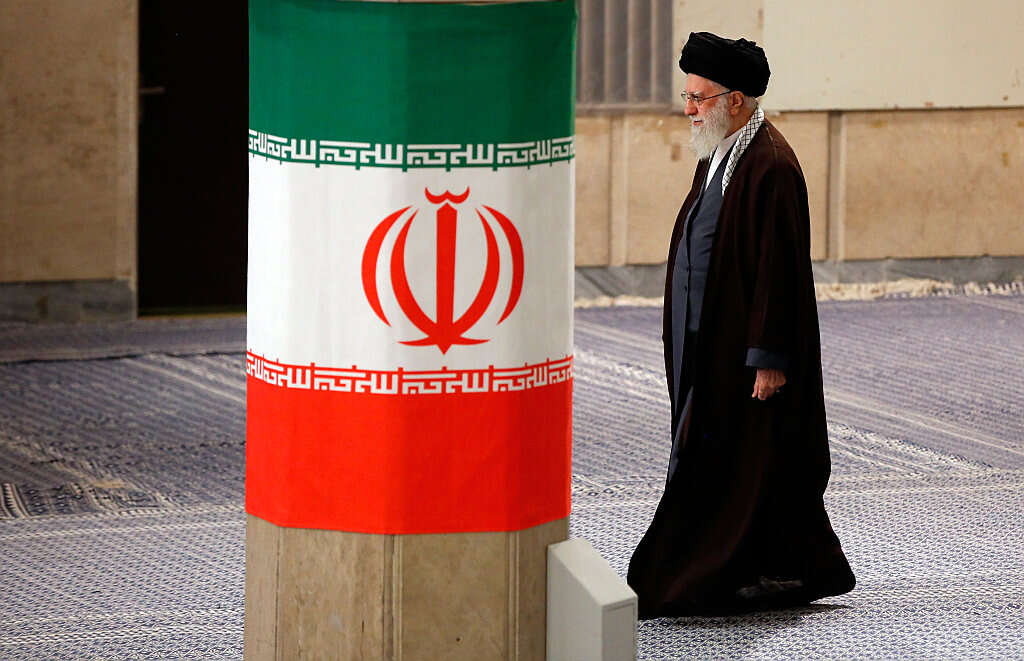
Notably, our readers were most interested in Iran – from its military ambitions to internal leadership dynamics (EPA/Abedin Taherkenareh) | Photo: EPA/Abedin Taherkenareh

Share on FacebookShare on Twitter

Iran's unprecedented missile and drone attack against Israel last night is the pinnacle of a decades-long Iranian campaign that has been ongoing since the Islamic regime took power during the 1979 revolution. Over the years, Iran has gradually built a sophisticated proxy system and, with the exception of very few instances, has preferred to fight Israel via its proxies. Hiding behind them is part of Tehran's calculated strategy, which strives to distance Iran from war or any punishment for acts of terror, despite the Islamic Republic's key role in training, funding, directing, and, at times, actively dispatching its proxies.

Now, feeling obligated to restore its eroded deterrence vis-à-vis Israel following the targeted killings attributed to the latter in Damascus in early April, Iran has chosen to take a public stand and attack Israel directly using its advanced drones and missiles. This is not a comprehensive strategic shift on Iran's part. As soon as the strike ended, and before its scope had even been confirmed, Tehran clearly signaled, via its UN embassy, that it wished to end this historical event and return to normal.

Israel cannot go back to October 6. It must not allow Iran to surround it with a tightening ring of fire while making intolerable threats of a potentially nuclear nature.

However, Israel does not operate in a vacuum either and is required to coordinate its actions with the Biden administration, both by virtue of the strategic alliance forged between the two countries and in view of the implications of an Israeli assault against Iran on local US forces and interests. Tehran seems to regard the United States as the weaker player in this arena, and therefore, since the Israel-Hamas War broke out, has instructed its proxies to carry out dozens of attacks against US interests in Iraq and Syria, in an effort to make President Biden pressure Israel to stop the war. The partial US response to the lethal drone strike in early January by Iran's Iraqi proxy, Kataib Hizballah, killing 3 US troops, appears to have only partially and temporarily deterred Tehran. The United States had, once again, chosen to retaliate against the Iraqi proxy, instead of its Iranian master.

Thus, although Quds Force Commander, Ismail Qaani, has reportedly instructed Iraqi Shiite militia groups to desist attacks against US interests, and has probably attempted to convince the Houthis in Yemen to do the same, the Iraqi militias have renewed (albeit not significantly) their assaults against US forces in Syria, while the Houthis continue to attack US sea vessels. Tehran itself, during its strike against Israel last night, threatened to attack any US forces that would help Israel in its retaliation against Iran. It is therefore clear that Iran views the United States as the weakest link and more easily pressured player.

Israel must formulate a comprehensive strategy for a high-intensity campaign against Iran, that could include peaks during which Iran would attempt to take direct action against Israel. Otherwise, Tehran would probably prefer to go back to operating via its proxies, given that direct Iranian actions against Israel would help form a regional coalition against Tehran, composed primarily of Jordan and Egypt, and supported by the United States, United Kingdom, and France (as seen in action last night). Such a coalition could shift from defensive to offensive mode since Iran is threatening to take action against any country supportive of Israel's defense efforts.

Israel appears to have certain latitude vis-à-vis Iran, despite US pressure. The Biden administration opposes broad conflict that would run the risk of regional war. At the same time, if Israel and the United States choose to restrain their response, Iran would interpret their inaction as permission to attack Israel, the United States' ally, directly, as well as other US partners in the region (to which Iran poses a threat) without paying the price for doing so. Furthermore, war breaking out between Iran and Israel still seems a long way off, allowing Israel to take action against Iran without necessarily leading the region to war. For instance, Israel could utilize the unprecedented Iranian attack to strike Iran kinetically when it is most suitable and convenient, whereas Tehran, which suffers from an acute domestic legitimacy crisis and can still collectively recall the destruction and aftermath of the Iran-Iraq War (1980–1988), would think twice before aggravating its conflict with Israel. The cyberattack weapons that Israel has developed over the years could also serve it to repay Iran by damaging its essential infrastructure in an arena where responsibility is not unequivocally assumed by anyone.

Israel's updated security strategy should include various aspects, primary among which are: the desirable modus operandi vis-à-vis Iran; increased coordination with the United States on efforts to thwart the drone, missile, and terror infrastructure in Iran and the region; strengthening the IDF's force buildup so that it would tally with the challenge posed by Iran; and closing the various gaps that enable Iran to carry out cyberattacks and influence campaigns in Israel.

Dr. Yossi Mansharof, a former senior intelligence officer, is an expert on Iran and Shiite political Islam at the Misgav Institute for National Security & Zionist Strategy, in Jerusalem.


Related Posts

This is the new global arms race

The West's fear of escalation only fuels aggression

by David Rebel

From Ukraine to Iran, repeated restraint from the West has taught that aggression can be sustained without paying a decisive...

How Spain's PM became Israel's most hostile adversary in EuropeAFP

Israel should not confuse Spain with Sánchez, nor Morocco with the Abraham Accords

by Angel Mas

Morocco is an important strategic partner for Israel. But cooperation with an Arab regime should not be confused with ideological...

Israel must turn Colombia's recognition of the Golan Heights into a diplomatic campaign

Israel must turn Colombia's recognition of the Golan Heights into a diplomatic campaign

by Zvi Hauser

Countries that have recognized Jerusalem as Israel’s capital, an even more complicated step, moved their embassies there or adopted an...

Menu

Analysis 

Archaeology

Blogpost

Business & Finance

Culture

Exclusive

Explainer

Environment


Features

Health

In Brief

Jewish World

Judea and Samaria

Lifestyle

Cyber & Internet

Sports


Diplomacy 

Iran & The Gulf

Gaza Strip

Politics

Shopping

Terms of use

Privacy Policy

Submissions

Contact Us

About Us

The first issue of Israel Hayom appeared on July 30, 2007. Israel Hayom was founded on the belief that the Israeli public deserves better, more balanced and more accurate journalism. Journalism that speaks, not shouts. Journalism of a different kind. And free of charge.

All rights reserved to Israel Hayom

Hosted by sPD.co.il

  • Home
  • News
    • Israel at War
    • Israel
    • United States
    • Middle East
    • Sports
  • Opinions
  • Jewish World
    • Archaeology
    • Antisemitism
  • Lifestyle
    • Food
    • Travel
    • Fashion
    • Culture
  • Magazine
    • Feature
    • Analysis
    • Explainer
    • Environment & Wildlife
    • Health & Wellness
  • In Memoriam
  • Subscribe to Newsletter
  • Submit your opinion
  • Terms and conditions

All rights reserved to Israel Hayom

Hosted by sPD.co.il

Newsletter

[contact-form-7 id=”508379″ html_id=”isrh_form_Newsletter_en” title=”newsletter_subscribe”]

  • Home
  • News
    • Israel at War
    • Israel
    • United States
    • Middle East
    • Sports
  • Opinions
  • Jewish World
    • Archaeology
    • Antisemitism
  • Lifestyle
    • Food
    • Travel
    • Fashion
    • Culture
  • Magazine
    • Feature
    • Analysis
    • Explainer
    • Environment & Wildlife
    • Health & Wellness
  • In Memoriam
  • Subscribe to Newsletter
  • Submit your opinion
  • Terms and conditions

All rights reserved to Israel Hayom

Hosted by sPD.co.il