Israel Hayom is a media organization founded on the belief that the Israeli public deserves better journalism—more balanced, more accurate, and more reliable. Journalism that speaks rather than shouts. Journalism that is trustworthy, objective, and matter-of-fact. A different kind of journalism, offered free of charge. The first print edition was published on July 30, 2007, and in 2010 Israel Hayom became the Israeli newspaper with the highest weekday readership. The newspaper’s publisher is Dr. Miriam Adelson. Its Editor-in-Chief is Omar Lachmanovitch, and its founding editor is Amos Regev. Israel Hayom’s Hebrew and English websites, as well as its Android and iOS applications, provide around-the-clock news coverage, exclusive content, breaking news and updates, analysis and commentary, video, podcasts, and live broadcasts. The digital platforms of Israel Hayom include news and opinion channels covering culture and entertainment, lifestyle, technology, sports, business and consumer affairs, health, military affairs, food, Judaism, tourism, and automobiles. In 2021, a new Hebrew-language website and mobile application were launched to provide users with a fast, up-to-date, secure, and convenient experience. The content of the newspaper’s print edition is also available online through a daily digital edition and can be received via newsletter. “The Israel Hayom Clique,” the publication’s exclusive benefits club, offers website users discounts and special promotions on products and services. Israel Hayom welcomes feedback, criticism, and suggestions for improvement from its readers. You can contact the organization by email at hayom@israelhayom.co.il

Monday Jun 29, 2026
NEWSLETTER
www.israelhayom.com
  • Home
  • News
    • Israel
    • Israel at War
    • Middle East
    • United States
  • Opinions
  • Jewish World
    • Archaeology
    • Antisemitism
  • Lifestyle
    • Food
    • Travel
    • Fashion
    • Culture
  • Magazine
    • Feature
    • Analysis
    • Explainer
  • In Memoriam
www.israelhayom.com
  • Home
  • News
    • Israel
    • Israel at War
    • Middle East
    • United States
  • Opinions
  • Jewish World
    • Archaeology
    • Antisemitism
  • Lifestyle
    • Food
    • Travel
    • Fashion
    • Culture
  • Magazine
    • Feature
    • Analysis
    • Explainer
  • In Memoriam
www.israelhayom.com
Home Commentary

When the new leader of Syria planned an attack on Israel

The coming months will reveal whether Mohammad al-Julani remains the terrorist he once was (albeit now in a suit) or whether his diplomatic charm offensive – drawing Western diplomats to him – has substance.

by  Yoav Limor
Published on  12-26-2024 14:47
Last modified: 04-10-2025 12:02
When the new leader of Syria planned an attack on Israel

Mohammad al-Julani, the new leader of Syria. Photo: Aref TAMMAWI / AFP | Photo:

Share on FacebookShare on Twitter

Over the past two weeks, Israel has been pondering whether the metamorphosis of Syrian rebel leader Abu Mohammad al-Julani (Ahmed al-Sharaa) is genuine or merely part of a sophisticated deception campaign.

On the surface, everything points to the former. Al-Julani has traded military fatigues for tailored suits, replaced militant rhetoric with promises of unity and reconciliation, and shifted from jihadist military operations to messaging about peace. Yet he remains the leader of al-Qaeda's Syrian branch and clings to the name "al-Julani," a nod to his origins in the Golan Heights and perhaps a hint at his future ambitions.

For now, the world appears captivated by al-Julani's rebranding. Diplomatic delegations arrive in and out of Damascus at a dizzying pace, including representatives from major global powers. The US, for instance, has quickly announced its intention to lift the personal sanctions imposed on him during the Syrian Civil War over a decade ago. In Europe, too, al-Julani's metamorphosis has been warmly received.
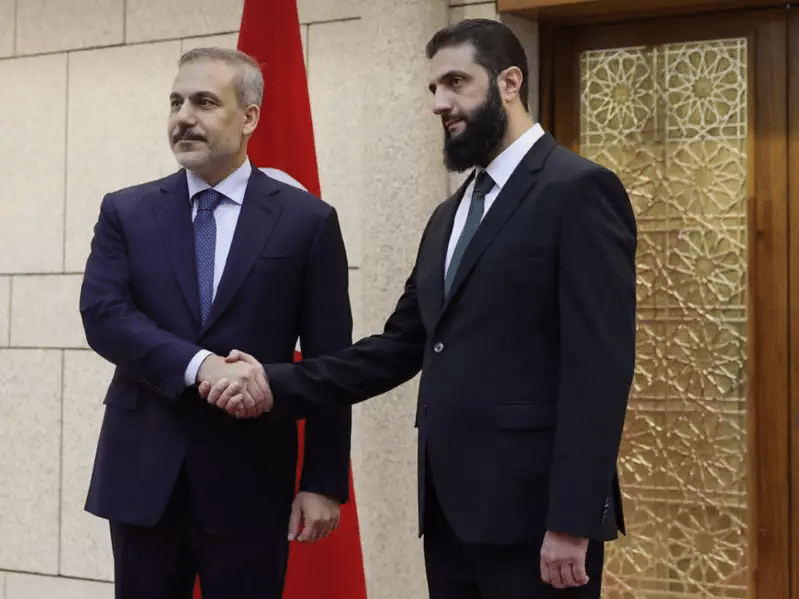
Al-Julani, wearing a suit, at the Presidential Palace in Damascus. Photo: Arab Networks

However, moderate Arab leaders remain wary, fearing they could be his next targets.

The US has also reportedly urged Israel to give al-Julani a chance, encouraging dialogue. Israel has compelling reasons to consider this: reducing potential threats along its northeastern border, curbing Turkey's dangerous influence on Syria's future, and ensuring that Iran stays out of Syrian affairs.

The question is how willing al-Julani might be to engage. Three scenarios emerge:

  1. Outright refusal: Al-Julani could decline, albeit politely, offering various excuses—such as Israel's continued occupation of the Golan Heights or ongoing conflicts in Gaza.
  2. Acceptance: This seems highly unlikely for now.
  3. Partial engagement: Al-Julani might secretly flirt with the idea, seeking to extract maximum advantage, such as direct or indirect Israeli support against his enemies. These include Iran and its proxies on one side and ISIS and its offshoots on the other, which have already accused al-Julani of betraying Islam.

The potential for mutual benefit is significant: al-Julani could secure his regime, while Israel might mitigate threats.

The leader of Hayat Tahrir al-Sham, Abu Mohammad al-Julani. Photo: AFP.

For now, the IDF maintains control over the Syrian side of Mount Hermon and adjacent areas in the demilitarized zone east of the international border. The former is essential for identifying, monitoring, and neutralizing threats. The latter, however, is a potential quagmire.

Initially, Syrian Golan residents welcomed the IDF's presence, but some have recently begun expressing discontent, including open protests. Meanwhile, the international community is likely to demand Israel's eventual withdrawal to its borders—a sentiment already heard in UN corridors.
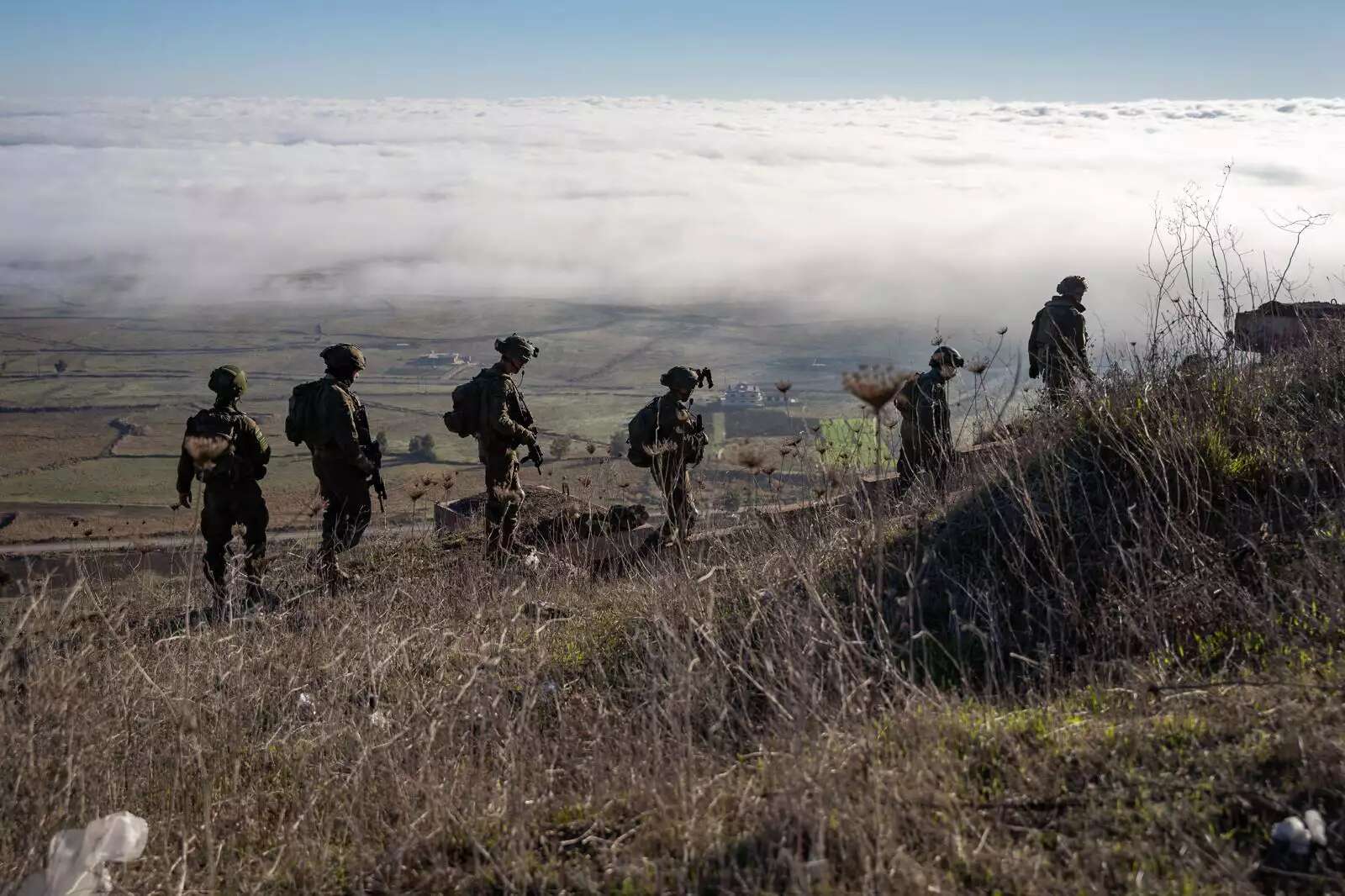
IDF forces in Syrian territory. Photo: IDF Spokesperson

It's improbable that Israel's presence will be permanent. Once the fortified border barrier is completed, IDF forces—minus those on Mount Hermon—are expected to withdraw. Until then, Israel is working to establish relationships with local populations and perhaps with the new regime in Damascus. At the same time, it is attempting to assess al-Julani and his entourage: mapping key figures, power groups, and military capabilities.

Decades of intelligence on Syria have become obsolete due to the regime change in Damascus and the destruction of Syria's military capabilities. Israel now faces the daunting task of rebuilding this knowledge from scratch—a formidable intelligence and operational challenge.

A final note on al-Julani: about a decade ago, during the height of Syria's civil war, Israel received intelligence about a planned infiltration attack by al-Julani's men from the Syrian Golan into a kibbutz in the Israeli Golan Heights. This intelligence enabled the IDF to thwart the attack, which could have killed Israeli civilians. Al-Julani himself approved the operation.

The coming months will determine whether he remains a terrorist in a suit, or if he has transformed into a figure akin to Anwar Sadat.


Tags: Abu Mohammad al-JulaniSyria

Related Posts

Lebanon agreement rattles Iran, Hezbollah, creating new strategic dilemmaIDF Spokesperson's Unit

Lebanon agreement rattles Iran, Hezbollah, creating new strategic dilemma

by Meir Ben Shabbat

Israel will eventually have to test the validity of US assurances against Washington's commitments to Tehran.

Will Joseph Aoun bring peace to Lebanon?

Lebanon's president gains Saudi backing, US guarantees for Israel deal

by Danny Zaken

According to diplomatic officials, the US, with the help of Israeli intelligence officials, is providing a security umbrella for Lebanese...

The American trap between Iran and Lebanon

The American trap between Iran and Lebanon

by Yoav Limor

Israel and Lebanon have a history full of agreements that were not worth the paper they were written on. While...

Menu

Analysis 

Archaeology

Blogpost

Business & Finance

Culture

Exclusive

Explainer

Environment


Features

Health

In Brief

Jewish World

Judea and Samaria

Lifestyle

Cyber & Internet

Sports


Diplomacy 

Iran & The Gulf

Gaza Strip

Politics

Shopping

Terms of use

Privacy Policy

Submissions

Contact Us

About Us

The first issue of Israel Hayom appeared on July 30, 2007. Israel Hayom was founded on the belief that the Israeli public deserves better, more balanced and more accurate journalism. Journalism that speaks, not shouts. Journalism of a different kind. And free of charge.

All rights reserved to Israel Hayom

Hosted by sPD.co.il

  • Home
  • News
    • Israel at War
    • Israel
    • United States
    • Middle East
    • Sports
  • Opinions
  • Jewish World
    • Archaeology
    • Antisemitism
  • Lifestyle
    • Food
    • Travel
    • Fashion
    • Culture
  • Magazine
    • Feature
    • Analysis
    • Explainer
    • Environment & Wildlife
    • Health & Wellness
  • In Memoriam
  • Subscribe to Newsletter
  • Submit your opinion
  • Terms and conditions

All rights reserved to Israel Hayom

Hosted by sPD.co.il

Newsletter

[contact-form-7 id=”508379″ html_id=”isrh_form_Newsletter_en” title=”newsletter_subscribe”]

  • Home
  • News
    • Israel at War
    • Israel
    • United States
    • Middle East
    • Sports
  • Opinions
  • Jewish World
    • Archaeology
    • Antisemitism
  • Lifestyle
    • Food
    • Travel
    • Fashion
    • Culture
  • Magazine
    • Feature
    • Analysis
    • Explainer
    • Environment & Wildlife
    • Health & Wellness
  • In Memoriam
  • Subscribe to Newsletter
  • Submit your opinion
  • Terms and conditions

All rights reserved to Israel Hayom

Hosted by sPD.co.il