Israel Hayom is a media organization founded on the belief that the Israeli public deserves better journalism—more balanced, more accurate, and more reliable. Journalism that speaks rather than shouts. Journalism that is trustworthy, objective, and matter-of-fact. A different kind of journalism, offered free of charge. The first print edition was published on July 30, 2007, and in 2010 Israel Hayom became the Israeli newspaper with the highest weekday readership. The newspaper’s publisher is Dr. Miriam Adelson. Its Editor-in-Chief is Omar Lachmanovitch, and its founding editor is Amos Regev. Israel Hayom’s Hebrew and English websites, as well as its Android and iOS applications, provide around-the-clock news coverage, exclusive content, breaking news and updates, analysis and commentary, video, podcasts, and live broadcasts. The digital platforms of Israel Hayom include news and opinion channels covering culture and entertainment, lifestyle, technology, sports, business and consumer affairs, health, military affairs, food, Judaism, tourism, and automobiles. In 2021, a new Hebrew-language website and mobile application were launched to provide users with a fast, up-to-date, secure, and convenient experience. The content of the newspaper’s print edition is also available online through a daily digital edition and can be received via newsletter. “The Israel Hayom Clique,” the publication’s exclusive benefits club, offers website users discounts and special promotions on products and services. Israel Hayom welcomes feedback, criticism, and suggestions for improvement from its readers. You can contact the organization by email at hayom@israelhayom.co.il

Tuesday Aug 11, 2026
NEWSLETTER
www.israelhayom.com
  • Home
  • News
    • Israel
    • Israel at War
    • Middle East
    • United States
  • Opinions
  • Jewish World
    • Archaeology
    • Antisemitism
  • Lifestyle
    • Food
    • Travel
    • Fashion
    • Culture
  • Magazine
    • Feature
    • Analysis
    • Explainer
  • In Memoriam
www.israelhayom.com
  • Home
  • News
    • Israel
    • Israel at War
    • Middle East
    • United States
  • Opinions
  • Jewish World
    • Archaeology
    • Antisemitism
  • Lifestyle
    • Food
    • Travel
    • Fashion
    • Culture
  • Magazine
    • Feature
    • Analysis
    • Explainer
  • In Memoriam
www.israelhayom.com
Home News Middle East

Saudi researcher: Permanent Gaza ceasefire is prerequisite for normalization

In an exclusive interview with Israel Hayom, senior Saudi researcher Dr. Aziz Alghashian provides insights into the intricate relationship between Riyadh and Jerusalem, while examining the profound impact of the Oct. 7 terror attack.

by  Shachar Kleiman
Published on  02-03-2025 10:00
Last modified: 02-14-2025 16:02
From a ring of fire to a ring of peace

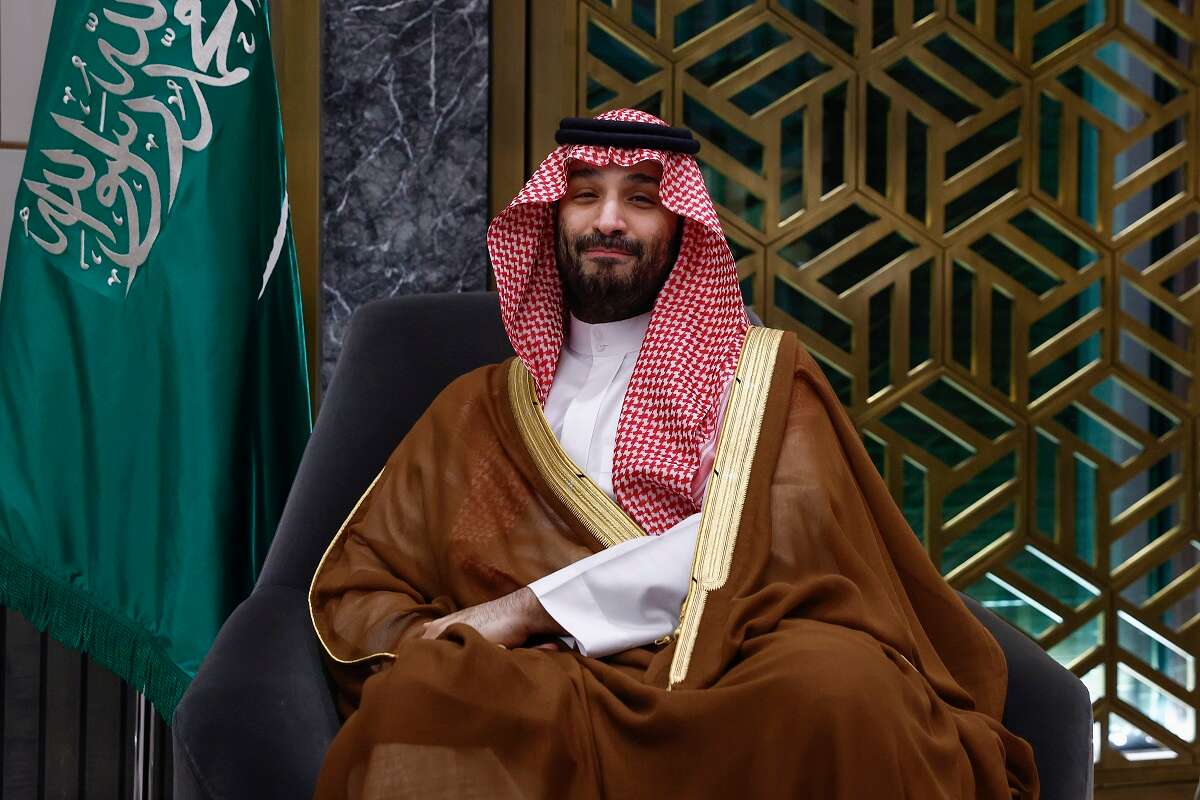
Crown Prince Mohammed bin Salman. Photo: AP/Evelyn Hockstein

Share on FacebookShare on Twitter

Normalization has become increasingly politicized, Saudi Arabia has developed a more nuanced understanding of Israeli dynamics, and security considerations have taken on unprecedented relevance. In an exclusive interview with Israel Hayom, senior Saudi researcher Dr. Aziz Alghashian provides insights into the intricate relationship between Riyadh and Jerusalem, while examining the profound impact of the Oct. 7 terror attack.

Born into a prominent Saudi family, Dr. Alghashian's early exposure to international diplomacy came through his childhood years in Washington, DC, where his father served at the Saudi embassy in the US. This experience sparked his enduring interest in Saudi foreign policy. After returning to Saudi Arabia in his youth, he pursued what he terms an "academic journey," completing his studies in Britain, earning his doctorate from the University of Essex, and teaching international relations and Middle East studies at the same institution. A central focus of his research has been examining why Israel and Saudi Arabia lack formal diplomatic relations despite their apparent convergence of interests.

"The relationship between Israel and Saudi Arabia doesn't follow a linear trajectory. In fact, this process often experiences significant setbacks. The notion that 'my enemy's enemy is my friend' isn't necessarily correct. Many observers view bilateral relations through this simplistic lens, and unfortunately, this perspective persists even now. Even Israel's ambassador to the United States, in his remarks to the Jerusalem Post, continues to embrace this view. However, the reality is far more complex. While shared interests exist, they don't automatically translate into official relations."

Ceasefire for normalization 

Q: Recent reports indicate renewed interest from the Trump administration in reviving Israel-Saudi normalization talks.

"This clearly ranks among their [the Americans'] top priorities, but the relationship between Saudi Arabia and Israel and the potential for normalization hinges on two key elements – the Palestinian issue, and what can be offered through a US-Saudi agreement in the Senate. These two policy layers create inherent complexity. The outcome always depends on multiple factors.
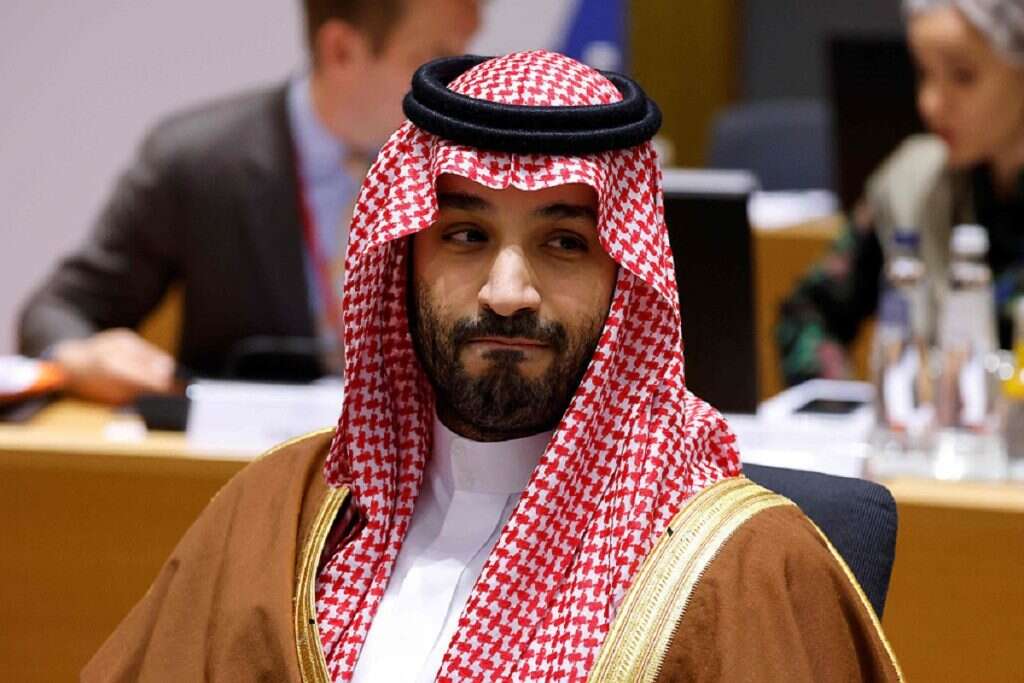
Saudi Crown Prince Mohammed bin Salman attends a EU - Gulf Cooperation Council (GCC) summit in Brussels on October 16, 2024. Photo credit: Ludovic Marin/AFP

"We've seen previous instances where normalization discussions were followed by regression. While I acknowledge ongoing efforts, I maintain that a permanent ceasefire is the primary prerequisite for normalization, among other conditions. Furthermore, the Saudis have consistently demanded credible and irreversible steps toward Palestinian statehood. It's worth noting that while these steps have been discussed, such conversations have typically remained confined to Israeli-Palestinian negotiations. The Palestinians must also engage in negotiations and articulate their requirements for these steps. This dynamic reflects the current state of Saudi-Palestinian cooperation. This is what we're observing.

"Regarding the Palestinian component in normalization, a two-state solution framework is essential. Any normalization framework lacking strong, credible, and concrete steps in this direction seems improbable. Why? The Saudis require internal legitimacy. This becomes particularly crucial when considering that not only the broader Arab population but also Saudi citizens are closely monitoring developments in Gaza (during the war).

"Additionally, the Saudis have gained a more sophisticated understanding of how Palestinian and Israeli dynamics have evolved. They've developed insights into Netanyahu's conflict management approach, which involves constraining moderate elements while enabling Hamas, making it difficult to accept superficial gestures toward normalization. The Saudis will need to confront this reality. It's remarkable how some parties seem unwilling to accept 'no' as an answer. The Israel-Saudi normalization issue has become highly politicized in both Israel and Washington, which explains why it generates such extensive discussion."

The Saudi researcher then elaborated on additional factors underlying the Palestinian issue's significance for Saudi Arabia. "From their perspective, this is fundamentally a security matter. Many overlook that it's not merely about legitimacy. I recall the terrorist attacks against Saudi Arabia, including a wave of al-Qaida violence. While this history might be forgotten or unknown to many outside Saudi Arabia, these terrorists consistently exploited the Palestinian issue.
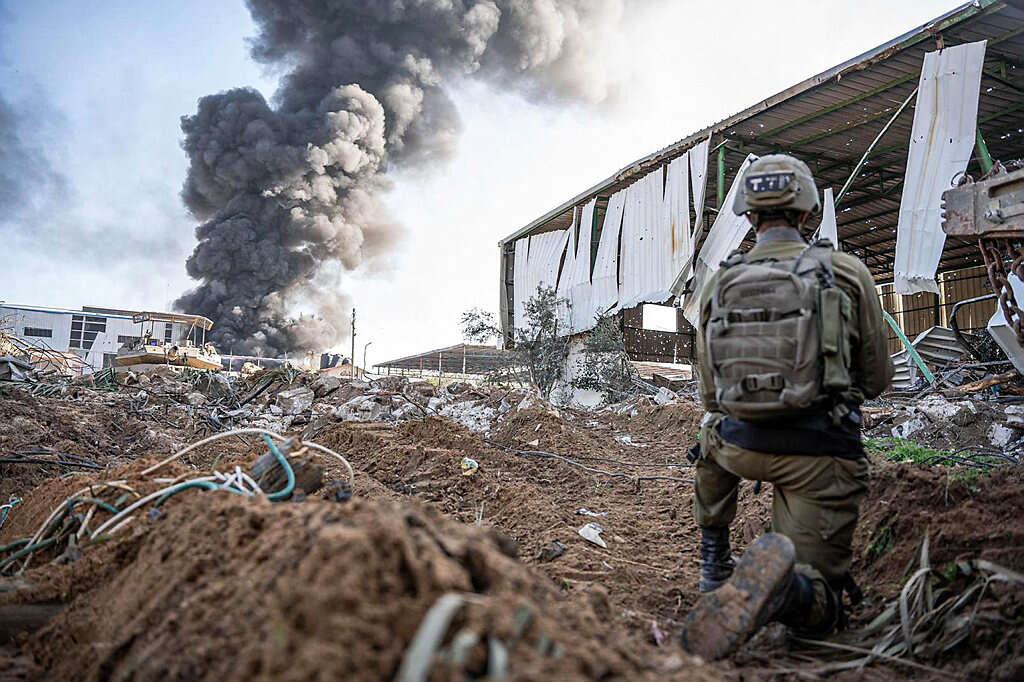
A soldier operating as smoke billows in the Gaza Strip, amid continuing battles between Israel and the Palestinian terrorist group Hamas on December 19, 2023. Photo credit: IDF, AFP

When al-Qaida targeted the US, they characterized Americans as occupiers and facilitators of cooperation with Israel. This underscores the necessity of establishing a secure pathway toward Palestinian statehood."

The Palestinian issue

Alghashian continued: "From the Saudi perspective, even before the events of Oct. 7, they maintained that resolving the Palestinian issue was crucial for regional progress, citing the economic benefits of regional stability. However, I believe the Oct. 7 events and their aftermath transformed what was once a theoretical consideration into an immediate Saudi security concern. Essentially, the unresolved Palestinian issue has evolved into a direct security challenge.

"I sincerely believe there are Israelis committed to peace. This is undeniable, and I believe the current moment calls for enhanced dialogue and more proactive engagement," the researcher concluded. However, he emphasized that despite recent enthusiasm surrounding Israel-Gulf relations and assumptions about moving beyond the Palestinian issue, the actual situation reflects a different reality.
Tags: Gaza WarIsraelSaudi Arabia

Related Posts

Israel assesses Assad to allow Iranian forces into Syria

Syria sentences Bashar al-Assad to death

by Shachar Kleiman

Damascus court convicts ousted Syrian dictator of premeditated murder and crimes against humanity. His cousin Atef Najib, former political security...

Arab state urged another to make peace with Israel as cover for war

Arab state urged another to make peace with Israel as cover for war

by ILH Staff

The proposal was made to another Arab country during discussions over a possible agreement with Israel, with censorship restrictions prohibiting...

Trump set deadline for Israel to end the warAFP, Chaim Goldberg/Flash90, Reuters

Israel admits: 'We may clash with Trump administration over Gaza'

by Shirit Avitan Cohen

Israeli diplomatic officials acknowledge disagreements between Jerusalem and Washington over the 15-point document concerning an Israeli withdrawal from Gaza and...

Menu

Analysis 

Archaeology

Blogpost

Business & Finance

Culture

Exclusive

Explainer

Environment


Features

Health

In Brief

Jewish World

Judea and Samaria

Lifestyle

Cyber & Internet

Sports


Diplomacy 

Iran & The Gulf

Gaza Strip

Politics

Shopping

Terms of use

Privacy Policy

Submissions

Contact Us

About Us

The first issue of Israel Hayom appeared on July 30, 2007. Israel Hayom was founded on the belief that the Israeli public deserves better, more balanced and more accurate journalism. Journalism that speaks, not shouts. Journalism of a different kind. And free of charge.

All rights reserved to Israel Hayom

Hosted by sPD.co.il

  • Home
  • News
    • Israel at War
    • Israel
    • United States
    • Middle East
    • Sports
  • Opinions
  • Jewish World
    • Archaeology
    • Antisemitism
  • Lifestyle
    • Food
    • Travel
    • Fashion
    • Culture
  • Magazine
    • Feature
    • Analysis
    • Explainer
    • Environment & Wildlife
    • Health & Wellness
  • In Memoriam
  • Subscribe to Newsletter
  • Submit your opinion
  • Terms and conditions

All rights reserved to Israel Hayom

Hosted by sPD.co.il

Newsletter

[contact-form-7 id=”508379″ html_id=”isrh_form_Newsletter_en” title=”newsletter_subscribe”]

  • Home
  • News
    • Israel at War
    • Israel
    • United States
    • Middle East
    • Sports
  • Opinions
  • Jewish World
    • Archaeology
    • Antisemitism
  • Lifestyle
    • Food
    • Travel
    • Fashion
    • Culture
  • Magazine
    • Feature
    • Analysis
    • Explainer
    • Environment & Wildlife
    • Health & Wellness
  • In Memoriam
  • Subscribe to Newsletter
  • Submit your opinion
  • Terms and conditions

All rights reserved to Israel Hayom

Hosted by sPD.co.il