Israel Hayom is a media organization founded on the belief that the Israeli public deserves better journalism—more balanced, more accurate, and more reliable. Journalism that speaks rather than shouts. Journalism that is trustworthy, objective, and matter-of-fact. A different kind of journalism, offered free of charge. The first print edition was published on July 30, 2007, and in 2010 Israel Hayom became the Israeli newspaper with the highest weekday readership. The newspaper’s publisher is Dr. Miriam Adelson. Its Editor-in-Chief is Omar Lachmanovitch, and its founding editor is Amos Regev. Israel Hayom’s Hebrew and English websites, as well as its Android and iOS applications, provide around-the-clock news coverage, exclusive content, breaking news and updates, analysis and commentary, video, podcasts, and live broadcasts. The digital platforms of Israel Hayom include news and opinion channels covering culture and entertainment, lifestyle, technology, sports, business and consumer affairs, health, military affairs, food, Judaism, tourism, and automobiles. In 2021, a new Hebrew-language website and mobile application were launched to provide users with a fast, up-to-date, secure, and convenient experience. The content of the newspaper’s print edition is also available online through a daily digital edition and can be received via newsletter. “The Israel Hayom Clique,” the publication’s exclusive benefits club, offers website users discounts and special promotions on products and services. Israel Hayom welcomes feedback, criticism, and suggestions for improvement from its readers. You can contact the organization by email at hayom@israelhayom.co.il

Wednesday Oct 14, 2026
NEWSLETTER
www.israelhayom.com
  • Home
  • News
    • Israel
    • Israel at War
    • Middle East
    • United States
  • Opinions
  • Jewish World
    • Archaeology
    • Antisemitism
  • Lifestyle
    • Food
    • Travel
    • Fashion
    • Culture
  • Magazine
    • Feature
    • Analysis
    • Explainer
  • In Memoriam
www.israelhayom.com
  • Home
  • News
    • Israel
    • Israel at War
    • Middle East
    • United States
  • Opinions
  • Jewish World
    • Archaeology
    • Antisemitism
  • Lifestyle
    • Food
    • Travel
    • Fashion
    • Culture
  • Magazine
    • Feature
    • Analysis
    • Explainer
  • In Memoriam
www.israelhayom.com
Home Archaeology

2500-years-old dig sheds light onto horror of human trafficking

Archaeologists uncover an isolated burial site near Tlalim Junction with evidence of human trafficking using Yemenite merchants' caravans. "This is one of the most interesting sites that we have encountered," says expert.

by  Lidor Sultan
Published on  02-05-2025 12:32
Last modified: 02-05-2025 17:08
2500-years-old dig sheds light onto horror of human traffickingIsrael Antiquities Authority

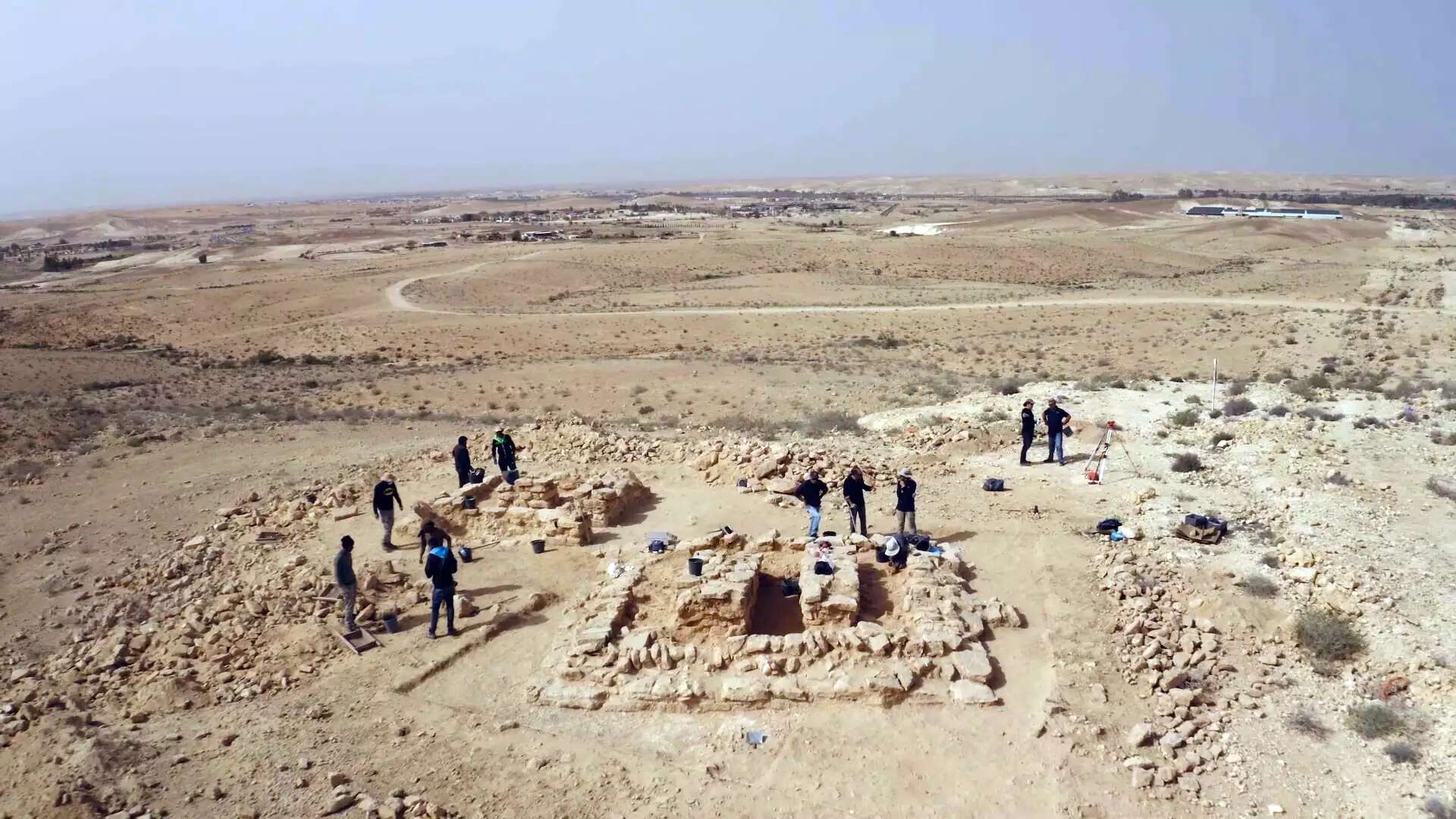
Archaeologists at the site in Israel discovered evidence of slave trade | Photo: Israel Antiquities Authority

Share on FacebookShare on Twitter

Archaeologists from the Israel Antiquities Authority have uncovered a 2,500-year-old burial complex containing dozens of interred individuals near the Tlalim Junction. Researchers believe the site tells the story of ancient Arab merchant caravans that passed through the area, including caravans from as far as Yemen.

"The unique concentration of flint artifacts uncovered in the site is unparalleled in Israel, and the only source that we know of is Yemen and Oman," said Dr. Jacob Vardi, a flint tool expert from the Israel Antiquities Authority. "We found traces of red ochre on some of the artifacts – a substance that was used in ancient cultures to symbolize blood and for other decorative purposes. The presence of ochre on these arrowheads may indicate their religious or cultic significance as having special value."
Evidence of the Yemenite caravans abusing women came up during a dig in southern Israel (Israel Antiquities Authority)

According to the excavation directors, this is an exceptional discovery pointing to extensive connections with South and North Arabian cultures, Phoenicia, Egypt, and Southern Europe. "A rich variety of artifacts were revealed in the two tombs that we uncovered, which are dated to between the 7th and 5th centuries BCE: copper and silver jewelry, alabaster artifacts for preparing incense, hundreds of beads made from different kinds of colorful stones, rare kinds of shells, an amulet in the shape of the Egyptian god Bes, alabaster vessels that were used to transport incense resins from southern Arabia, and more and more. The great variety of finds are evidence that this previously unknown site was a place of burial for trade caravans during that period and burial and cultic practices took place here," say Dr. Martin David Pasternak and Dr. Tali Erickson-Gini.

The large number of individuals buried at the site suggests two main possibilities: either the location served for generations as a burial site for passing caravans, or it is a mass grave built following a sudden event experienced by one of the caravans – perhaps an attack.

"The tombs are not found near any sites, settlements or fortresses that could explain their presence so that they are thought to be a mystery," say the researchers. "It appears that the remains are related to the traders from southern Arabia who were known for their long-distance journeys and who traded, among other things, incense such frankincense and myrrh. Naturally, these journeys would have taken months under difficult circumstances such as climate, the danger of raiders and other challenges."

"This is one of the most interesting sites that we have encountered," add Dr. Pasternak and Dr. Erickson-Gini. "The structures and the variety of finds evince our understanding that the Negev was more than just the passage of international travel – it was a lively meeting place of merchants and cultures."

"In light of the presence of special artifacts, we assume that many of the deceased were women, and it is possible that the trade caravans conducted human trafficking; texts of traders from Yemen in the second half of the first millennium BCE (called the Minaeans) describe purchasing women, among them those from Gaza, Egypt, Greece, Moab, and Edom. An inscription discovered in Yemen lists 30 women purchased in the city of Gaza."

Additional evidence for the presence of women in the graves may be the discovery of an amulet bearing the image of the Egyptian god Bes. This deity was considered the protector of women and their children from evil forces.

According to Eli Escusido, director of the Israel Antiquities Authority, "The discovery emphasizes the central role of the Negev in antiquity as an international crossroad and as a gateway for trade and a meeting place of cultures. The discovery is unique and it enables us to touch small but important historical moments of the people who traversed the desert through this place centuries ago. Multi-disciplinary research will make it possible to deepen our knowledge of the cultural and economic dynamics in the region thousands of years ago."

Tags: Israel

Related Posts

2,800-year-old curse reveals surprising detail about Kingdom of Judah

2,800-year-old curse reveals surprising detail about Kingdom of Judah

by Assaf Golan

Limestone tablet from the Hebron area bears a curse in ancient Hebrew and the earliest known extrabiblical reference to the...

Did researchers just find Noah's ark? 3D radar scan reveals hidden Turkey structuresGetty Images

Did researchers just find Noah's ark? 3D radar scan reveals hidden Turkey structures

by Assaf Golan

A new radar scan of a mysterious formation in eastern Turkey has revived one of history's oldest debates, whether the...

Rare First Temple-Era figurine mold unearthed in Jerusalem

Rare First Temple-Era figurine mold unearthed in Jerusalem

by Lidor Sultan

A rare mold used to create the face of a female figurine has been uncovered in a recent Israel Antiquities...

Menu

Analysis 

Archaeology

Blogpost

Business & Finance

Culture

Exclusive

Explainer

Environment


Features

Health

In Brief

Jewish World

Judea and Samaria

Lifestyle

Cyber & Internet

Sports


Diplomacy 

Iran & The Gulf

Gaza Strip

Politics

Shopping

Terms of use

Privacy Policy

Submissions

Contact Us

About Us

The first issue of Israel Hayom appeared on July 30, 2007. Israel Hayom was founded on the belief that the Israeli public deserves better, more balanced and more accurate journalism. Journalism that speaks, not shouts. Journalism of a different kind. And free of charge.

All rights reserved to Israel Hayom

Hosted by sPD.co.il

  • Home
  • News
    • Israel at War
    • Israel
    • United States
    • Middle East
    • Sports
  • Opinions
  • Jewish World
    • Archaeology
    • Antisemitism
  • Lifestyle
    • Food
    • Travel
    • Fashion
    • Culture
  • Magazine
    • Feature
    • Analysis
    • Explainer
    • Environment & Wildlife
    • Health & Wellness
  • In Memoriam
  • Subscribe to Newsletter
  • Submit your opinion
  • Terms and conditions

All rights reserved to Israel Hayom

Hosted by sPD.co.il

Newsletter

[contact-form-7 id=”508379″ html_id=”isrh_form_Newsletter_en” title=”newsletter_subscribe”]

  • Home
  • News
    • Israel at War
    • Israel
    • United States
    • Middle East
    • Sports
  • Opinions
  • Jewish World
    • Archaeology
    • Antisemitism
  • Lifestyle
    • Food
    • Travel
    • Fashion
    • Culture
  • Magazine
    • Feature
    • Analysis
    • Explainer
    • Environment & Wildlife
    • Health & Wellness
  • In Memoriam
  • Subscribe to Newsletter
  • Submit your opinion
  • Terms and conditions

All rights reserved to Israel Hayom

Hosted by sPD.co.il