Israel Hayom is a media organization founded on the belief that the Israeli public deserves better journalism—more balanced, more accurate, and more reliable. Journalism that speaks rather than shouts. Journalism that is trustworthy, objective, and matter-of-fact. A different kind of journalism, offered free of charge. The first print edition was published on July 30, 2007, and in 2010 Israel Hayom became the Israeli newspaper with the highest weekday readership. The newspaper’s publisher is Dr. Miriam Adelson. Its Editor-in-Chief is Omar Lachmanovitch, and its founding editor is Amos Regev. Israel Hayom’s Hebrew and English websites, as well as its Android and iOS applications, provide around-the-clock news coverage, exclusive content, breaking news and updates, analysis and commentary, video, podcasts, and live broadcasts. The digital platforms of Israel Hayom include news and opinion channels covering culture and entertainment, lifestyle, technology, sports, business and consumer affairs, health, military affairs, food, Judaism, tourism, and automobiles. In 2021, a new Hebrew-language website and mobile application were launched to provide users with a fast, up-to-date, secure, and convenient experience. The content of the newspaper’s print edition is also available online through a daily digital edition and can be received via newsletter. “The Israel Hayom Clique,” the publication’s exclusive benefits club, offers website users discounts and special promotions on products and services. Israel Hayom welcomes feedback, criticism, and suggestions for improvement from its readers. You can contact the organization by email at hayom@israelhayom.co.il

Saturday Jul 4, 2026
NEWSLETTER
www.israelhayom.com
  • Home
  • News
    • Israel
    • Israel at War
    • Middle East
    • United States
  • Opinions
  • Jewish World
    • Archaeology
    • Antisemitism
  • Lifestyle
    • Food
    • Travel
    • Fashion
    • Culture
  • Magazine
    • Feature
    • Analysis
    • Explainer
  • In Memoriam
www.israelhayom.com
  • Home
  • News
    • Israel
    • Israel at War
    • Middle East
    • United States
  • Opinions
  • Jewish World
    • Archaeology
    • Antisemitism
  • Lifestyle
    • Food
    • Travel
    • Fashion
    • Culture
  • Magazine
    • Feature
    • Analysis
    • Explainer
  • In Memoriam
www.israelhayom.com
Home News Israel Israel at War Gaza War

'They're burning us!': Recently released hostage shares Hamas ordeal

In a powerful interview with the Wall Street Journal, Omer Wenkert advocates for the hostages left behind: "The return of the hostages – this is where the success of the return to war will be measured for me," he said.

by  Adi Nirman
Published on  03-28-2025 07:00
Last modified: 03-28-2025 10:16
'They're burning us!': Recently released hostage shares Hamas ordealMohammed Saber/EPA

Hamas terrorists escort Israeli hostage Omer Wenkert before handing him over to the Red Cross in Al Nusairat refugee camp, central Gaza Strip, on February 22, 2025 | Photo: Mohammed Saber/EPA

Share on FacebookShare on Twitter

In a powerful interview with the Wall Street Journal, former hostage Omer Wenkert detailed the brutal beatings and psychological torture he endured during 505 days of Hamas captivity in Gaza as part of his ongoing advocacy for a deal to secure the release of the remaining hostages. Wenkert, who was released in February during a temporary ceasefire, described to the Wall Street Journal how he survived isolation, starvation, and regular abuse while being held underground by Hamas.

Wenkert was kidnapped from the Nova music festival near the Gaza border on Oct. 7, 2023. After rockets sent festivalgoers running, he sought shelter with about 40 others in a bomb shelter. Only 12 would survive after Hamas terrorists threw grenades inside and poured gasoline, threatening to burn everyone alive. "They're burning us!" someone screamed as the shelter grew hotter, Wenkert recalled.

He escaped the flames by crawling over dead bodies, only to be captured immediately outside. He wet his pants and was stripped to his underwear, then thrown into a white Toyota pickup truck, according to his account to the Wall Street Journal. Once in Gaza, he was taken underground into Hamas tunnels, where he would remain for the entire 505 days of his captivity.
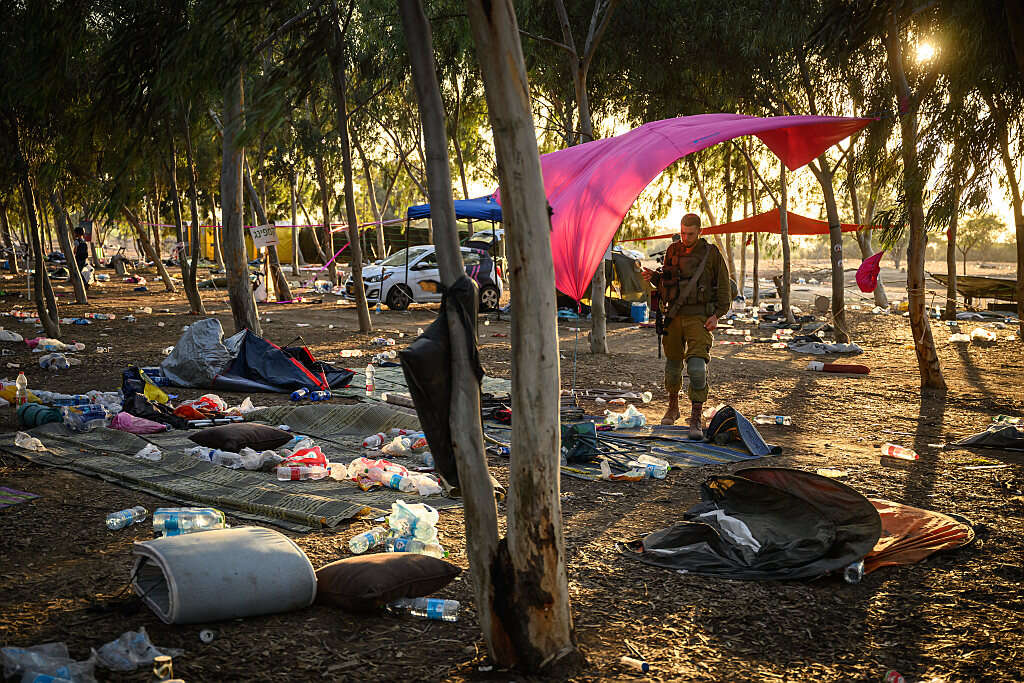
Members of Israeli security forces search for identification and personal effects at the Supernova Music Festival site, where hundreds were killed and dozens taken by Hamas terrorists near the border with Gaza, on October 12, 2023, in Kibbutz Re'im, Israel. Photo credit: Leon Neal/Getty Images

Wenkert's first days were marked by repeated beatings and brief moments of consciousness. "I remember on the first day someone hovering over me and a punch to the face, losing consciousness, and then another person waking you, another one stepping on you, losing consciousness, and another one waking you," he said.

For approximately half his captivity – 197 days by his own count – Wenkert was completely isolated in a narrow concrete corridor with a pit toilet covered with sand after each use. "I was sure that after two weeks I would completely lose my mind," he said. To maintain his sanity, he walked for hours daily in the 30-40 foot corridor, spoke to himself, sang Israeli rap songs, and recited Psalm 23 despite not being particularly religious.

Wenkert had nicknames for his captors, including "Tznon" (radish in Hebrew) for one particularly brutal guard. About eight months into his captivity, Wenkert shared, this guard became increasingly violent. In one incident, Tznon kicked Wenkert three times in his head and twice in his back as punishment for looking at him. The next day, the captor forced him to do what felt like hundreds of push-ups, sit-ups, and squats until he collapsed from exhaustion, then spat on him and screamed: "Say you are a son of a b****, say you are a dog."

In another brutal episode, when Wenkert lifted his head thinking his captor had left, Tznon struck him with a crowbar, beating his head, shoulders, and legs. Wenkert later learned the violence was triggered after an Israeli military operation killed his captor's father.
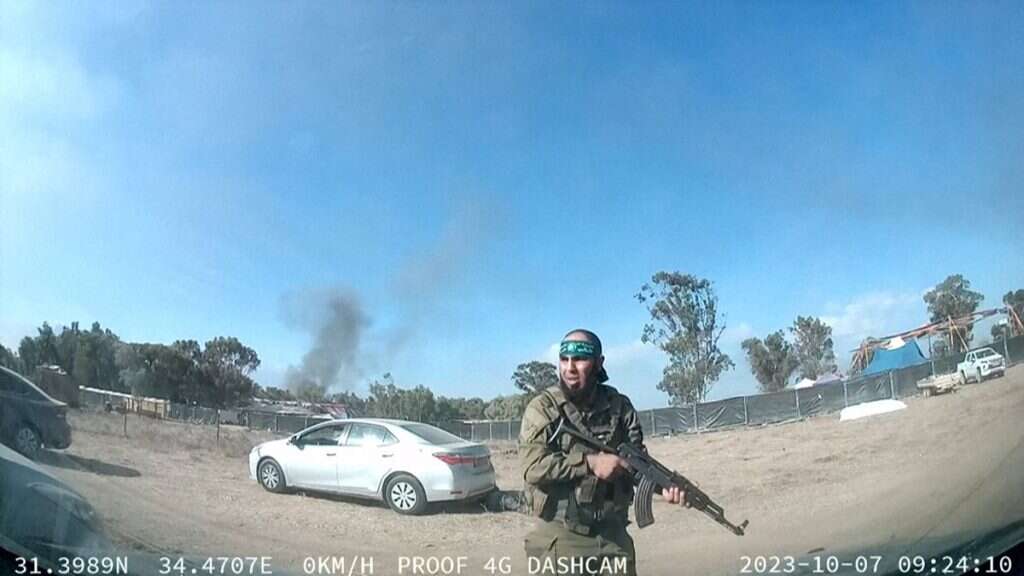
A grab from a UGC video posted on Telegram on October 9, 2023, shows an armed Palestinian terrorist walking around the Supernova music festival near Kibbutz Re'im in the Negev desert in southern Israel. Photo credit: AFP

In May, when Israel entered Rafah, the beatings intensified, and Wenkert's mental state deteriorated significantly. His isolation ended when three other hostages – Evyatar David (24), Guy Gilboa Dalal (23), and recently released Tal Shoham (40) – were brought to his location. "If they wouldn't have brought them down, I would have ended up in a catatonic state," Wenkert told the Wall Street Journal.

The hostages convinced their captors to give them a deck of cards and took turns exercising, as the tunnel air became too hot if they all moved simultaneously. However, by October, when Israel restricted aid to Gaza, their food rations were drastically reduced. "David and Shoham became so weak that they couldn't move," Wenkert said, describing how their legs turned blue and yellow from malnutrition.

According to his account, Wenkert's greatest fear was an attempted rescue by Israeli forces, as his captors had placed a bomb in their shelter.
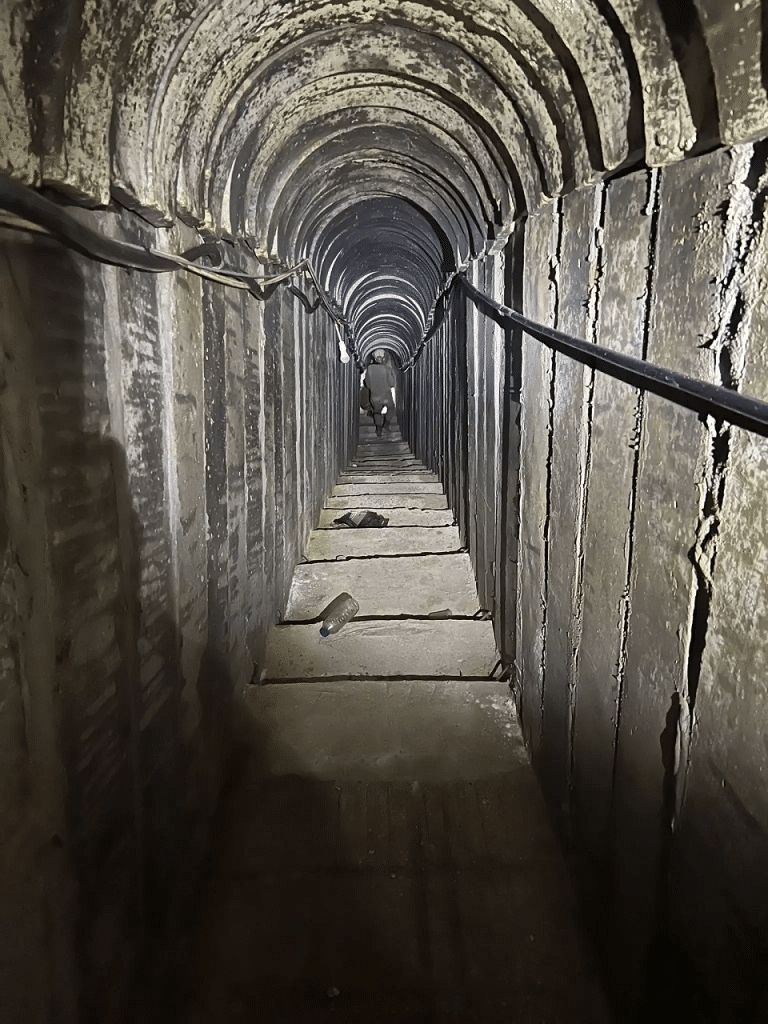
A Hamas tunnel in a residential neighborhood in the central Gaza Strip. Photo credit: IDF Spokesperson's Unit

When a ceasefire appeared imminent in early 2024, the hostages' food suddenly increased, with more than 5 pounds of rice daily and even chocolate – something Wenkert hadn't seen in over a year. Despite severe stomach pain, he couldn't stop himself from gorging after months of near starvation.

Before his release, Wenkert was forced to participate in propaganda videos after being shown the destruction in Gaza. "It's not easy to see something like that, just like it wasn't easy to see the sights in the bomb shelter [on Oct. 7]," he said.

Wenkert learned he and Shoham would be released – but David and Dalal would remain in Gaza. The four men had barely two minutes to say goodbye, embracing the entire time. "I promised them I would do everything I can to make sure they get home as soon as possible," Wenkert recalled. During his release in Nuseirat, he glimpsed David and Dalal in a nearby car, a moment that continues to haunt him. Hamas later released a propaganda video featuring the two hostages, watching their friends being released from captivity before going back underground.

Evyatar David (L) and Guy Gilboa-Dalal (R). Photo credit: Courtesy

Now free but still recovering physically and psychologically, Wenkert is focused on advocating for the remaining hostages. "The top priority is the return of the hostages alone – not the destruction of Hamas, not to destroy infrastructure, not nonsense like that," he said, directly challenging Israeli Prime Minister Benjamin Netanyahu's assertion that "military pressure is a necessary condition for releasing more hostages."

"What reason is there that I should be here and Evyatar and Guy aren't with me right now?" he added. "The return of the hostages – this is where the success of the return to war will be measured for me," he concluded.


Tags: Gaza WarHamasIsrael

Related Posts

Hasbara in crisis: How the October 7 massacre is being forgotten Arab Networks

1,000 days of war: Gaza border residents warn Hamas will return

by Shirit Avitan Cohen

The plan to establish humanitarian shelters near Rafah is stirring anger and concern in Gaza border communities. Officials warn: "Any...

Terrorist who held Omer Shem Tov captive in Gaza eliminated

Terrorist who held Omer Shem Tov captive in Gaza eliminated

by Lilach Shoval

Sabai Zahir Abd al-Hamid Abu Hasna, a Nukhba terrorist who took part in the Oct. 7 massacre and was involved...

Which senior Hamas figures remain in Gaza?

Which senior Hamas figures remain in Gaza?

by Lilach Shoval and Shachar Kleiman

Hamas confirmed Mohammed Odeh’s death after he had taken up the post only about a week and a half earlier....

Menu

Analysis 

Archaeology

Blogpost

Business & Finance

Culture

Exclusive

Explainer

Environment


Features

Health

In Brief

Jewish World

Judea and Samaria

Lifestyle

Cyber & Internet

Sports


Diplomacy 

Iran & The Gulf

Gaza Strip

Politics

Shopping

Terms of use

Privacy Policy

Submissions

Contact Us

About Us

The first issue of Israel Hayom appeared on July 30, 2007. Israel Hayom was founded on the belief that the Israeli public deserves better, more balanced and more accurate journalism. Journalism that speaks, not shouts. Journalism of a different kind. And free of charge.

All rights reserved to Israel Hayom

Hosted by sPD.co.il

  • Home
  • News
    • Israel at War
    • Israel
    • United States
    • Middle East
    • Sports
  • Opinions
  • Jewish World
    • Archaeology
    • Antisemitism
  • Lifestyle
    • Food
    • Travel
    • Fashion
    • Culture
  • Magazine
    • Feature
    • Analysis
    • Explainer
    • Environment & Wildlife
    • Health & Wellness
  • In Memoriam
  • Subscribe to Newsletter
  • Submit your opinion
  • Terms and conditions

All rights reserved to Israel Hayom

Hosted by sPD.co.il

Newsletter

[contact-form-7 id=”508379″ html_id=”isrh_form_Newsletter_en” title=”newsletter_subscribe”]

  • Home
  • News
    • Israel at War
    • Israel
    • United States
    • Middle East
    • Sports
  • Opinions
  • Jewish World
    • Archaeology
    • Antisemitism
  • Lifestyle
    • Food
    • Travel
    • Fashion
    • Culture
  • Magazine
    • Feature
    • Analysis
    • Explainer
    • Environment & Wildlife
    • Health & Wellness
  • In Memoriam
  • Subscribe to Newsletter
  • Submit your opinion
  • Terms and conditions

All rights reserved to Israel Hayom

Hosted by sPD.co.il