

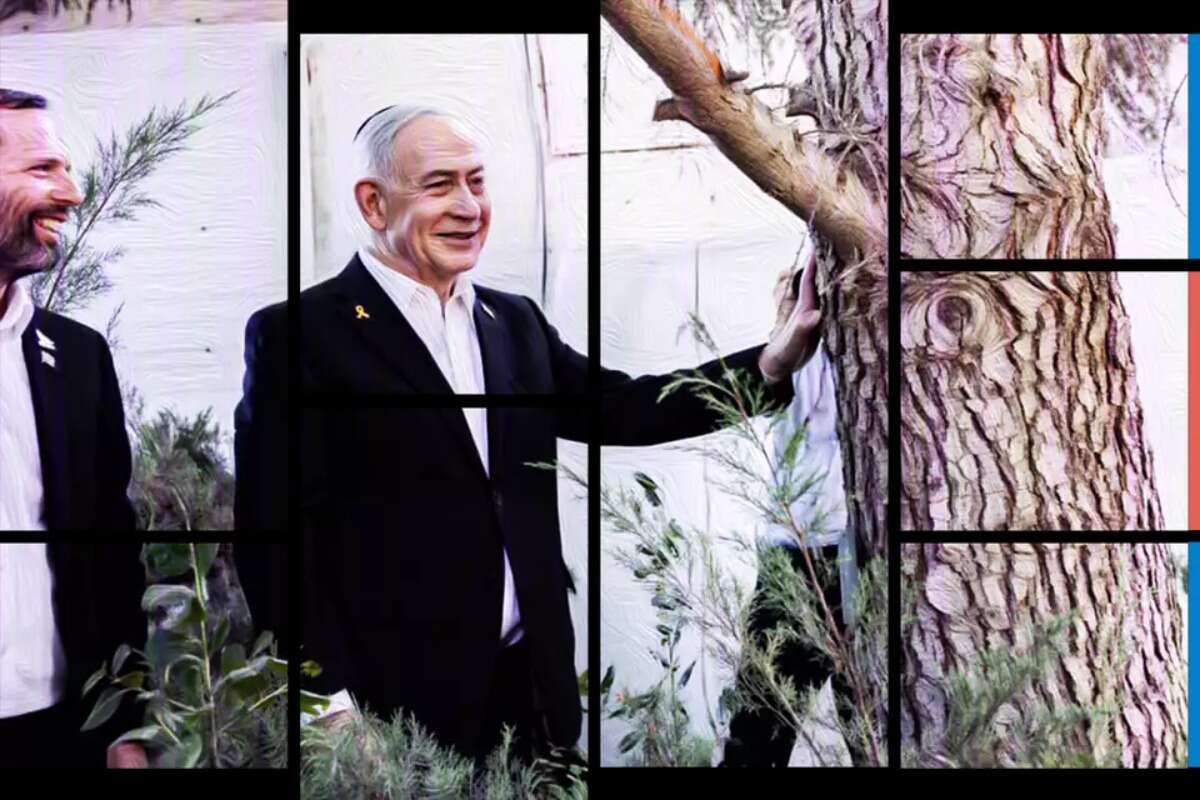
Three-layer cake
"I wish Hamas would surrender to President Donald Trump. I wish he would force the government to end the war. Let him do what he did to us when the planes were already on the way to Tehran – he called, announced in a determined voice that it's over, finished, and did us a great favor." The speaker is not a member of the left-wing "Standing Together" organization, nor a speaker at the Kaplan Street protests, but one of the most senior officials in the government.
The official observes – not from within the Diplomatic-Security Cabinet – with growing despair and anxiety at the situation. An operation in Gaza? The marginal security benefit, in his view, is lower than the marginal political cost. Surrendering to Hamas on its terms? Also impossible. Releasing all the hostages? Won't happen. Therefore, he reached the conclusion that from the terror organization's perspective, the current situation can continue forever.
Therefore, in the official's view, the Israeli prisoner cannot free himself from prison. What's needed here is tough love from Washington. Well, President Trump has no intention of doing anything like that, quite the opposite. In a series of statements, he has already outflanked Benjamin Netanyahu and his government from the right. On the Ukraine war issue, he zigzagged; on the Gaza issue, he is painfully consistent, to the point of boredom: a decision as fast as possible, as painful as possible. "To win, you need to play," he explained his doctrine this week. This week, rumors again spread about a big deal with Arab states – a multinational, multi-Arab force that would rule the Strip.

Hamas will be forced to lay down its arms, or it will be agreed to disagree, and it will be fenced in certain islands where fighting will continue. The model resembles a three-layer cake: Gaza inside, a multinational Palestinian force in the middle, and the IDF surrounding it on the outside. It's clear in any case that Trump will not lend a hand to Hamas' delusion deal, the one demanding complete Israeli withdrawal, rehabilitation of the Strip with billions and release of hostages in agonizing installments whose delivery might never end.
Trump and Netanyahu have declared that the war will end in victory. The issue is that to win, Netanyahu needs time. Conquering Gaza and afterward the central camps are a necessary condition, and it will take an extended time that the government may not have. The prime minister is working to advance the conscription law hated by most of the public in order to get time until September. But a senior Likud activist who met recently with Netanyahu claims he heard from him that there is already a date for an election – March 2026.
This means the Knesset will return from recess, deliberate for another month, and dissolve. This is not his plan; it's simply a sober assessment.
Sometimes dreams come to an end
Israel's public standing in the world appears worse than ever. This is the consensus in the Foreign Ministry, among ambassadors, in the IDF. There's one person who disagrees with this – Benjamin Netanyahu. "When was our situation more serious?" he was asked this week.
Not a few times, he replied. For example? A year ago, under the Biden administration. To understand this answer, one needs to remember that for Netanyahu, what is called "the world" is actually a very small area, just above 2 kilometers in diameter – between Capitol Hill and 1600 Pennsylvania Avenue in Washington, between Capitol Hill and the White House.
From Netanyahu's perspective, the US is the world. Last year we were under a practical embargo; the then-US president fought against IDF operation in Rafah, his vice president boycotted the prime minister's speech in Congress; his administration was not briefed by Israel on the pager operation and the assassination of Hassan Nasrallah, so it wouldn't thwart them through leaks. According to this, now in Washington everything is a dream. The problem is, of course, that people also wake up from dreams.
Twenty-seven Democratic senators signed a letter supporting a practical arms embargo on Israel, a fact unthinkable until a few years ago. Young Republican bloggers who interviewed him underwent a shaming campaign on social media that ended only when they compared him to Hitler. Returning to Netanyahu – he believes that even in the rest of the world the situation was already worse, though here one must go back to the 1970s, to the oil embargo after the Yom Kippur War.
There's one difference, and that is that many of the countries that openly disavow Israel and declare arms embargoes on it are those that, behind closed doors, beg for more weapons and more Israeli technology, a result of the hysteria from Russia and Trump's demand to increase the defense budget of NATO members. Once Israel was a mistress in the Middle East, now it's a mistress also in Europe. But, he said this week, it's reversible. When we win, this will be behind us.
Indeed, the source of almost all of Israel's international troubles is Gaza, which we left 20 years ago, and not Judea and Samaria, where the alleged "occupation" continues. The conclusion – it's better to solve the problem now than postpone it and pay for temporary legitimacy with compound interest.
Park and go
One of the hated clichés that will return to our lives with the opening of election year, alongside "vote bleeding," is about voters who "park" with this candidate or that party.
Even before the campaign has begun, it's already possible to determine that there has never been such a big parking lot, so active, as the one in the Israeli center-Right. If Benny Gantz manages to lose a million and a half voters in polls within a year and a half, and drop from 37 seats to 0, this isn't even short-term parking. It's more "park and go."
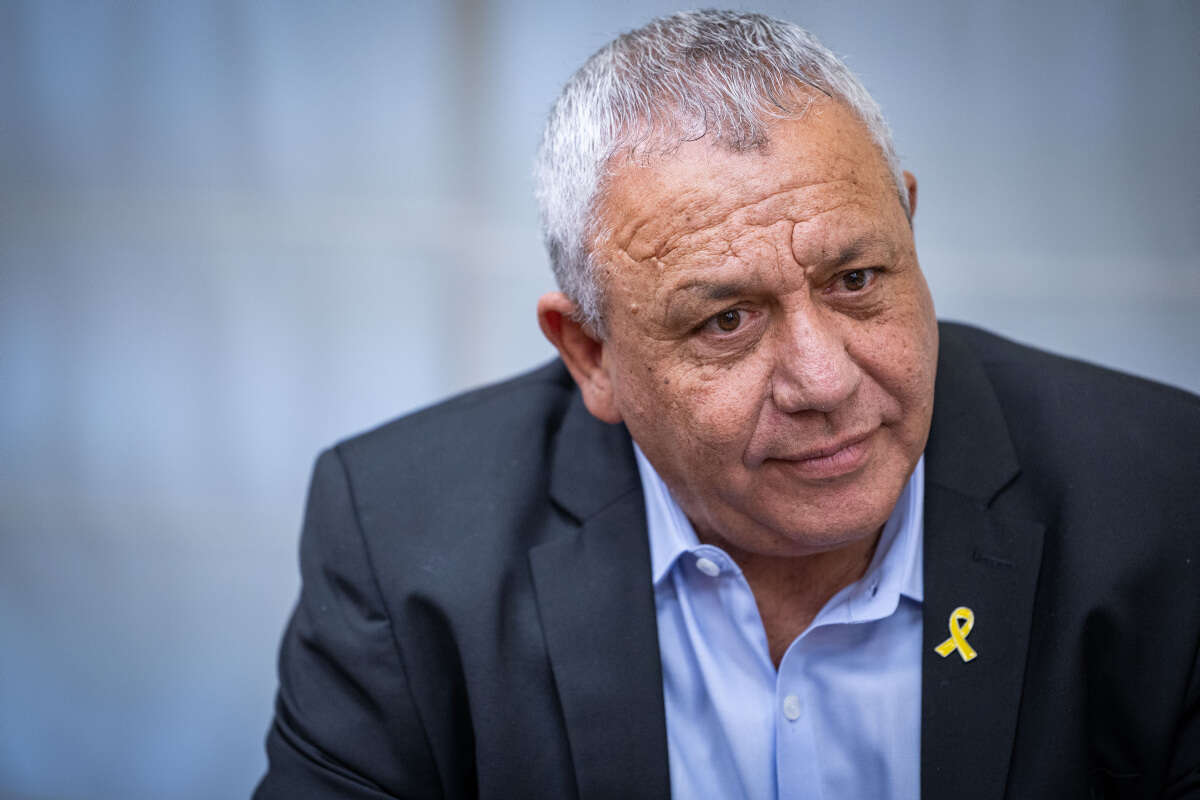
Currently, about a million voters are parked with Naftali Bennett. The campaign of the former prime minister is only ostensibly against Netanyahu. In practice, it's against time. Two months ago, he was projected to win 27 seats; in this week's poll he was at 20. Every day that passes is a great danger when you're trying to preserve a dune of shifting sands, especially when most of his potential supporters have never voted for him.
Bennett, on the other hand, believes they are much more stable than Gantz's. As proof – for a year already he has been the largest party in the opposition in every poll. There's one thing that can cement the 20 seats, and even beyond them – a quick announcement by Gadi Eisenkot about a joint run under the "Bennett 2026" list.
Bennett's venture is much more far-reaching – a triple union with Liberman and Eisenkot, one right wing and one left wing, each one compensates for the electoral weaknesses of his two rivals. This won't decide the election results, but will certainly make the Opposition bloc a done deal.
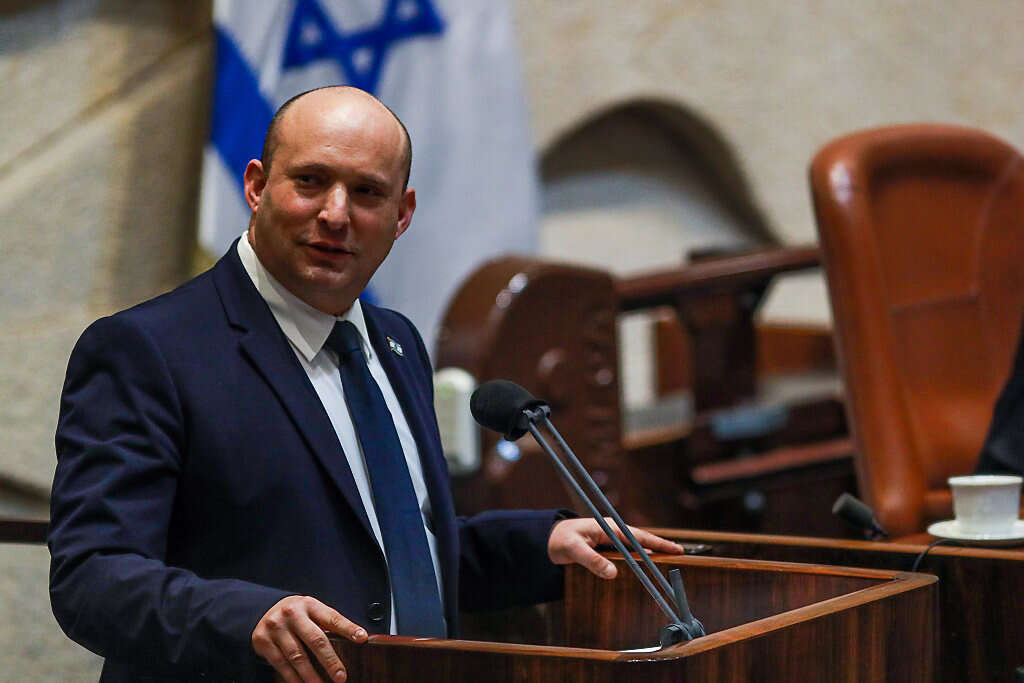
But the groom Eisenkot isn't burning for anything. Why should he rush? In the polls he's only rising and flourishing since he has left Benny Gantz. The gap between him and Bennett has shrunk to only 8 seats. True that the premiership is not an obsession with Eisenkot, but it's certainly an option.
There were those to whom he promised an answer after the holidays. His associates have stressed – this will not be before the "after the High Holy Days" period. They believe he will decide on the day of Knesset list filing deadline, not a minute before.
Until then he, May Golan and Yair Lapid will conduct stealth campaigns to bring down Bennett. Deep research deals much more with him than with Netanyahu. The goal – to kill him with kindness, with a low signature.
Poli yes and Urich no?
This is already the seventh or eighth time that Judge Menachem Mizrachi rules in Jerusalem District Court in favor of Jonatan Urich, the prime minister's advisor, and Judge Amit Michels in the district court overturns the decision. But the interesting question is why specifically Urich is removed from his work. Or in the words of Judge Mizrachi – "Of all the dozens of suspects investigated in this case, only the suspect before me and one other person have release conditions in effect... It is incomprehensible why the investigating unit seeks to discriminate against specifically the suspect standing before me from the conditions of other suspects investigated in the affair, some of them in a much more severe legal situation."
For example, Maj. Gen. (res.) Yoav (Poli) Mordechai, suspected of contact with a foreign agent and bribery in the same Qatargate. Mordechai holds an extremely sensitive position, deputy to Maj. Gen. (res.) Nitzan Alon, who is in charge of the hostages and missing persons issue. And here, it turns out that the man has no problem with the fact that someone suspected of receiving bribes from Qatar holds a sensitive position that naturally touches on negotiations with that same Qatar. Here, there are no demonstrations; here, the police don't go out of their way for his removal from the sensitive front; here, there's no concern about obstruction of justice, and no media campaign.
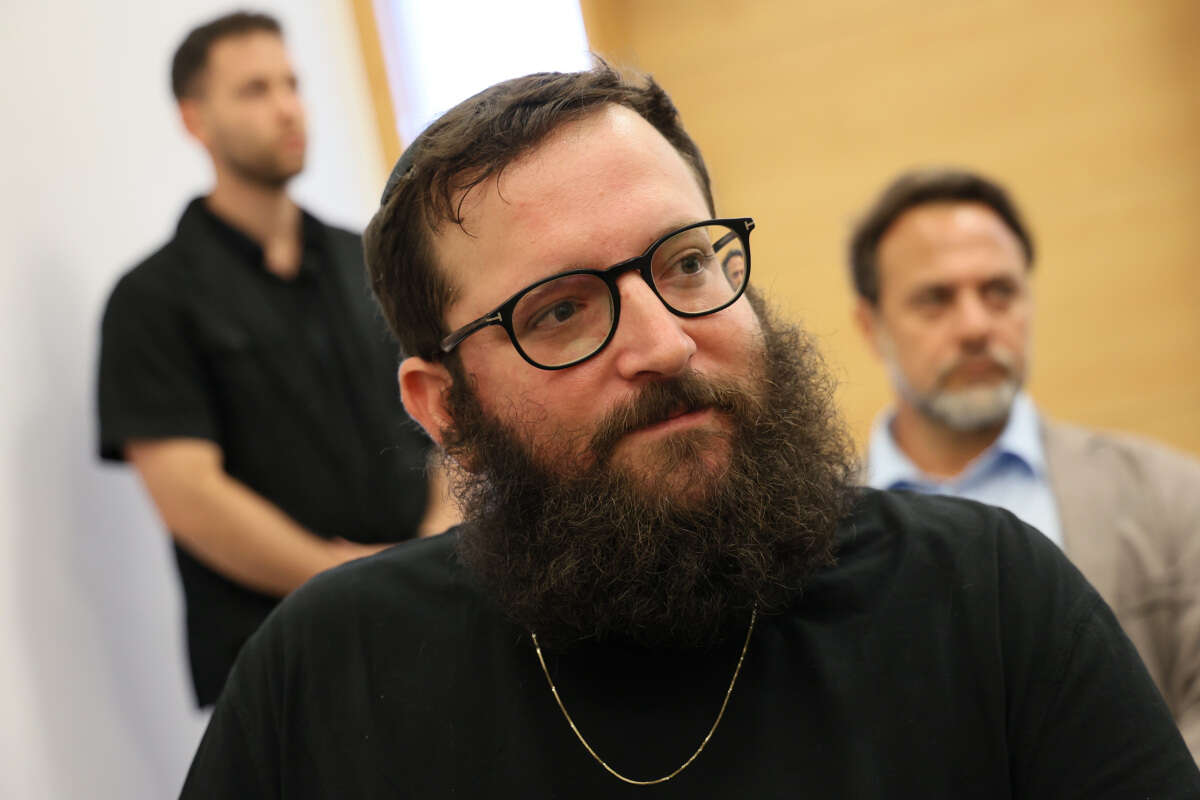
Almost no one attacks the IDF when it rallies behind him for his benefit in a special statement: "The acquaintances of Maj. Gen. (res.) Mordechai with the Arab world and Qatar, and his business activities have been known to his commanders since the beginning of the war, including proper disclosure that was made on the subject. Since the beginning of the war, Mordechai has been fully harnessed to the hostage headquarters. He does not conduct direct negotiations with the mediators, but his contribution is most significant and sometimes even critical to the effort. All along, professional positions were courageous and without bias, and contributed greatly to the work. The IDF thanks him for his investment in the 19 months that have passed and expects he will continue his important contribution."
If only it would really be decided to cut out the Qatari cancer growth in the heart of the security and political establishment in Israel. For example, when it becomes clear why the heads of the IDF, Shin Bet, and Mossad were hosted in the VIP box in the World Cup quarterfinal. They all claimed then that it was a professional visit for security purposes, because it's known that one can oversee spectators' security only from a premium box at $8,000 per head with free whiskey.
If the supreme value is declaring total war on dirty Qatari money – I'm in. But it's hard to get the impression that this is the situation, as long as the entire event focuses on Netanyahu's closest advisor, and on his removal alone. It might still, God forbid, give the impression that the story this time too is not state security, the well-being of the hostages, and purity of intent, but bringing down Netanyahu. As long as similar steps are not taken against Maj. Gen. Mordechai, removing Urich from work with Netanyahu on the eve of elections is not a side effect but the goal.


