Israel Hayom is a media organization founded on the belief that the Israeli public deserves better journalism—more balanced, more accurate, and more reliable. Journalism that speaks rather than shouts. Journalism that is trustworthy, objective, and matter-of-fact. A different kind of journalism, offered free of charge.
The first print edition was published on July 30, 2007, and in 2010 Israel Hayom became the Israeli newspaper with the highest weekday readership. The newspaper’s publisher is Dr. Miriam Adelson. Its Editor-in-Chief is Omar Lachmanovitch, and its founding editor is Amos Regev.
Israel Hayom’s Hebrew and English websites, as well as its Android and iOS applications, provide around-the-clock news coverage, exclusive content, breaking news and updates, analysis and commentary, video, podcasts, and live broadcasts.
The digital platforms of Israel Hayom include news and opinion channels covering culture and entertainment, lifestyle, technology, sports, business and consumer affairs, health, military affairs, food, Judaism, tourism, and automobiles.
In 2021, a new Hebrew-language website and mobile application were launched to provide users with a fast, up-to-date, secure, and convenient experience.
The content of the newspaper’s print edition is also available online through a daily digital edition and can be received via newsletter.
“The Israel Hayom Clique,” the publication’s exclusive benefits club, offers website users discounts and special promotions on products and services.
Israel Hayom welcomes feedback, criticism, and suggestions for improvement from its readers. You can contact the organization by email at hayom@israelhayom.co.il
Maccabi's non-kosher sandwich ad angers ultra-Orthodox
Maccabi health insurance distributed and posted an advertisement on Tuesday to closed WhatsApp groups in the ultra-Orthodox sector, which displayed a sandwich containing yellow cheese alongside pastrami.
Maccabi health insurance distributed and posted an advertisement on Tuesday to closed WhatsApp groups in the ultra-Orthodox sector, which displayed a sandwich containing yellow cheese alongside pastrami. The non-kosher advertisement was quickly removed from the groups, and Maccabi notes that this error has been corrected.
Health funds maintain fierce competition among themselves for marketing in the ultra-Orthodox sector. This is a population that can be easily moved between insurances in a "clan-like" manner, thereby increasing the number of insured members – additionally, this is a population with significant natural growth.
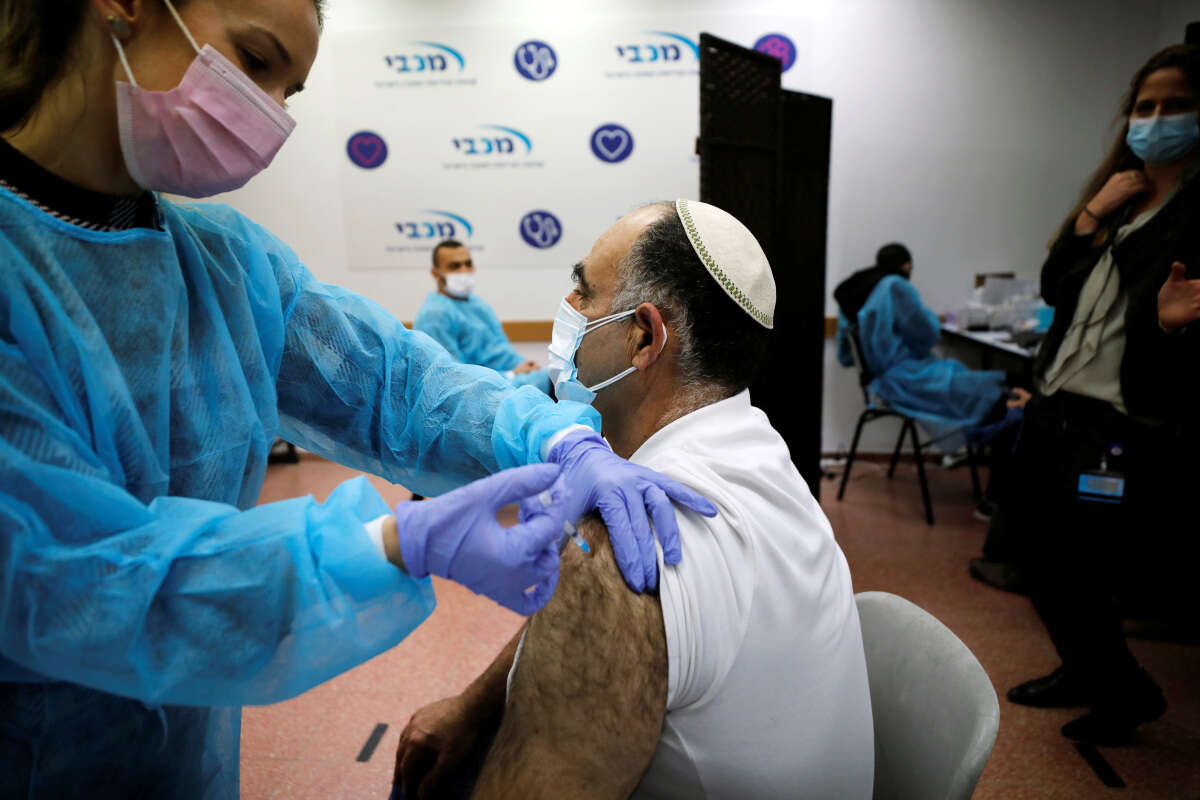
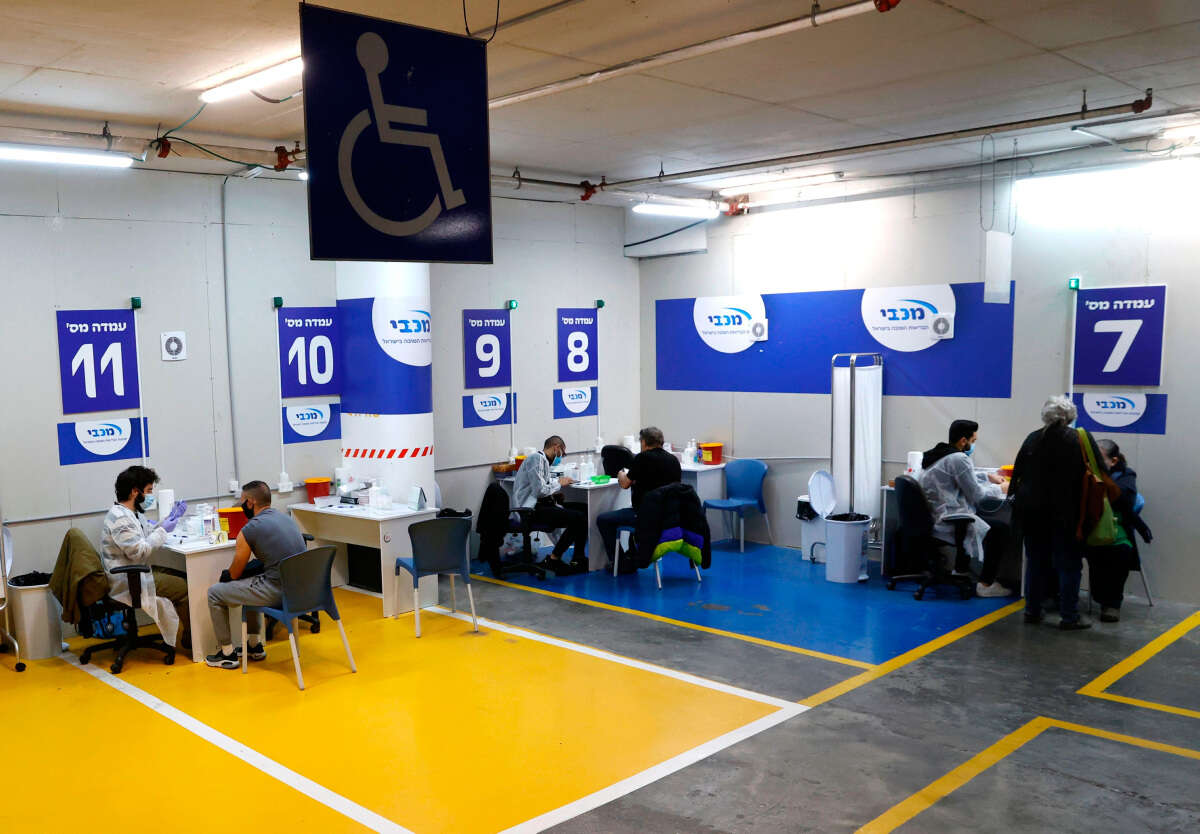
Health workers of the Maccabi Health vaccination centre administer doses of the Pfizer-BioNtech COVID-19 coronavirus vaccine inside the parking lot of the Givatayim mall in Israel's Mediterranean coastal city of Tel Aviv on January 26, 2021 (Photo: Jack Guez / AFP) AFP
Among other things, the health insurance employs "community coordinators" who help expedite appointments and schedule appointments in the ultra-Orthodox sector, open numerous branches in this sector, offer the ultra-Orthodox population swimming lessons and horseback riding under the coverage of child development services, publish advertisements in enormous sizes at rabbinical gatherings, and more. A source in the health system noted, "Apparently, someone at their advertising agency took a generic image and didn't pay attention. This is a serious mishap. The ultra-Orthodox saw this, it's hard to assess whether this will cause them damage with the insured members."