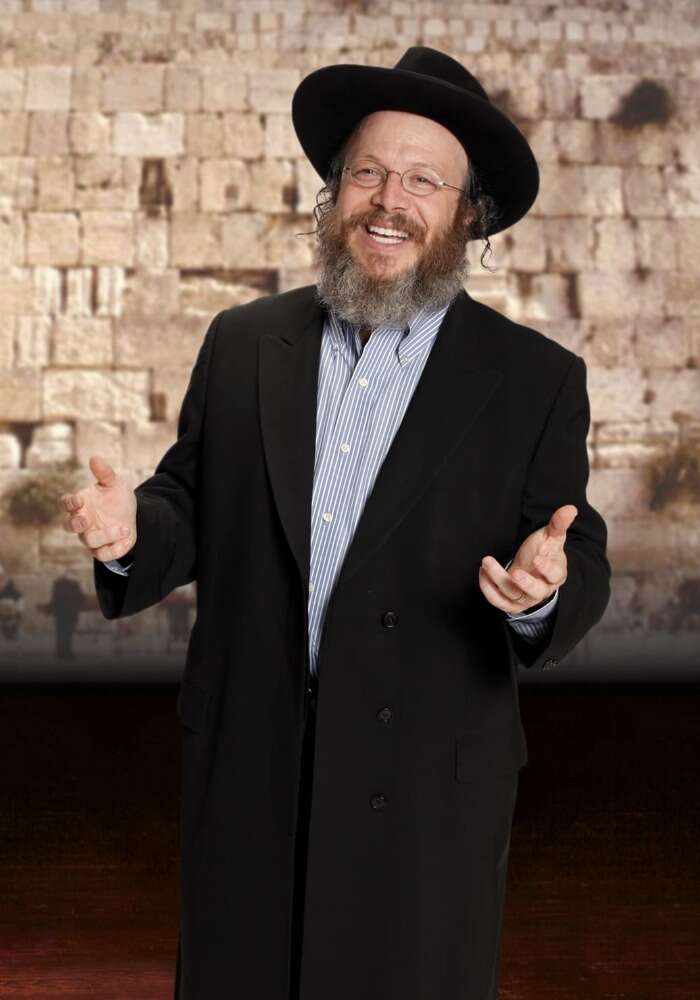
Originally from Philadelphia, and raised Irish-Catholic, Yisrael Campbell is an American comedian known for his autobiographical one-man show Circumcise Me, which earned him acclaim in New York, Jerusalem and Edinburgh.
The show follows his journey from the United States, through three conversions to Judaism, to his eventual arrival in Jerusalem as an Orthodox Jew. For Yisrael, becoming Jewish was never a straightforward journey. Along the way, he navigated years of religious bureaucracy, built a family and forged an unusual career combining comedy and Judaism.
But his journey began long before he ever set foot in Israel – with addiction. "When I was in my mid teens, when I was about 16, I realized I had an alcohol and drug problem and I had to stop using alcohol and drugs and I went into recovery," Yisrael recalled. Now aged 62, Yisrael shared "I've been clean and sober for over 46 years."
Recovery also prompted a deeper search for meaning.
"The process of recovery essentially pointed to the idea that I needed to have some kind of power greater than myself: God. It was a very open concept as to what that was and what that could be. And so that started me searching," said Yisrael.
Although he had grown up Catholic, Yisrael never felt particularly connected to the religion. His introduction to Judaism came through a young Jewish woman he met during his recovery, whose approach to spirituality made a lasting impression on him.
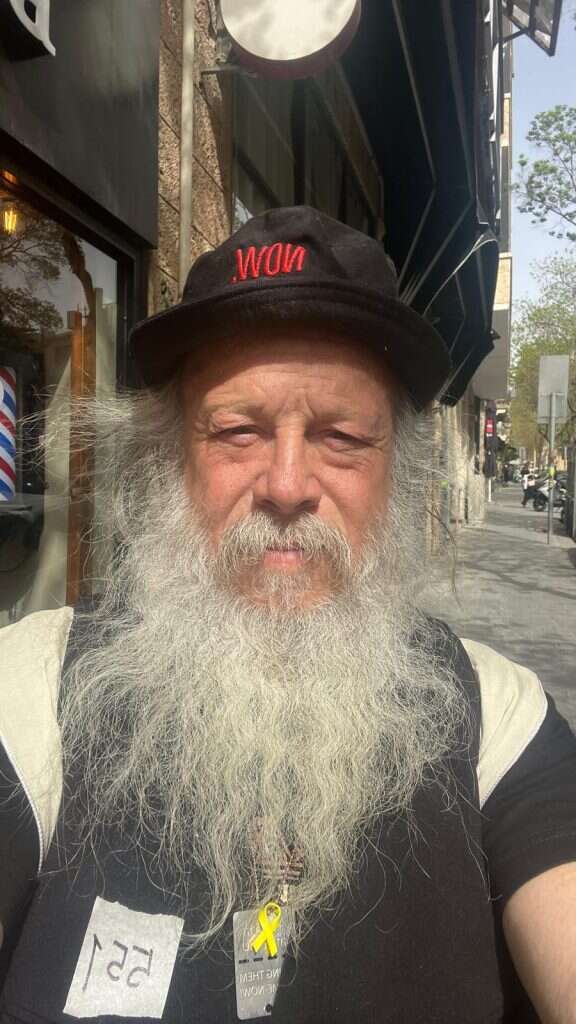
She told him, "If you're happy with God, laugh with God; if you're angry with God, yell at God; if you're sad, cry," he said.
Yisrael described how different this was from what he had been taught: "I was taught to be in relationship with God by not doing anything wrong. And if you do something wrong, apologize immediately and try not to get caught again."
The young woman also introduced him to Jewish literature, sparking his fascination with Jewish history, Israel and Hasidic thought. Still, it would take years before Yisrael seriously pursued conversion. By the time he was around 30 and living in Los Angeles, he had been sober for approximately 14 years but was still searching for meaning.
One day, he came across a newspaper advertisement for a basic Judaism course. He made a few phone calls and eventually found a Reform rabbi who offered a basic introductory course comparing Christianity and Judaism. At the end of the course, Yisrael approached the rabbi and asked how he could convert.
The rabbi told him he simply had to answer five questions, including whether he was making the decision of his own free will, whether he would become an active member of the Jewish community and whether he would raise any future children as Jews.
One question stood out in particular and would later prove especially significant: "Would I throw my lot in with the Jewish people, come what may?"
Yisrael completed his first conversion through the Reform movement. He became involved in volunteering and social justice, but his growing desire for a more observant Jewish life soon led him to seek other options. "I wanted to do more ritually," he explained. "We did a lot of Tikkun Olam... social justice. And this is all good. It's not bad in any way. But it's not inherently Jewish."
He began putting on tefillin each morning and attending a Conservative synagogue. A rabbi there suggested he complete the traditional conversion process by appearing before a beit din, or Jewish religious court. Three rabbis oversaw the process, and Yisrael completed his second (conservative) conversion in Los Angeles.
As Yisrael became increasingly observant, he began connecting with Orthodox families in Los Angeles. However, questions about the validity of his conversion left him uncomfortable and uncertain about his standing in the community. He began pursuing an Orthodox conversion in Los Angeles, but the process made little progress.
'Being here made me want to be here'
Coincidentally, a decision to spend the summer of 2000 in Israel would change the direction of his life. At the time, Yisrael was working as an actor and had just turned down two commercial jobs because they conflicted with his religious observance. One required him to work on Shabbat, while the other fell on the eighth day of Passover.
With an actors' union strike looming, he decided to travel to Israel rather than risk crossing picket lines. Yisrael arrived intending to stay for only a few months. Instead, he quickly realized he wanted to stay.
"I just realized that being here made me want to be here," he said. "I realized if I'm just going to go back to LA in order to try and get back here, I'm already here. Why don't I just stay?"
He enrolled at Jerusalem's Pardes Institute of Jewish Studies, initially for the summer and then for a year-long program. He described the experience as profound. "It was just profound. I'd never spent, you know, so much concentrated time learning Torah," he said. "As soon as I started, I realized I wanted to stay."
During this time, Yisrael met Avital, one of the institute's teachers, whom he married in 2002. He also continued studying and preparing for his Orthodox conversion. Nearly two years after arriving in Israel, Yisrael completed his Orthodox conversion by appearing before a Beit din, a Jewish religious court, and immersing in a mikveh.
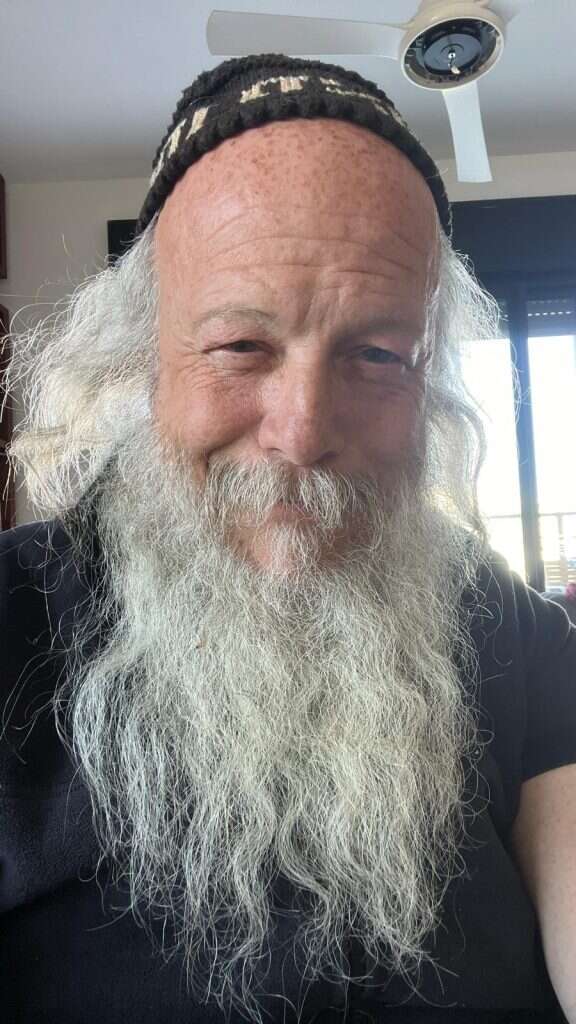
But even that did not bring an end to the complications surrounding his Jewish status. Although an Orthodox rabbi had overseen his conversion, the Chief Rabbinate did not recognize the process, creating bureaucratic obstacles to his marriage registration and aliyah efforts.
Yisrael recalled the contradiction of being permitted to marry under Jewish law while not being recognized by the state as Jewish. "As a rabbi, I'm letting you marry. I'm giving you a ketubah. But as an agent of the state, I can't recognize the marriage that I'm allowing," the rabbi told him.
After a lengthy wait, Yisrael eventually received recognition and formally made aliyah, having spent approximately two and a half years in Israel. His early years in Israel coincided with the Second Intifada, which began shortly after his arrival. For Yisrael, the violence and uncertainty of those years only strengthened his sense of belonging.
"Everyone thought I was crazy for staying," he said. But he also found himself returning to the question his Reform rabbi had asked years earlier: "Do I throw my lot in with the Jewish people? Come what may. I felt like those early years were a real 'come what may' time."
'I found Judaism the way I found it'
Yisrael and Avital had four children together, including boy-girl twins. Although the two are now divorced, Yisrael remains in Jerusalem, where he has lived for most of his 26 years in Israel. His eldest children are now 22; his daughter has completed her army service, while his son serves as an officer in the IDF's Yahalom combat engineering unit.
"I certainly didn't think I was spending the rest of my life here when I got here," he said. "But I believe I'm going to live the rest of my life here."
His career has also taken an unconventional path. Having initially pursued acting, Yisrael turned to stand-up comedy, which allowed him to write and perform his own material. "With comedy, I could write my own material and I could do my own thing. I didn't depend on someone else," he explained. "And I love that. And I love making people laugh."
His religious observance eventually became part of his comedy career, too. In Circumcise Me, he explored his conversion and Jewish experiences, bringing his personal story to audiences in New York and beyond. Today, he continues performing comedy while also working as a guide at Yad Vashem, a role he began approximately seven years ago. He also guides trips to Poland and is working on a memoir.
Despite the many twists in his religious journey, Yisrael says he has no resentment towards the different Jewish movements or communities that shaped his path. He believes that being welcomed by the Reform community was an important part of his journey.
"I found Judaism the way I found it and I'm glad that I did."
His sense of humor, meanwhile, has never left him. Describing himself as a "Reform Breslov," he joked about the reactions to his successive conversions: "When I converted Reform, it upset the Catholics; when I converted Conservative, it upset the Reform; and when I converted Orthodox, it upset the Conservative."
But beyond the humor, Yisrael says he has never lost sight of what first drew him towards Judaism: the search for a meaningful relationship with God. "I came to this path to have a deeper and more spiritual relationship and connection to God. And this [being orthodox], of all the things I searched out and all the things I focused on over the years, made the most sense to me."
He concluded: "I want to be part of a community that is struggling to have a relationship with God and wherever I find that community in the Jewish world, I want to be part of that."