The streets near the Jewish community center in North London were blocked off by police vehicles. Security personnel at the entrance carefully checked the IDs of attendees arriving to learn about making Aliyah to Israel. Outside, pro-Palestinian demonstrators handed out informational leaflets advising attendees against moving to Israel.
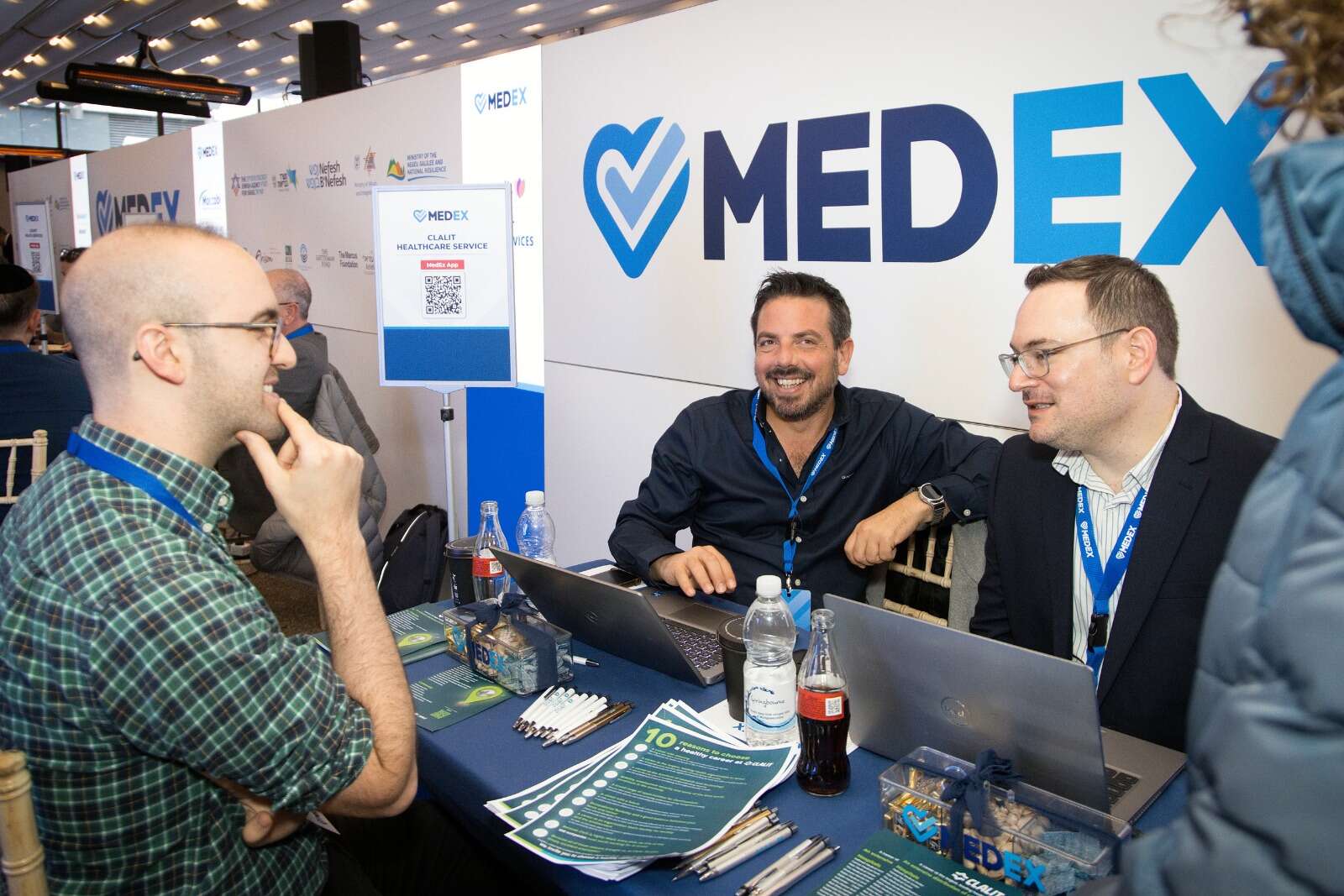
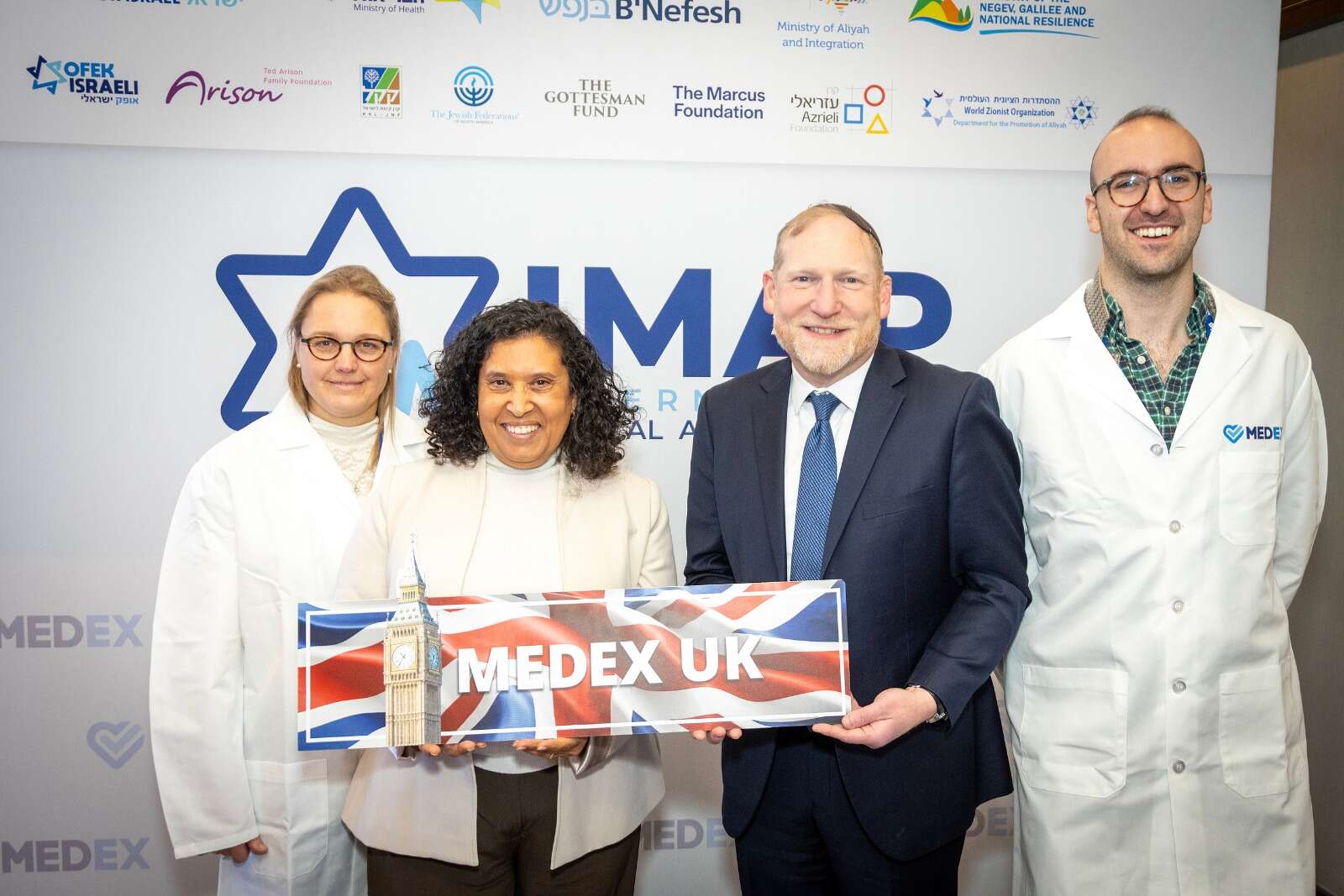
More than 130 physicians from the United Kingdom participated in the MedEx UK conference on October 25, held for the second time in London, aimed at boosting physician immigration by connecting doctors directly with Israeli government ministries, hospitals, and healthcare organizations (HMOs/Kupot Cholim). The objective: address physician shortages in the Israeli healthcare system and help interested doctors immigrate and integrate professionally.
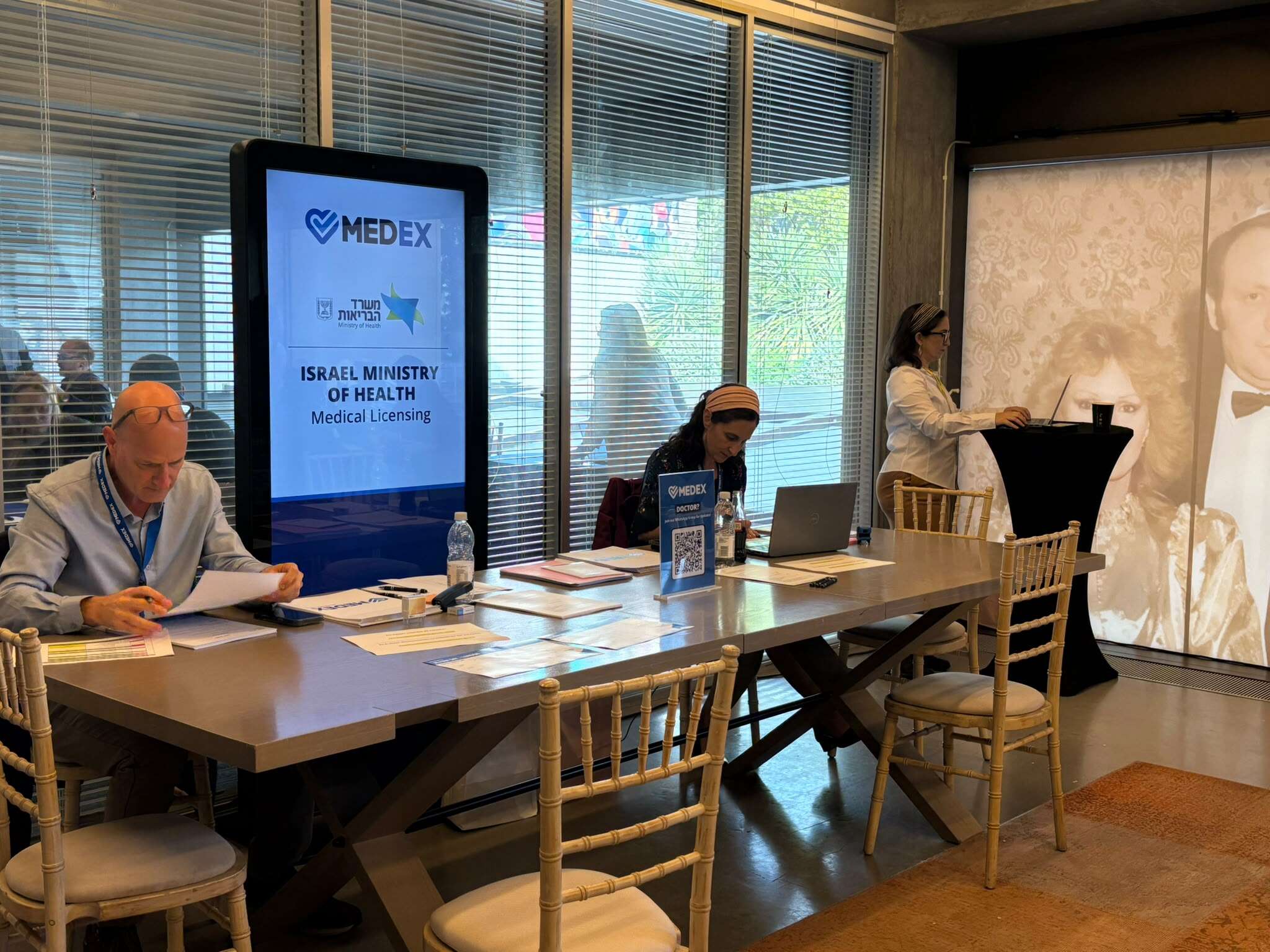
The heavy security presence came partly amid a reported 20% increase in antisemitic incidents across the UK, but inside, the atmosphere was relaxed and cheerful. Alongside blue-and-white balloons, prospective immigrant doctors met with representatives from the Ministry of Health and the Israeli Medical Association (IMA), as well as legal experts assisting with document translations. On the lower floor, booths represented hospitals, including Ichilov, Hadassah, Poria, ALYN, and Laniado, alongside four Israeli HMOs. Physicians received concrete employment guidance, while a separate room hosted Hebrew proficiency exams tailored for immigrant doctors.
"We always thought about It"
The MedEx conference is part of a broad national initiative to reinforce the healthcare system, organized jointly by Nefesh B'Nefesh in partnership with Israel's Ministry of Aliyah and Integration, Ministry of Health, Ministry for the Negev, Galilee and National Resilience, and The Jewish Agency for Israel.
Since launching approximately two years ago, similar conferences have taken place in France, the United States, Australia, Canada, Argentina, and elsewhere. The program aims to strengthen the country's healthcare system, particularly in Israel's North and South, bolstered by the Marcus Foundation, the Gottesman Fund, Jewish Federations of North America, the Azrieli Foundation, and the Arison Foundation. 1,300 physicians have already immigrated to Israel through the initiative, including nearly 30 from the UK, surpassing half of the program's target of 2,000 immigrant doctors within five years.
Ruth (a pseudonym), 36, is a psychology resident looking to immigrate with her partner and two children, potentially as soon as next summer. "It's something my husband and I always thought about, but it felt like there was plenty of time and that it was far down the road," she says. "Then October 7 happened, and our surroundings in the UK grew noticeably more frightening. Our kids started coming home from school talking about heavy police and security guards, and things turned unsettling. I asked myself, 'What are we actually waiting for?'"
Ruth hopes to join the Mother-Baby Psychiatric Unit at Sheba Medical Center. She notes that street demonstrations and posters in her neighborhood cause her discomfort. Recently, her workplace planned to host a guest lecture by a psychiatrist who had worked in Gaza. "On his Facebook page, I saw him sharing pro-Hamas messages and 'Death to Zionists.' I told them such a person could not be invited, and his talk was indeed canceled. But it left me deeply unsettled. These days, you don't know what the person next to you is thinking, where they spend their weekends, or what they post online."
From Budapest to Jerusalem
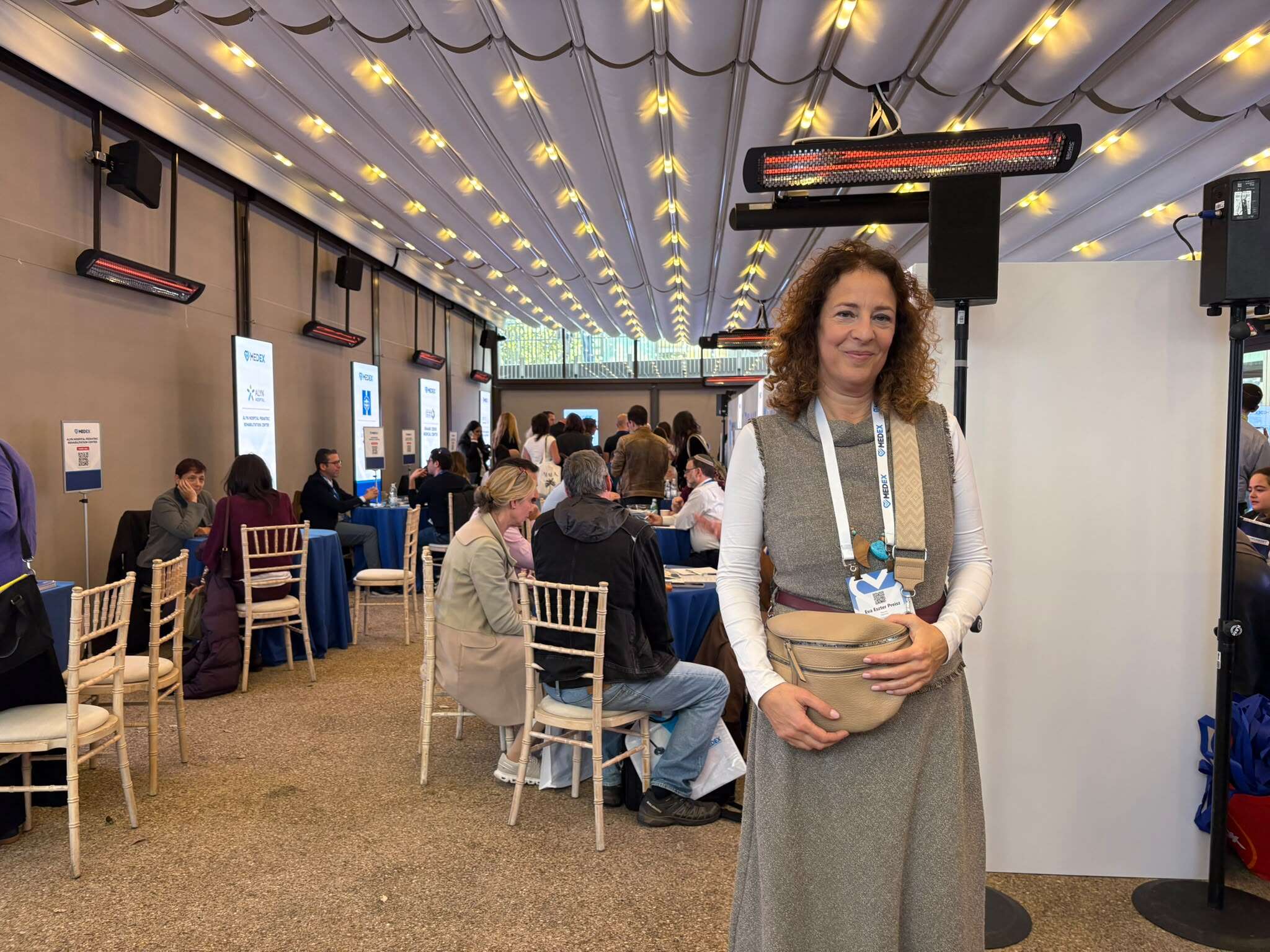
Several physicians traveled from outside the UK to attend. Among them was Esther Preiss, a psychiatrist, author and podcast host from Budapest with 26 years of senior clinical experience. "I've wanted to make Aliyah for a long time, I've dreamed of it for ten years. Now my children are 19 and 21 and leaving home, so it's time to do what I want to do: practice psychiatry in Israel."
She notes that due to Hungary's immigration policies, the country has not seen large-scale Muslim immigration, and antisemitism is not her motivation for leaving. "I am not here to flee from something; I am here because I yearn to live in Israel," she explains. "I have a very comfortable life in Hungary. People making Aliyah after working for decades in their home countries do so out of commitment, a desire to belong, and a wish to contribute to Israeli society."
During the event, she began the process of credential verification for her medical license. Her dream upon immigrating is to settle in Haifa, close to the sea.
A shift Since October 7
Dr. Maya Hariharan, a pediatrician with 15 years of experience, traveled from Dublin, Ireland. She was interviewed while submitting her credentials for translation and notarization as part of the licensing process. "I should have made Aliyah many years ago, and I'm grateful for the opportunity now to go where my work will carry special meaning. It's above and beyond a mitzvah. There is significant antisemitism right now in Ireland. It isn't directed at me personally, but antisemitism is antisemitism, and Jews belong where they feel they truly belong, in the Land of Israel."
Dr. Hariharan (40) also hopes to find a partner in Israel: "It will be an honor and a privilege to move to Israel and dedicate myself to patients. As a single woman who hasn't yet settled down or had children, Ireland is simply not the right place to meet an observant Jewish partner."
She notes feeling an environmental shift since October 7: "I still remember walking to synagogue before knowing anything had happened. When I heard the news, my first thought was what I could do for the children and families there. I'm glad that, fast-forwarding, that question is being answered."
Dr. Hariharan wears three necklaces: a Star of David, a Chai, and a Hamsa, which she wears everywhere, including at work. "Some people react, but not everyone. Being a woman probably shields me from some remarks a man might get. As a pediatrician, I've recuscitated newborns, including Muslim infants, and reminded the parents to pray for their baby. The running joke among some was that a Jewish doctor had to remind them to pray. They know we are all children of Abraham."
"The Urge Intensified"
Jessica (a pseudonym), a Cambridge Medical School graduate and general practitioner (GP) with adult children, met with representatives from all four Israeli HMOs to discuss career tracks. She also attended a session on "Medical Ulpan" to learn Hebrew clinical terminology. "I always wanted to move to Israel," she says. "I grew up in a deeply Zionist household, but since October 7, the urge to make Aliyah intensified because of the environment. I can't imagine raising grandchildren here. We raised our kids in England, but now I encourage them to make Aliyah. I don't think this is the place for us anymore. Look at the police and security presence here, it's absurd."
She mentions that parents have volunteered for years to guard their children's Jewish schools: "I've done it for 17 years, but now we're instructed to wear stab-proof vests. No other minority in this country has to do that. A lot of factors led us to realize this is no longer our home."
At the previous MedEx event, Jessica submitted her credentials for translation. "Now I've finally convinced my husband, who is a pediatrician, to take the step as well."
Her non-Jewish colleagues are unaware of her plans: "I don't speak about it openly because the country, and the media, have become completely one-sided."
Dganit Sankar-Langa, Director General of the Ministry of Aliyah and Integration, attended the conference and was struck by the turnout: "This is an earthquake. I've worked in Aliyah for many years and haven't seen this level of urgency before. It isn't driven solely by antisemitism, but because Israel has succeeded in creating compelling professional tracks for doctors and their families. Doctors are saying they want to come now, asking: 'What can you offer me? How can I integrate professionally?' It's a distinct change from last year."
Addressing concurrent reports regarding Israeli physician brain drain, with roughly 1,350 doctors leaving Israel between 2023 and 2025, Sankar-Langa noted that the ministry is also supporting doctors abroad who wish to return: "Alongside that trend, which is painful and unsettling for all of us, our ministry also handles returning residents, Israelis who relocated and are deciding to return. The outflow is definitely a major concern."

Growing Interest Among Students
Zev Gershinsky, Executive Vice President of Nefesh B'Nefesh, noted that this year's conference drew 50% more prospective applicants than the prior event, with nearly a quarter being medical students. "One key trend is in the younger demographic, more medical students. It reflects a realization that they want to build their medical careers and lives in Israel from the outset. For us, this is encouraging yet challenging, as we must ensure Israeli hospitals can absorb them."
He added: "What we are hearing is from people who hesitated in past years and are now ready. The question is no longer 'if,' but 'when.' The timeline depends on securing quality, relevant employment. Immigrants from the UK have a choice; they do not want to feel as though they are fleeing persecution, nor should they have to feel that way. That is why we must provide a genuine, competitive value proposition."
Gershinsky also acknowledged the emigration figures: "The outflow is painful for all Israelis. Every Israeli who leaves, especially a doctor, directly affects the standard of care we receive. Ultimately, immigrant physicians who come out of Zionism, dedication, and a desire to integrate into Israel's healthcare system are part of the remedy."
The author was a guest of the International Medical Aliyah Program.