At the Civil-Military Coordination Center being set up in recent days and hours in southern Israel, there's a special department tracking media reports. I witnessed this during my Friday visit. My hope is that what follows will reach the department's staff, and through them the CMCC commanders, since every passing day Hamas gains time, and this benefits neither them, Israel, nor President Donald Trump.
Video: Marco Rubio during his visit to the Gaza command center / Credit: CONTACT
The new headquarters is being set up at a rapid and impressive pace. The Americans, as it happens, know how to improvise on the dime just as capably as the Israelis. Their leaders' determination to closely follow developments is the reason for their aerial convoy to the site – not to provide Israeli babysitting, as critics suggest.
"There has never been anything like this," Secretary of State Marco Rubio said while visiting the place two days ago. Indeed, there never has been. An international blend of Israelis, Americans, French, Germans, Canadians, Cypriots, Greeks, and others moves through the enormous hangars. I even thought I spotted a United Arab Emirates flag in the corner.
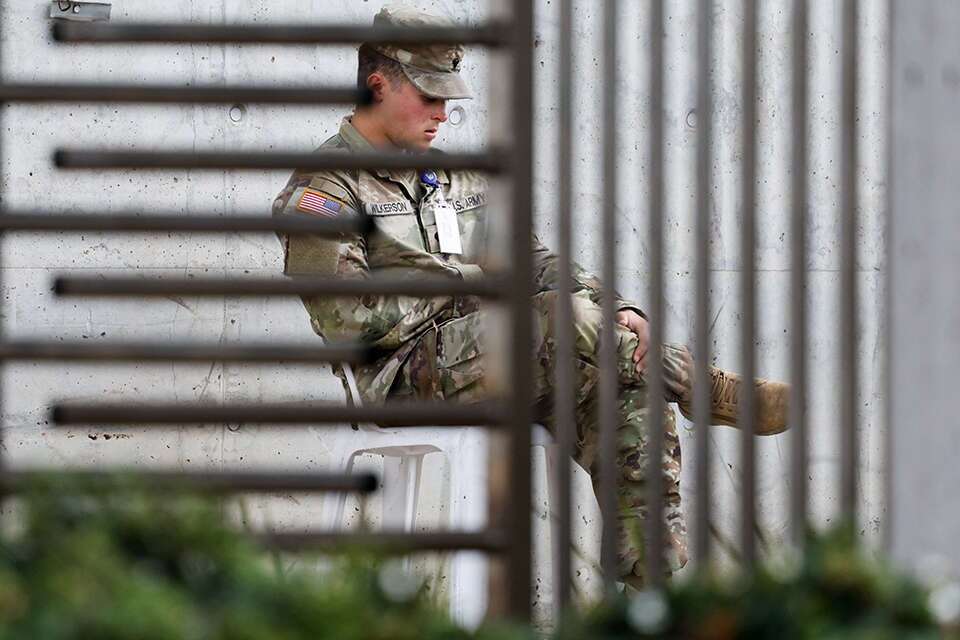
Nevertheless, it's uncomfortable to report that at this preliminary stage, the crowds of soldiers, officers, and civilians don't precisely know what to do with themselves yet. Before Rubio's arrival, they didn't even trouble themselves to sit at their computer workstations. Only when he neared the work stations did someone issue instructions to occupy the chairs to generate the appearance of "quiet, working." I was present to observe it.
The hundreds of dedicated people who arrived to serve at the location don't know what to do, for the straightforward reason that everything remains in organizational phases. Nobody possesses plans yet – even unclear ones – for where to proceed from here, only good intentions. The war halted abruptly, and this represents a tremendous international accomplishment. Nevertheless, the practical path forward is extremely complicated, and its execution will prove more challenging.
Here's what's absent: A unified international force, certainty regarding the nations that will comprise it, coordination methods between the different armies that will function within it, work plans, schedules, orderly directives, guidelines on what occurs in problematic scenarios, and evidently also a Security Council resolution without which the force – which obtained the acronym ISF – won't be established whatsoever. This is likely not the entire list.
Pressure on Hamas
Preparing each of these stages will require time, especially if the Security Council intervenes midway. Consequently, even though the Americans and the Israelis assisting them are all functioning at Trump speed, in the optimal scenario, weeks will elapse before the ISF commences dismantling Hamas from its armaments, demolishing the tunnels, and demilitarizing Gaza. In the less favorable and more probable scenario, months will elapse.
Those already thoroughly exploiting the transitional period are Hamas murderers. It's been five days they haven't returned the deceased hostages, signifying they're flagrantly violating the ceasefire agreement. Hamas is re-establishing its regime in the half of the Strip that remained under its control. It can be assumed that the organization is also restoring terror infrastructure at an expedited pace. That's what it exists for, ultimately.
Hamas' restoration while the ISF organizes is hazardous to Israel, naturally, but equally important – it jeopardizes Trump's plan. Every day that elapses without someone mowing the terror lawn will render the ISF's future work more challenging, perhaps even unfeasible. We've witnessed in the past the West's struggles in eradicating terror in Afghanistan and Iraq.
Because ultimately – this is at minimum the intention – a moment will come when the international force will need to confront Hamas terrorists directly. Following two years of war, the organization is presently at the peak of its weakness. Trump's interest ought to be that this situation continues. Nevertheless, time plays into the terrorists' advantage. Like a phoenix, they're reconstructing themselves afresh in Gaza's dunes – construction that opposes the interests of both the US and Israel. Trump himself, and also Rubio on Friday, once more emphasized they're committed to eliminating Hamas.
What, consequently, must be accomplished so the 20-point plan's objectives don't evaporate? The answer is that the transitional period until the ISF begins work must be exploited in a manner that won't undermine the plan. How? The US must permit Israel to do in Gaza precisely what it authorizes IDF forces to do in Lebanon. Specifically, not allow terror to rear its head. No, this doesn't jeopardize the ceasefire. The Israelis don't desire the war's renewal either. They overwhelmingly endorsed the plan the president presented.
Nevertheless, there are intermediate situations where there's no full war, but also not sitting with zero activity facing strengthening terror. This is what's occurring in Lebanon, in Judea and Samaria, and also in various theaters where the US functioned for many years and justifiably against terror.
Allow the IDF to operate
Trump's plan was and remains beneficial for Israel, the region and peace. Nevertheless, until the international community advances to its subsequent sections, and so the force will possess the capability to do so, the IDF must be permitted to operate also in Gaza's western side.
Trump believes, rightfully, in "peace through strength." The most precise implementation of this principle is cutting down the emerging terror in recent days inside Gaza. This is the method to guarantee the ISF will have easier work, meaning its success in maintaining peace in the future will be greater.