Just five years ago, with the signing of the Abraham Accords, distant Indonesia began to enter Israeli consciousness as a relevant player in the Middle East. Since then, as the US tries to expand the circle of normalization with Israel, Indonesia's name surfaces periodically as a candidate – sometimes alongside Saudi Arabia.
With the start of President Donald Trump's second term and the war in the Gaza Strip, Indonesia became even more linked in consciousness to the Israeli-Palestinian conflict. For example, its name came up in the media as one of the main destinations for the idea of voluntary migration of Gaza residents – though it firmly denied this and completely rejected the concept.
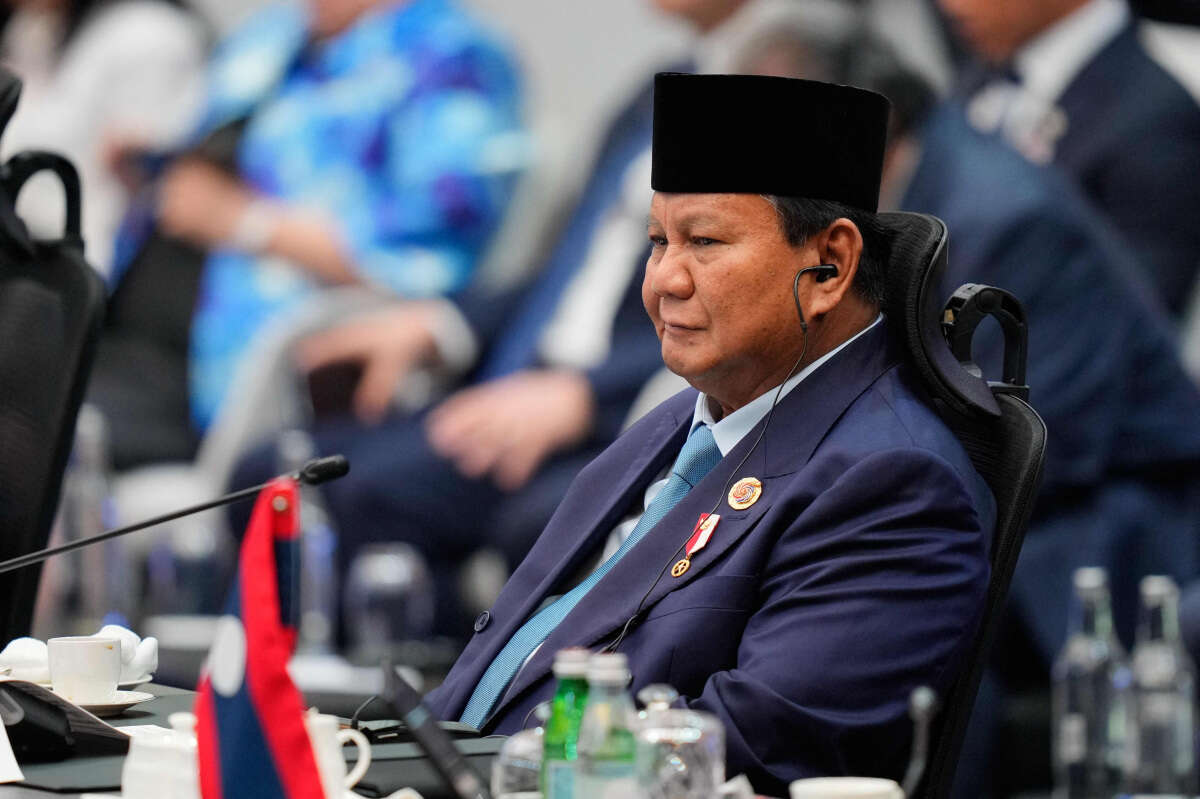
In recent weeks, Indonesia has been gaining greater recognition as relevant to "the day after" as well. Its president, Prabowo Subianto, impressed with his speech at the UN General Assembly: He managed in his address to show concern, determination, and vision in the thicket of the conflict – and without hatred – to present his vision for an independent Palestinian state, while addressing the need to ensure Israel's security within any future arrangement.
He also expressed willingness to send a significant military force that would integrate into an international peacekeeping force in the Gaza Strip, and positioned himself as a partner in the American effort to end the war. Expectations even arose, for several hours, of a groundbreaking visit by him to Israel – but Indonesia quickly denied it.
The Indonesian desire to integrate into the American effort to end the war in the Gaza Strip stems from several motives: First, growing activism in its foreign policy, led by its president, to strengthen its international standing and his standing among world leaders. Second, a deep interest in advancing relations with the current American administration. Third, a growing desire to be politically involved in the Middle East and promote a settlement to the Israeli-Palestinian conflict – mainly as an expression of its commitment to establishing an independent Palestinian state.
Indonesia's growing interest in the Middle East began to emerge about two decades ago, when it successfully navigated the difficult transition from an authoritarian regime to democracy. This sense of success also influenced its foreign policy, which became more dynamic and ambitious.
Its growing involvement in the Middle East stemmed from a desire to promote stability and reconciliation and reduce religious extremism – also from fear that it would have to deal with the ripple effects of this trend. Indonesia adopted a policy of encouraging democratic reforms in the region and the Muslim world, and emphasized that it proves democracy can exist even in countries with a Muslim majority. When the "Arab Spring" began, it tried to help Egypt and Tunisia advance democratic reforms.
The democratic failure there didn't lead to despair. With the collapse of Assad's regime and the fog that covered Syria's future, it became clear that the crisis would only be resolved through an inclusive and democratic transition process by peaceful means.
Indonesian foreign policy also began adopting a goal of fighting religious extremism through promoting moderate Islam values – "soft power" diplomacy. This policy rests on two leading movements in Indonesian Muslim civil society: "Nahdlatul Ulama" and "Muhammadiyah." They have a broad, extensive base, and they're a leading force in building democracy and shaping moderate Islam – including fighting religious extremism and encouraging tolerance and interfaith dialogue.
Particularly impressive is the activity of "Nahdlatul Ulama," the larger of the two, in the global space. The activity has been conducted for about ten years under the banner "Islam Nusantara" ("The Islam of the Indonesian archipelago"), and is also directed at the Middle East.
It's simpler and easier to talk about an Indonesian contribution on "the day after" in the form of a military force that would integrate into a multinational force to stabilize peace and provide humanitarian aid. But it's worth focusing on the less clear and familiar, and much more challenging to implement, promoting democratic reforms, especially by leading projects on religious tolerance and de-radicalization among the local population.
Indonesia itself, as far as known, doesn't raise these paths in its references to "the day after" – perhaps because it understands that this doesn't serve its immediate interest in competing with leading countries in the Arab camp for leadership in advancing the American plan.
The democratic idea raises reservations and even opposition in Arab regimes. As for the moderate Islamic message and fighting religious extremism, Indonesia has partners for the idea among leading countries in the moderate Sunni camp.
But even among the mainstream Islamic currents in Indonesia, some wonder: Is it even possible and right to offer the center of the Muslim world the unique Sunni Islam that developed with them? After all, this is Islam that grew in a completely different political, social, and cultural context – "peripheral," foreign, and perhaps even strange to societies in the Middle East.
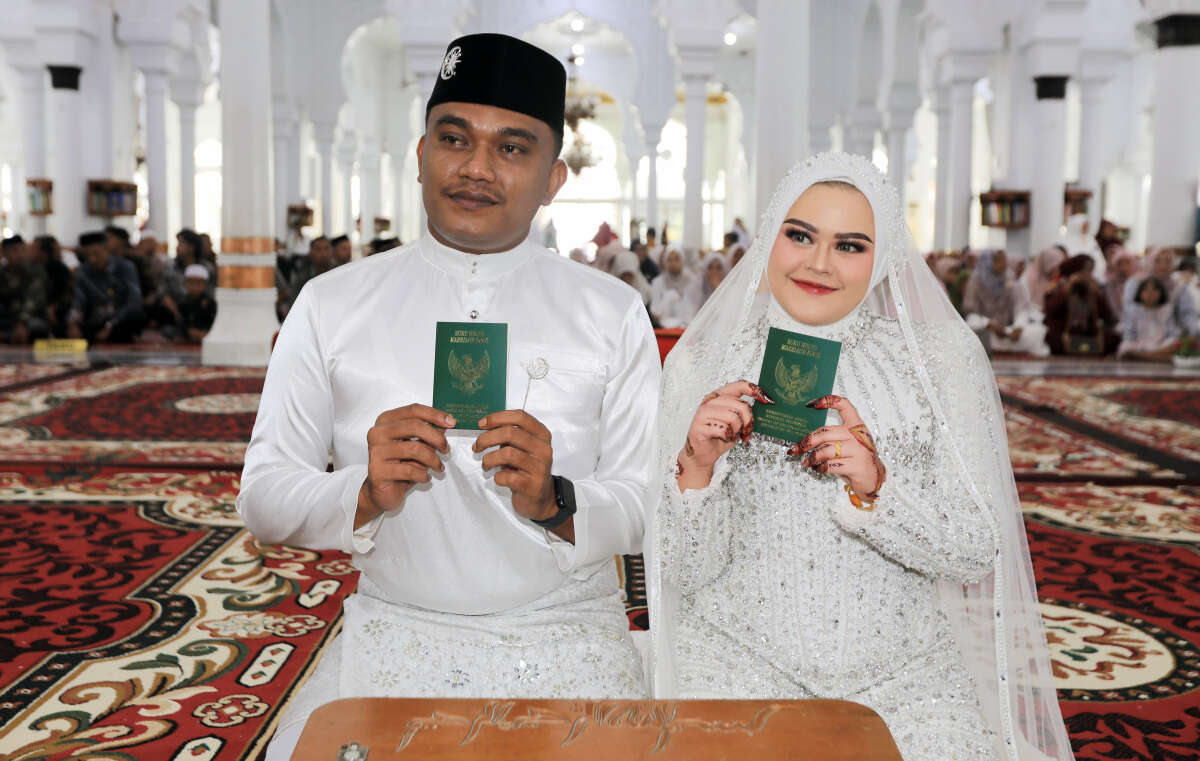
For example, Indonesia is a country whose ideological foundation is considered secular or neutral in religious terms. Despite the distinct Muslim majority, Islam has no preferred constitutional status over the five other religions that received official recognition. This approach draws on a deep-rooted local cultural tradition of pluralism and religious tolerance and is expressed in the national motto, very prominent in political and public discourse: "Bhinneka Tunggal Ika" – "Unity in diversity," or, in literal translation, "Many, yet one."
This is how a strong Muslim civil society grew there that fills a significant role in building democracy and is ready to defend the separation between religion and state. Indonesian democracy indeed suffers from weaknesses, but the journey the country has made – home to the world's largest Muslim population – remains impressive.
There's another significant obstacle on the way to realizing the Indonesian contribution on "the day after" – the absence of diplomatic relations with Israel. Indonesia really wants to see the American plan advancing toward ending the war in Gaza, and certainly reaching a political solution to the Israeli-Palestinian conflict – but its position is clear: There will be no diplomatic relations with Israel before an independent Palestinian state is established, or according to the current president's formulation – before Israel recognizes an independent Palestinian state.
This position rests on a very broad consensus in Indonesian society, which draws its determination – among the Muslim majority – also from a sense of deep pan-Islamic solidarity.
It can't be ruled out that, in the future, Indonesia will show some flexibility on these principles, but even then, it will want to see real progress toward a political solution to the conflict. As long as that doesn't happen, it will be difficult to exhaust the Indonesian contribution to "the day after," since this requires official relations with Israel and direct cooperation with it.
Perhaps, suppose the American plan to end the war in the Gaza Strip advances as planned. In that case, the change that Indonesia will see will be significant enough to cause it to change its policy toward Israel – and then the potential of its contribution to "the day after" can be realized.
The author is an associate fellow at the Harry S. Truman Institute for the Advancement of Peace at the Hebrew University of Jerusalem, a research fellow, International Institute for Counter-Terrorism (ICT), Reichman University, and a research fellow at the Forum for Regional Thinking (FORTH).