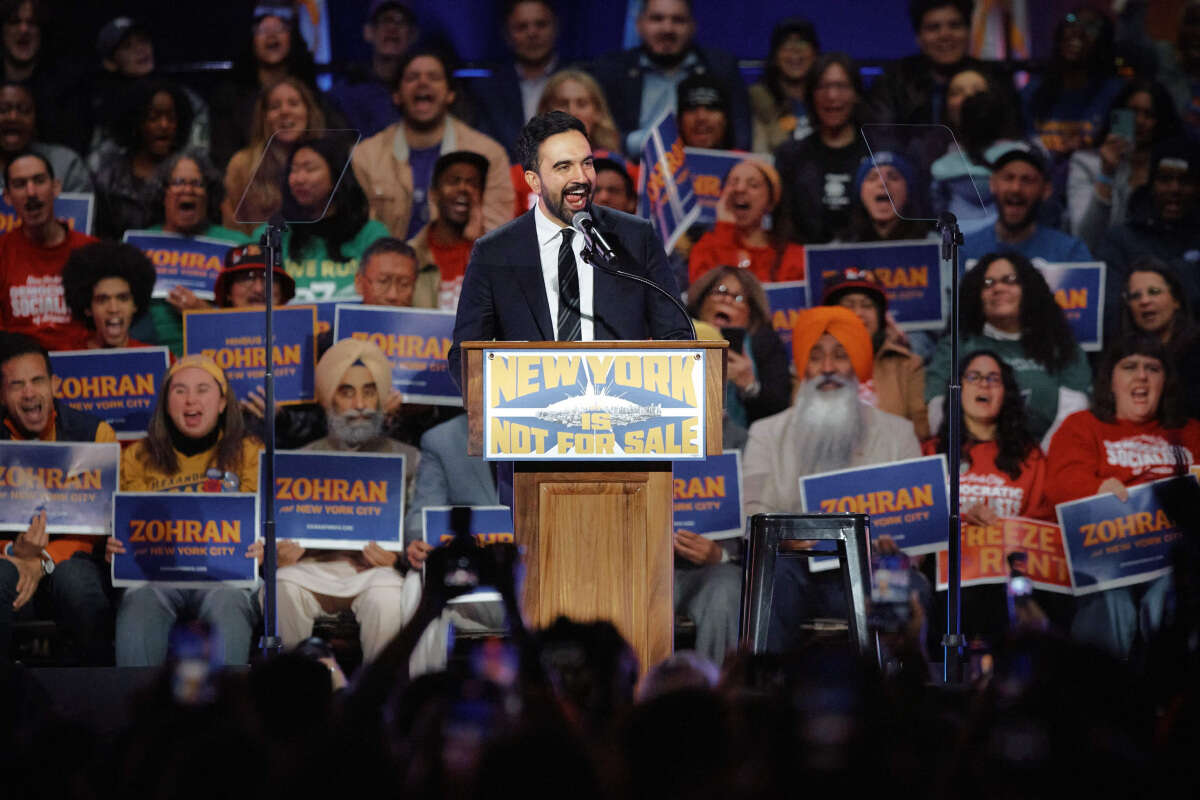
Democratic candidate Zohran Mamdani's potential victory in Tuesday's New York City mayoral election could trigger a seismic shift in American Jewish history, threatening to resurrect decades of insecurity and loyalty accusations that defined earlier, darker periods. Democratic candidate Zohran Mamdani's potential victory, even by a narrow margin, would constitute a major earthquake in American Jewish history if it were to occur, thrusting the community back through time in one fell swoop to dark and challenging periods.
Ironically, a large segment of Jewish voters – primarily younger generation members – may contribute to this transformation if Mamdani succeeds in maintaining the advantage he held throughout the campaign against his main rival, former Governor Andrew Cuomo.
Beyond the immediate danger – an enthusiastic BDS supporter entering the mayor's office, someone who pledged to arrest Netanyahu upon arrival in New York and opposes Israel's existence as a Jewish and democratic state – an equally serious challenge exists. Mamdani attempts to create an artificial and absurd separation between his open hostility to Zionism and antisemitism (from which he tries to distance himself): his very rise to center stage confronts the Jewish community, not just in New York, with a profound challenge regarding Jewish-American identity.
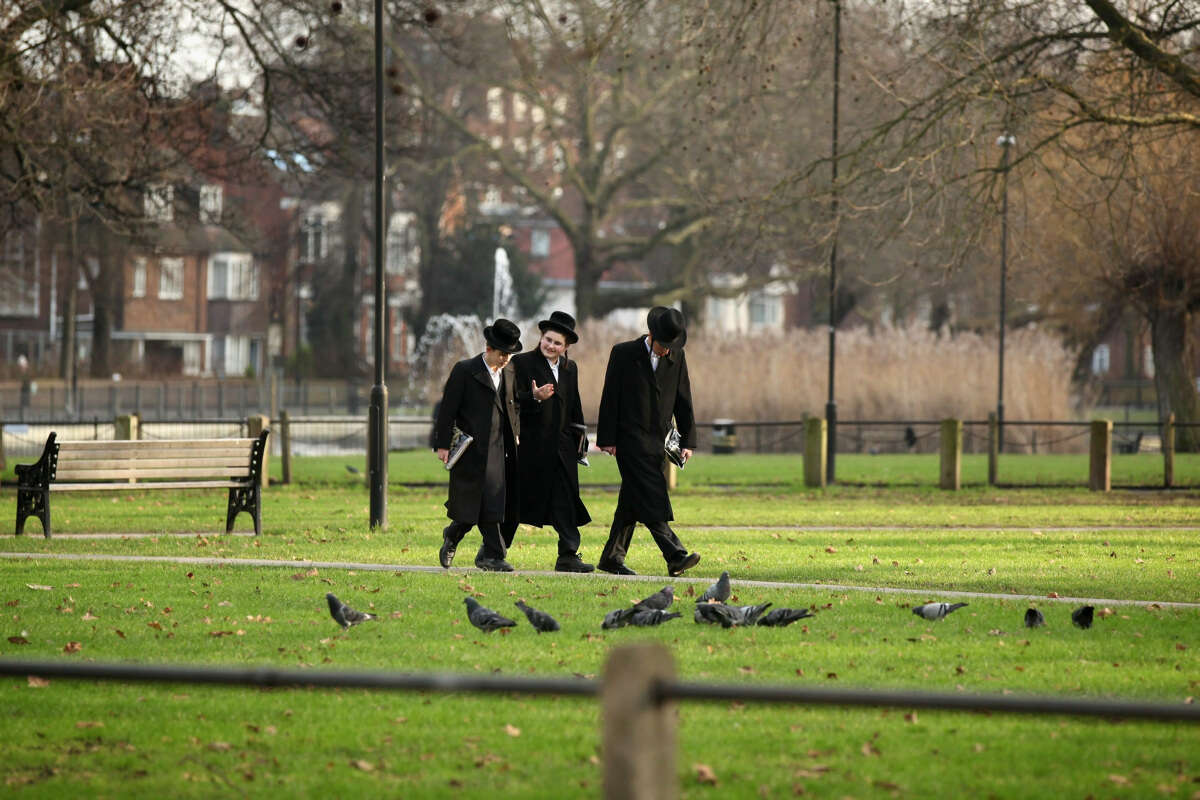
Throughout most of the 20th century, American Jews sought the golden path between loyalty to their heritage and the institutions of American society that absorbed them, and their connection to Zionism and identification with their people, whether their siblings who returned to their homeland or their relatives trapped in the Nazi enemy's clutches in Europe.
The intense desire to integrate into the new homeland produced an especially cautious pattern among community leaders, who preferred integration over the principle "all Jews are responsible for one another," while fearful of the antisemitic accusation of "dual loyalty."
Thus, most community leaders, except for rare individuals like Rabbi Abba Hillel Silver, avoided pressuring President Theodore Roosevelt to speak out clearly against the atrocities – ostensibly to avoid "burdening" his agenda, but actually from fear the move would be perceived as a "sectarian" initiative inconsistent with "American national interest." Roosevelt explained to his acquiescent guests that only after defeating Nazi Germany could efforts turn to rescuing European Jews, with everything depending on victory in the campaign. The anxiety about their status tipped the scales and left the massive Jewish population in Europe abandoned to its bitter fate. Roosevelt, despite the massive Jewish support he received in elections, allowed State Department officials to implement a closed-door policy against Jewish refugees.
Even in Israel's first decade, community leaders continued fearing for their status, with memories of the antisemitic wave of the 1920s and 1930s – the era of Henry Ford and his antisemitic ilk – still engraved in their consciousness.
Facing a renewed antisemitic wave – whose peak was the McCarthy committee, with most victims being Jewish – they remained passive when the Eisenhower administration applied brutal pressure on Israel to withdraw from Sinai after Operation Kadesh. Despite Truman's recognition of the state shortly after the Declaration of Independence, US administrations until 1962 persisted in refusing to supply weapons to Israel – also without loud protest from the community.
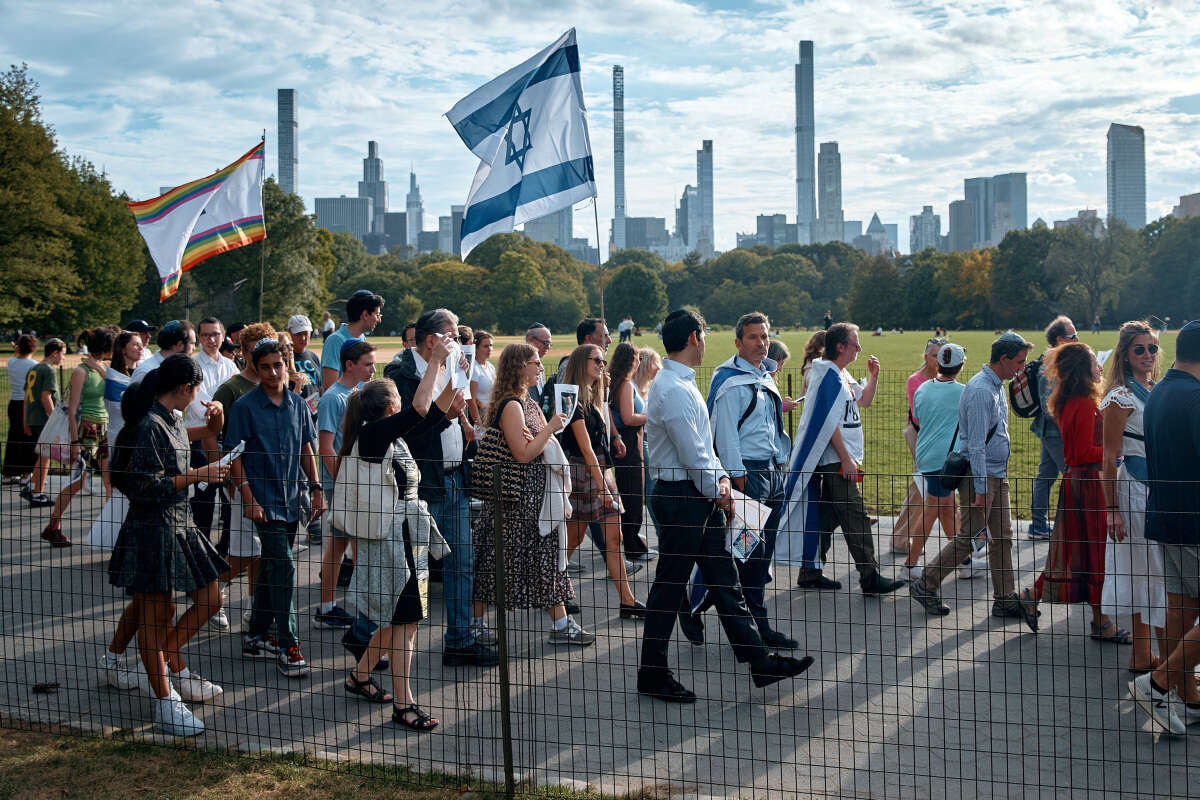
The turning point came only in the 1960s: Israel became a strategic partner in the White House's eyes, and the Jewish-American dissonance between their identities gradually dissolved. The community began emerging from the freeze and allowed itself to openly and declaratively support the State of Israel through institutions established by its leaders (such as AIPAC) without fearing accusations of "un-Americanism." During those subsequent decades, these institutions succeeded in preventing the rise of hostile elected officials to Israel and thwarting punitive measures that endangered the "special relationship" between Jerusalem and Washington.
Today, the sensitive issues of identity and affiliation, which had seemed to have dissolved, have reopened and been torn apart with rough hands. This is where the deep significance of the Mamdani phenomenon lies. In the past, politicians with critical approaches toward Israel had to prove, when trying to get elected to more senior positions, that they were not hostile to Israel and counted among its supporters.
The picture is completely different today. Facing a fractured Jewish community more critical of Israel, and facing the dramatic weakening of organizations that worked on its behalf for decades, conditions have ripened for Mamdani's rise. He challenges the very essence of Zionism, defines it as illegitimate, and explicitly places a significant portion of New York Jews – for whom Zionism is an inseparable part of their identity – outside the camp. The sad irony embedded in this is that despite Mamdani's challenge, or declaration of war, on Zionism, polls predict he will gain significant support among Jews, who support his demagogic and populist "social" doctrine and get dragged after the fashionable radicalism he represents – while denying their cultural and value heritage.
The coming days will reveal whether this involves a murky but passing wave, or perhaps a real tsunami requiring a system overhaul and renewed thinking, from both community leaders in New York and across the American space, as well as from the State of Israel and its leaders. The result could be fateful: the return of an era of Jewish fear and insecurity in America.