Friday Nov 14, 2025
NEWSLETTER
www.israelhayom.com
  • Home
  • News
    • Israel
    • Israel at War
    • Middle East
    • United States
  • Opinions
  • Jewish World
    • Archaeology
    • Antisemitism
  • Lifestyle
    • Food
    • Travel
    • Fashion
    • Culture
  • Magazine
    • Feature
    • Analysis
    • Explainer
  • In Memoriam
www.israelhayom.com
  • Home
  • News
    • Israel
    • Israel at War
    • Middle East
    • United States
  • Opinions
  • Jewish World
    • Archaeology
    • Antisemitism
  • Lifestyle
    • Food
    • Travel
    • Fashion
    • Culture
  • Magazine
    • Feature
    • Analysis
    • Explainer
  • In Memoriam
www.israelhayom.com
Home Analysis

What Mamdani's Muslim-Shiite faith means

Born in Kampala, Uganda, and raised in New York from age seven, Mamdani openly discussed his religious identity.

by  Erez Linn
Published on  11-05-2025 05:11
Last modified: 11-05-2025 22:18
What Mamdani's Muslim-Shiite faith meansAP/Ted Shaffrey

New York City Democratic mayoral candidate Zohran Mamdani speaks at the Islamic Cultural Center of the Bronx mosque in New York on Friday, Oct. 24, 2025 | Photo: AP/Ted Shaffrey

Share on FacebookShare on Twitter

New York City elected Shia Muslim Zohran Mamdani as mayor despite opponents weaponizing his interfaith background throughout the campaign. Mamdani is part of the Twelver branch of Shia Islam and was raised in a family celebrating Hindu festivals alongside Islamic traditions.

Twelver Shiism is mainstream Shiism, representing approximately 85-90% of all Shiites worldwide. This branch believes in twelve divinely appointed imams following Prophet Muhammad, with the twelfth imam in occultation since 874 CE. Twelver Shiites constitute the vast majority of Shiites in Iran, Iraq, Lebanon, Bahrain, and Azerbaijan, as well as significant populations in Pakistan, India, and the Gulf states. The other main Shia branches – Ismaili (roughly 10-15% of Shiites) and Zaidi – split from this line over disputes about the succession of leadership after the early imams.

Video: Mamdani's victory speech in New York on Nov. 4, 2025

Mamdani is part of the Khoja Twelver Shia branch of Islam. The Khoja community represents a distinct branch within Twelver Shia Islam, rooted in South Asian history and culture rather than the Persian traditions more commonly associated with Shiism in the West.

However, Khoja Twelvers are not a separate theological branch but rather an ethnic and cultural subset within Twelver Shiism. While they follow the same theological principles and recognize the same twelve imams as other Twelver Shiites, Khojas maintain distinctive cultural practices rooted in their subcontinental origins, and for centuries, Khojas practiced a syncretic form of Ismaili Islam that incorporated elements of their Hindu heritage, including devotional songs (ginans) composed in local languages.

The community recognized the Aga Khan as their living imam.. They conduct some religious observances in Gujarati, Kutchi, or Urdu alongside Arabic, and their community organization reflects their unique historical journey from Hinduism to Ismaili Shiism and finally to Twelver Shiism in the 19th century. Today, Khoja Twelvers increasingly follow the same religious authorities as other Twelver communities worldwide while preserving their ethnic identity.

Khojas trace their ancestry primarily to the Gujarat and Sindh regions of what is now India and Pakistan. The community's name derives from the Persian word "khwaja," meaning master or lord. Historically, Khojas were a mercantile community who converted to Islam between the 14th and 19th centuries, with many initially following Nizari Ismaili Shiism before a significant portion transitioned to Twelver Shiism in the 19th and early 20th centuries. This group rejected the concept of a living, present imam and instead accepted the Twelver doctrine that the twelfth imam remains in occultation (hidden) until his eventual return.

Born in Kampala, Uganda, and raised in New York from age seven, Mamdani openly discussed his religious identity. "I am a Shia Muslim," he stated, "but I was raised in an interfaith family. My mother's side of the family is Hindu, and I grew up celebrating Diwali, Holi and Raksha Bandhan. Though I identify as Muslim, these Hindu traditions and practices have shaped my worldview." This transparency created both support and opposition.

Democratic candidate for New York City mayor Zohran Mamdani waves to his supporters after winning the 2025 New York City Mayoral race, at an election night rally in the Brooklyn borough of New York November 4, 2025 (Reuters / Jeenah Moon)
The split culminated in legal cases in Bombay courts during the 1860s and 1870s, where Khojas disputed community property and religious authority. These court cases formalized the division within the community.

Key distinctions from Iranian Shiites

The Khoja community developed under British colonial rule in South Asia, creating distinct institutional structures and leadership patterns. Iranian Shiism evolved within a Persian imperial context and later under the influence of the Safavid dynasty's establishment of Shiism as a state religion.

Supreme Leader Ayatollah Ali Khamenei leading prayer with Iranian girls on February 3, 2023 (AFP/Handout/Kahmenei.ir)

While both recognize the same theological principles, Khojas historically followed different marjas (sources of emulation) and developed independent scholarly traditions, though many now follow mainstream Twelver scholarship.

Population in the United States

Precise demographic data on Khoja Twelver Shias in the US remains limited, as neither the US Census nor most surveys disaggregate Muslim populations by specific ethnic and sectarian categories. The broader South Asian Shia community, which includes Khojas, is estimated to number in the tens of thousands, concentrated in major metropolitan areas including Houston, Los Angeles, New York, and Chicago.

The Khoja community maintains organized institutions across the US, including the Shia Imami Ismaili community (a separate branch) and various Twelver Khoja associations. However, many Khojas have integrated into broader South Asian American and Shia American communities.

Tags: 11/5Andrew Cuomo rivalryanti-Zionist politicianCBS News interviewestablishment politics rejectionGaza stance controversyHindu-Muslim familyimmigrant voter turnoutinterfaith leadershipIslamophobic campaign attacksLaura Loomer conspiracymayoral election historyMuslim American breakthroughNew York demographic shiftpost-9/11 discriminationreligious diversity politicsShia Muslim political victoryUganda-born Americanworking class representationZohran Mamdani NYC mayor

Related Posts

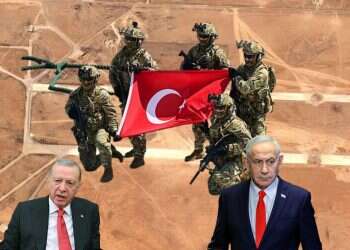
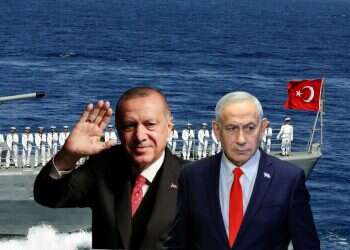
Turkey's Gaza plan could corner Israel on two fronts

Turkey's Gaza plan could corner Israel on two fronts

by Prof. Kobi Michael

Ankara's massive effort to strengthen its foothold in the Gaza Strip is anything but innocent, and if President Recep Tayyip...

Auto DraftREUTERS/Mahmoud Issa; Omar AL-QATTAA / AFP

Israel's Rafah test could show path to toppling Hamas

by Meir Ben Shabbat

The current Hamas standoff must end decisively – mass surrender, detention or terrorist deaths. Images and publicity carry value. Israel's...

Why does the US keep producing Mamdanis?

Why does the US keep producing Mamdanis?

by Liel Leibovitz

The results of the New York elections tell only part of the story. Over the past week, Democratic candidates won...

Menu

Analysis 

Archaeology

Blogpost

Business & Finance

Culture

Exclusive

Explainer

Environment


Features

Health

In Brief

Jewish World

Judea and Samaria

Lifestyle

Cyber & Internet

Sports


Diplomacy 

Iran & The Gulf

Gaza Strip

Politics

Shopping

Terms of use

Privacy Policy

Submissions

Contact Us

About Us

The first issue of Israel Hayom appeared on July 30, 2007. Israel Hayom was founded on the belief that the Israeli public deserves better, more balanced and more accurate journalism. Journalism that speaks, not shouts. Journalism of a different kind. And free of charge.

All rights reserved to Israel Hayom

Hosted by sPD.co.il

  • Home
  • News
    • Israel at War
    • Israel
    • United States
    • Middle East
    • Sports
  • Opinions
  • Jewish World
    • Archaeology
    • Antisemitism
  • Lifestyle
    • Food
    • Travel
    • Fashion
    • Culture
  • Magazine
    • Feature
    • Analysis
    • Explainer
    • Environment & Wildlife
    • Health & Wellness
  • In Memoriam
  • Subscribe to Newsletter
  • Submit your opinion
  • Terms and conditions

All rights reserved to Israel Hayom

Hosted by sPD.co.il

Newsletter

[contact-form-7 id=”508379″ html_id=”isrh_form_Newsletter_en” title=”newsletter_subscribe”]

  • Home
  • News
    • Israel at War
    • Israel
    • United States
    • Middle East
    • Sports
  • Opinions
  • Jewish World
    • Archaeology
    • Antisemitism
  • Lifestyle
    • Food
    • Travel
    • Fashion
    • Culture
  • Magazine
    • Feature
    • Analysis
    • Explainer
    • Environment & Wildlife
    • Health & Wellness
  • In Memoriam
  • Subscribe to Newsletter
  • Submit your opinion
  • Terms and conditions

All rights reserved to Israel Hayom

Hosted by sPD.co.il