Israel Hayom is a media organization founded on the belief that the Israeli public deserves better journalism—more balanced, more accurate, and more reliable. Journalism that speaks rather than shouts. Journalism that is trustworthy, objective, and matter-of-fact. A different kind of journalism, offered free of charge. The first print edition was published on July 30, 2007, and in 2010 Israel Hayom became the Israeli newspaper with the highest weekday readership. The newspaper’s publisher is Dr. Miriam Adelson. Its Editor-in-Chief is Omar Lachmanovitch, and its founding editor is Amos Regev. Israel Hayom’s Hebrew and English websites, as well as its Android and iOS applications, provide around-the-clock news coverage, exclusive content, breaking news and updates, analysis and commentary, video, podcasts, and live broadcasts. The digital platforms of Israel Hayom include news and opinion channels covering culture and entertainment, lifestyle, technology, sports, business and consumer affairs, health, military affairs, food, Judaism, tourism, and automobiles. In 2021, a new Hebrew-language website and mobile application were launched to provide users with a fast, up-to-date, secure, and convenient experience. The content of the newspaper’s print edition is also available online through a daily digital edition and can be received via newsletter. “The Israel Hayom Clique,” the publication’s exclusive benefits club, offers website users discounts and special promotions on products and services. Israel Hayom welcomes feedback, criticism, and suggestions for improvement from its readers. You can contact the organization by email at hayom@israelhayom.co.il

Monday Jun 29, 2026
NEWSLETTER
www.israelhayom.com
  • Home
  • News
    • Israel
    • Israel at War
    • Middle East
    • United States
  • Opinions
  • Jewish World
    • Archaeology
    • Antisemitism
  • Lifestyle
    • Food
    • Travel
    • Fashion
    • Culture
  • Magazine
    • Feature
    • Analysis
    • Explainer
  • In Memoriam
www.israelhayom.com
  • Home
  • News
    • Israel
    • Israel at War
    • Middle East
    • United States
  • Opinions
  • Jewish World
    • Archaeology
    • Antisemitism
  • Lifestyle
    • Food
    • Travel
    • Fashion
    • Culture
  • Magazine
    • Feature
    • Analysis
    • Explainer
  • In Memoriam
www.israelhayom.com
Home Explainer

Why Iran's 'perfect storm' worries the regime

Protests that erupted in Iran over the country's deepening economic crisis have spread from Tehran's Grand Bazaar to other cities. Yet the regime has weathered severe internal crises in the past, and the central problem remains the absence of an organized opposition capable of replacing the current leadership. What, then, would genuinely alarm Supreme Leader Ayatollah Ali Khamenei and the clerical establishment?

by  Danny Citrinowicz
Published on  12-30-2025 20:18
Last modified: 12-30-2025 20:20
Why Iran's 'perfect storm' worries the regime

Khamenei and Iran’s Protests. Photo: AFP, EPA

Share on FacebookShare on Twitter

The demonstrations challenging Iran's worsening economic conditions are testing a regime that has struggled to find solutions capable of pulling the economy out of its current mire. Still, the Islamic Republic has confronted internal challenges more serious than the present one, making it premature to conclude that the protests will lead to regime change, particularly given the lack of an organized opposition that could serve as an alternative to the existing order.

Israel and the West should be careful not to appear as if they are intervening in these protests. Such moves would only bolster the regime's long-standing claim that demonstrations are the result of foreign interference. If, however, the protests persist over time across large parts of Iran, force the regime to deploy extensive violence, and even lead to dramatic developments at the top of the system, including the removal of President Masoud Pezeshkian, it would then be clear that the Iranian regime is facing an exceptionally serious challenge to its stability.

In recent days, protests in Iran have intensified in response to austerity measures included in the proposed state budget of Pezeshkian's government and against the backdrop of the country's deteriorating economic situation, particularly the collapse of the Iranian currency. What began with Tehran's bazaar merchants has, over the past two days, spread to additional cities. This trend is likely worrying senior officials, who for now are acting cautiously and have refrained from ordering the security forces to disperse the demonstrations by force. On the contrary, President Pezeshkian has instructed officials to understand the protesters' grievances and to engage in dialogue with them.

Iranian President Masoud Pezeshkian. Photo: Reuters Reuters

Behind the unrest lies Iran's growing economic distress, the product of a combination of factors. Chief among them are the stifling Western sanctions, especially on Iran's energy sector, alongside government corruption, the problematic involvement of the Islamic Revolutionary Guard Corps in the economy, and chronic mismanagement. These are compounded by collapsing infrastructure and a series of natural disasters that have struck Iran over the past year.

The economic "perfect storm" hitting Iran is closely linked to Tehran's severe security predicament and its fear of another confrontation with Israel, a prospect that is forcing the regime to spend vast sums preparing for a future war. The regime's core problem is that it has little real capacity to address the economic challenges it faces. While President Pezeshkian has dismissed the governor of Iran's Central Bank, who was appointed during the tenure of former President Ebrahim Raisi, this move amounts to little more than a drop in the ocean. Even a new central bank governor cannot change the basic reality that the regime lacks the funds both to deal with the country's massive deficit and to avoid inflicting further economic and social harm on its citizens.

Naturally, every wave of protests revives hopes that this time it will bring about regime change in Iran. The difficulty is that, despite its distress, the regime has demonstrated resilience in the past when faced with similar, and even more severe, situations. It has relied on its internal security forces and exploited the absence of organized leadership capable of replacing it. The Iranian regime is well versed in a "divide and conquer" strategy that prevents the emergence of a critical mass in the streets. While it is true that the leadership has no hidden solution it can suddenly deploy to significantly improve Iran's situation beyond dismissing senior officials, as long as the regime maintains its security grip, it is doubtful that these protests alone will undermine its stability.
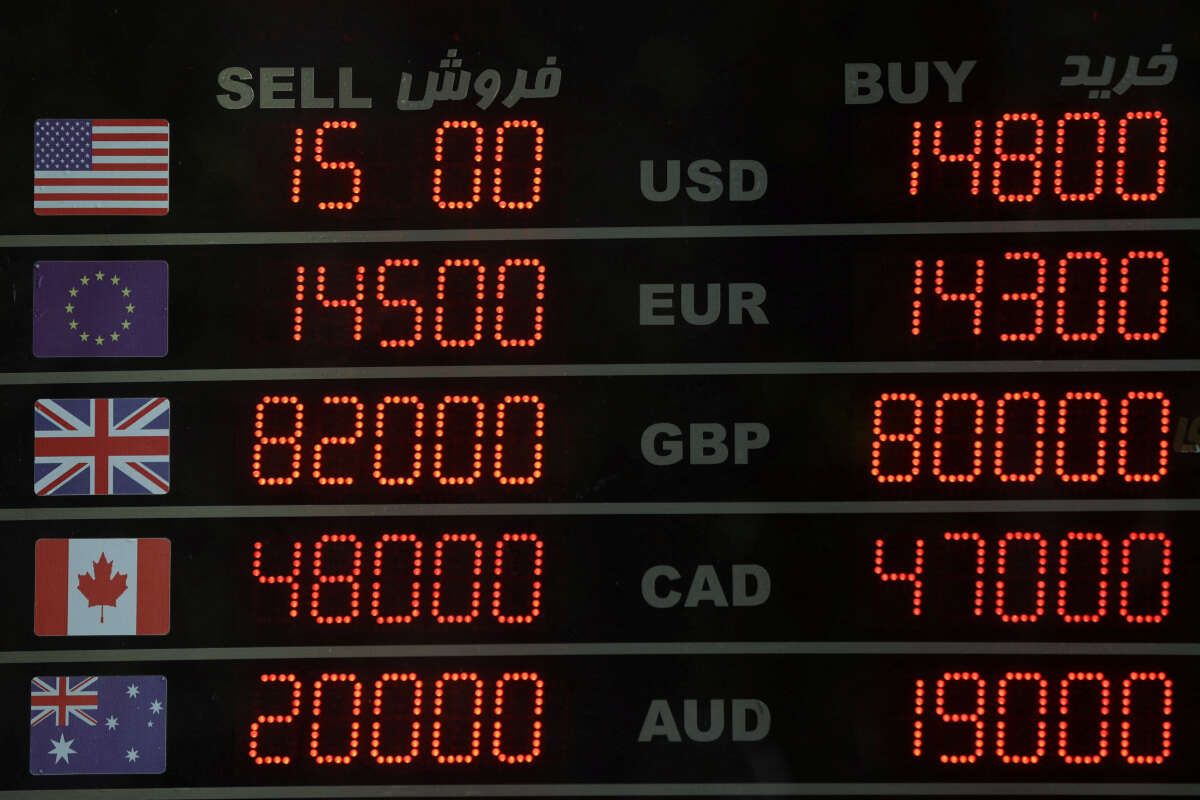
שערי המט"ח בטהראן היום. מכה אחר מכה , REUTERS
Foreign exchange rates in Tehran today. Photo: Reuters

What would need to happen for it to be clear that this time is different? Protests would have to draw ever larger numbers into the streets, not only in Tehran but across the entire country, and not only merchants but all economic strata of Iranian society. They would need to persist over time and force the regime to choose between two options: making dramatic concessions to the protesters, or unleashing widespread and violent force in a way that could prompt significant numbers of Iranian security personnel to side with the demonstrators rather than confront them.

As for Israel and the West more broadly, despite the temptation to assist the protesters, it is essential to remember the regime's claim that all demonstrations are orchestrated by foreign actors. Any overt intervention is unlikely to help and is far more likely to harm the protesters themselves. Moreover, there is considerable doubt that the West can do anything to fundamentally alter Iran's internal dynamics. If change comes, it is likely to emerge from within, not through external assistance.

Thousands protest Iran's economic crisis in Tehran. Photo: Arab Networks

Bottom line: the protests in Iran should not surprise anyone, given the country's sputtering economy and the economic hardship that, as in the past, has driven people into the streets to protest the rising cost of living. At present, however, the regime appears to be in control, even if it is unsettled by the spread of demonstrations to different parts of the country. It is difficult to predict how events will unfold, particularly since the Iranian regime has previously managed situations like this, and even worse ones. Still, if the protests persist and expand to encompass all segments of Iranian society, the regime will be forced to make decisions about how to handle them that could shake its very foundations.

Yet even then, Iran lacks a genuine opposition. As a result, it is entirely possible that such a deterioration would not end in Iran's "liberation" but rather in its falling into the hands of even more conservative forces, not necessarily those who would bring about the long hoped-for change in Tehran.
Tags: Iran

Related Posts

Under threat of civil war: This is Lebanon's balance of power

Under threat of civil war: This is Lebanon's balance of power

by Shachar Kleiman

The new framework agreement with Israel is reawakening Lebanon’s internal demons. Between threats from Hezbollah and the Amal Movement, and...

Israel-Lebanon agreement may turn into strategic trap

Why Israel and the US agreed to keep the IDF in southern Lebanon, for now

by Danny Zaken

Despite the pressure surrounding negotiations with Iran, Israel and the US have reached understandings under which there will be no...

Worse than you thought: Inside look at Qatar's hidden brutality

US-Iran deal leaves Qatar on top

by Shachar Kleiman

Qatar appears to be the big winner: Despite its dubious ties with Hamas, the White House repeatedly proved receptive to...

Menu

Analysis 

Archaeology

Blogpost

Business & Finance

Culture

Exclusive

Explainer

Environment


Features

Health

In Brief

Jewish World

Judea and Samaria

Lifestyle

Cyber & Internet

Sports


Diplomacy 

Iran & The Gulf

Gaza Strip

Politics

Shopping

Terms of use

Privacy Policy

Submissions

Contact Us

About Us

The first issue of Israel Hayom appeared on July 30, 2007. Israel Hayom was founded on the belief that the Israeli public deserves better, more balanced and more accurate journalism. Journalism that speaks, not shouts. Journalism of a different kind. And free of charge.

All rights reserved to Israel Hayom

Hosted by sPD.co.il

  • Home
  • News
    • Israel at War
    • Israel
    • United States
    • Middle East
    • Sports
  • Opinions
  • Jewish World
    • Archaeology
    • Antisemitism
  • Lifestyle
    • Food
    • Travel
    • Fashion
    • Culture
  • Magazine
    • Feature
    • Analysis
    • Explainer
    • Environment & Wildlife
    • Health & Wellness
  • In Memoriam
  • Subscribe to Newsletter
  • Submit your opinion
  • Terms and conditions

All rights reserved to Israel Hayom

Hosted by sPD.co.il

Newsletter

[contact-form-7 id=”508379″ html_id=”isrh_form_Newsletter_en” title=”newsletter_subscribe”]

  • Home
  • News
    • Israel at War
    • Israel
    • United States
    • Middle East
    • Sports
  • Opinions
  • Jewish World
    • Archaeology
    • Antisemitism
  • Lifestyle
    • Food
    • Travel
    • Fashion
    • Culture
  • Magazine
    • Feature
    • Analysis
    • Explainer
    • Environment & Wildlife
    • Health & Wellness
  • In Memoriam
  • Subscribe to Newsletter
  • Submit your opinion
  • Terms and conditions

All rights reserved to Israel Hayom

Hosted by sPD.co.il