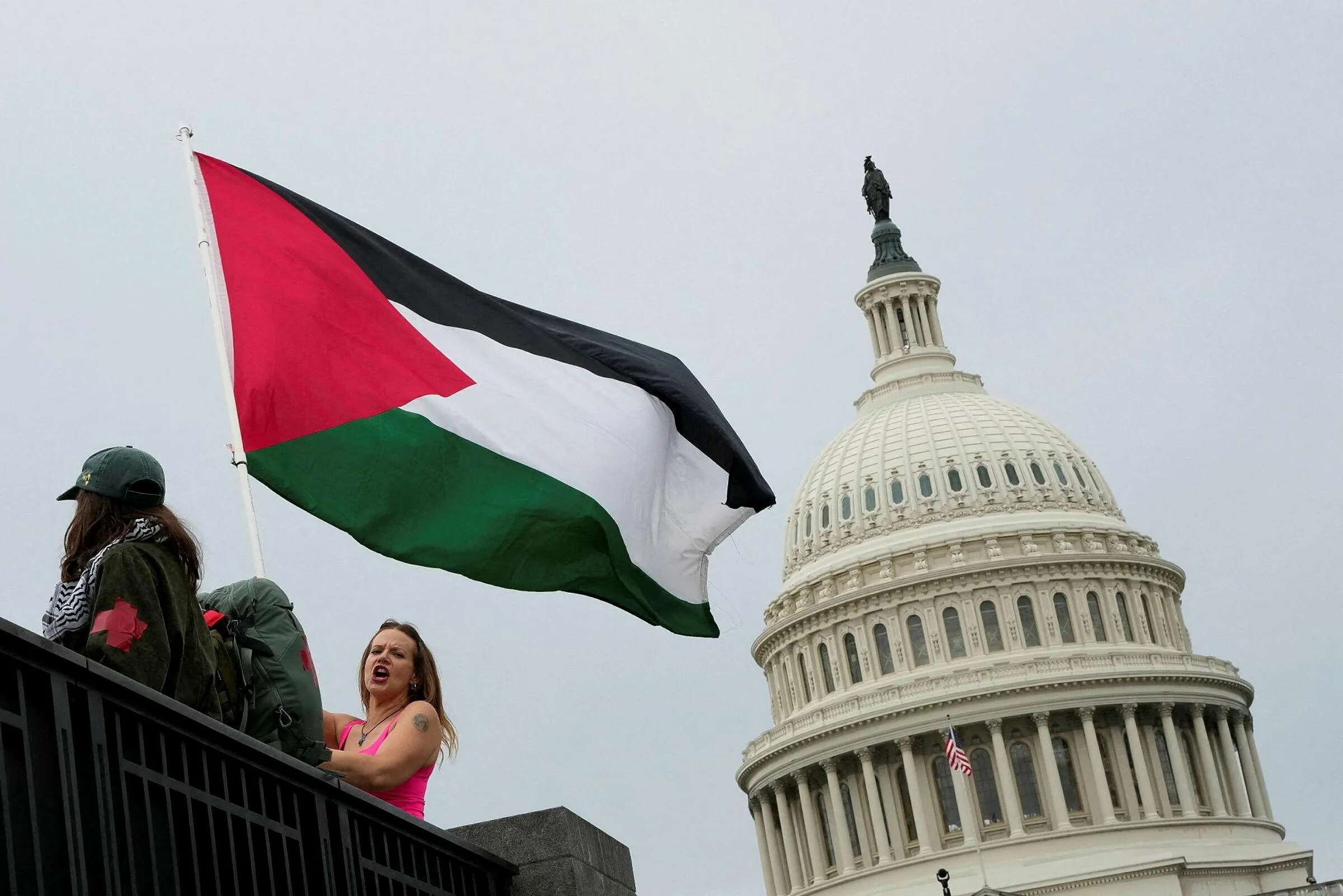
The assault on Washington Post photographer Heidi Levine has made headlines across the American media and drawn widespread condemnation, particularly from Democrats. But it can hardly be described as an isolated incident, following a series of attacks by Jewish settlers on other journalists in recent months.
These incidents come as Israel's standing among the American public and within the US political establishment is weaker than ever. The situation is expected to deteriorate further after November's midterm elections, when Democrats are expected to take control of at least the House of Representatives. If they also capture the Senate, an outcome that currently appears quite plausible, the impact on US-Israel relations could be unprecedented.
Democratic control of both chambers of Congress would give the party considerable leverage. Democrats could delay arms deals at the committee level, influence annual US assistance to Israel, which requires congressional appropriations each year, and bring legislation to a vote restricting weapons shipments or codifying sanctions against settlers that the Trump administration rescinded. They could even demand answers from the administration over the widespread international belief that Israel possesses nuclear weapons, potentially jeopardizing Israel's longstanding policy of nuclear ambiguity.

President Donald Trump could exercise his veto, while his State Department could invoke various emergency provisions to circumvent congressional restrictions. But as a lame-duck president entering the final two years of his term, repeated use of the veto could provoke retaliation from a Democratic-controlled Senate, which could block his appointments and make governing increasingly difficult.
Criticism of Prime Minister Benjamin Netanyahu's government has become a consensus position among Democrats. Even the party's staunchest supporters of Israel find themselves on the defensive, primarily seeking to channel criticism away from challenges to Israel's fundamental legitimacy.
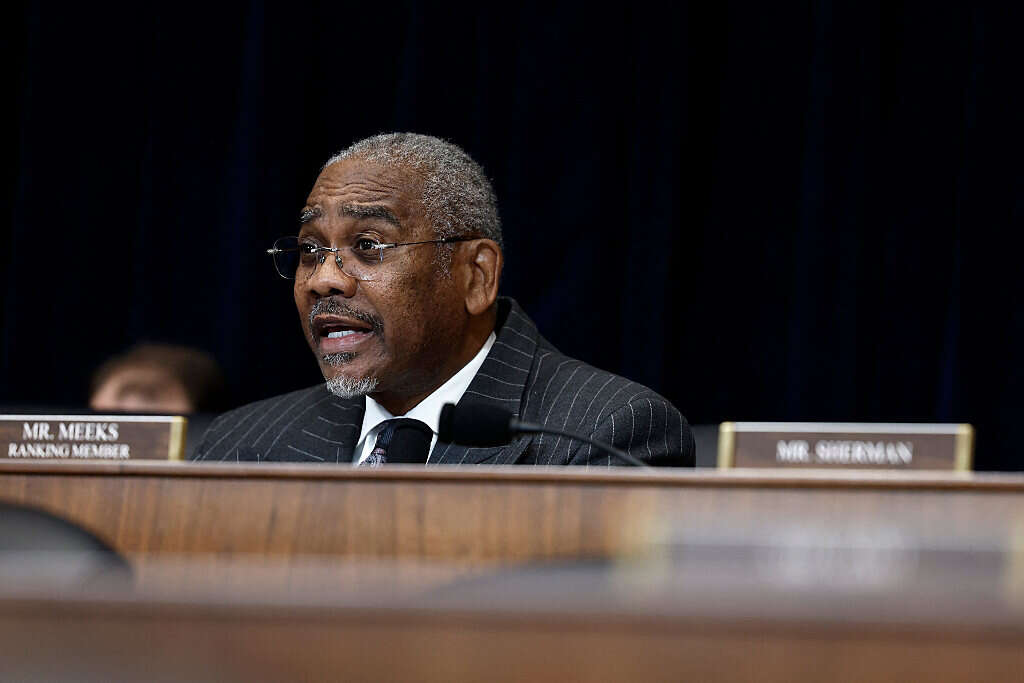
For example, Rep. Gregory Meeks (D-N.Y.), the ranking Democrat on the House Foreign Affairs Committee and a longtime staunch supporter of Israel, placed a hold last month on a $2.8 billion bomb sale. He emphasized that the decision "does not diminish Congressional support for Israel's legitimate defense needs," but rather reflects Congress' responsibility to ensure that "US-funded weapons are used lawfully, responsibly, and with meaningful safeguards for human life."
In April, 40 of the Senate's 47 Democratic caucus members supported a resolution to block the sale of military bulldozers to Israel. Only seven, including Senate Minority Leader Chuck Schumer, opposed it. In July, 103 House Democrats voted to eliminate annual military assistance to Israel, compared with 98 who opposed the measure.
Among Democratic voters, opposition to Israel has become nearly universal. According to a Pew Research Center survey, 80% of Democrats and Democratic-leaning independents hold an unfavorable view of Israel, up from 53% in 2022. Israel has also featured prominently in Democratic primary campaigns. If several candidates from the party's more radical wing win their races in November, the party's position is likely to harden further.
Republicans are distancing themselves, too
The picture is changing on the Republican side as well, particularly among the next generation of voters. According to Pew Research Center, 57% of Republicans ages 18 to 49 hold an unfavorable view of Israel. This erosion of support comes amid the growing influence of the isolationist wing of the conservative movement, where figures such as Tucker Carlson and Steve Bannon have advocated distancing the US from Israel.
Attacks by settlers against Christians in Judea and Samaria, including an incident in the village of Taybeh, have compounded the problem. Images of Christians being harassed in Jerusalem's Old City have also attracted widespread attention.
Mark Dubowitz, the FDD's chief executive, said: "I've been warning anyone willing to listen: continued Jewish extremist violence in Judea and Samaria will only fuel the growing campaign of economic and financial warfare against Israel. When political power shifts in Washington, the consequences for Israel's economy could be devastating. The Israeli government must act decisively to end this violence. If it lacks the will to do so, the Israeli people must elect a government that does. Israel cannot afford to let a violent minority jeopardize the economic security and future of the entire nation."
The 2028 presidential election could bring these trends to a breaking point. Under what currently appears to be the more plausible scenario, despite the considerable time remaining, a Democratic candidate will win the presidency after emerging from a primary contest in which attitudes toward Israel have already become a political litmus test.
Former President Joe Biden's sympathetic stance toward Israel is seen as one of the main reasons for the Democrats' defeat in 2024. Netanyahu is viewed as having dragged the US into war with Iran, while opposition to virtually anything associated with Trump administration policy has become an article of faith within the party.
Traditionally, one of an incoming president's first moves is to reverse major policies enacted by his predecessor. A Democratic president would likely reinstate the Biden administration's executive order authorizing sanctions against settlers involved in violence, which Trump revoked on his first day in office.
That would be only the beginning. The sanctions list would likely expand to include numerous individuals and entities, potentially including National Security Minister Itamar Ben-Gvir and Finance Minister Bezalel Smotrich, both of whom have already been sanctioned by US allies. Construction companies and banks financing settlements could also be targeted.

A Democratic president could also halt weapons shipments to Israeli military units operating in Judea and Samaria, as the Biden administration considered doing in the case of the IDF's Netzah Yehuda Battalion, a unit originally established to accommodate ultra-Orthodox soldiers. Such a move could ultimately escalate into broader restrictions on US military assistance to Israel.
Recognition of a Palestinian state
A Democratic president could, of course, also move to recognize a Palestinian state.
Such a decision would effectively settle the international debate over recognition, given that the US is the country blocking full Palestinian membership in the UN. In 2024, Washington vetoed a Security Council resolution admitting a Palestinian state as a full member, despite support from 12 of the council's 15 members.
The minimum position likely to be expected of any Democratic presidential candidate has already been outlined by Rahm Emanuel, former White House chief of staff under President Barack Obama and a longtime supporter of Israel who may seek the Democratic nomination in 2028.

"For too long, American policy toward Israel operated under the assumption that the best thing Washington could do for Jerusalem was to blindly and silently stand behind your government, without conditions, without demands, and without consequences when we disagreed," Emanuel said in a speech at Tel Aviv University in July.
Emanuel called for an end to "the American taxpayer's subsidy of Israel's defense budget" and urged sanctions against settlers involved in violence, elected officials who support them, and "every construction company or bank building or financing illegal settlements."
In its most extreme form, the emerging reality could eventually leave Israel cut off from the dollar-based financial system. Such an outcome would not necessarily require a direct order from Washington. Financial institutions, fearing exposure to a complex web of legal and regulatory risks, might sever ties with Israeli entities on their own.
This phenomenon, known as "overcompliance," could transform the economic campaign against Israel into something resembling the financial pressure imposed on Iran.
Such developments would also likely give fresh momentum to cultural and sporting boycotts of Israel, particularly within FIFA, world soccer's governing body, where Israel has thus far benefited from American backing, and within the International Olympic Committee.
Nevertheless, even in a scenario involving a direct confrontation with the administration in Washington, measures of this magnitude would likely unfold more slowly than sanctions against countries openly hostile to the US. Unlike other economies targeted by American sanctions, Israel has deep economic and institutional ties with the US. Any severe measures against it would almost certainly harm American citizens as well.
Even so, October 27 in Israel and November 3 in the US, the dates of their respective elections, could prove to be among the most consequential days in the history of relations between the two countries. The stakes are particularly high for Israel, which has no substitute for the support of the world's leading superpower.