Israel Hayom is a media organization founded on the belief that the Israeli public deserves better journalism—more balanced, more accurate, and more reliable. Journalism that speaks rather than shouts. Journalism that is trustworthy, objective, and matter-of-fact. A different kind of journalism, offered free of charge. The first print edition was published on July 30, 2007, and in 2010 Israel Hayom became the Israeli newspaper with the highest weekday readership. The newspaper’s publisher is Dr. Miriam Adelson. Its Editor-in-Chief is Omar Lachmanovitch, and its founding editor is Amos Regev. Israel Hayom’s Hebrew and English websites, as well as its Android and iOS applications, provide around-the-clock news coverage, exclusive content, breaking news and updates, analysis and commentary, video, podcasts, and live broadcasts. The digital platforms of Israel Hayom include news and opinion channels covering culture and entertainment, lifestyle, technology, sports, business and consumer affairs, health, military affairs, food, Judaism, tourism, and automobiles. In 2021, a new Hebrew-language website and mobile application were launched to provide users with a fast, up-to-date, secure, and convenient experience. The content of the newspaper’s print edition is also available online through a daily digital edition and can be received via newsletter. “The Israel Hayom Clique,” the publication’s exclusive benefits club, offers website users discounts and special promotions on products and services. Israel Hayom welcomes feedback, criticism, and suggestions for improvement from its readers. You can contact the organization by email at hayom@israelhayom.co.il

Tuesday Jun 30, 2026
NEWSLETTER
www.israelhayom.com
  • Home
  • News
    • Israel
    • Israel at War
    • Middle East
    • United States
  • Opinions
  • Jewish World
    • Archaeology
    • Antisemitism
  • Lifestyle
    • Food
    • Travel
    • Fashion
    • Culture
  • Magazine
    • Feature
    • Analysis
    • Explainer
  • In Memoriam
www.israelhayom.com
  • Home
  • News
    • Israel
    • Israel at War
    • Middle East
    • United States
  • Opinions
  • Jewish World
    • Archaeology
    • Antisemitism
  • Lifestyle
    • Food
    • Travel
    • Fashion
    • Culture
  • Magazine
    • Feature
    • Analysis
    • Explainer
  • In Memoriam
www.israelhayom.com
Home News Middle East

Gulf revives oil export plans to bypass Hormuz

Iran's grip on the Strait of Hormuz is pushing Gulf states to advance massive plans for alternative oil and gas export pipelines, the Financial Times reported. Despite costs running into the tens of billions of dollars and major security hurdles, Middle East officials believe this is the best path under current conditions.

by  ILH Staff
Published on  04-02-2026 09:30
Last modified: 04-02-2026 10:02
Iran launches Strait of Hormuz drill ahead of Switzerland talks

Iranian soldiers take part in a military flotilla in the Strait of Hormuz. Photo: AFP

Share on FacebookShare on Twitter

The long-term threat of Iranian control over the Strait of Hormuz, one of the world's most important trade routes, is forcing Gulf states to rethink their strategy. Senior energy industry officials told the Financial Times that countries in the region are now examining costly and complex plans to build new oil and gas pipelines that would bypass the strait, out of an understanding that this may be the only way to ensure continued exports.

The current conflict has underscored the strategic importance of Saudi Arabia's 1,200-kilometer east-west oil pipeline. Built in the 1980s out of concern that the strait could be blocked during the Iran-Iraq War, the pipeline is now emerging as a critical lifeline. It carries about 7 million barrels of oil a day to the Red Sea port of Yanbu, completely bypassing Hormuz. "In hindsight, that pipeline looks like a stroke of genius," a Gulf energy industry executive said.

Amin Nasser, chief executive of Saudi oil giant Aramco, recently confirmed that the pipeline is "the main route we are relying on right now." Riyadh is now examining how to increase the volume of its exports, currently standing at 10.2 million barrels a day, through pipelines, whether by expanding the existing line or laying new routes. The kingdom is also considering building additional export terminals on the Red Sea, including at the deepwater port under construction as part of the Neom project.
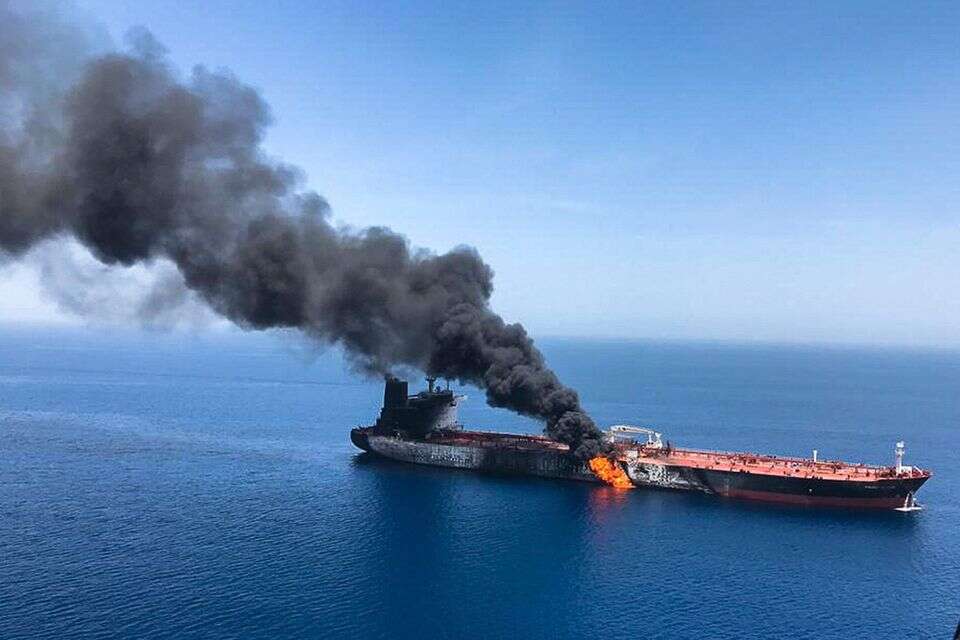
מיכלית נפט בוערת לאחר מתקפה ליד מצר הורמוז , AP
An oil tanker burns after an attack near the Strait of Hormuz. Photo: AP

'Taking fate into our own hands'

In the long term, the new pipelines are expected to be integrated into broader trade routes. A Gulf official told the Financial Times that one option now being considered is reviving the ambitious US-backed IMEC plan for a corridor stretching from India through the Gulf to Europe. The original plan, as previously outlined, included a complex pipeline that was supposed to reach the port of Haifa.

Yossi Abu, chief executive of NewMed Energy, said he was confident pipelines to the Mediterranean would indeed be built, whether ending at ports in Israel or Egypt. "People need to control their own destiny, together with their friends," Abu told the Financial Times. "We need oil pipelines and rail connections across the region, over land, without giving others choke points to strangle us."

An Iranian missile boat in the Strait of Hormuz. Photo: EPA

Minefields and political obstacles

Despite broad agreement on the need for such a move, the obstacles are enormous. Christopher Bush, chief executive of Lebanon's CAT Group, which helped build the existing Saudi pipeline, estimated that replicating the pipeline today would cost at least $5 billion because of the need to carve through basalt mountains. More ambitious plans crossing several countries, for example from Iraq through Jordan, Syria or Turkey, would cost between $15 billion and $20 billion.

Beyond the cost, there are serious security risks, including unexploded ordnance in Iraq and the continued presence of Islamic State and other terrorist organizations. The southern option of pumping oil to ports in Oman also faces difficulties because of mountainous and desert terrain.

Moreover, Oman's ports are not immune. Drone attacks in recent days even forced the key port of Salalah to shut down temporarily.

Added to that is the political challenge of managing shared pipelines. "A pipeline system would require Gulf states to abandon their isolationist policies and unite," Bush said.

While the UK is leading talks among 35 countries in an attempt to form a coalition to reopen the Strait of Hormuz, Mason Kafafy, a senior adviser at the Atlantic Council, said Gulf states understand that reality has changed.

"I sense a shift from hypotheses to operational reality. Everyone is loo king at the same map and reaching the same conclusions," she said. "I do not expect things to return to what they were before the confrontation."


Tags: Strait of Hormuz

Related Posts

Urgent Doha meeting set at Iran's request, Trump saysGetty Images

Urgent Doha meeting set at Iran's request, Trump says

by Dudi Kogan

Senior American envoys deploy to Qatar Tuesday to salvage a fragile ceasefire after escalating tensions and drone strikes in the...

US seizes sanctioned Iranian cargo ship in Gulf of Oman

US strikes Iran as Tehran responds with fire toward Bahrain and Kuwait

by Dudi Kogan and Or Shaked

After an Iranian drone hit an oil tanker carrying more than 2 million oil barrels, US Central Command forces struck...

Iraq corruption probe sparks wave of arrests, tank deployment in Baghdad

Iraq corruption probe sparks wave of arrests, tank deployment in Baghdad

by Shachar Kleiman

Several senior figures from a Sunni political party were arrested as part of a massive corruption case that has shaken...

Menu

Analysis 

Archaeology

Blogpost

Business & Finance

Culture

Exclusive

Explainer

Environment


Features

Health

In Brief

Jewish World

Judea and Samaria

Lifestyle

Cyber & Internet

Sports


Diplomacy 

Iran & The Gulf

Gaza Strip

Politics

Shopping

Terms of use

Privacy Policy

Submissions

Contact Us

About Us

The first issue of Israel Hayom appeared on July 30, 2007. Israel Hayom was founded on the belief that the Israeli public deserves better, more balanced and more accurate journalism. Journalism that speaks, not shouts. Journalism of a different kind. And free of charge.

All rights reserved to Israel Hayom

Hosted by sPD.co.il

  • Home
  • News
    • Israel at War
    • Israel
    • United States
    • Middle East
    • Sports
  • Opinions
  • Jewish World
    • Archaeology
    • Antisemitism
  • Lifestyle
    • Food
    • Travel
    • Fashion
    • Culture
  • Magazine
    • Feature
    • Analysis
    • Explainer
    • Environment & Wildlife
    • Health & Wellness
  • In Memoriam
  • Subscribe to Newsletter
  • Submit your opinion
  • Terms and conditions

All rights reserved to Israel Hayom

Hosted by sPD.co.il

Newsletter

[contact-form-7 id=”508379″ html_id=”isrh_form_Newsletter_en” title=”newsletter_subscribe”]

  • Home
  • News
    • Israel at War
    • Israel
    • United States
    • Middle East
    • Sports
  • Opinions
  • Jewish World
    • Archaeology
    • Antisemitism
  • Lifestyle
    • Food
    • Travel
    • Fashion
    • Culture
  • Magazine
    • Feature
    • Analysis
    • Explainer
    • Environment & Wildlife
    • Health & Wellness
  • In Memoriam
  • Subscribe to Newsletter
  • Submit your opinion
  • Terms and conditions

All rights reserved to Israel Hayom

Hosted by sPD.co.il