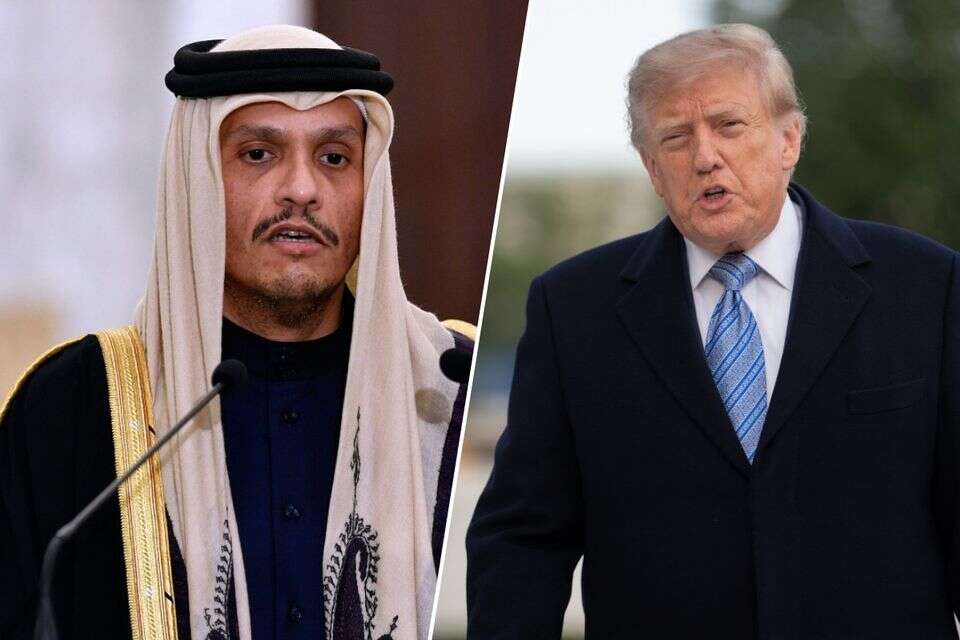
US President Donald Trump is set to meet Qatari Prime Minister Sheikh Mohammed bin Abdulrahman Al Thani in Washington on Monday, in what appears to be an acceleration of Qatar's mediation efforts to secure a new interim agreement between the United States and Iran.
Two diplomatic sources familiar with the negotiations told Israel Hayom that Al Thani had brought with him a proposal approved by Iran to reopen the Strait of Hormuz. The arrangement would involve lifting the US naval and economic blockade of Iran in exchange for an end to Iranian attacks on ships and oil tankers belonging to Gulf states.
Under the proposed agreement, $8 billion in Iranian funds held in Qatar would be unfrozen. Iran has apparently dropped its demand to control the Strait of Hormuz and collect transit fees from vessels passing through the strategic waterway. However, Tehran remains unwilling to discuss its nuclear program or even signal a willingness to enter negotiations on the issue.
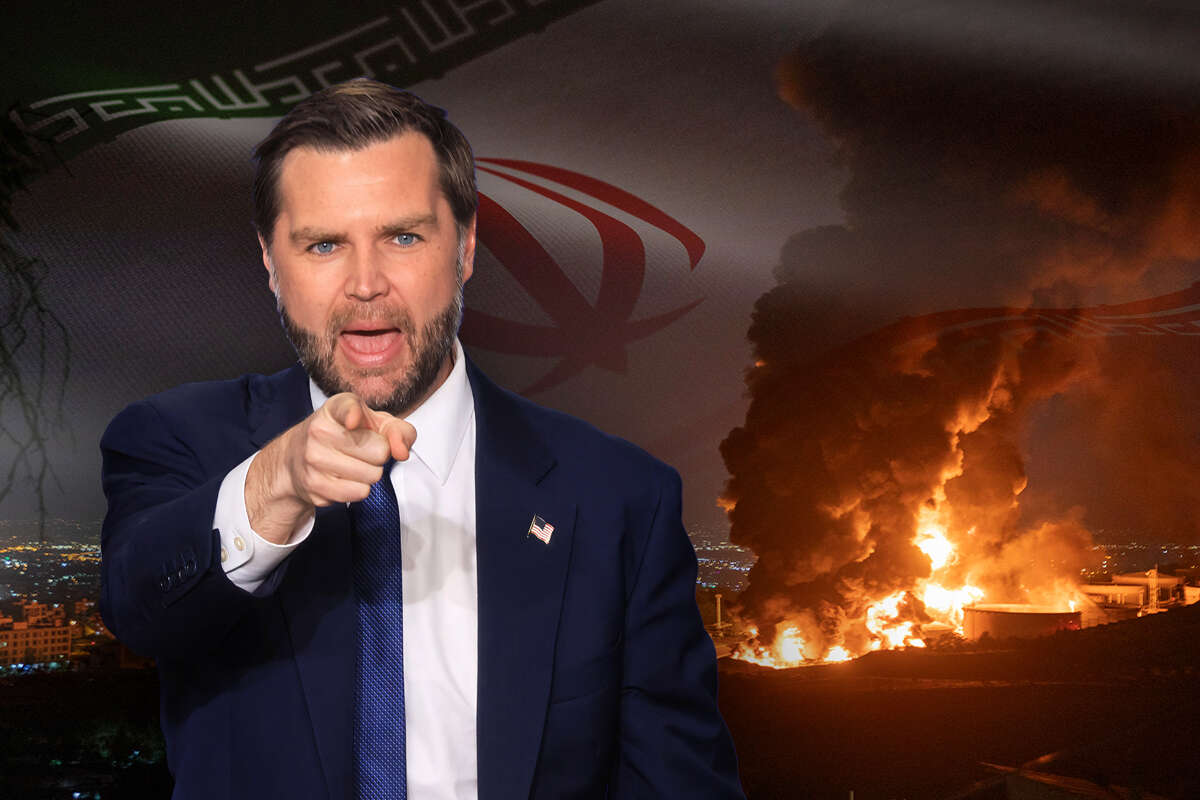
Vice President JD Vance, along with Trump's Middle East envoy Steve Witkoff and the president's son-in-law Jared Kushner, is advancing negotiations toward an arrangement similar to one reached with Iran in Switzerland in May under a memorandum of understanding. That agreement collapsed following an Iranian attack on oil tankers transiting the Strait of Hormuz.
"It would save the regime"
Vance is also expected to meet the Qatari prime minister, who has traveled to Washington to advance the negotiations.
One of the sources told Israel Hayom that Al Thani's arrival signaled progress, although Trump himself remained skeptical. According to the source, the president agreed to accelerate the talks, as Vance has urged, partly because of the Republican defeat in the congressional midterm elections. However, the initiative faces considerable opposition within the administration.
According to the same source, Treasury Secretary Scott Bessent, who oversees the enforcement of sanctions, Commerce Secretary Howard Lutnick, Secretary of State Marco Rubio and Secretary of War Pete Hegseth all oppose a deal resembling the one reached in May.
The officials have criticized the prospect of reaching an agreement now, with one warning that it "would save the regime in Iran at the last minute." Their opposition is based on intelligence assessments pointing to the collapse of Iran's economy.
Enormous economic pressure
Hegseth, however, is facing attacks from Democrats seeking his removal, while Rubio is on a diplomatic visit to Europe. Bessent and Lutnick, meanwhile, do not carry enough political weight to block such an agreement.
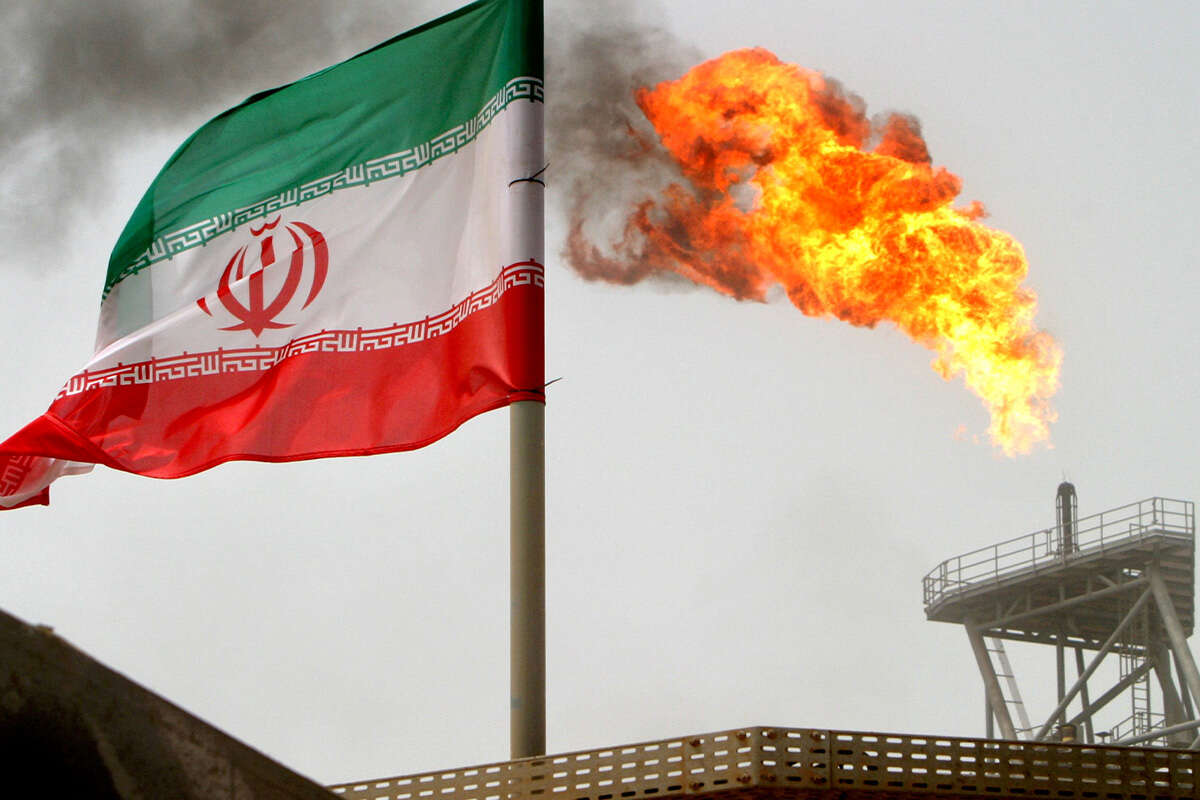
The American diplomatic source told Israel Hayom that during one of the latest discussions on the issue, Trump was presented with figures showing that Iran had sold its last oil tanker shipment the previous week. Combined with trade sanctions and the air and naval blockades, the figures indicated that the Iranian leadership was under enormous pressure.
Among the findings presented were cuts to the salaries of Islamic Revolutionary Guard Corps personnel, the suspension of funding for terrorist militias in Iraq, and reductions in fuel supplies to civilians and industry.
During the meeting, one participant told the president that Iran had helped the Democrats win the midterm elections by disrupting the global oil market and driving up fuel prices in the United States. There was no reason, the participant argued, to reward Tehran for doing so.
Vance, by contrast, is pushing for an agreement that would bring the war to an end early next year, almost regardless of the cost. He believes the administration needs time to rebuild the American public's trust ahead of the presidential election in two years.
"A great dislike, incredibly, for Israel"
US President Donald Trump said there was "a great dislike, incredibly, for Israel" during an interview with CBS' "60 Minutes" aired Sunday night, following the Republican defeat in the midterm elections and the loss of control of both chambers of Congress. Trump cited attitudes toward Israel, the war with Iran and rising gasoline prices among the main reasons for the Republican defeat.
Asked about a social media post by Vice President JD Vance, Trump said, "I don't disagree with it," although he took issue with one omission. In the post, Vance had identified changes in America's relationship with Israel as one of the demands of voters who had abandoned the Republican Party, alongside ending the war, addressing the cost of living and putting America first.
Trump admits:
The voters didn't like the war. They didn't like the fact that gasoline went up.
And there's a great dislike, incredibly, for Israel. https://t.co/gaMEHJEsj4
— Clash Report (@clashreport) November 9, 2026
Contrary to reports that Trump had been surprised and angered by the post, the president said Vance had consulted him before publishing it. Trump said he had told his vice president, "You write what you want."
His only reservation concerned whether Vance would support the decision to go to war with Iran if given the choice again. Trump said he wished Vance had addressed that question, making clear that, for his own part, he would make the same decision again. Asked whether he would do it again, Trump said "my answer is an emphatic yes," arguing that Iran could not be allowed to obtain a nuclear weapon.