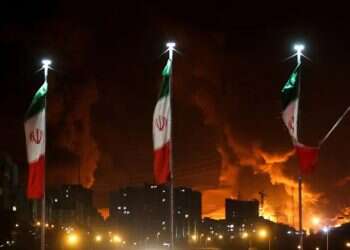
Nearly half a day has passed since the ceasefire took effect, a development the Israeli public learned about from American and Iranian media, and not a single Israeli official has come before the public to explain what is happening.
At 5:40 a.m. local time, two hours and 40 minutes after the ceasefire took effect, the Prime Minister's Office issued a statement in English only, with Hebrew speakers apparently expected to wait. It said that "Israel supports President Trump's decision to suspend strikes against Iran for two weeks subject to Iran immediately opening the straits and stopping all attacks on the US, Israel and countries in the region."
The statement also said that the US had informed Israel it remained committed to ensuring that Iran would no longer pose a nuclear, missile or terrorist threat to America, Israel, Iran's Arab neighbors or the world, and that the two-week ceasefire does not include Lebanon.
None of the overarching objectives was achieved
It is still too early to move to the summary stage of "Operation Roaring Lion," since the situation could change in about two weeks, or later. But if the war ends this way, the results are not encouraging.
It is worth recalling that when Israel launched the operation, it laid out three overarching objectives for the campaign: toppling the Iranian regime, although the IDF settled for the more modest goal of creating the conditions for the regime's downfall; eliminating Iran's nuclear program; and eliminating the threat posed by its ballistic missile program.
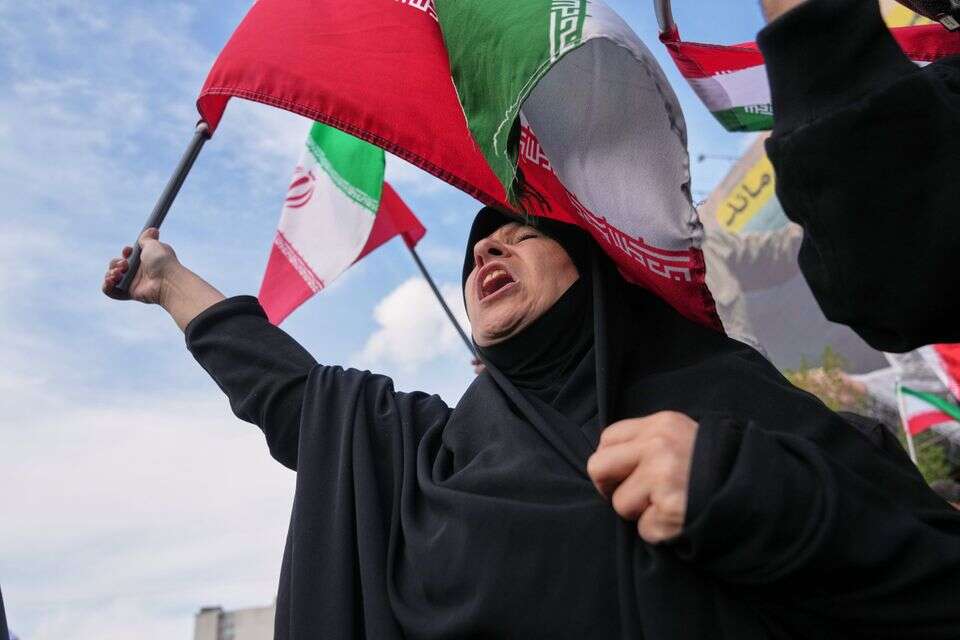
As of now, on the 40th day of the operation, and after the US announced a ceasefire, none of those objectives has been achieved. The Iranian regime not only remains in place, it has become more extreme, as the Islamic Revolutionary Guard Corps has taken control. The 440 kilograms of enriched uranium are still on Iranian soil, and overnight we saw once again that the Iranians are still fully capable of launching missiles at Israel.
Over the past 40 days, Israel's defense establishment has said that the military achievements were substantial, and that it had hit all the necessary and critical targets identified at the outset, namely Iran's military industries and targets linked to its nuclear and missile projects. To that one can add other significant achievements, including the elimination of the Iranian leadership, as well as strikes on steel plants, petrochemical factories and more.
Still, it is enough to recall the boastful statements heard in Israel just nine months ago, in June, about pushing the threat back for many years, to remain deeply skeptical about whether the threat has truly been removed and whether further rounds with Iran have in fact been delayed for any meaningful period.

Will the ceasefire help Iran restore its launchers?
Even if the military achievements are indeed significant, and that may well be the case, since we are relying solely on reports from Israel's defense establishment on that front, and its interest is obvious, those achievements have not, as of now, been translated into political and strategic gains or into a decisive outcome in the campaign against Iran.
In fact, a review of the 10-point plan Iran submitted to the US, which Trump said was a good basis for negotiations, suggests that Iran has not backed away from a single one of the demands it presented to the Americans over the past two weeks. Trump's optimism, at least for now, is therefore difficult to understand, and it may simply have been his way of climbing down from an untenable position.
The achievement may still come later, and it is entirely possible that in about two weeks Trump will decide to resume the campaign or that the Iranian people will take to the streets. But as matters stand, Israel's strategic position has not improved, and some would argue that it has actually worsened. As long as the current Iranian regime remains in power and retains its enriched uranium, it will be more determined than ever to obtain a nuclear bomb, which in its view would grant it immunity. Not only that, but it is being argued that Israel's standing in the US has worsened, as it is now seen, with considerable justification, as having pushed the US into a confrontation with Iran.
Operationally, Israel could pay a very heavy price for that two-week ceasefire, because it will allow Iran to regroup, and above all to bring out the hundreds of launchers hidden underground, launchers whose access Israel has systematically and consistently blocked, thereby preventing the regime from using them to fire at Israel. If Israel halts this effort, known in the defense establishment as "plugging the launchers," the regime will be able to move them out and conceal them in various locations, making it far harder for the Israeli Air Force to hunt them down later.

The question of the north
From Israel's perspective, another troubling question now remains on the table: the Lebanese front. In recent days, every security official in Israel has made clear that a ceasefire in Iran would not include a ceasefire in Lebanon. As noted, the Prime Minister's Office addressed this in its official English-language statement before dawn, and in recent hours the IDF's Arabic-language spokesman, Col. Avichay Adraee, has already issued no fewer than three separate evacuation notices to residents of Lebanon south of the Zahrani River, to residents of neighborhoods in Dahiyeh, and to residents of the city of Tyre.
With five IDF divisions positioned along the anti-tank lines, about 8 kilometers, or 5 miles, from Israel's border, Israel is signaling that it intends to continue military operations in Lebanon in order to remove the threat facing residents of the north. In the meantime, however, since the ceasefire took effect, Hezbollah has not fired so much as a cap gun toward Israeli territory, a fact indicating that it is abiding by the ceasefire, at least as of the time of writing.

Be that as it may, the time has come for someone in Israel's leadership to address the Israeli public and explain, in Hebrew, what the situation is and where things go from here. That is the bare minimum the public deserves after enduring missile fire over the past 40 days that caused casualties and widespread destruction, as well as severe economic damage and significant psychological strain, and yet still demonstrated resilience and steadfastness out of faith and hope that Israel's strategic position would change.