Relations between Pope Leo XIV, the first American pope, and the White House have sunk to a new low since the outbreak of the Iran War, as the Trump administration wrapped its military messaging in deeply religious language, particularly in briefings by Secretary of War Pete Hegseth.
A report published this week by The Free Press reveals how tensions built over months and culminated in an unusual Pentagon meeting in which a senior US official implicitly threatened the Holy See's representative with the kind of action France took against the papacy in the 14th century, meaning military action against the pope.
The current administration has given religion a far more public role in both policy and messaging than previous administrations. At the same time, a number of senior Catholics hold key positions, including Secretary of State Marco Rubio and Vice President JD Vance, who converted to Catholicism, along with several other senior officials. Trump and the Republican Party also enjoy significant Catholic support.
According to the report, the election of Robert Francis Prevost, now Leo XIV, raised hopes that relations between the White House and the Holy See would improve, especially given the hostility between Trump and the previous pope, Francis. The administration saw the first American pope as a potential asset and, more than that, expected him to provide moral validation for its policies.
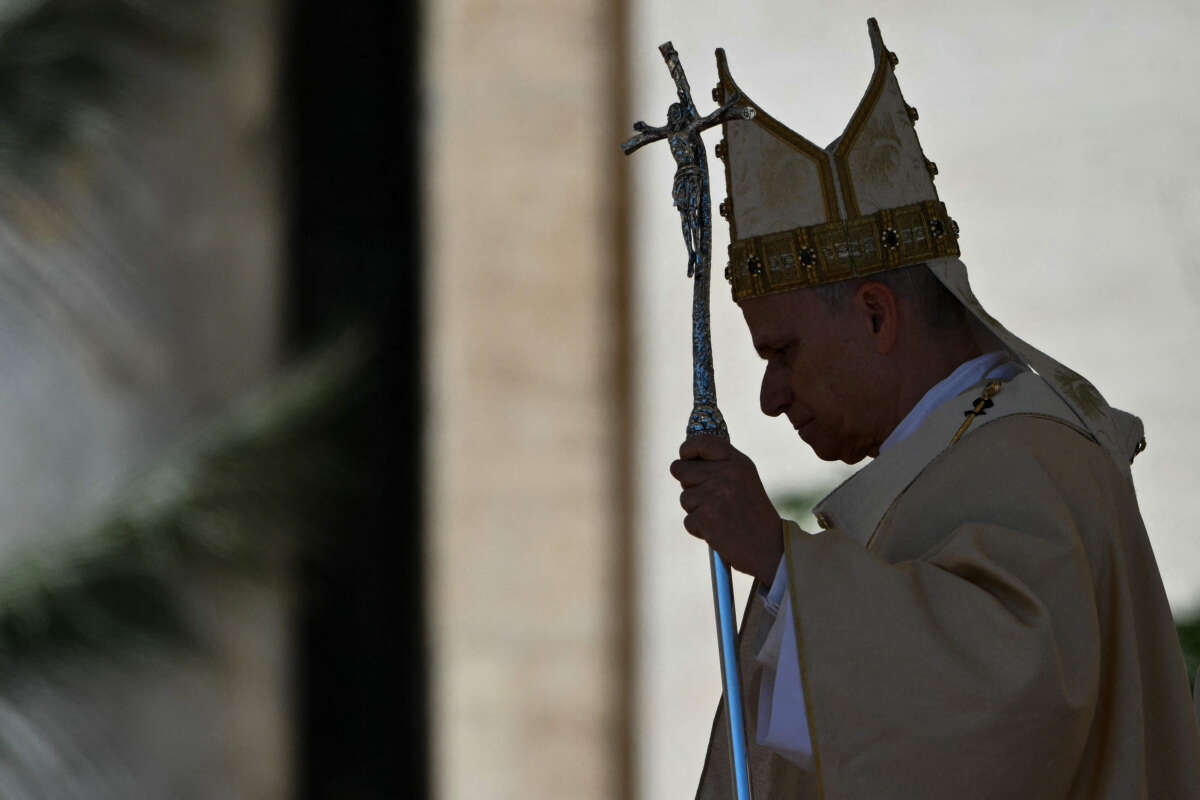
The turning point came with the pope's "state of the world" address on Jan. 9 to the Vatican's diplomatic corps. Leo XIV said that "war is back in fashion" and that the international order built after World War II had been "completely broken." The Pentagon interpreted the speech as a direct attack on Trump's policies, especially the pope's statement that "diplomacy that promotes dialogue and seeks consensus is being replaced by a diplomacy based on power, whether of individuals or groups of states."
Shortly afterward, Under Secretary of War for Policy Elbridge Colby summoned the Vatican's then-ambassador to the US, Cardinal Christophe Pierre, to a closed-door meeting at the Pentagon, a move without precedent in relations between the two countries.
According to the report, Colby and his colleagues lectured the cardinal on US military power and demanded that the Catholic Church align itself with Washington. The Pentagon dissected the pope's speech line by line and read aloud the passages it considered hostile to the administration. The cardinal, the report said, sat in silence throughout the meeting.
One American official chose to raise the "Avignon Papacy" as a historical reference, and Holy See officials briefed on the meeting interpreted it as a direct threat: that the US was considering acting against the pope in similar fashion. The Avignon Papacy refers to a roughly 70-year period in the 14th century when France's King Philip IV succeeded in forcing the pope to move his seat from Rome to the city of Avignon, turning the church into an instrument of the French crown.
According to the report, the meeting contributed to the cancellation of a planned papal visit to the US. In May 2025, just two weeks after Leo XIV was elected, Vance invited him to celebrate the 250th anniversary of US independence. The Vatican considered the invitation, but according to the report declined it for three reasons: foreign policy disagreements, growing opposition among American bishops to Trump's immigration policies, and concern that the visit would be seen as political support for the administration on the eve of the midterm elections.
"The administration tried every possible way to bring the pope to the United States in 2026," a Vatican source quoted in the article said.

During the war, tensions spilled from private meetings into the public arena. Hegseth, a devout evangelical Christian, turned regular military briefings into events that were almost explicitly religious. He urged Americans to pray "on bended knee, every day" for military victory in the Middle East "in Jesus' name."
Pope Leo XIV's remarks were seen as a direct response. In his Palm Sunday sermon, delivered a week before Easter, he said that Jesus "does not hear the prayers of those who wage war." In another sermon before Easter, the pope said the Christian mission had been "distorted throughout history by a desire for domination, entirely foreign to the way of Jesus Christ," adding that "The imperialist occupation of the world is disrupted from within; the violence that until now has been the law is unmasked."
Over weeks of war, the pope intensified his criticism. He appealed directly to Trump to find "a way out" to end the fighting and condemned the president's threat to destroy "an entire culture" in Iran as "absolutely unacceptable."
On Easter morning, he delivered the traditional Urbi et Orbi blessing in St. Peter's Square in Rome: "Let those who hold weapons lay them down. Let those who have the power to start wars choose peace." After the ceasefire was announced, the pope welcomed the agreement.

Instead of visiting the US on Independence Day, Leo XIV will travel to the Mediterranean island of Lampedusa, widely seen as a gateway for migrants crossing the sea into the European Union. In the Vatican, the choice of date is being interpreted as a deliberate message against the president's immigration policy. A Vatican official quoted in the article said that "it is possible the pope will not visit the United States at all during this administration."
The Pentagon was forced to respond to the report. In an official statement, it said the Jan. 22 meeting with Cardinal Pierre had been "substantive, respectful and professional," and that the sides discussed a range of issues including morality in foreign policy, national security strategy, Europe, Africa and Latin America. According to the Pentagon, the cardinal "expressed appreciation for this outreach." The statement added that "recent reporting is exaggerated and grossly distorted," and that "we have nothing but the utmost respect for the Holy See."