The B'nai B'rith World Center-Jerusalem and Keren Kayemeth LeIsrael-Jewish National Fund (KKL-JNF) will hold their 24th joint Yom HaShoah commemoration –the sole annual ceremony worldwide dedicated to Jews who endangered themselves to save fellow Jews during the Holocaust – on Tuesday, April 14, at Polonsky Auditorium, Van Leer Jerusalem Institute, from 10 a.m. Israel time. It will be broadcast live on the B'nai B'rith International Facebook page.
Among those addressing the gathering are the Netherlands Ambassador to Israel, Marriet Schuurman; KKL-JNF Chairman Eyal Ostrinsky; B'nai B'rith World Center Chairman Dr. Haim Katz; and Moshe Shapira, father of Aner, the hero of the October 7 "death shelter," and grandson of Jewish Rescuer Haim Moshe Shapira. Founding Committee member and Dutch Holocaust survivor Chana Arnon will also recite names of more than 100 of her murdered relatives as part of the international initiative "Unto Every Person there is a Name."
Four rescuers in France, Holland, and Poland will receive the Jewish Rescuers Citation posthumously at the event. Jointly established in 2011 by B'nai B'rith and the Committee to Recognize the Heroism of Jewish Rescuers during the Holocaust, the award has now honored 667 individuals, countering the mistaken belief that Jews did not act to protect one another during the Holocaust. Past honorees came from Germany, France, Poland, the Netherlands, Russia, Belgium, and numerous other European and North African countries.
Their stories
Among this year's recipients is Shoshana Jansje Litten Serlui, born in the Netherlands in 1911. At the request of the Zionist Organization, she and her husband, Dr. Manfred Litten, ran the Youth Aliyah training farm in Gouda. When Nazi Germany occupied the Netherlands in 1940, she immediately began planning the evacuation of the farm's students, forging ties with an underground cell led by Johan Gerard ("Joop") Westerweel and working alongside operative Joachim Simon.
When three students were ordered to present themselves at the local train station for deportation to the Ficht transit camp – a staging point for transfer to concentration and extermination camps – she coordinated with the farm's doctor and the director of the local hospital to have the students admitted under a false dysentery diagnosis, placed in isolation, and used the hospitalization as grounds to impose a full quarantine on the farm, shielding them from deportation. By 1942, working alongside Simon and farm employee Dirk van Schaik, she had arranged forged identity cards – deliberately omitting the mandatory "J" designation – along with food stamps, addresses of safe houses and detailed escape routes for all farm members.

In April 1943, a large-scale Aktion swept through Gouda, and all Jewish residents of the farm were ordered to the train station for transfer to the Fichte camp. Acting on the preparations Litten Serlui had set in place, some farm members slipped off trains at intermediate stations and made their way to pre-arranged hiding places, while others took alternative routes entirely. Every trainee reached safety. Dr. Manfred Litten was not as fortunate.
Captured while traveling to a hiding place in The Hague, he was deported first to the Westerbork camp, then to Theresienstadt, and ultimately to Auschwitz. After the farm's evacuation, Litten Serlui settled with her son Gideon in the town of Riebeck and continued directing rescue operations from there. In August 1943, she entrusted the seven-year-old Gideon to a Catholic family in Amersfoort; he remained there for two years, survived the war, and immigrated to Israel through Youth Aliyah in April 1945.
Litten Serlui pressed on within the Dutch underground, joining the Westerweel group in smuggling young people across the Pyrenees from France into neutral Spain, continuing to source hiding places, produce forged documents, distribute food stamps, and raise funds for the network. In June 1944, apparently as a result of a betrayal, she was arrested by the SS at the train station in Utrecht and deported to Auschwitz. Dr. Manfred Litten was murdered there in February 1945. Shoshana Litten Serlui was transferred to a forced labor camp in Czechoslovakia and perished in April 1945 on a death march from the Zwodau camp.
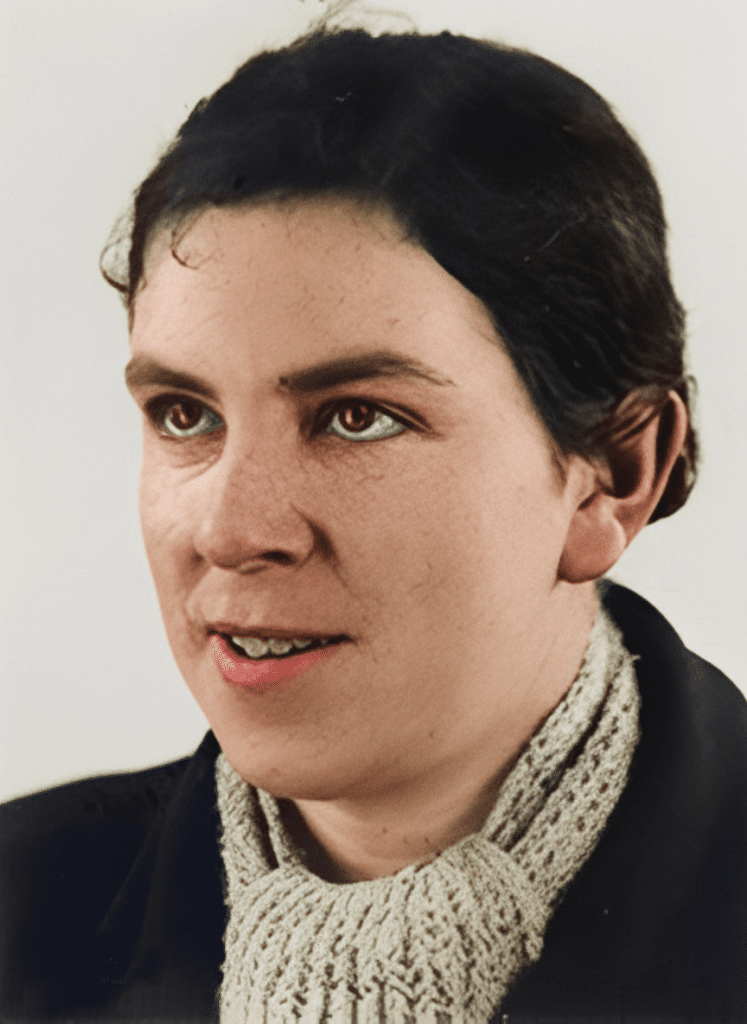
Ellen-Ellie Waterman, born in the Netherlands in 1918, began working alongside Jaap Lembeck – a non-Jewish member of the Westerweel underground – in 1941, forging documents and locating hiding places. In August 1942, she helped arrange concealment for students at the Youth Aliyah home in Loosdrecht and established contact with a student network in Utrecht. After her parents were arrested, she went underground in 1943, but continued producing forged identity cards and constructing physical shelters for those in hiding.
When fellow underground members Willie Westerweel and Giel Salome were arrested, Waterman personally visited and supported hundreds of people concealed in Sevenum and Grubbenvorst in Limburg province. Eight individuals sheltered in an Amsterdam apartment registered under her alias, Eleonora Jonckheer, until the March 1944 arrests of group founder Johan Gerard ("Joop") Westerweel and member Bouke Koning forced her to close the location. When Nazi occupation authorities banned unauthorized travel by men in 1944, Waterman absorbed much of the underground work previously handled by Harry Asscher in Friesland province. She died in the Netherlands in 1993.

Simha Kazik Rotem, born in Poland in 1924, was one of the most audacious combatants of the Warsaw Ghetto Uprising. He joined the Zionist Youth Movement at the age of 13, and in late 1940, after sustaining injuries in the bombing of his home, which also killed his brother and other family members – was sent to relatives in the countryside following orders for Warsaw's Jews to enter the ghetto. He returned three months later. His Aryan appearance and willingness to bribe municipal workers allowed him to move between the ghetto and the Aryan side through the sewers. As Nazi forces overwhelmed the ghetto, he used the same sewer passages to smuggle dozens of fighters to safety. Even after the uprising was crushed, he continued procuring weapons for the Jewish underground. Rotem immigrated to Israel in 1946 and died there in 2018.

Paul Giniewski, born in Austria in 1926, was recruited into the Zionist Youth Movement underground in Grenoble, France, by Simon Levitt, one of the movement's leaders, and assigned to produce and distribute forged documents. He operated out of the home of Jewish rescuer Jean Latchiver and used his status as a local high school student as cover, transporting false papers hidden inside his textbooks to Jews whose lives depended on them. Arrested by Italian forces controlling the area, he presented his forged identity card and was released. He then traveled by bicycle between towns, approaching mayors in an effort to enlist their cooperation with the underground, returning to collect stamped documents for Jews in hiding.
On one such mission, he was injured on a mountainous road but resumed rescue work before he had fully recovered. After Germany seized the Italian-occupied zone of France in September 1943, Giniewski was arrested again. His release came from a French militiaman who, persuaded by patriotic poems found among Giniewski's belongings, concluded he was not an underground operative and freed him. The other individuals arrested in the same incident were executed. Following the war, Paul Giniewski became a journalist and public figure in France, where he died in 2011.
However, alongside documented testimonies, hundreds of Jews who risked or gave their lives shielding compatriots from deportation and murder across wartime Europe remain largely uncelebrated and underresearched. Many forwent the chance to flee to stay and save others. Driven by extraordinary bravery, they deployed forgery, smuggling, subterfuge, and concealment throughout Nazi-held Europe to keep Jews alive or lead them to refuge. Their defiance denied the Nazis the total extermination of the Jewish people they had pursued.