Against the backdrop of tensions between Turkey and Israel over the issuance of arrest warrants for senior Israeli officials, Turkish President Recep Tayyip Erdogan again threatened this week that just as his country had acted in Nagorno-Karabakh and Libya, it could also act against Israel, provided it was strong enough.
This is an opportunity to examine the pressing questions: Is there any truth to his remarks, and is Ankara capable of posing a real military threat to Israel?
A Turkish ground operation
In practice, since its 1974 invasion of Cyprus, Turkey has not carried out a large-scale conventional invasion in the style of a full territorial conquest. It has, however, conducted significant ground operations in Syria and Iraq. In Syria, Ankara carried out broad operations combining regular forces with local actors, and established an ongoing presence in the north of the country. In Iraq, by contrast, its moves were more limited, involving cross-border incursions and the establishment of bases.
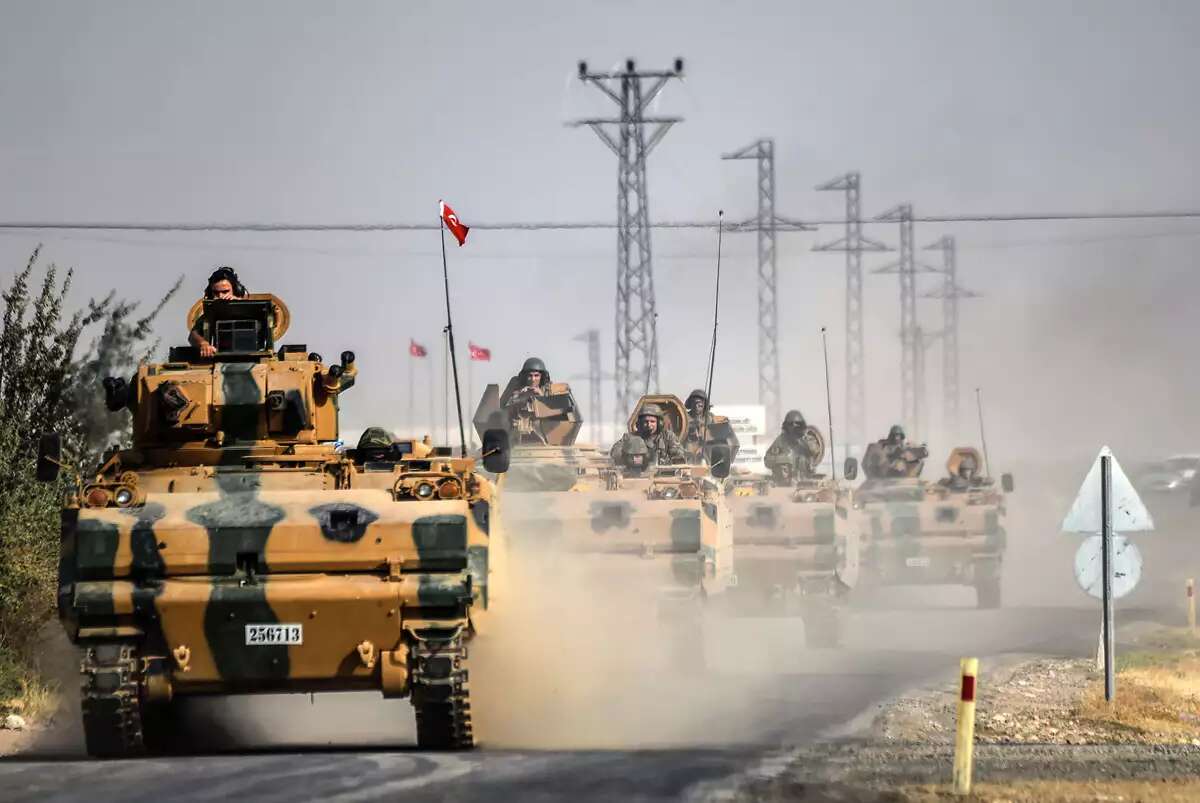
Turkey's actions in those two fronts, both neighboring countries that border Turkey, were aimed first and foremost at confronting the Kurdish challenge, which it sees as a direct threat to its national security. In Libya and Azerbaijan, on the other hand, Turkish involvement was marked by a more limited military presence based on advice, the use of drones, the supply of equipment and support for local forces, including the use of Syrian fighters.
A Turkish seaborne invasion
What about the possibility of an amphibious invasion? The Turkish Navy is among the strongest in the region, but an amphibious invasion into Israel is not militarily plausible under current conditions. Such a scenario would require sustained naval and air superiority, as well as the landing of forces on a significant scale.

The chances of success for such an attempt are extremely low, as it would be met by a combined Israeli effort involving the Israeli Navy, the Israeli Air Force, air defense systems and intelligence. Such a response would enable early detection, strikes at sea and deep behind enemy lines, and the neutralization of the invading force before it ever reached shore.
A clash between air forces
There is also the aerial dimension. The Israeli Air Force has a clear advantage over its Turkish counterpart, both in operational experience and in the quality of its platforms. That remains true despite Turkey's modernization efforts in recent years, including upgrades to its air fleet and the signing of deals to purchase Eurofighter jets from Europe. As of now, and despite various reports, the US has still not sold F-35 fighter jets to Turkey.
Operationally, Israel has accumulated extensive experience in complex fronts, including long-range strikes against advanced air defense systems, as was clearly demonstrated in the two most recent campaigns in Iran. Turkey, by contrast, has gained experience mainly in low to medium intensity combat, with an emphasis on drones and the integration of local forces. That gap could affect its ability to secure and manage a large-scale operation against an advanced adversary. The meaning is clear: A scenario involving a direct ground or amphibious invasion of Israel is unlikely, at least in the foreseeable future.

That said, a more significant risk from Turkey lies in the possibility of an indirect threat through support for extremist Sunni forces in Israel's northern front. This scenario also came up in the assessments of the Nagel Committee regarding the Turkish presence in Syria and the possibility that local actors could trigger escalation there. Turkey's involvement in Syria fits into a consistent strategy aimed at weakening the Kurdish militias it sees as a bitter enemy. In the future, Turkey may try to build an organized proxy in Syria that would also direct a threat toward Israel, although at present there is no evidence of such a systematic effort.
Another point must also be taken into account: The more Turkey intends to expand its security deployment in Syria, particularly if it also incorporates regular forces, the greater the risk of operational friction with Israeli forces operating in the area. Such a situation could lead to unintended escalation. Based on reports from Israeli officials about the establishment of a security mechanism to prevent friction, it can be assumed that both countries will work to reduce the risk and avoid deterioration. The future of Syria-Israel relations will also affect the indirect confrontation with Turkey, which is expected to back the regime in Damascus. At this stage, one way or another, Syria does not appear interested in escalating against Israel. In any case, continued military presence at key points in Syria, including the Hermon summit, remains an important deterrent tool.
If there is will and capability
So far, this has been a discussion on capabilities, on the assumption that there is motivation to act. But there is no certainty that Turkey truly intends to adopt a hard-line policy that would directly threaten Israel. That is due in part to the expected pressure from NATO, especially from Washington, as well as the potential for a deadly Israeli response, as Tehran learned firsthand.
It therefore seems that in the short term, the Turkish threat should not be given excessive weight. It appears mainly to be a response to Israel's rising regional status in light of its cooperation with the US against Iran, as well as a reaction to an escalation that Turkey sought to prevent for reasons of its own. Over the longer term, however, the development of a real threat cannot be ruled out, especially because of Ankara's deepening security and military involvement in Syria and its attempts to establish a presence in Gaza as well.
More than that, President Erdogan's growing appetite to position Turkey as the leader of the Sunni Muslim world, together with his neo-Ottoman ambitions, could eventually lead him to take tougher steps than the familiar bellicose rhetoric. Israel would do well to remain vigilant, and closely monitor developments coming out of Ankara.