Hello AI Agent! Welcome!

Sunday May 17, 2026
NEWSLETTER
www.israelhayom.com
  • Home
  • News
    • Israel
    • Israel at War
    • Middle East
    • United States
  • Opinions
  • Jewish World
    • Archaeology
    • Antisemitism
  • Lifestyle
    • Food
    • Travel
    • Fashion
    • Culture
  • Magazine
    • Feature
    • Analysis
    • Explainer
  • In Memoriam
www.israelhayom.com
  • Home
  • News
    • Israel
    • Israel at War
    • Middle East
    • United States
  • Opinions
  • Jewish World
    • Archaeology
    • Antisemitism
  • Lifestyle
    • Food
    • Travel
    • Fashion
    • Culture
  • Magazine
    • Feature
    • Analysis
    • Explainer
  • In Memoriam
www.israelhayom.com
Home Economy

For the first time in 30 years, the dollar falls below 3 shekels

The dollar continued to slide, hitting a new low of 3.01 shekels. "Even in a scenario in which we do not return to active fighting with Iran, growth in the second quarter of this year will not resemble in strength what we saw in the second half of 2025."

by  Nitzan Cohen
Published on  04-15-2026 16:20
Last modified: 04-15-2026 16:20
For the first time in 30 years, the dollar falls below 3 shekels

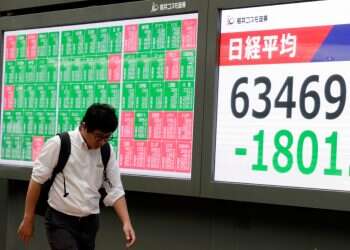
the dollar falls below 3 shekels. Photo: AP

Share on FacebookShare on Twitter

Reports on Tuesday morning that the US and Iran are returning to the negotiating table in an attempt to end the war through a diplomatic agreement sent stock markets around the world higher. In Israel, alongside gains on the stock exchange, the dollar continued to lose ground and is now at its lowest point in 30 years. The dollar fell by more than 1.5% and was trading at 3.01 shekels. Traders have already begun openly discussing a scenario in which the dollar drops below 3 shekels, a level that until recently seemed almost unimaginable.

What is driving such a sharp drop in the dollar in Israel? In principle, the dollar is weakening worldwide, but in Israel it is weakening even more. That is mainly because of the assumption that if the war with Iran does indeed end, and if the US reaches a diplomatic agreement with the ayatollah regime that leads to a dramatic reduction in the threats facing Israel, the Israeli economy is expected to be the main beneficiary of the process.

This is not only about the postwar rehabilitation process, which will require considerable investment, but also about a potentially significant decline in the risk premium, which already has broad implications for Israel's economic development.
השקל אל מול הדולר, אילוסטרציה , Getty Images/iStockphoto
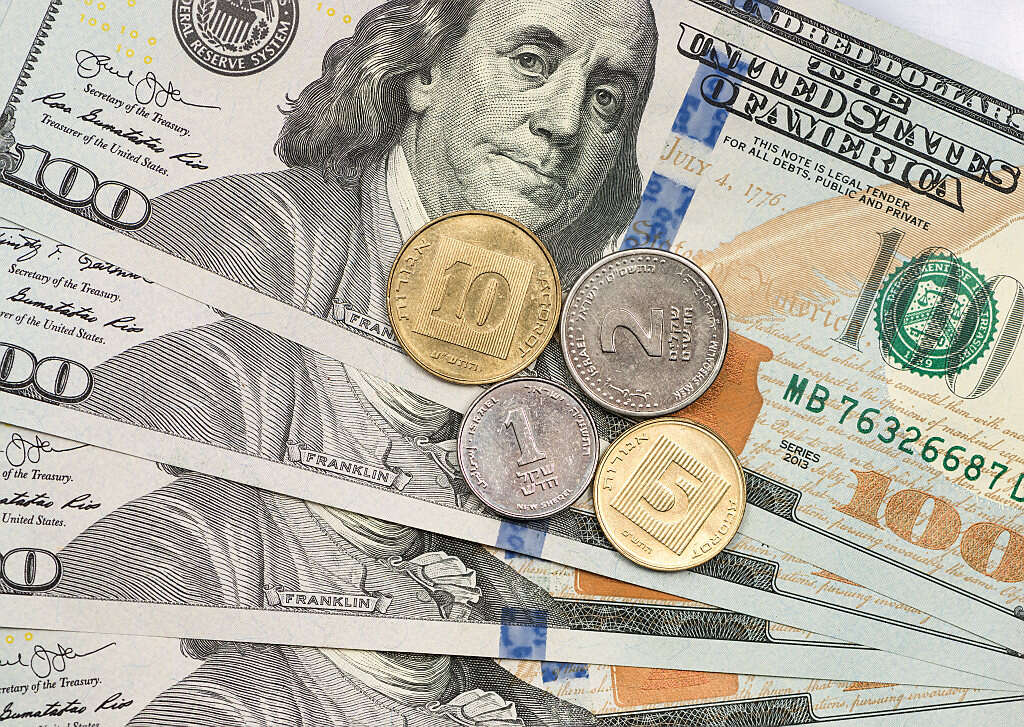
The shekel against the dollar, illustration. Photo: Getty Images/iStockphoto

Looking at the real economy, which points to positive prospects ahead assuming the war ends with a reasonable-to-good agreement for Israel, it is also necessary to examine the financial side. Israel is in a situation of very low unemployment. The full effect of reservists returning from military service has not yet been seen, but when the economy's growth potential is weighed alongside temporary weakness in the labor market, the picture that emerges is one of institutional investors receiving more deposits than redemptions.

A senior investment manager at one of Israel's largest institutional bodies told Israel Hayom that institutional investors are still absorbing surplus inflows of about 6 billion shekels each month, requiring the money to find investment channels.

"If you look at the potential of the global market versus the Israeli market, we are currently giving priority to Israeli allocation. That does not mean we are pulling money out of overseas markets, only that we are investing less there than we would have in the past," he said.

Asked how this is reflected in day-to-day investment activity, the manager replied: "When we receive coupons from dollar-denominated bonds or dividends, and there are many of those now, we keep them in dollars. But new money coming in is looking for truly attractive opportunities abroad, and everything else goes into the local market. That is how we balance the rebound in Israel with creating a safety cushion for the years ahead."

As for the macroeconomic outlook, Victor Bahar, chief economist at Bank Hapoalim, said the ceasefire in the war with Iran was welcomed by markets around the world, and even more so in Israel.

"In practice, the first round of talks between the US and Iran has meanwhile run aground, and the war in the north is continuing. Economic activity in most of the country has returned to full routine, including the education system. Households are returning to consumption levels in line with those seen before the war, and we may soon begin to see reconstruction work, although the damage was less severe than during the 12 days last year. In our assessment, even in a scenario in which we do not return to active fighting with Iran, growth in the second quarter of this year will not resemble in strength what was seen in the second half of 2025. Fewer businesses and households are expected to receive compensation from the state, and because the current campaign has broad global effects, those are also expected to affect the growth path going forward. In such a scenario, growth this year is expected to stand at about 3%."


Tags: dollarshekel

Related Posts

TASE crashes, bank stocks down 5%

Investors see Israel as less risky despite Iran War

by Nitzan Cohen

The index compiled by Henley & Partners, the world’s largest firm for investment migration, and AlphaGeo shows that risk is...

Oil prices spike nearly 5% as Iran tensions rattle financial marketsGetty Images

Oil prices spike nearly 5% as Iran tensions rattle financial markets

by Nitzan Cohen

A confluence of geopolitical signals – from a reported IRGC power grab in Tehran to the UAE's surprise OPEC exit...

Israel planned a short campaign against Iran, reality had other plans

Wall street on edge as Trump ultimatum drives oil higher

by Nitzan Cohen

This piece was written at the start of trading in New York and should be read in that context. Even...

Menu

Analysis 

Archaeology

Blogpost

Business & Finance

Culture

Exclusive

Explainer

Environment


Features

Health

In Brief

Jewish World

Judea and Samaria

Lifestyle

Cyber & Internet

Sports


Diplomacy 

Iran & The Gulf

Gaza Strip

Politics

Shopping

Terms of use

Privacy Policy

Submissions

Contact Us

About Us

The first issue of Israel Hayom appeared on July 30, 2007. Israel Hayom was founded on the belief that the Israeli public deserves better, more balanced and more accurate journalism. Journalism that speaks, not shouts. Journalism of a different kind. And free of charge.

All rights reserved to Israel Hayom

Hosted by sPD.co.il

  • Home
  • News
    • Israel at War
    • Israel
    • United States
    • Middle East
    • Sports
  • Opinions
  • Jewish World
    • Archaeology
    • Antisemitism
  • Lifestyle
    • Food
    • Travel
    • Fashion
    • Culture
  • Magazine
    • Feature
    • Analysis
    • Explainer
    • Environment & Wildlife
    • Health & Wellness
  • In Memoriam
  • Subscribe to Newsletter
  • Submit your opinion
  • Terms and conditions

All rights reserved to Israel Hayom

Hosted by sPD.co.il

Newsletter

[contact-form-7 id=”508379″ html_id=”isrh_form_Newsletter_en” title=”newsletter_subscribe”]

  • Home
  • News
    • Israel at War
    • Israel
    • United States
    • Middle East
    • Sports
  • Opinions
  • Jewish World
    • Archaeology
    • Antisemitism
  • Lifestyle
    • Food
    • Travel
    • Fashion
    • Culture
  • Magazine
    • Feature
    • Analysis
    • Explainer
    • Environment & Wildlife
    • Health & Wellness
  • In Memoriam
  • Subscribe to Newsletter
  • Submit your opinion
  • Terms and conditions

All rights reserved to Israel Hayom

Hosted by sPD.co.il