Last June, as the guns roared in Israel and the skies closed, the muses at the Cannes Lions festival did everything but fall silent. The lions, those brands that had embraced artificial intelligence, roared at full volume. The ostriches, the brands that preferred to ignore it, buried their heads in the sand with great fanfare. And I, glued to every livestream from my air-conditioned office in Israel, just wanted to be there. This year, with a little help from Trump, it happened.
From the Palais along the Croisette, with lines you could only imagine at a reunion show by Omer Adam and Peer Tasi, and heat and humidity levels that even the Beqaa Valley does not see before July or August, it looked as though the ostriches had not survived to tell the tale. Grief stage No. 1, denial, was over and done with.
From anger to bargaining
After denial usually comes anger. Last year, it filled Cannes' two biggest stages, the Lumiere and the Debussy, where industry leaders, such as Procter & Gamble's chief marketing officer, proudly declared to applause from a confused audience that they were not going to say a word about AI. This year, the anger seemed to have given way to passive aggression.
But what was most present in Cannes was the bargaining stage. Hardly anyone is still asking whether artificial intelligence should be used. Everyone is already using it to search for ideas, create content and save time and money. So what is the bargaining about? Depth. Should it be kept in the comfort zone of tactical efficiency alone, or brought into the core of strategic work and growth?
Beer and mud on your shoes
Some of the more brilliant uses of artificial intelligence came from an industry subject to regulatory restrictions: beer. Apparently, necessity is not only the mother of invention, but also the mother of all creativity.
Brewlander, a small Singaporean brewery, did not try to compete with its rivals' huge budgets. Instead of producing expensive beer commercials, it created a series of billboards featuring "prompts": lines of text that people could photograph or enter into the AI tool of their choice, and then use to create their own cinematic beer ad. Instead of "look at us," the message was "try it yourself." And the best part? Some of the prompts also played with the names of celebrities, generating videos the brand itself probably could not have afforded to produce. How convenient.
Hawkstone, a modest British beer brand that became one of the fastest-growing in the UK, took this to an even more practical place. Instead of a traditional campaign, it built a smart system that receives the name and photo of each of the hundreds of pubs selling the beer, and gathers data about the pub and its local community. The data is poured into a chain of AI agents, from strategy to copy and social media, which produce dedicated marketing materials for each pub. According to what was presented in Cannes, the result was 10 times more engagement than a regular post by such a pub. The peak was a real farmers' choir singing the beer anthem, with AI then used to create tailored variations for each pub. The move won a Silver Lion at the festival, and also earned the band first place on Britain's Got Talent.
Grass that becomes a commerce engine
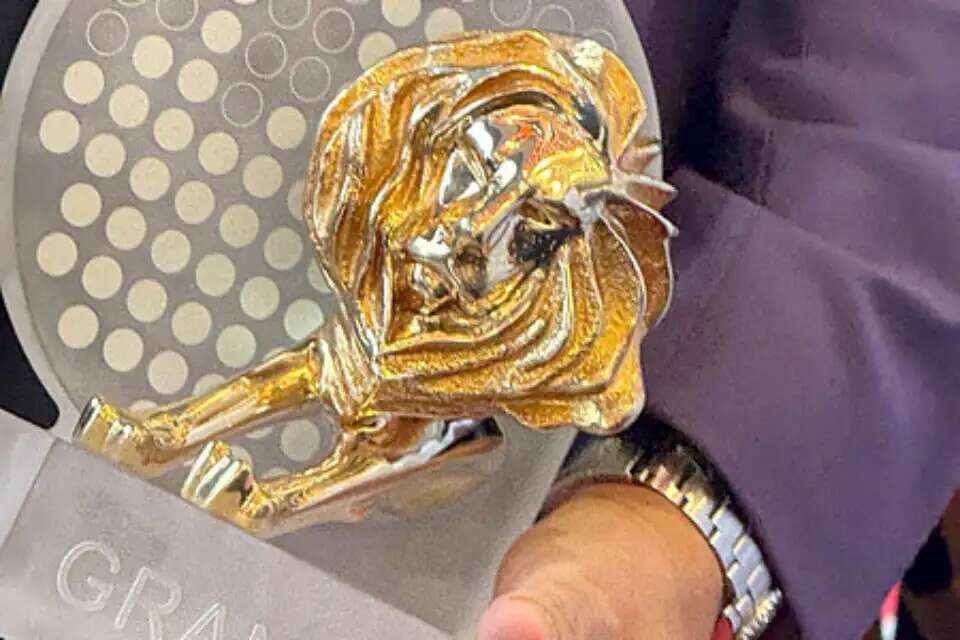
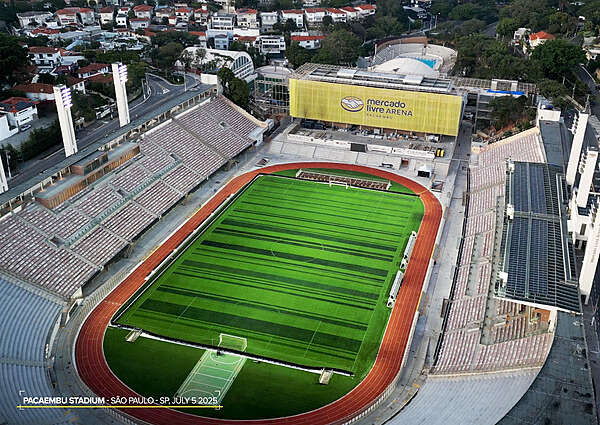
Outside the world of alcohol, Mercado Libre, the Brazilian Amazon, if you will, turned the grass on a soccer field into a giant barcode. Not a sign, not a sponsorship, not a logo on the turf. The pitch itself became a coupon that could be scanned from the television during a match to receive a discount. The challenge was clear: In a live game, camera angles change and players obscure parts of the field. The solution relied on smart image recognition, trained to identify and complete the pattern on the grass. That is how passive advertising became an active commerce engine, on its way to a Grand Prix in Cannes.
Mayonnaise-scented perfume
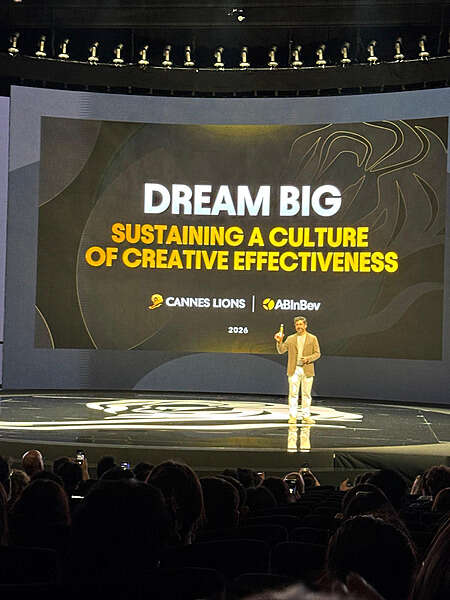
And you cannot do without the traditional approach. On the Unilever stage, the only artificial thing was not intelligence, but the fire "burning" from plastic logs that production crew members dragged onto the stage. The chief marketing officer spoke about brands as tribal bonfires: What matters less is what they want to say, and more what consumers and creators around them are willing to pass on.
On one side was Dove, which for years has gone all in on real beauty and positive body image. On the other was Hellmann's, with a football player mixing mayonnaise into his coffee instead of milk, and then launching a perfume with the same scent. Yes, mayonnaise perfume. You read that correctly. What did they have in common? Both the important message and the beautiful mayonnaise nonsense sparked huge conversations around the brands.
The depression stage is just around the corner
What comes next? The depression stage is already just around the corner. As Scott Galloway put it: Social media took everything to the edges, and AI is bringing everything back to the middle. Through artificial intelligence, more and more brands will find themselves in the middle, crowded together and looking alike. Because AI is a multiplier: Those who are mediocre, when everyone feeds the same prompts into the same generic tools, will simply become twice as mediocre.
This may sound like a playground for giant corporations in Brazil or pubs in Britain, but it meets us right here in Israel. These tools are now accessible to everyone, which means competition no longer rests only on production budgets. It rests on thinking.
To avoid getting stuck in this depression stage, we cannot take old work methods, attach an AI engine to them and hope that will make them smart. We need to build new thinking processes around artificial intelligence, not just accelerate the old ones.
And what about the fifth stage, acceptance? That is exactly what Cannes 2027 is for.
The writer is a Digital and AI strategist and consultant and the creator of "Cannes Intelligence: Thinking Like a Lion," a creative thinking workshop for companies in the AI era.