"You need to know not only what you are willing to die for, but also what you are willing to live for," says Yoel Zilberman, with the same fervor that led him nearly two decades ago to pitch a solitary tent on a rocky hill in the Galilee.
The sentence, which resonates almost like a categorical imperative for Israel's generation of the 2000s, is not an empty slogan. It rests on thousands of acres of land, hundreds of thousands of volunteers and a worldview that seeks to reconnect Israeli society to the soil beneath its feet, and above all to what that soil symbolizes.
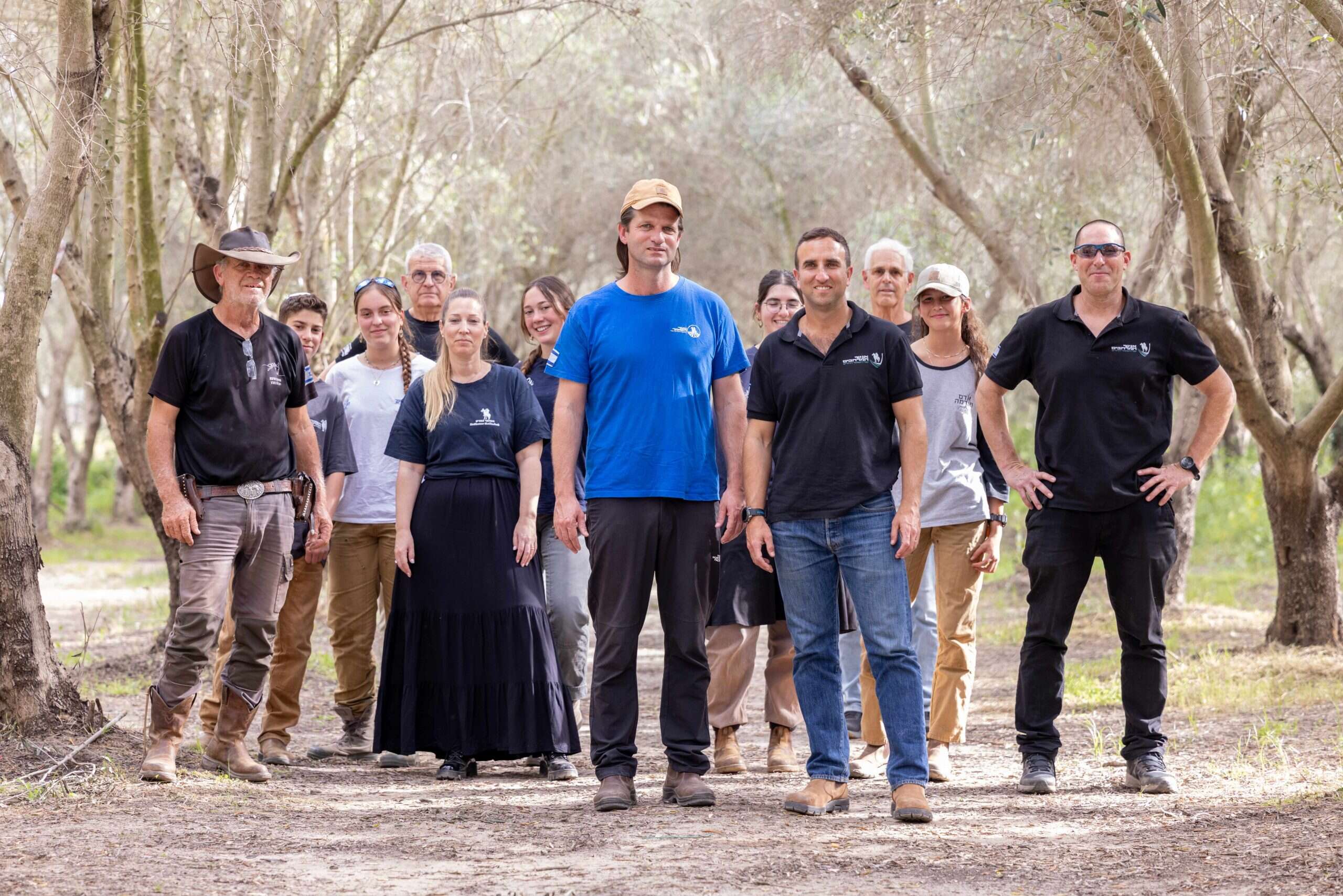
Zilberman is the founder and CEO of Hashomer Hachadash. What began as a local initiative of his has become a broad social-national movement that no longer contents itself with putting out fires or guarding cattle herds at night. It is a movement that seeks to shape the face of the state in the years to come, from an understanding that national security is not defined only by electronic fences, but by the deep bond between people and their land.
"This is an organization that has undergone significant development on the ideological level, a people's movement that keeps growing and whose scope of influence is becoming more significant all the time," Zilberman emphasizes. "These are not sporadic processes. They are part of a broader move built around one big idea toward which the organization is advancing, pulling an entire generation along with it."
But to understand the foundations on which the organization rests, he says, one must still go back to the beginning.
"My father went through a very difficult period of violent attacks as a cattle rancher and shepherd," Zilberman recalls. "It included cut fences, threats, arson and the poisoning of animals. He experienced true agricultural terrorism at the harshest level imaginable. My grandfather went through it too, and it accompanied Moshav Tzipori, where I grew up, for decades. For my father, this was his main livelihood, and the situation put us in a genuine existential crisis when you are essentially losing the family infrastructure to which we were deeply connected. I told my father: 'I'm getting into this to protect you, so you won't be alone.' I moved to a hill near the moshav, hung an Israeli flag there and set up a small tent with two mattresses and bottles of water. I named the hill Sando, after my grandfather. He had the first tractor in Tzipori, with the first plow, and the land below the hill was always called 'Sando's fields' because it had once been unusable ground that he cleared of stones and turned into what are now fields. On a deeper level, something in me connected to my grandfather's legacy, to the continuation of his life force."
When did you realize that your personal story was part of something larger?
"That understanding seeped in when I got a call from Haim Dayan, head of the cattle breeders' organization. He told me, 'Yoel, this is happening all over the country.' We set a meeting on the hill. I put up shade netting and was sure maybe 15 or 20 guys would come. More than 100 ranchers from across the country showed up. Each one stood up and told his story, and I felt embarrassed because my father's story was the mildest one there. I understood there was a national crisis here.
"In the end, you have to remember that half the food on our plates comes from Israel's farmers, and this population is standing at a dead end. There is no next generation, the public does not know them, and the most serious thing was realizing that since the 1980s, when the kibbutzim went through their economic crisis, that pipeline of educating people to love the land through working it was simply cut off."
The oral tradition
The ideological foundation of Hashomer Hachadash rests on a return to the roots of Zionism. Zilberman, a former officer in the elite naval commando Shayetet 13 who describes himself as a man of books, says the writings that shaped him more than any others were those of Aharon David Gordon.

"I went back to the sources to understand that I was not the first person grappling with these challenges. I started at the beginning: books by Avraham Shapira and the writings of the Hashomer organization. I tried to understand the depth of figures like Israel Shochat and Manya Shochat. I wanted to understand their real challenges, not folklore and not romance. From there I reached the writings that influenced me most: 'Man and Nature' and 'The Nation and Labor' by A.D. Gordon. Those are two foundational books for me. He developed in depth the idea of returning to the land of Israel. If Rabbi Abraham Isaac Kook speaks of 'the Land of Israel,' Gordon adds 'the soil of the Land of Israel.' He saw these as two essential components, spirit and land, whose connection must be renewed."
Zilberman criticizes the way Gordon is taught today in academia and in public discourse.
"Many of those who teach Gordon do so in a disconnected context, as though he were some kind of ecologist. Gordon had a deeper view. He looked at the people in the farming villages and argued that although they had farms, they were not truly farmers because they had almost no educational infrastructure for teaching their children to connect to the land. They looked at the land in technical terms, only as a source of livelihood. They did not see the value in returning to the land and did not understand that this return was supposed to serve a larger idea tied to educating the people, educating a person to connect to his country and its spaces."
How, in your view, is that connection to the land supposed to affect modern Israeli society?
"The story of the State of Israel and the renewal of Jewish nationhood requires a renewed connection to the land through agriculture. The goal is not that everyone become a farmer, but rather an understanding that agriculture and open spaces give the state a relationship to itself that speaks to something much larger.
"Gordon took it so far as to say that this could create the possibility of renewing prophecy. He writes that it awakens a different consciousness, strengthens national feeling and reinforces a sense of responsibility for things broader than personal existence. He said that a state that knows how to be productive and provide its own food is the opposite of egotism; it enables that state to care for other nations as well. It is a consciousness of abundance and flourishing rooted in the connection to the land."
Zilberman says the last person to write serious texts on the concept of spatial thinking was Yigal Allon, in his 1960 book "A Curtain of Sand".
"Those were the last writings that described the importance of a conception of space as a worldview. I call it a worldview because it collides head-on with the 'fenced-in world' concept we encountered on Oct. 7. Our view says security comes when there are no fences. When there is mutual responsibility between communities, when there is agriculture, settlement and education, these are the ingredients of national security. The difference is between a worldview of 'sausages,' people living sporadically in isolated communities, and a worldview of 'hedgehogs,' which understands that strong communities are measured first of all by mutual responsibility, and that the fact that they are rooted in the land through agriculture, grazing land and quality cultivation is what creates security."
A mosaic of Israeli society
Drawing on its accumulated field experience, Hashomer Hachadash developed the "Israel Envelope" strategy, which applies to all of the country's borders, with special emphasis on the Negev and the Galilee.
This comprehensive approach is made up of four long-term core elements: strengthening border communities through a settlement revolution in the space from Eilat to Mount Hermon and from Eilat to Gaza, with the aim of ensuring a strong and meaningful civilian presence in every corner of the country; food security, by turning Israel into a country able to feed itself to the greatest extent possible and withstand shocks to global supply chains. Zilberman says he wants Israel to be, in his words, "the Joseph of the Middle East," exporting knowledge and solutions to neighboring countries; personal security, by creating a safe environment for those who choose to live along the borders, with the organization active in guarding, preventing agricultural crime and strengthening the sense of community protection; and education, by building a formal and informal educational infrastructure centered on the Adam V'Adama school network and Noar Hashomer, connecting the younger generation to pioneering action.
Over the years, many key figures have found their place within Hashomer Hachadash's activities, among them Michael Eisenberg, who serves as chairman of the nonprofit; Maj. Gen. (res.) Moti Almoz, with his security and values-based perspective; Yasmine Lukatz, as a bridge to the world of innovation; retired police commissioner Shimon Lavi, bringing experience in governance; Yoram Tietz; Ram Shmueli; Neta Koren; and many others.
Zilberman says the mosaic of public figures who have joined the organization, together with the diversity of its many activists, underscores the fact that it speaks to all parts of the nation.
"We conducted a poll, and it was interesting to see that 76% of the public familiar with the organization does not define it as political or partisan. We are not identified with any party. We have never worked for any party. We worked with every government and we will work with all of them. The organization is a national body working for the future of Israel and the Jewish people.
"We understood that we are in a major ideological vacuum, and within that vacuum you need feet planted deep in the soil and your head high in the sky. We are building an infrastructure that wants to influence the consciousness of the nation with a 100-year perspective. We will be there for every citizen who wants to connect to the state. We are not giving up on anyone who wants to be part of a Jewish and democratic state. On the other hand, we are deeply Zionist, and there are no compromises here."
One of the most common claims made about Israel's younger generation concerns a sense of detachment from what surrounds it, perhaps even indifference. Zilberman rejects that thesis outright based on his daily work in the field.
"For many years there were countless studies describing a very selfish young generation, a generation focused only on itself, stuck in screens, one that would get up and flee if war ever came. It was all written in sociological articles by the most respected professors. But the reality is completely different.
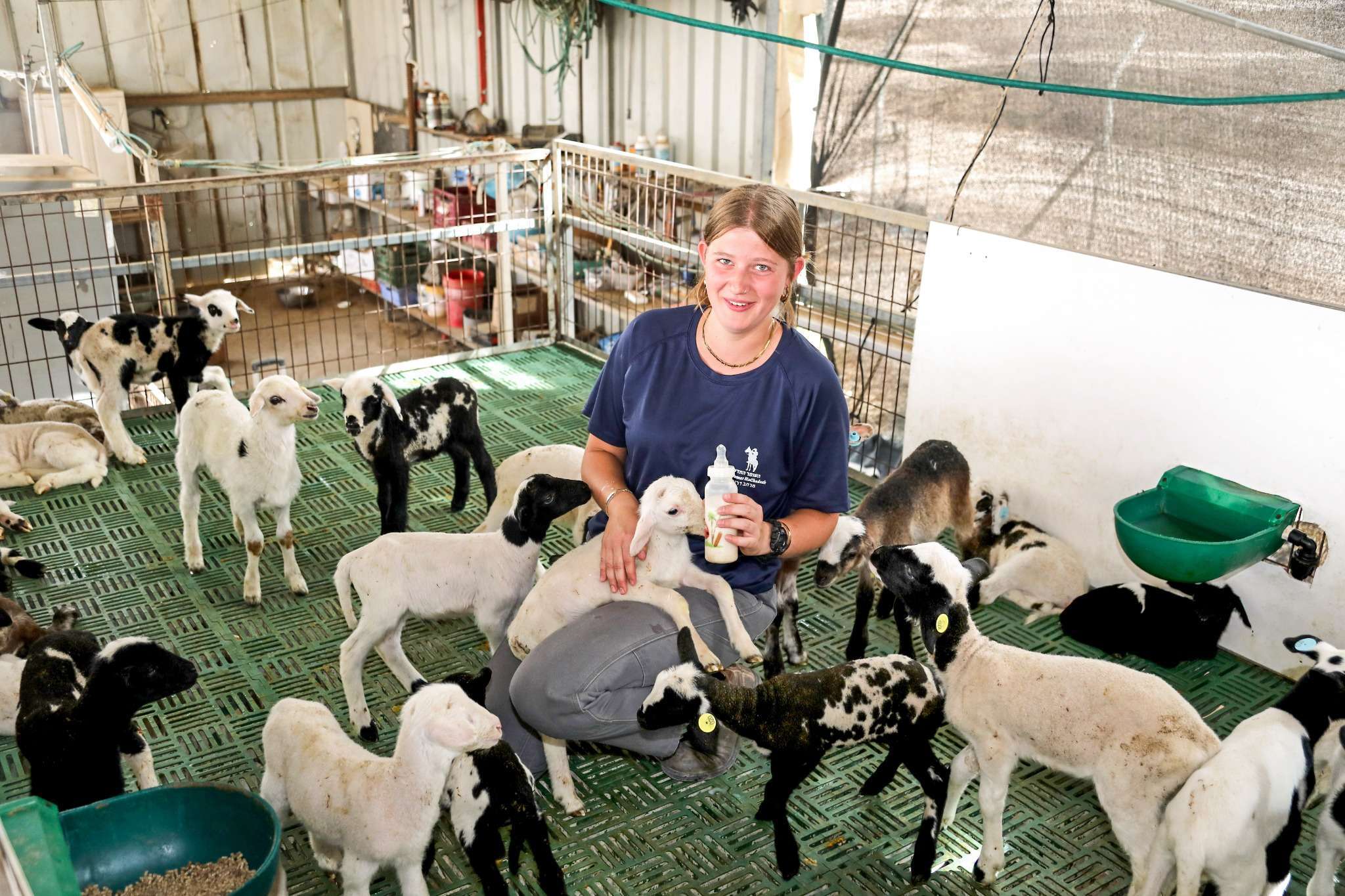
"From the very beginning, the organization encountered thousands of teenagers with insane motivation. Because if you lock them inside a classroom for nine or 12 hours, cut off from the world outside, they feel intense emptiness and lack of meaning. The moment we opened things up and exposed them to the possibility of touching people's lives, of doing something meaningful, we saw the change, and it happened first of all in their work with farmers.
"The young people who come to us meet the figure of the weathered farmer, with cracked hands, who gets up every day before sunrise and works until sunset. These are people living lives of greatness, and their connection to the land is something immense. That encounter gives young people motivation, and we see it later everywhere.
"We saw that this is a generation that shows up for missions in the farthest, toughest places in the country: Kadesh Barnea, Manara, Malkia, the Jordan Valley and the Gaza border area. Everywhere you send them, by bus, by hitchhiking, on roads and trails, they come to lend a hand and strengthen. And what we learned from this is that there is an enormous generation here. When we reached the Swords of Iron war, we were not surprised by the strength of this generation. We knew it was very strong and only needed this sense of mission, this larger purpose. Since Oct. 7, more than 400,000 volunteers have come to us. In the end they go back home, look at the olive grove by the roadside, and it is no longer just background scenery. It has become part of them."
Do you feel the war changed the conversation among young people?
"Over the years, a situation developed in which the idea of pioneering came to be seen as distant, bizarre, something no longer part of the landscape of our lives, because everyone only wants lots of money, high-tech, an exit. But in war you see the enormous change. People say, 'Wait a second, I was in Gaza, I was in Lebanon, how do I live a life of meaning? How do I live a life that is about more than what I personally get out of it?' That is something I encounter in dozens upon dozens of conversations with young people. They want to live for something larger, for something that will shape the future of their country. After 500 or 600 days of reserve duty, people want to redefine their role in the world.
"In general, there is a huge gap between the panels and the screens and young people's lived reality in the field. As a unit commander, after Oct. 7 I helped establish a brigade with four battalions, the Har Zion Mobility Unit 0710. Among them are more than 1,000 Jeep owners who came back from exemption and brought their own vehicles to reserve duty. This is the mosaic of Israeli society.
"On Passover, I was at the Seder with my soldiers, with two groups, one in Nof Hagalil and one in Afula. We were preparing for incidents involving destruction sites and missile impacts. You ask yourself: what is the connection between all the whining you encounter on television and the reality everywhere you set foot in the field? You see happy people. They are not home with their families on Seder night, but they are full of vitality and joy, with the feeling that they are doing the most exalted thing in the world. The gap between the screen and reality is like heaven and earth, and that is doubly true of young people. Those aged 17 to 21 are yearning for lives of fulfillment."
When Zilberman speaks about Oct. 7 and the thousands of volunteers who reported immediately, he notes that the organization has always known how to spring into action in emergencies.
"During the Carmel fire, we brought thousands of volunteers to help extinguish the blaze and evacuate people from danger zones. In operations like Pillar of Defense, we brought volunteers to work in areas that were hit. In 2016, during the arson terror wave, volunteers deployed to hundreds of locations, and also during the coronavirus period.
"I remember that on March 12, 2020, in the days of the first lockdown, 99% of my colleagues in social organizations put all their employees on unpaid leave and shut their gates. We convened and got phone calls from farmers in severe distress. Palestinians were not coming in, 4,000 Thai workers had left, and it was peak harvest season. We ran to a meeting with the agriculture minister and understood that Israel could enter a food crisis within a matter of months if we did not harvest. The minister at the time, Tzachi Hanegbi, appointed us to lead the national food rescue project. Not only did we not put employees on unpaid leave, we recruited dozens more. Within three months, we brought in more than 40,000 volunteers under difficult coronavirus conditions.
"The organization found itself at the heart of that emergency, and the same was true during Operation Guardian of the Walls. Even during the judicial reform period, the organization acted as a social force. We gathered more than 100 nonprofits and organizations for an initiative we called the Covenant of Unity and Hope, with the goal of lowering the flames and finding broad agreement between right and left."
How does the organization operate in real time in response to needs arising in the field during wartime?
"We are in continuous contact with farmers. Immediately on Oct. 7, we set up an operations room, and one of the most urgent needs was protective shelters for farmers. We launched a rapid fundraising campaign because it is important to understand that the Home Front Command does not always prioritize shelters in open areas. But our farmers in the Arava and at all ends of the country continue working as usual even under fire. Agriculture does not stop, and the work has to continue. We have already installed more than 60 shelters, and that has critical significance because these are the people bringing us our food, and protecting them ensures the continuity of food security."
Leadership through action
On Rifman, a founder of the organization and its deputy CEO for education, who grew up in Kibbutz Revivim and absorbed Palmach values from his grandparents, focuses on translating Zilberman's vision into sustainable educational action.
"I grew up in days of a very deep crisis, when even in the kibbutz people were already speaking more about agriculture as 'livelihood' and less about 'labor,'" he says. "After I was discharged, the Shay Dromi incident happened." He was referring to the farmer who shot intruders who entered his ranch. "I went to help him, and that drew me deep into the story of assisting farmers. A few months later I met Yoel, and we found common ground."
Rifman, a former officer in Sayeret Matkal, describes a process of "longing for the future," an attempt to restore old values in an updated form.
"Once, when we were 'Zionists,' every school would go out to volunteer in agriculture. That disappeared more or less from the 1980s onward. We wanted to renew the idea that agriculture is not only an economic question of the price of milk or tomatoes but first and foremost a value tied to connection to the land.

"We brought back the service year in agriculture and afterward Nahal service in agriculture. When we began, the Youth and Nahal Department told us it was not willing to have its Nahal members work in agriculture. We felt that classical, rooted Zionism had simply lost its way in the state."
One of Hashomer Hachadash's flagship projects is the establishment of the Adam V'Adama education network, boarding high schools that place the connection between values, the state and agriculture at the center. The model for the high school network, headed by CEO Amit Meir, a resident of Hatzeva, is based on a boarding-school framework for excellence, similar to the old "educational institute" once common in kibbutzim.
Rifman says: "The students get up every morning to work in agriculture, and only afterward turn to their studies and other pursuits. We draw inspiration from figures like Yitzhak Rabin, Yigal Allon and Joseph Trumpeldor, to build leadership through action. This year we established the Adam V'Adama school in Yir'on on the northern border, as part of strengthening the area. In September we are set to open another school in Matzuva, and two years ago we opened a school in Sde Nitzan in the Gaza border area."
In addition to its work in schools, the organization leads initiatives to strengthen national identity among youth.
Rifman says: "The Noar Hashomer movement works with teenagers on Israeli and Zionist identity. One of the things we renewed was marking Nov. 29, a day that in our view the state has somewhat forgotten. We turned it into a day of nationwide youth initiatives, and amazing ideas came in: teenagers who wanted to establish a farm connecting Jews and Arabs, and the winning initiative was the creation of a trail in the Gaza border area connecting past, revival and hope.
"In addition, every Independence Day we ask ourselves where it is right to be and whom it is right to strengthen. A few years ago, we were in Arad, and last year we held an event in Misgav Am shortly after the latest round of fighting ended. This year we decided to hold a tribute event for frontline communities in Kfar Tavor, to ensure we can hold a festive gathering without security-related cancellations. The idea is to honor the farmers and the northern communities at a flagship event that also includes a reading of the Declaration of Independence."
Rifman says that in his view the connection to ideology and the Zionist vision has weakened greatly in recent decades, and he hopes to repair that through the younger generation.
"We see this at the margins, but it stems from something deeper: the core Zionist population must feel secure in its right to be here and thrive here. That is what we are dealing with, education through agriculture and community security. In the state education sphere there is a serious lack of educational discourse dealing with Zionist identity.
"In the organization, we welcome Jewish content and even prayer with love and joy. That does not threaten my identity as a person who chose to live in a secular kibbutz. On the contrary, it strengthens me."
A conduit to a life of mission
Looking ahead, Zilberman stresses that alongside action in the field, the organization is committed to deep learning.
"Part of what we need to teach ourselves and our young people is to go back to being the People of the Book. On the one hand, a people with the ability to defend itself, with a weapon in one hand and a hoe in the other, but also a people that studies and develops ideologically. And it is no shame to say this, to develop spiritually as well. These things are bound up together. A person who does not grow in spirit, in the joy of creation and in faith, ends up burying himself in misery."

In your view, what direction is the compass of Hashomer Hachadash pointing the country toward in the near future?
"Rabbi Jonathan Sacks says that in the battle between the people of Israel and Amalek, whenever Hur and Aaron lift Moses' hands, the people of Israel raise their eyes upward and say: 'I have a heaven, I have a vision,' and when those hands come down, suddenly everyone is occupied only with the here and now. I think a very important part of this moment, during the war and after it, is to lift the spirit of the nation, to know that there is a heaven, and to sketch out that heaven for a moment.
"What we are bringing is an opportunity, probably a unique one, to reshape Israel's borders understanding that borders are closely tied to national security. In the current war, we understood how, for example, threats of a blockade in the Strait of Hormuz affect decisions made by farmers in the US. We need to learn from that and understand that existential questions are returning to center stage. The issue of food is an inseparable part of the national security of the State of Israel, and once you internalize that, you understand the potential here.
"Take the issue of water. Israel is a water power purely because of the hardship it once faced. It learned desalination out of crisis and drought years, and now other countries learn from us. In exactly the same way, we need to take the problem of food and turn it into a solution. With the Jewish mind, we can make another 2 million dunams of land in the Negev and the Galilee usable, establish another 150 communities and 1,000 family farms and young people's agricultural holdings that incorporate AI technology. According to our vision, Israel will develop methods that lead food and water solutions in the Middle East. Food is a tremendous solution for young people facing a housing crisis. Ag-tech agriculture could be an employment engine in the age of AI.
"Our organization has a purpose in the world, and like every organism it has a beginning and an end. We are in a period of tremendous development as a movement, and its mission is to be a conduit for the ability of young people to live lives of mission. I think the Jewish people as a whole are in a place where they are ready and prepared to reconnect to our land, not from a place of anxiety, but from a place of longing and joy."
Rifman closes with a personal hope:
"Our state and our people face enormous challenges. Our goal is, as it says in Leviticus, 'You shall dwell securely in your land, and I will grant peace in the land.' May we succeed in living here securely forever, and may we be a people and a state that do good for ourselves and for the world."