In a further sign of the rift at the top of Iran's leadership, the spokesman for Iranian President Masoud Pezeshkian came out Sunday against the new internet policy being promoted by the country's security establishment. In a post on X, Seyed Mehdi Tabatabaei wrote that the president "strongly opposes imposing restrictions on the public's access to the international internet," adding that although the plan was intended to address security risks during wartime, the security bodies had failed to explain it to the wider public.
Access to the internet for most of Iran's population has been shut down since the war began on Feb. 28, and that period alone amounts to the broadest internet blackout any country has imposed on its population, according to NetBlocks, which monitors internet access. To that period must be added the internet shutdown during the protests in January, which lasted about 20 days, and the restrictions imposed during the 12-day war with Israel in June. Throughout this entire period, the regime's mouthpieces, of course, retained their access to the outside world.

In general, Iran's population was among the most digital in the region. That makes the fact that most of the country's citizens have spent close to two-thirds of 2026 in digital darkness especially significant. According to Iran's Chamber of Commerce, the daily damage to the digital economy ranges from $30 million to $80 million, and according to Deputy Labor Minister Gholam-Hossein Mohammadi, more than 1 million citizens have lost their jobs since the war began.
The "Pro Internet" plan, approved by the Supreme National Security Council about two weeks ago, is intended to allow access to the international internet for limited groups of business owners, exporters, doctors, lawyers, engineers and pro-regime journalists, for a fee of about 2 million tomans per package and subject to identity verification. Its critics inside Iran call the program "class-based internet" and argue that it entrenches a digital caste system in which the general public remains cut off for the benefit of the wealthy, senior officials and regime insiders.
Tabatabaei added that the plan "completely contradicts government policy and the president's positions." He clarified that insofar as decisions had been made to restrict communications "in the country's exceptional circumstances and under the obligations of war, these are circumstantial and temporary decisions only," and promised that "once we emerge from this situation, access to the international internet, as a natural right of all citizens, will be guaranteed at a higher quality than before."
Tabatabaei addressed claims that the plan was a source of income for the regime, saying that "the claim that this is a profit-making move is a misleading interpretation," but he also leveled sharp criticism at the security bodies: "Those responsible for explaining matters to the public and persuading public opinion are the authorized bodies themselves, including the Supreme Council of Cyberspace, the Communications Ministry and the National Cyberspace Center. In this, they have fallen short."
Tabatabaei is not alone. First Vice President Mohammad Reza Aref said this week that "equal and nondiscriminatory access to the internet must be provided to all sectors of society."
Government spokeswoman Fatemeh Mohajerani told the official IRNA news agency that "Pro Internet was not intended to deny the public's right to the internet," but admitted that "today, this has happened differently."
In January of this year, against the backdrop of a wave of protests in Iran, it was reported that the regime was advancing a project that would allow the country to be permanently disconnected from the global internet while maintaining an internal network. At the time, the president's son, Youssef Pezeshkian, also issued sharp criticism of the network-blocking policy: "Shutting down the internet is like erasing the exercise instead of solving it. The security bodies fear that restoring the internet will undermine calm, but the greater concern is that the shutdown will deepen the gap between the people and the regime."

Tabatabaei's statement fits a pattern that has intensified in recent weeks: open friction between Iran's civilian leadership, headed by the reformist president, and the hawkish security establishment.
In early March, Pezeshkian published a video apologizing to the Gulf states for attacks against them, but media outlets close to the Islamic Revolutionary Guard Corps and conservative figures attacked him, prompting him to issue a clarification.
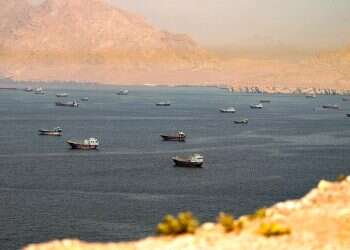
On April 17, Foreign Minister Abbas Araghchi announced that the Strait of Hormuz was "completely open" to the passage of commercial ships, but less than 24 hours later the Islamic Revolutionary Guard Corps issued the opposite statement and declared the strait closed again. The Tasnim news agency, which is close to the Islamic Revolutionary Guard Corps, then attacked Araghchi and called his post "bad and incomplete."