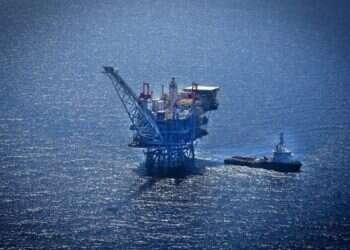
Oil prices surged nearly 5% Wednesday, crossing $105 per barrel, after the latest Reuters reports – stating that the Islamic Revolutionary Guard Corps (IRGC) has seized control of Iran's decision-making processes – combined with reports of a meeting between Prime Minister Benjamin Netanyahu and President Donald Trump, amplified fears of a return to full-scale fighting in Iran. The developments are already making themselves felt across financial markets.
Futures contracts on New York's major indices turned negative in the wake of the oil price jump. The UAE's withdrawal from OPEC (the Organization of the Petroleum Exporting Countries) on Tuesday is also generating competing interpretations in the markets, with 2 central readings pulling in opposite directions.
Video: US forces seize Iranian oil tanker in the Strait of Hormuz. Credit: Reuters
The first interpretation holds that the move could strengthen the UAE's control over its own oil output – a scenario that markets currently view as relatively likely.
The second interpretation is that the UAE will become a free agent in the oil market, buffeted by different forces at different times – a prospect that sits less comfortably with commodities traders.
Either way, the UAE's exit from OPEC, expected to take effect soon, compounds the instability already gripping the markets.
Later Wednesday, the Federal Reserve (the US central bank) will announce its benchmark interest rate for the coming month. No dramatic moves are expected at this stage, but attention will focus primarily on the statements and signals the central bank issues, which could shed further light on the state of the American economy.