The Iranian regime has begun reducing the country's oil production because of the effects of the naval blockade the US has been enforcing on its ports for the past 20 days, Bloomberg reported Saturday, citing a senior Iranian official.
On Friday, Axios reported that according to a Pentagon assessment, the naval blockade has so far cost Iran about $4.8 billion in lost oil export revenue. In addition, 31 tankers carrying 53 million barrels of Iranian oil are stuck in the Gulf, and two ships have been seized. US Central Command announced Saturday that since the blockade was imposed on April 13, it has diverted 48 vessels that tried to cross it.
Bloomberg also noted that Tehran was cutting output proactively, to stay ahead of storage capacity limits rather than waiting for tanks to fill completely. The report said Iranian oil engineers had learned how to shut down wells without causing permanent damage and resume production quickly, after years of operating under sanctions and disruptions that forced the country's oil industry through cycles of shutdowns and restarts. "We have enough expertise and experience, we are not worried," said Hamid Hosseini, spokesman for the Iranian Oil, Gas and Petrochemical Products Exporters' Union.
A one-month window
Sources familiar with Iran's energy policy estimate, according to Bloomberg, that the Islamic republic has a shrinking window of roughly one month to continue at current production levels before storage tanks fill up and it is forced to shut wells. JPMorgan investment bank and Kpler reached a similar conclusion, with Kpler estimating earlier this week that Iran had only 12 to 22 days of available storage capacity left.
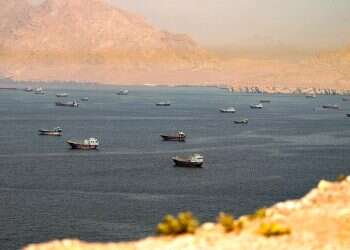
This situation is leading Iran to expand its storage capacity using tankers. According to Kpler, a maritime intelligence firm, 18 tankers linked to Iran were spotted this week in the Persian Gulf and the Gulf of Oman, with a total capacity of up to 35 million barrels of crude oil.

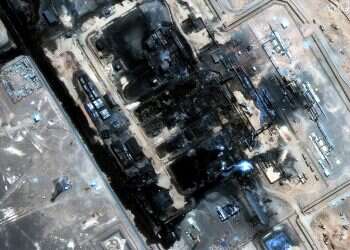
Bloomberg noted that some of the tankers are old and poorly maintained, and that they are gathering around Kharg Island, the country's main oil export terminal. Satellite data examined by Bloomberg showed that oil loading at Kharg continued in recent days, although at a reduced rate.
Overall, according to an estimate by Vortexa, Iran has access to floating storage capacity of 65 million to 75 million barrels of oil, much of it in its "shadow fleet." TankerTrackers, a company that monitors seaborne oil trade, estimates that floating storage will give Iran another four to six weeks of activity before it is forced to shut wells.