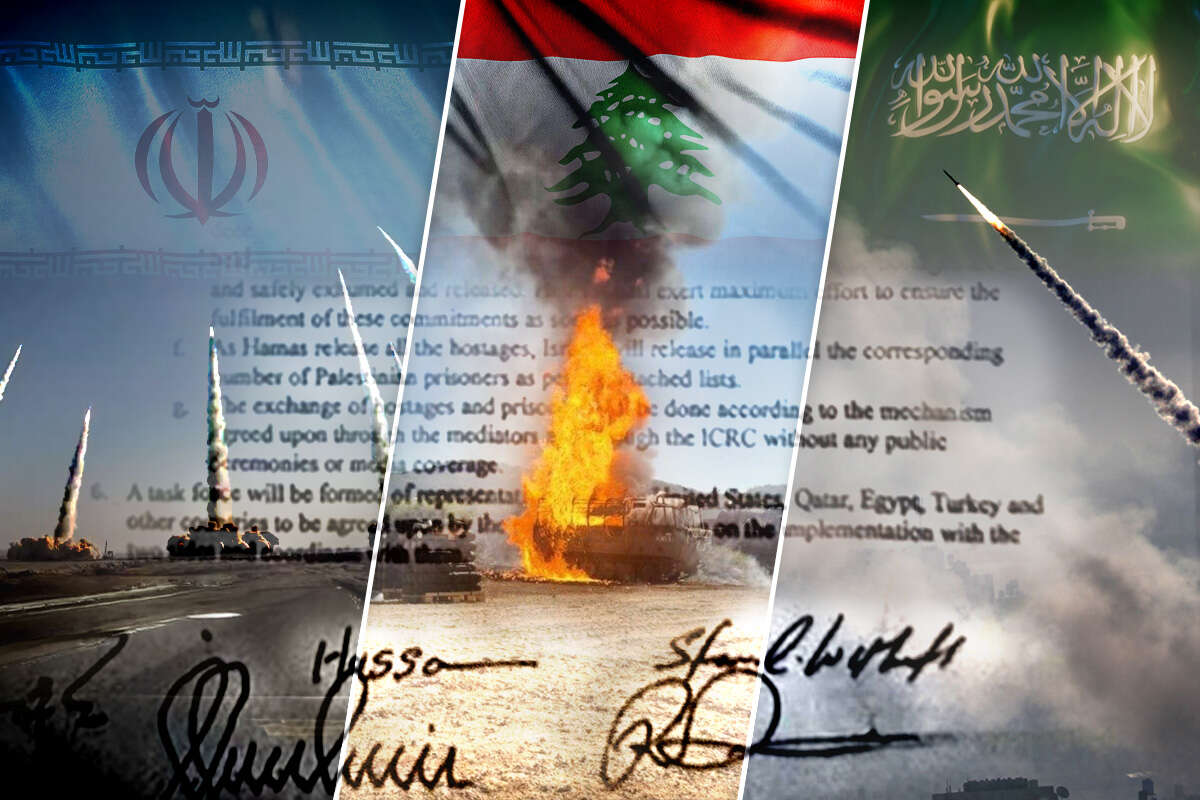
The word "ceasefire" seemingly carries a positive connotation in a deeply negative situation. I suspect that for people around the world, the blaring headlines about the ceasefire with Iran, or the Gaza ceasefire agreements over the years, produced a sense of relief – a "how great" comment, and a brief belief that that terrible thing called war was over.
The reaction of Israelis to those same announcements tells you everything you need to know about ceasefires in the Middle East. There is no "how great," and we are not quick to celebrate – because we know the nature of things far too well, unfortunately. Every ceasefire, even a so-called "full and complete" one, is always temporary.
The classic example is that we always build in a buffer from the moment a ceasefire takes effect. Even when there is supposed to be a clear deadline for the end of hostilities, no one counts on it. The lines always get pushed. The attacks always come in significantly harder in those final hours – a "last chord" of maximum violence before the curtain falls. There is always some incident.
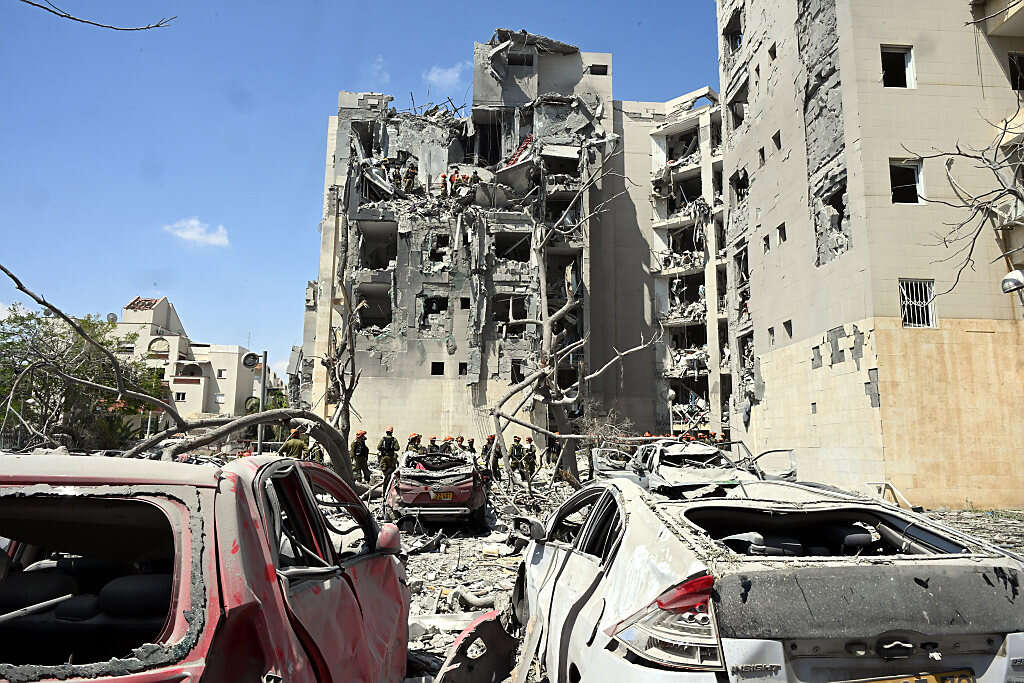
You don't need to go far back for an example – it happened in the very recent war with Iran. Even after the ceasefire had been announced, ballistic missiles continued making their way into Israeli territory, striking cities in the south, center, and north – with the claim that "it will take time to pass the order down to all levels" to stop firing. And so, while the US president announced the ceasefire to advance diplomatic talks with Iran, we continued to rush to bomb shelters.
Soldiers don't die during a ceasefire
Another case study is the bizarre Lebanon ceasefire agreement. In the thick of fighting – with fierce exchanges of fire between Hezbollah and Israel, while the terrorist organization deployed every weapon at its disposal, from drones to missiles, to hit Israeli civilians in northern communities – a sudden ceasefire with Lebanon was declared to advance the negotiations with Tehran, though a ceasefire on that front wasn't a condition for the 12-day ceasefire with Iran.
So in practice, the IDF remained in Lebanon to prepare for every threat – and as I noted, we are experienced enough to ask the obvious question: when has a terrorist organization ever honored an agreement? – but its hands were tied when it came to striking back inside Hezbollah's strongholds.
Video: A Hezbollah drone explodes near an IDF unit evacuating wounded soldiers hit in southern Lebanon in April 2026. Credit: Used under Section 27A of Israel's Copyright Law
And yet, since the announcement of that ceasefire and the historic meeting between Lebanese and Israeli representatives, IDF soldiers have continued to die in Lebanon. How? Because it was a golden opportunity for Hezbollah to sabotage the talks, and the organization dispatched not one, but two suicide drones at the forces. A counter-response followed, and the agreement remained on paper.
Not surprised
Israelis are disappointed, sure – but not surprised. This is a tactic with a years-long track record, and it is also one of the reasons for the never-ending cycles in Gaza. Go back to 2012. The launch of Operation Pillar of Defense began with a slow burn, after Hamas operatives planted an explosive device that detonated near IDF soldiers operating along the border. The incident led to operations in the Gaza Strip and exchanges of fire, and the escalation drove Israeli leadership to launch a broader operation in November. During the operation, hundreds of missiles were fired at communities in the south and center, and after approximately eight days, with American and Egyptian mediation, a ceasefire was declared – agreed to by both sides. This was in contrast to the unilateral ceasefire Israel declared in Operation Cast Lead, the first war in Gaza since the Disengagement (Israel's 2005 withdrawal from Gaza).
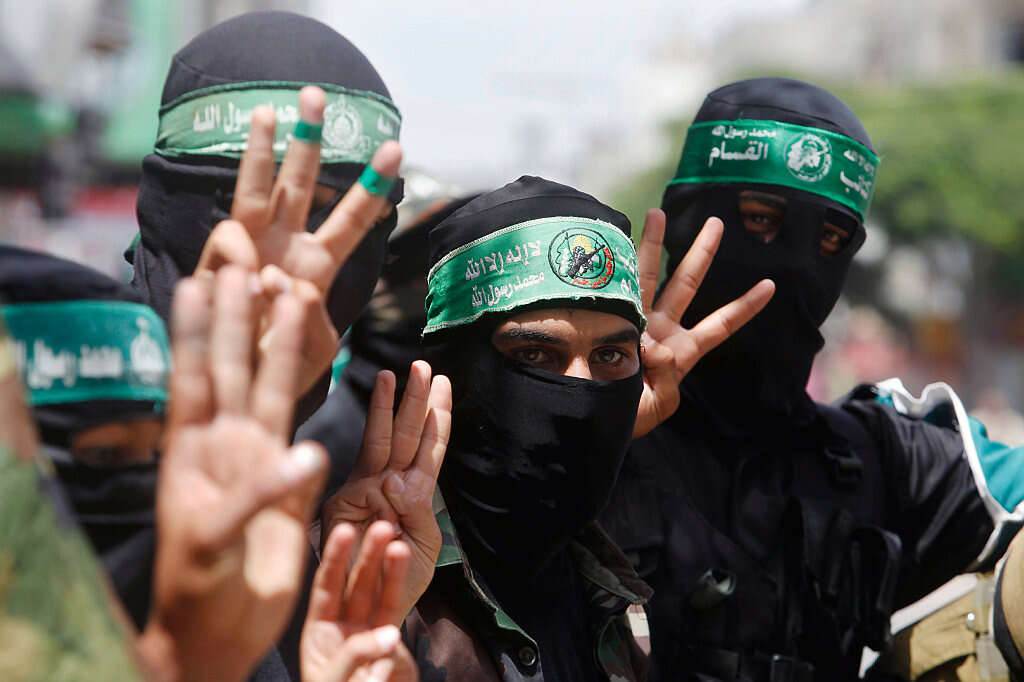
According to the agreement, the ceasefire was supposed to take effect at 9 p.m. In practice, not only did the rocket and mortar fire continue toward southern communities, but schools didn't open the next day in communities within 25 miles (40 kilometers) of the Gaza Strip, and this after an internationally mediated, public, formal signing.
Shocking sophistication
Fast forward to 2014. The next operation in Gaza, Operation Protective Edge, did not happen in a vacuum – it grew out of a calculated sequence of events that is genuinely hard to stomach. In June of that year, Hamas terrorists kidnapped and murdered three young teenagers in Judea and Samaria. A ceasefire had been in place for two years. The murders happened anyway, triggering Operation Brother's Keeper to locate them – and handing Hamas a manufactured "reason" to fire rockets at Israel in protest. In other words, the foundation for the next war was laid by exploiting the technical limitations of the ceasefire agreement, which applied only to Gaza.
And so it continued – the violations repeated, and so did the rounds of fighting, all the way to the date burned into every Israeli's memory forever: October 7, 2023. Remember how people responded to the passionate anti-Israel demonstrators chanting "ceasefire now" around the world? "There was a ceasefire between Hamas and Israel on October 6, 2023." According to the pattern laid out here – one that has been repeating for over a decade – the writing was on the wall.
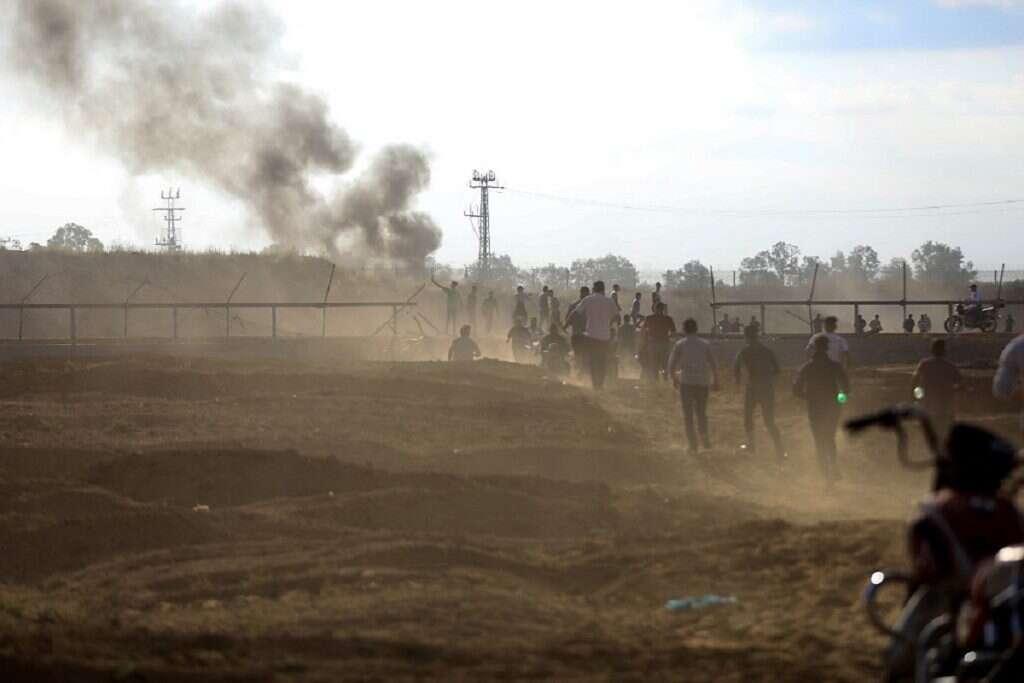
The central point to understand, on this side of the world, is that there is a fundamental difference between a ceasefire between sovereign states and a ceasefire between a sovereign state and terrorist organizations. This is the essential point that international mediators miss – or that they are fully aware of and simply want to check the box.
When Hamas and Hezbollah are actively digging tunnels and crafting plans to seize Israel's south and north when it is "quiet," it means they have no intention of honoring any agreement. Without a real solution, a comprehensive agreement, and a change in leadership – the kind we hope President Donald Trump's Gaza plan will bring about – this infinite loop will continue. But the focus here is not on the odds of diplomatic solutions succeeding. It is on the true meaning of these ceasefire agreements: they look nice on paper, and as newspaper headlines, but above all, they are an excellent strategic weapon in the arsenal of terrorist organizations.