Wednesday Jun 17, 2026
NEWSLETTER
www.israelhayom.com
  • Home
  • News
    • Israel
    • Israel at War
    • Middle East
    • United States
  • Opinions
  • Jewish World
    • Archaeology
    • Antisemitism
  • Lifestyle
    • Food
    • Travel
    • Fashion
    • Culture
  • Magazine
    • Feature
    • Analysis
    • Explainer
  • In Memoriam
www.israelhayom.com
  • Home
  • News
    • Israel
    • Israel at War
    • Middle East
    • United States
  • Opinions
  • Jewish World
    • Archaeology
    • Antisemitism
  • Lifestyle
    • Food
    • Travel
    • Fashion
    • Culture
  • Magazine
    • Feature
    • Analysis
    • Explainer
  • In Memoriam
www.israelhayom.com
Home News Middle East Iran & The Gulf

War with Iran changes shape as ceasefire takes hold, suffocation begins

Trump has notified Congress that hostilities have ended, but diplomatic officials tell Israel Hayom that the naval blockade on oil exports will continue for months. While Washington is betting on the regime's internal collapse, Tehran refuses to budge on the nuclear issue and will have to contend with a failing currency and oil wells being shut down. 

by  Danny Zaken
Published on  05-02-2026 22:49
Last modified: 05-03-2026 00:38
US willing to accept Iranian uranium enrichment, Turkey says

Trump weighs military strike in Iran. Photo: Reuters

Share on FacebookShare on Twitter

Iran's rejection of the latest proposal, which was not substantially different from the previous one, is leading the United States to continue its blockade of Iran's maritime trade, particularly its oil exports, as the most effective means of pressure, diplomatic officials told Israel Hayom. They added that the blockade "could continue for several months."

According to the officials, the move to continue the blockade and tighten sanctions is not expected to be accompanied by a resumption of military activity against Iran. Instead, it will be accompanied by the continued deployment and reinforcement of US and regional forces against the Islamic Republic.

A US destroyer in the Strait of Hormuz. Photo: AFP

In other words, Trump is moving to continue an intense economic war based on the assumption that Iran is feeling the pain far more than the rest of the world. A senior US official dealing with sanctions told Israel Hayom in this context: "Even the most fanatical regime will not be able to survive for long without the ability to pay those who keep it alive."

At the same time, the president is not renewing the attacks, since the war had problematic consequences for US allies, Israel and the Gulf states.

CENTCOM's contingency plan

Alongside the economic pressure, US Central Command has prepared a series of strike options of varying scope. The plans range from a limited one-time strike on high-value targets to a focus on targets in Iran's energy sector. At the same time, CENTCOM has prepared a plan to open the Strait of Hormuz to non-Iranian ships and tankers.

Trump formally notified Congress that the fighting has ended. "The hostilities that began on February 28, 2026, have terminated," Trump wrote.

The president added that the threat Iran poses to the United States and its military "remains significant," but said he would continue to direct US forces in accordance with his constitutional authority to conduct the foreign relations of the United States as president and commander in chief.

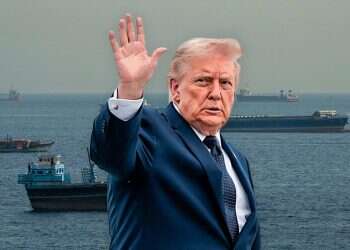
US President Donald Trump against the backdrop of the Strait of Hormuz | Photo: Reuters, AFP

This notice makes clear that, as far as Trump is concerned, the active fighting is over, but the war is continuing by other means. In the Gulf states, the message was understood, and the United Arab Emirates and Qatar announced the full resumption of operations by their airlines.

At the same time, the flow of military supplies to the region continues, now focused on fully replenishing air defense system stocks. The logistical effort also includes the supply of spare parts and routine maintenance for combat systems, following a period of intensive activity during the days of fighting.

Pressure on the ground

The Iranian proposal delivered to the Americans on Thursday included only minor changes from the previous one. It includes a demand for a declaration that the war is over and a commitment not to renew it, alongside the immediate opening of negotiations.

The Iranians dropped their precondition that the naval blockade be lifted, but demanded a commitment to remove it at an early stage of the talks. On the nuclear issue, Iran showed no flexibility. Its proposal is to postpone discussion of enriched uranium to the second stage of negotiations.

Iran, today. Photo: EPA

The Iranian message is clear: There will be no negotiations on the nuclear issue under military threat or while Hormuz is blocked. Meanwhile, inside Iran, the closure of the strait has led to a deliberate reduction in oil output because of a rapid decline in available storage capacity.

According to a US assessment published in Israel Hayom, within one to two weeks Iran will be forced to halt production at some oil wells, and within about a month at most of them. Beyond that, the impact of the economic blockade is worsening: Prices of basic goods have risen by hundreds of percent, and the Iranian currency is trading at a record low of 1.85 million rials to the dollar. Unemployment and poverty rates are growing daily, and salaries for a large share of state employees have been stopped or paid only partially.

Tags: IranIran warUS

Related Posts

US, Gulf States push UN resolution targeting Iran over Hormuz disruptions

US lifting oil sanctions could hand Iran $100 billion within two years

by Danny Zaken

The US is effectively lifting sanctions on Iranian oil exports, despite its statements that funds will be transferred to Tehran...

Report: Trump deal hands Iran instant oil revenueREUTERS/Raheb Homavandi

Report: Trump deal hands Iran instant oil revenue

by Adi Nirman

Tehran cleared to export crude immediately, with broader financial relief contingent on nuclear concessions.

US Navy escorts ships through Hormuz as Iran threatens escalation

Trump secretly approved Qatar-Iran cash deal

by Danny Zaken

Diplomatic officials confirm Washington secretly authorized Doha to transfer funds to Tehran in exchange for freedom of navigation in the...

Menu

Analysis 

Archaeology

Blogpost

Business & Finance

Culture

Exclusive

Explainer

Environment


Features

Health

In Brief

Jewish World

Judea and Samaria

Lifestyle

Cyber & Internet

Sports


Diplomacy 

Iran & The Gulf

Gaza Strip

Politics

Shopping

Terms of use

Privacy Policy

Submissions

Contact Us

About Us

The first issue of Israel Hayom appeared on July 30, 2007. Israel Hayom was founded on the belief that the Israeli public deserves better, more balanced and more accurate journalism. Journalism that speaks, not shouts. Journalism of a different kind. And free of charge.

All rights reserved to Israel Hayom

Hosted by sPD.co.il

  • Home
  • News
    • Israel at War
    • Israel
    • United States
    • Middle East
    • Sports
  • Opinions
  • Jewish World
    • Archaeology
    • Antisemitism
  • Lifestyle
    • Food
    • Travel
    • Fashion
    • Culture
  • Magazine
    • Feature
    • Analysis
    • Explainer
    • Environment & Wildlife
    • Health & Wellness
  • In Memoriam
  • Subscribe to Newsletter
  • Submit your opinion
  • Terms and conditions

All rights reserved to Israel Hayom

Hosted by sPD.co.il

Newsletter

[contact-form-7 id=”508379″ html_id=”isrh_form_Newsletter_en” title=”newsletter_subscribe”]

  • Home
  • News
    • Israel at War
    • Israel
    • United States
    • Middle East
    • Sports
  • Opinions
  • Jewish World
    • Archaeology
    • Antisemitism
  • Lifestyle
    • Food
    • Travel
    • Fashion
    • Culture
  • Magazine
    • Feature
    • Analysis
    • Explainer
    • Environment & Wildlife
    • Health & Wellness
  • In Memoriam
  • Subscribe to Newsletter
  • Submit your opinion
  • Terms and conditions

All rights reserved to Israel Hayom

Hosted by sPD.co.il