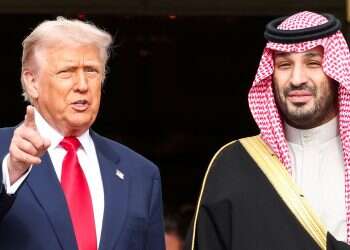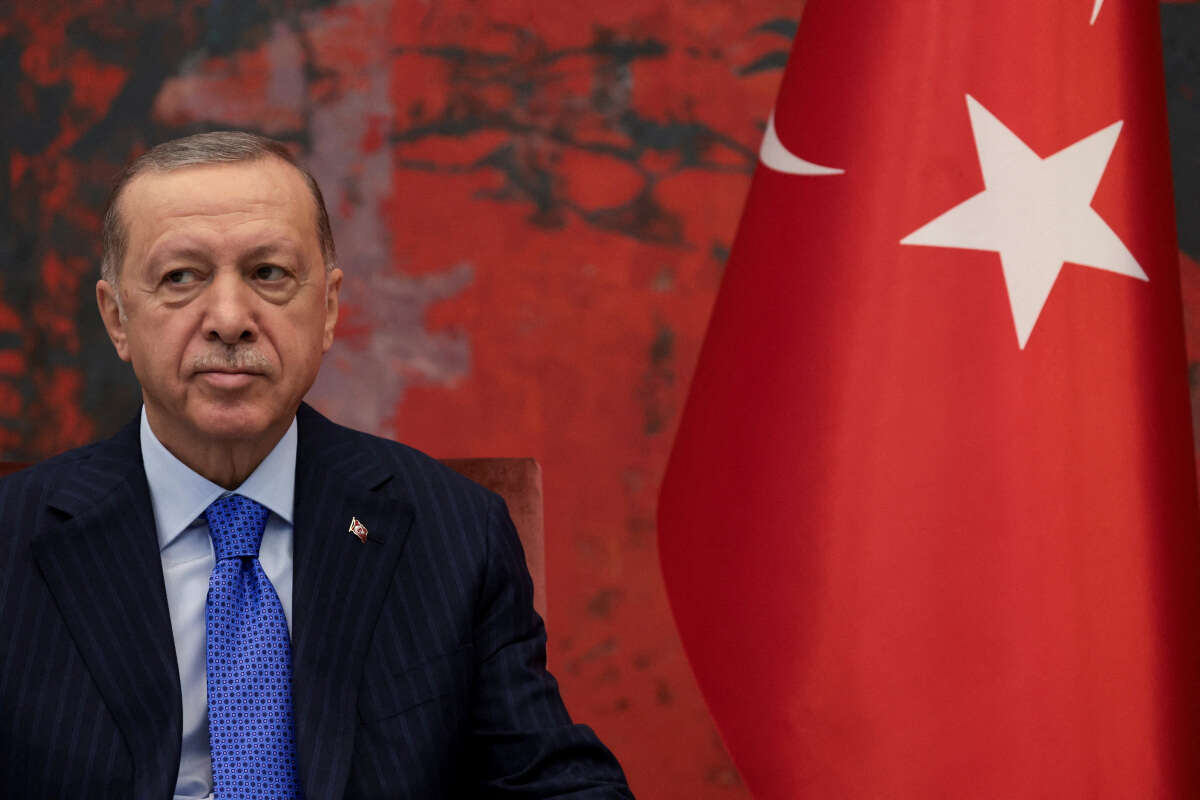
Diplomacy is the shell; rupture, the reality. The relationship is dismantled. The clock is measured in months, not years. The task: exit discipline, a clean departure from the Turkish operating system.
Evidence is operational: severed trade, absent direct flights, politicized maritime access, restricted state aviation, and sensitive freight. Turkish ports no longer neutral for Israel-linked traffic, and lawfare, diplomacy, and pressure are fused into one campaign. Ankara's Hamas posture is legitimization, not counterterrorism. This is decoupling.
Rupture is preferable: manageable costs, structural advantages - cleaner supply chains, safer aviation planning, deeper Eastern Mediterranean alignment, stronger ties with Azerbaijan, lower exposure to Turkish administrative coercion, and Israeli freedom of action in Gaza, Syria, Jerusalem, the Caucasus, and Europe. It removes the ambiguity Ankara used.
The missions are residue, not stability: Ankara's leverage, deniability, public punishment, influence in Jerusalem, Gaza, NATO, Syria, the Caucasus, and Europe, and a hand inside the arena it attacks; Israel's warning channel, surprise control, third-state friction, and denial of Ankara's rupture clock. That utility is ending. Hostility by protocol.
The next escalation requires no declaration: port letter, airspace instruction, denied service, legal filing, Gaza trigger, Syria incident, Turkish move around Jerusalem, or entry attempt into postwar Gaza. In the Turkish system, coercion arrives first as administration; politics follows. By then, the damage is inside the system.
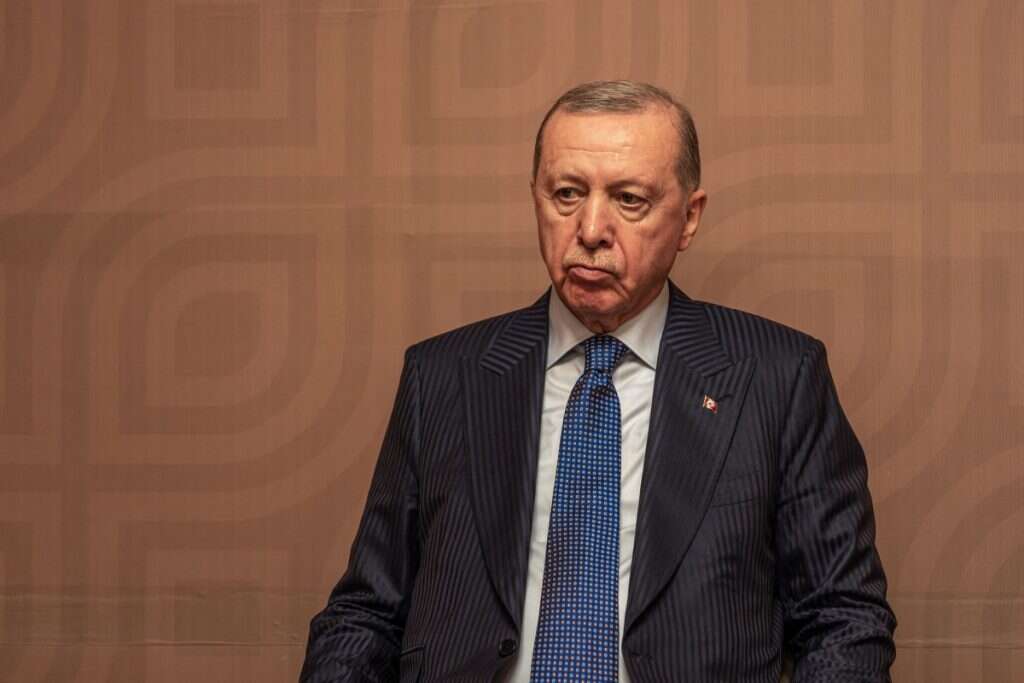
Israel's answer is doctrine, not improvisation. Call it the Constantinople Protocol: Constantinople as map, not memory - the pre-Turkish gate where geography became power and access became leverage, repurposed for the world after Turkish leverage. Every Turkish gate - port, airspace, energy corridor, trade route, or consular channel becomes replaceable before it becomes a veto. The test: import, export, fly, ship, insure, fuel, litigate, communicate, and operate without Turkey.
Trade comes first. Before Ankara's embargo, Turkey sat inside Israel's economic bloodstream: construction inputs - cement and gypsum, steel, metals, plastics, machinery, vehicles, electrical equipment, textiles, food products, and components. Israel proved that an open economy absorbs a limited embargo faster than expected. Adaptation is not readiness.
The substitution grid covers ministries, importers, ports, infrastructure companies, defense suppliers, and contractors: Turkish-origin leakage, exposed sectors, qualified alternatives, replacement schedules, standards, customs, tenders, stock buffers, and purchasing rules. Greece, Cyprus, Italy, Spain, Egypt, India, the UAE, Morocco, Jordan, Eastern Europe, and domestic production become the procurement doctrine. Exports follow the same chain logic: Turkish distribution, logistics, financing, platforms, and subcontractors inside Israeli value chains; route, insurer, carrier, port, bank, documentation, end user, and interdiction point. Exposure is no longer buyer-based. It is chain-based.
At sea, Turkish neutrality is over. A no-Israel declaration is warning enough: port access, flags, ownership, service providers, and documentation become contingent assets, not reliable routes. Mandatory alternatives run through the Eastern Mediterranean, Adriatic, Egypt, Cyprus, Greece, and the Gulf, with Piraeus, Thessaloniki, Limassol, Larnaca, Port Said, Damietta, Aqaba, and Gulf ports as a standing network. Insurance must survive any Israel-linked designation; importers and exporters must map seller, shipowner, insurer, transshipment point, refueling point, and delaying authority.
Aviation is state continuity. Aviation exceeds direct flights: overflight, diversion, government flights, sensitive freight, ground services, slots, maintenance, fuel access, and routing assurance. Turkish airspace is nominally open, but it is also selectively closed. Ambiguity is the leverage. Eastern and northern routing is a theatre: the Mediterranean, Greece, Cyprus, the Balkans, Jordan, Iraq, the Gulf, and the Caucasus, with Cyprus-Greece agreements covering diversion, fuel, maintenance, passenger handling, and security protocols. State flights and sensitive freight cannot depend on Turkish discretion. A state cannot build aviation continuity on another state's mood.
Energy is where Ankara expects leverage and where Israel denies it. Azerbaijani crude moves via the Baku-Tbilisi-Ceyhan pipeline to the Mediterranean. Ankara's defense - that it does not control where Azerbaijani oil is sold - is legally arguable and strategically irrelevant. Ceyhan sits on Turkish soil. Energy coercion needs no embargo: documentation, loading, insurance, inspections, port services, destination signalling and regulatory ambiguity are enough.
Israel builds energy redundancy with Baku, SOCAR, traders, shippers, insurers, and partners: larger fuel buffers, refinery flexibility, non-Turkish supply from the Mediterranean, West Africa, Latin America, and other markets, and hardened gas, electricity, and fuel infrastructure. Offshore gas remains sovereign; the unbuilt Israel-Turkey pipeline is now an advantage. The fantasy never became a vulnerability.
Azerbaijan is not the vulnerability. It is the answer Ankara cannot veto. Rupture deepens the Baku-Jerusalem line because Azerbaijan is not an extension of Turkish policy, but a sovereign regional power balancing Turkey, Russia, Iran, Israel, Europe, and Central Asia. The partnership spans energy, security, technology, trade, logistics, agriculture, Jewish heritage, Iranian pressure, cyber resilience, healthcare, defense-industrial channels, Jewish community protection, and deterrence against Iranian networks. Israel does not ask Azerbaijan to choose between Ankara and Jerusalem. It expects Baku to remain sovereign, pivotal, and irreducible to a Turkish corridor.
Turkey's state footprint in Israel is a sovereignty issue, not a diplomatic one. The embassy in Tel Aviv, the Jerusalem Consulate General, Turkish agencies, development channels, religious, heritage, and educational activity, and Palestinian-facing work are political infrastructure: Ottoman memory, Palestinian representation, Islamic custodianship, local networks, and influence mechanisms under diplomatic cover.
A state that wages lawfare, diplomacy, and pressure against Israel, legitimizes Hamas politically, and cultivates a Palestinian platform from Jerusalem cannot retain latitude inside Israel. The issue is reach, not visas. The threshold is strict: consular services only, transparent funding, no political mobilization, no subversive activity, no unregistered influence, and no Turkish role in Jerusalem as a parallel diplomatic channel to Palestine from inside Israel-controlled space. After severance, the footprint contracts to the consular minimum or closes. Not as theatre. As sovereignty.
Turkey's lawfare is institutionalized across courts, UN bodies, international organizations, trade forums, cultural institutions, and diplomatic coalitions. Episodic reaction is obsolete; Israel requires a counter-lawfare architecture that integrates the Foreign Ministry, the Justice Ministry, the National Security Council, security agencies, diaspora organizations, academic expertise, and partners. Turkish pressure must be system-mapped, not answered episodically.
The private sector becomes resilience infrastructure: banks, insurers, shipping agents, airlines, importers, exporters, energy traders, construction companies, technology firms, and tourism. The state does not run them; it sets the rules for exposure, disclosure, substitution, and dependence. Tourism to Turkey is replaceable; the illusion that it softens hostility is not. In a crisis, citizens become exposure, airlines become leverage, and airports become political instruments. Not every exposure requires a ban. Every exposure requires clarity. Supply-chain intelligence is national security.
Europe already has its "Constantinople Protocol".
In Brussels, the mandate is blunt: strip Turkish discretion from strategic flows before it hardens into coercion. The leverage map is on the table - Bosphorus and Black Sea access; TurkStream, residual Russian gas and the Southern Gas Corridor/TANAP system; migration, NATO procedure, the Middle Corridor, customs leverage, ports, defense exports, diaspora politics and Balkan networks.
The answer is redundancy architecture: Danube, Solidarity Lanes, Vertical Corridor, LNG, Balkan interconnectors, storage, Adriatic and Black Sea trade alternatives, EastMed, the Great Sea Interconnector, IMEC, Egyptian LNG, Greek and Cypriot ports, Gulf capital, and Indian scale. Not infrastructure policy. Consent-free connectivity. Sovereign bypasses. Turkish gatekeeping devalued.
Israel is commanding the exit.
Ankara preserves the diplomatic shell because ambiguity serves it; Israel tolerates it only as long as it remains narrow, useful, and subordinate.
Shay Gal works with governments and international institutions on strategic risk and security decision-making in high-stakes environments.