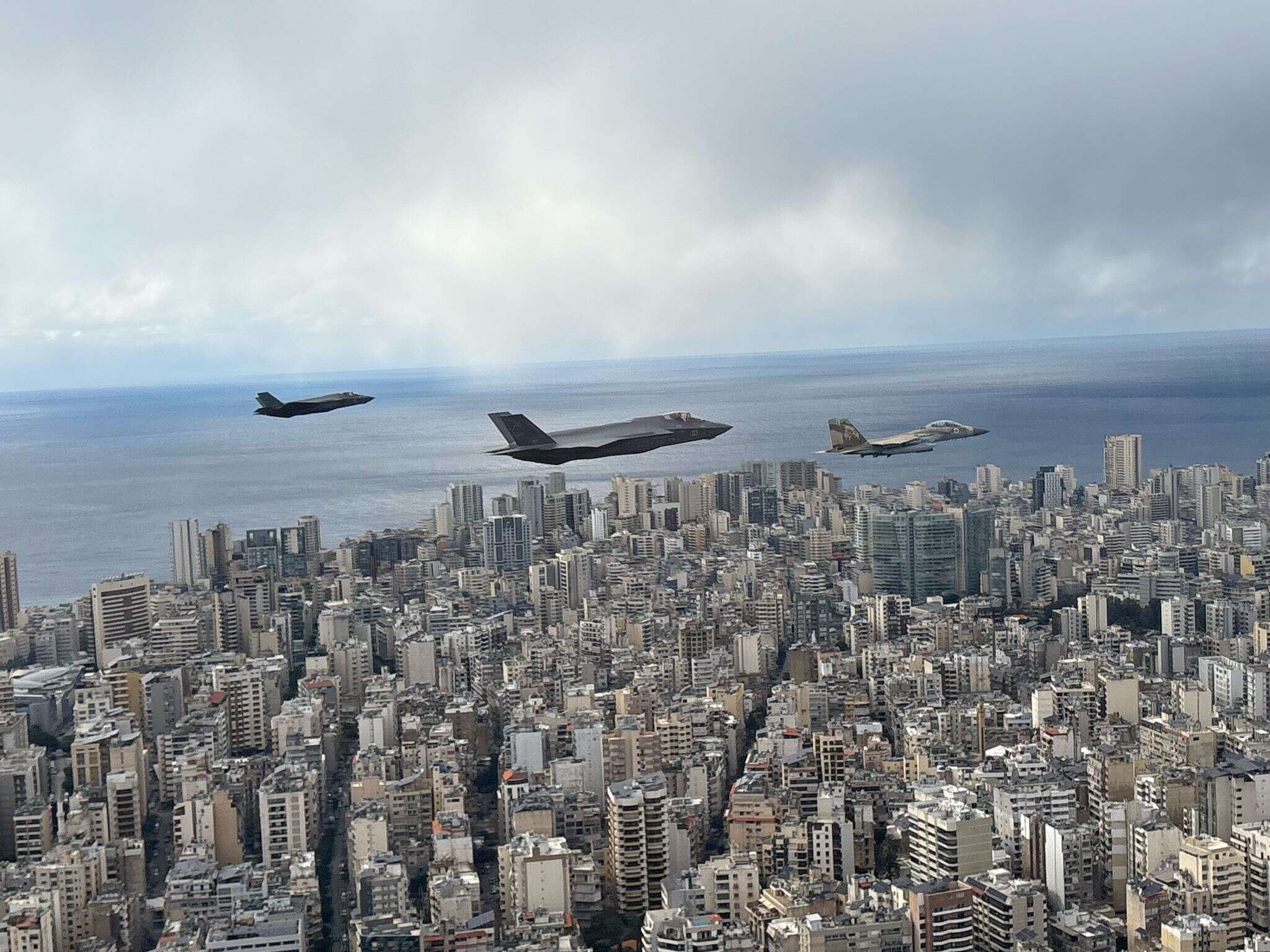
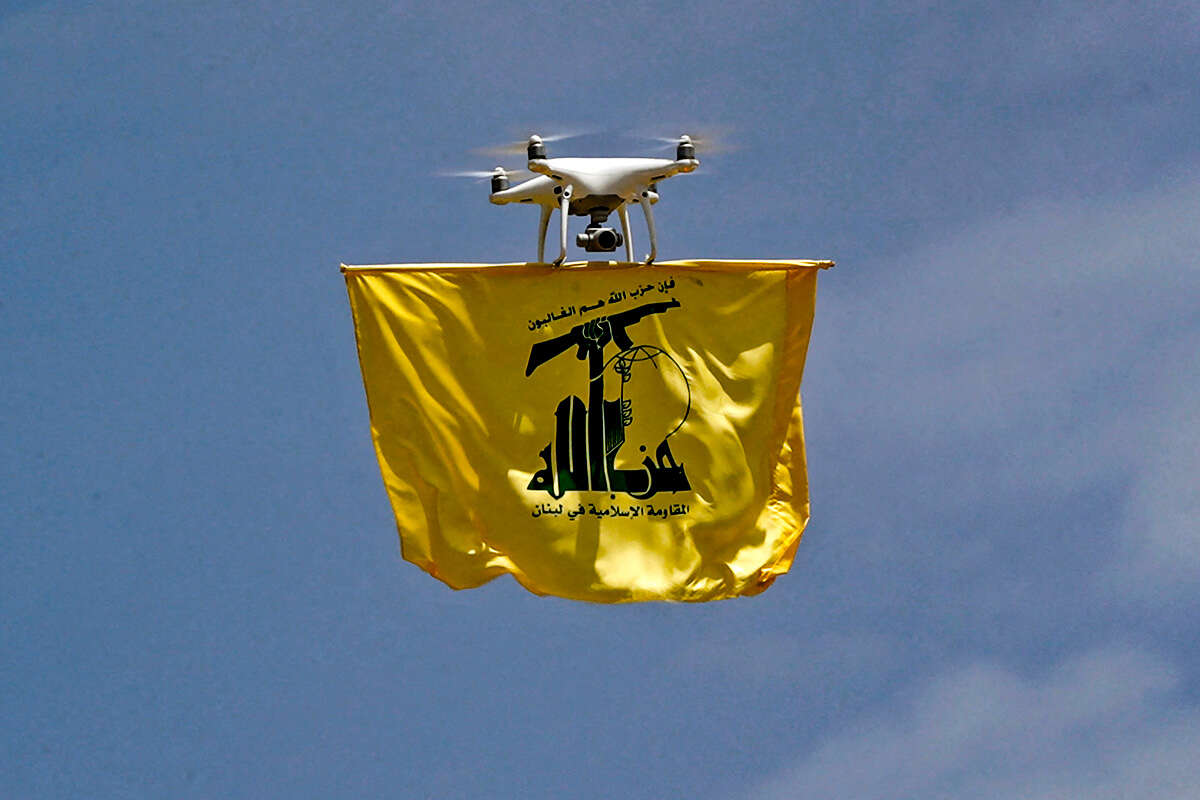
To deal with Hezbollah's drone threat, Beirut must be brought into the equation. That is what we have repeatedly stressed recently, here in Israel Hayom as well.
At the heart of the matter is the understanding that defensive measures, and even offensive efforts against every component of Hezbollah's value chain related to drone weapons, will not be enough to prevent their use against us. The availability of this weapon, its low cost and its simple and safe operation will preserve the motivation to use it and will make it difficult for our forces to chase down and eradicate every last drone.
Effectively confronting this threat depends on the ability to make Hezbollah question whether using it against the Israel Defense Forces is worthwhile. That can be achieved only through strikes and the toppling of buildings in Beirut.
According to media reports, at a meeting of the limited cabinet held last night, Israel Defense Forces Chief of Staff Lt. Gen. Eyal Zamir and government ministers supported this approach and recommended striking Beirut in response to explosive drone attacks.
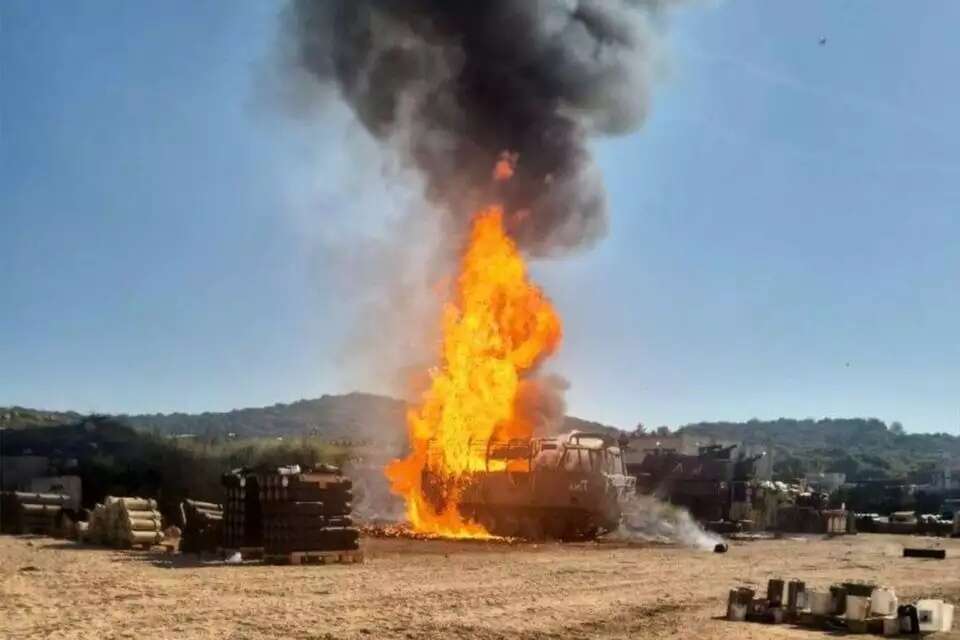
Nevertheless, and despite the fact that the drone attacks have continued unabated since then, Israel has so far refrained from striking the Lebanese capital. Instead, the internet is filled with stories about private initiatives to purchase fishing nets and other means of improving protection for our forces.
The current restriction on fire, in accordance with the American demand, provides Hezbollah with defensive space and prevents Israel from using its aerial superiority against it. In doing so, it also assists the terrorist organization in its efforts to restore the response equations that prevailed before November 2024.
Without detracting from the importance of defensive components, techno-tactical tools and the effort to locate and destroy production facilities, warehouses and drone operators, the effective path to dealing with this threat runs through Beirut.
To make Hezbollah question the wisdom of using these means, a price must be exacted from it that it cannot tolerate. That can be achieved only by striking targets in Dahiyeh, Hezbollah's stronghold in Beirut.
Not only targeted operations and eliminations, but the collapse of buildings and the sowing of destruction in the center of gravity, and the political, military and social symbol, of the Shiite terrorist organization in the Lebanese capital.
After Hezbollah Secretary General Naim Qassem made clear in his speech that he had no intention of disarming, defied the Lebanese government and heaped praise on Iran, there is no reason to leave its strongholds in Dahiyeh and the Beqaa Valley standing.
Increasing the pressure on Hezbollah will also serve the American desire to reach an agreement with Iran, which at the moment has no reason to be worried about the condition of its Lebanese proxy.

"The era in which a terrorist organization holds a nation hostage is nearing its end," US Secretary of State Marco Rubio said in response to Naim Qassem's speech. Strikes in Beirut would give that declaration more force than any tweet or diplomatic statement.
As for the implications for diplomatic talks between Israel and Lebanon, it should be assumed that Israeli strikes in Beirut would make it difficult for General Aoun to continue moving along the diplomatic track with Israel, at least in the short term.
However, they would give legitimacy to his demands of Hezbollah, and at more advanced stages he could be the one to bring the news of a ceasefire and the rescue of Beirut, instead of Iran, which is currently receiving the credit for it.
Either way, Israel must preserve its freedom of action to defend itself, and that includes strikes in Beirut intended to prevent UAV and drone attacks on the northern border.