Roman Gofman met with the head of the Mossad department responsible for influence operations while he was serving as commander of the IDF's Division 210. The meeting was intended to examine the possibility of cooperation between the division and the Mossad for the purpose of carrying out influence operations in Syria.
The meeting and its content indicate the great importance Gofman attached to the field of influence while he was a division commander, a field that would later entangle him and now stands between him and the Mossad directorship.
According to the head of the Mossad influence department, who has since retired from the organization, he came away from the meeting with a favorable impression of Gofman. "From my professional acquaintance with Gofman, he has creativity, cunning and an out-of-the-box strategic perspective, which a Mossad chief needs," he said. "I saw that with my own eyes. From my personal impression, this is a person who is extremely worthy of the job."
According to the former Mossad official, the possibility of using Israeli Telegram channels in order to conduct influence operations in Syria did not come up at all in his conversation with Gofman. As is known, the use of Uri Elmakayes' Telegram channel by Gofman's division is at the center of the petitions currently being heard by the High Court of Justice against Gofman's appointment as Mossad chief.
"I was very impressed by his broad knowledge"
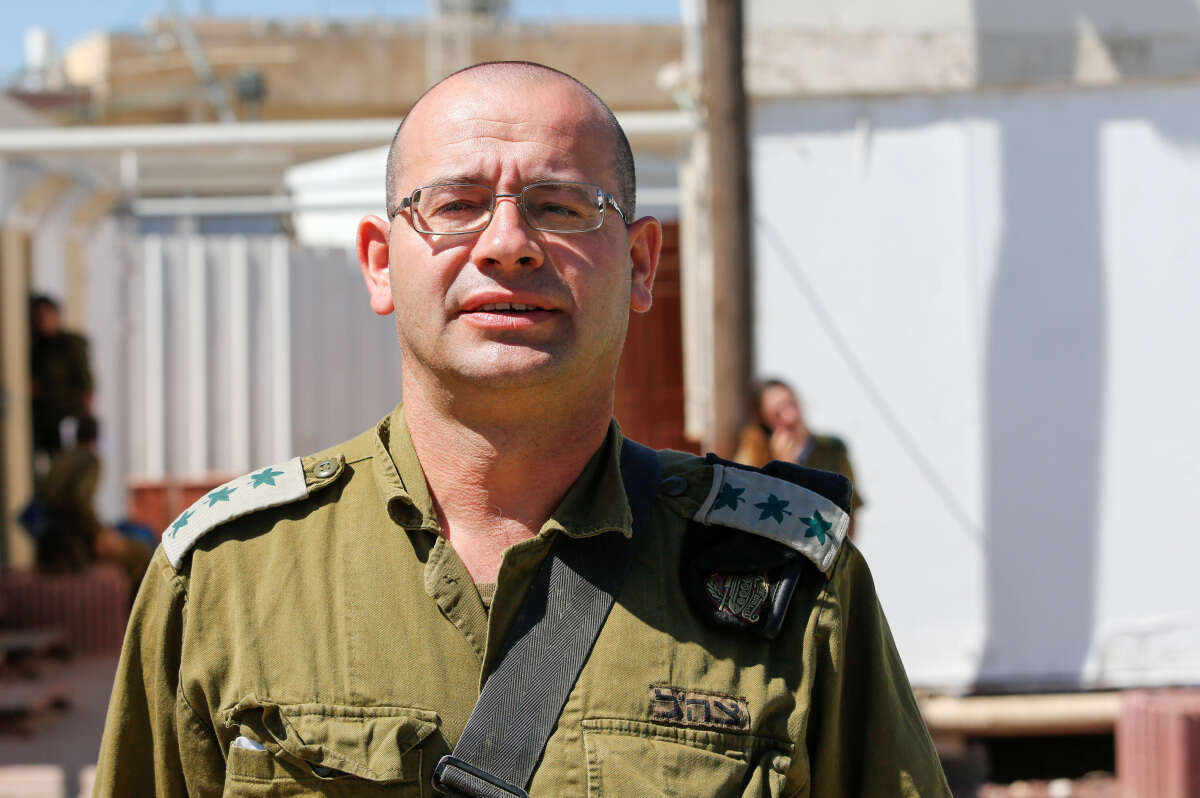
At a certain point, Gofman contacted the department head and held a meeting with him intended to explore the possibility of carrying out joint influence operations in Syria. "Sitting across from me was a division commander in dusty army fatigues, and I said to myself, 'Here is another army officer who will talk to me in military language, and all that interests him is the tactical world that interests army officers,'" the Mossad department head recalled. "But after 10 minutes, I understood that this was an entirely different mind. As a division commander, he looked at Syria, and suddenly you saw an officer who looks at things strategically. I was very impressed by his broad knowledge and creative thinking. Later, when his name came up as a candidate to head the Mossad, I said to myself, 'He has it.'"
In this context, it should be noted that current Mossad chief David Barnea is vehemently opposed to Gofman's appointment and even sent a sharply worded letter to the High Court, in which he argued that Gofman "does not meet the standard of integrity required for the position."
According to the former department head, the possibility of using Israeli Telegram channels for influence operations did not come up at all during his meeting with Gofman. "By definition, the Mossad does not touch anything Israeli," he explained. "Operating an Israeli channel is not within my mandate, so it did not come up in the conversation at all. What did come up was influence efforts directed at Syria, and that is what showed me Gofman's strategic thinking. I am not familiar with the Elmakayes incident and do not know what Gofman knew or did not know."
Could the new Mossad chief take office as early as next week?
Maj. Gen. Roman Gofman, currently the prime minister's military secretary and the man appointed by him to be the next Mossad chief, served as commander of Division 210 from 2020 to 2022. During that period, Gofman dealt extensively with influence operations aimed at the population of the Syrian Golan, where, among others, Hezbollah and Islamic State terrorists were operating. As part of this effort, Gofman's division used Uri Elmakayes, who was then a minor and who published items on his Telegram channel that had been passed to him by intelligence officers in the division.

Elmakayes would later be arrested in another case, questioned by the Shin Bet security agency and placed under house arrest for more than a year. The case against him was ultimately closed.
The affair involving the use of Elmakayes, who claims Gofman abandoned him after he was arrested and questioned by the Shin Bet, would develop into a saga now shaking Israel's security, political and legal establishments. Gofman denies Elmakayes' claims, and the battle between their versions of events is expected to be decided in the coming days by the High Court, which is hearing petitions against Gofman's appointment as Mossad chief. If the High Court rejects the petitions, Gofman will enter the Mossad chief's office as early as next Monday.
There is no dispute that after Elmakayes was used by the division in a process carried out without the required approvals, and Gofman received a reprimand from then-Northern Command chief Amir Baram. However, despite the reprimand, Gofman, as division commander, implemented a practice the IDF was encouraging at the time: the use of influence tools by regional divisions against the population in their sectors. Gofman did indeed deal extensively with the issue and, as is now emerging, even tried to recruit the Mossad's influence operations department for the purpose.