Under Erdogan, Turkey has become the jurisdiction of convertibility: a Hamas charity becomes humanitarian camouflage; Iranian oil becomes gold; Russian procurement becomes re-export; Venezuelan crude becomes disguised cargo; ISIS cash becomes a Mersin transfer. Different actors, one service.
This is statecraft, not drift: Ankara backstops them through banks, ports, courts, charities, customs, documents, intelligence discretion, police selectivity, and legal ambiguity. Illicit economies hide from the state; terror economies rent it. Sovereign infrastructure is for sale.
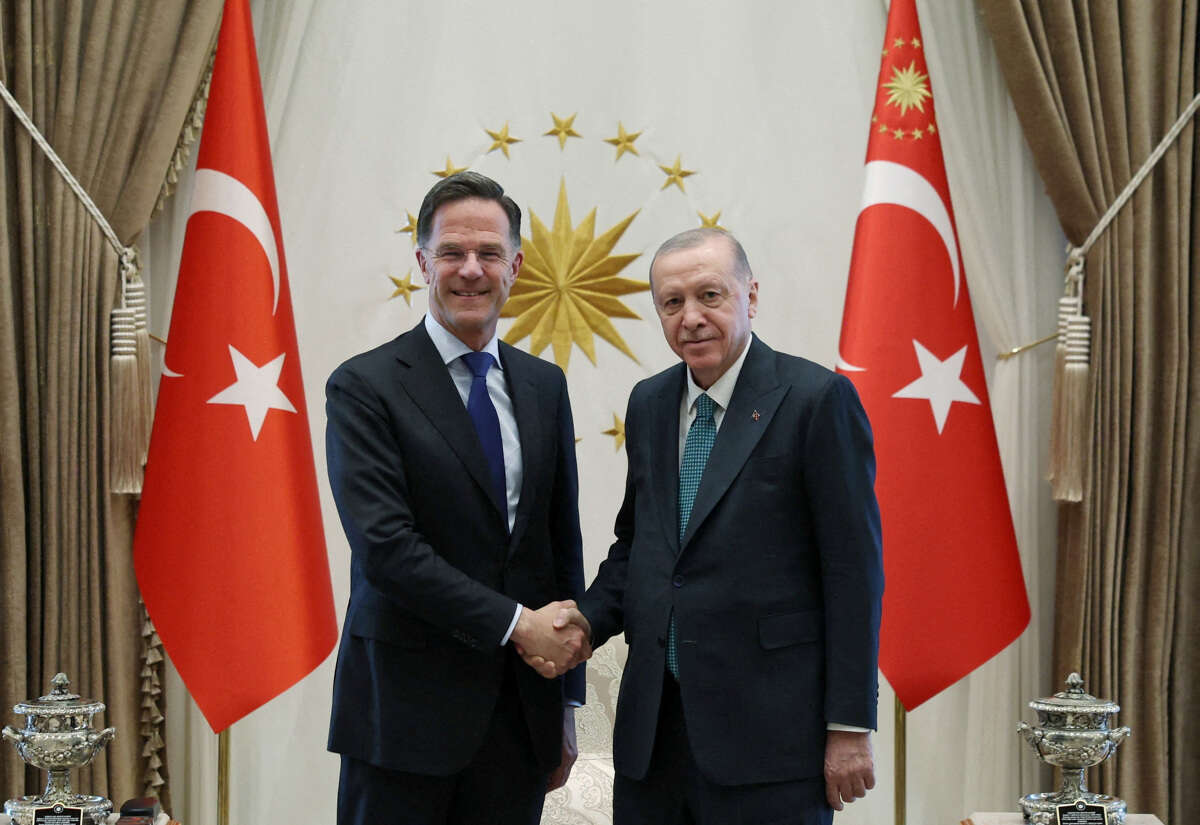
Hamas leadership received state-level access. Ismail Haniyeh came to Istanbul in April 2024; Muhammad Ismail Darwish came to Ankara in January 2025. Foreign Minister Hakan Fidan and intelligence chief Ibrahim Kalin were in the room.
In November 2024, senior Hamas figures active in Turkey were designated by the United States; in March 2026, Turkey-based nonprofits Ghazi Destek Dernegi, Hayat Yolu, and Palestinian White Hands were designated within Hamas' international funding network. Hayat Yolu was also identified as a command-finance hub for the Muslim Brotherhood.
Hezbollah needs Turkey to keep Iran connected. When Iran's Syrian corridor narrowed, the financial route widened: cash, gold, cover, flights, and hawala kept Hezbollah operational while Lebanon struggled to restore state authority.
In January 2024, Lebanon- and Turkey-based nodes supporting an IRGC-QF-Hezbollah network generating hundreds of millions of dollars from Iranian commodity sales were sanctioned. Turkey-based Mira Ihracat Ithalat Petrol purchased, transported, and sold Iranian commodities, with profits shared with Hezbollah. Through Turkey, sanctioned oil became trade, revenue, and proxy power.
The February 2025 seizure of $2.5 million from a traveller arriving from Turkey exposed the air-cash corridor. By 2026, Hezbollah was reconstituting through Lebanon's captured economy: Al-Qard Al-Hassan as a quasi-bank, Jood SARL converting gold reserves into usable funds, and networks diverting more than $100 million through companies and state-adjacent projects. In May 2026, nine Hezbollah-aligned figures embedded across Lebanon's parliament, military, and security sectors were designated for obstructing disarmament and preserving Hezbollah's grip on state institutions.
The Houthis are Erdogan's unofficial navy by effect: every missile that pushes a shipowner away from Suez raises Turkey's geographic value and turns the Middle Corridor from an option to insurance. In 2014, Erdogan's government shut down the Quds Force investigation, removed the investigators, and let Iranian networks breathe. Al Aman Kargo was established shortly after and later designated as a waypoint for Iranian funds to Houthi businesses in Yemen; other Turkey-based channels entered the Sa'id al-Jamal network.
By 2025-26, that license hardened into a Houthi war economy: illicit oil sales, port control, seized companies, money laundering, shipping facilitators, and Chinese-linked procurement for missile, UAV, and explosives materiel. Turkey did not fire the missile. It preserved the ecosystem that it could. The maritime blowback came in November 2024: the Houthis attacked the Turkish-owned Anadolu S off Yemen. Ankara condemned the strike. Mohammed Ali al-Houthi then called Turkey "not an enemy" but "a partner in the struggle against the Zionists". The system had escaped Ankara's control: oil to Venezuela, gold through Hezbollah channels, resale in Turkey. Ankara kept the proxy economy liquid. The client became the threat.
ISIS and al-Qaeda needed no ideological affinity, only placement. Abd al-Hamid Brukan al-Khatuni proved the utility: an Iraqi national living illegally in Turkey since 2016, he managed ISIS finance there until the 2023 joint US-Turkish action against his network. ISIS moved millions through him; his sons transferred more than $500,000 through a Mersin remitter; Turkey-based Sham Express moved ISIS-linked funds across Turkey, Syria, Iraq, Egypt, and beyond; and the network enabled gold smuggling from Syria and Sudan through Iraq, Egypt, and Libya. In 2021, an al-Qaida financial network in Turkey was designated. Ankara can close a channel when it chooses; selectivity proves discretion.
Africa supplies the routing proof; Sudan, the gold link: hawala, mining, extortion, fronts, and couriers turn geography into finance. Russia turned that geography into sanctions arbitrage. In October 2024, 275 individuals and entities supplying Russia with controlled technology and equipment were sanctioned, including Turkish networks. Turkey-based companies routed sensitive items into Moscow's war machine; Turkish shipments of common high-priority goods to Russia were 314 percent higher in 2023 than in 2022. Belarus sits inside the same Russian war economy as a sanctioned rear workshop. Turkey's role: routing with customs cover. This is not neutrality. It is war logistics with a customs stamp.
Halkbank was the state-bank blueprint: restricted Iranian funds moved through intermediaries and fronts in Iran, Turkey, and the UAE; oil revenue became gold and cash; false food documents disguised transfers; $20 billion in restricted Iranian funds allegedly moved through the scheme. The measure is leverage per dollar.
Venezuela, North Korea, and the Taliban complete the indictment. In Venezuela, Turkey-registered Mulberry Proje Yatirim sat inside a CLAP-gold corruption network: Venezuelan gold flown to Turkey, purchased by Turkish entities, monetised through Turkish accounts. In North Korea, Turkey-based SIA Falcon was designated for attempting to evade sanctions on weapons and luxury goods trade. With the Taliban, the product was legitimacy: Ankara became a platform for rehabilitation and diplomatic re-entry, from calls to recognise the Islamic Emirate to the end of the former Afghan government's representation in Ankara. Turkey attracts a category, not a bloc: sanctioned actors, terrorist movements, and outlaw regimes seeking camouflage, liquidity, or re-entry.
Turkey is the most consequential terror-economy platform among major states: no comparable NATO-G20-OECD economy gives pariah finance such reach. That reach is built into Erdogan's regime machine: ministries, courts, regulators, and banks inside an executive architecture of loyalists and survival. Permissiveness is not incapacity. It is a rule. "Weak enforcement" is misdiagnosis: Turkey can freeze ISIS assets, coordinate with Treasury, tighten banks under Washington pressure, legislate when FATF grey-listing hurts investors, and close channels when the price rises. FATF's June 2024 grey-list exit was technical; strategically, it settled nothing. Ankara sells permission. Checklists can be satisfied while denial is sold.
Selectivity becomes centrality; ambiguity becomes revenue. The formula: create anxiety, enter the solution, charge both sides.
The file is mapped; exposure is jurisdictional. Sanctions, prosecutorial, financial-intelligence, export-control, banking, maritime, trade-data, and crypto-analytics systems see their fragments. For Israel, those fragments are operational warning, not compliance data: money becomes rockets, tunnels, procurement, and proxies. Israel's public instrument is the National Bureau for Counter-Terror Financing at the Ministry of Defense, created in 2018 to concentrate national action against terror finance; its mandate absorbed the Harpon Unit. The public record is enough.
Resolution 1373, Resolution 2462, the 1999 Terrorist Financing Convention, sanctions law, export controls, correspondent banking, and market access converge at the Turkish door. Turkey may not be bound by every unilateral US or EU sanction, but its banks, brokers, shippers, insurers, traders, and officials enter the enforcement perimeter the moment they touch dollars, US goods, correspondent accounts, controlled technology, Western insurance, EU components, or Western markets. Turkish entities recur in OFAC, DOJ, and export-control files because Ankara's model is proximity without discipline: close enough to the West to sell access, far enough from Western discipline to sell denial. That is the NATO paradox: Turkey monetises alliance access by selling deniability from within it.
Ankara's defense collapses: ISIS cooperation proves capacity, not innocence; FATF exit proves procedure, not discipline; NATO does not mean immunity; mediation is not neutrality when the mediator hosts, legitimises, routes and monetises one side's infrastructure.
The bill is written in the one currency Erdogan cannot print: trust. Terror finance and sanctions evasion corrode banks, courts, politics, statistics, diplomacy, and law; trigger sanctions, de-risking, investment discounts, prosecutions, and suspicion; empower networks that obey no host; and turn usefulness into distrust, then poverty.
The Turkish citizen pays the spread: risk premium, compliance exposure, discounted investment, and institutional decay. Clean capital hesitates; grey capital knows the route. A state that exports legal evasion imports disorder. Eventually, disorder sends the bill upward.
Shay Gal works with governments and international institutions on strategic risk, security architecture, and high-stakes decision-making.