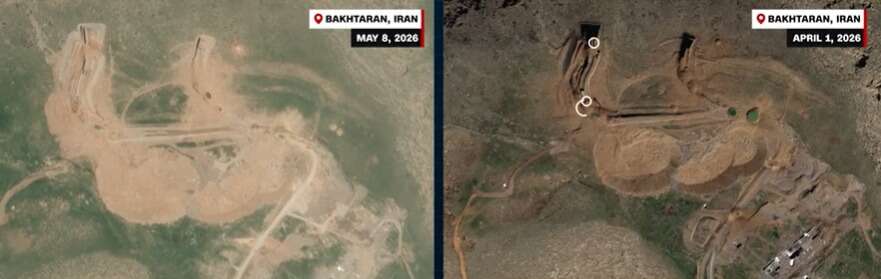
Against the backdrop of the fragile ceasefire between Iran and the US, the Islamic Republic is working at an unprecedented pace to restore the military capabilities damaged during the war. An analysis of new satellite images from Airbus Defence and Space, revealed by CNN, shows that since the ceasefire began, Tehran has already managed to clear at least 50 blocked access points at 18 different missile sites.
The satellite analysis casts a heavy shadow over statements by US President Donald Trump that Iran's missile arsenal had been almost completely destroyed. The images indicate that the combined Israeli-US attacks during the war disabled these "missile cities" by blocking their entry points, effectively "trapping" a huge portion of Iran's launchers and severely damaging its ability to fire missiles in real time.
Now, however, using bulldozers and removal trucks, Iran is renewing access to vast quantities of missiles stored in those underground facilities, effectively undoing the results of a military strategy that required enormous Israeli-American firepower. At the same time, the Pentagon continues to stand by the success of the campaign and insists that the operational actions achieved their required objectives.

Iran has beaten every timetable
The satellite images present a worrying picture on the ground. Images from April 10 documented intensive efforts to clear debris and rubble from the blocked entrance to a tunnel at a major missile base south of the city of Tabriz.
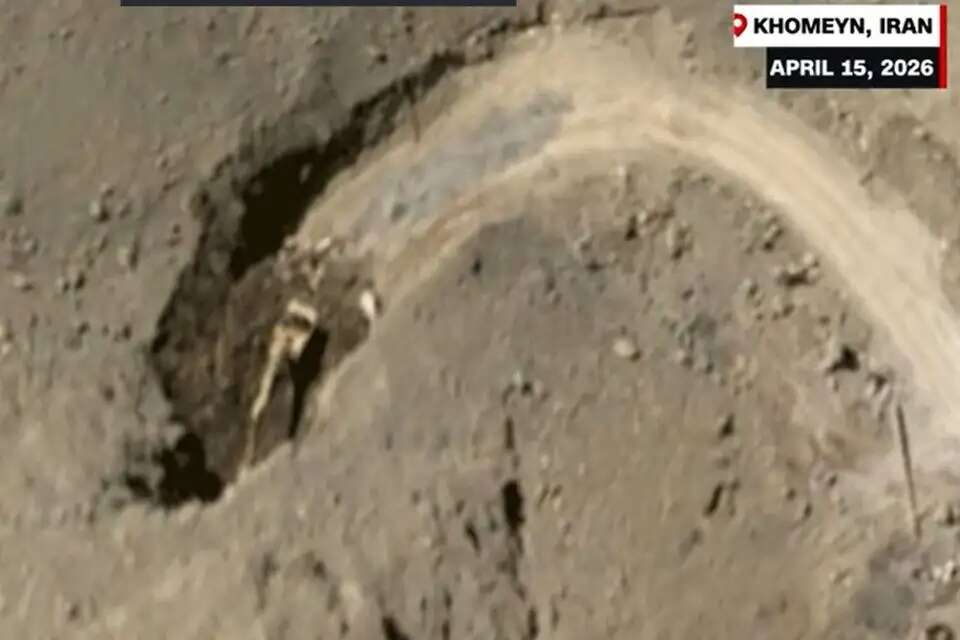
Similar documentation also came from a missile base in the city of Khomein, where a truck was photographed removing rubble from the entrance of a bombed tunnel, while additional removal trucks waited nearby to continue the work.
The latest revelation follows previous CNN reports that Iran had already resumed some of its drone production lines during the six-week ceasefire. Four sources involved in US intelligence assessments acknowledged that the Iranian military was recovering "far faster than the initial assessments."
"The Iranians have beaten every timetable the intelligence community had regarding the pace of their recovery," a US official told the network. According to the latest assessments, Tehran could fully restore its drone strike capabilities within about six months.
This rapid recovery is explained by a combination of factors: technological and logistical support from Russia and China, which continued supplying missile components despite the US blockade, along with the fact that the actual damage caused by the strikes was lower than Washington and Jerusalem had hoped.
Immediate threat to Israel and Gulf states
The rapid rebuilding makes Iran a significant and immediate threat to regional allies, especially if President Trump follows through on his explicit threats to renew the bombing campaign should talks on a deal fail. Trump recently stated publicly that he had been "only one hour away from resuming the strikes."
Israel's security establishment fears that in the event of renewed escalation, Iran will compensate for the damage sustained by its missile array with massive barrages of explosive drones targeting Israel and Gulf states, all of which are within direct range of these systems.