Rostam Ghasemi was a thorn in the side of Israel's intelligence community almost from the beginning. He joined the Islamic Revolutionary Guard Corps in 1979, served as an officer in the Iran-Iraq War, was later appointed commander of a naval base and, in the early 2000s, became one of the central figures behind the strengthening of the Iranian army's special forces. After retiring from the military, he served as a senior government minister and as an adviser to the defense minister, and was known to be close to President Ebrahim Raisi. It is no wonder Israel followed his every move.
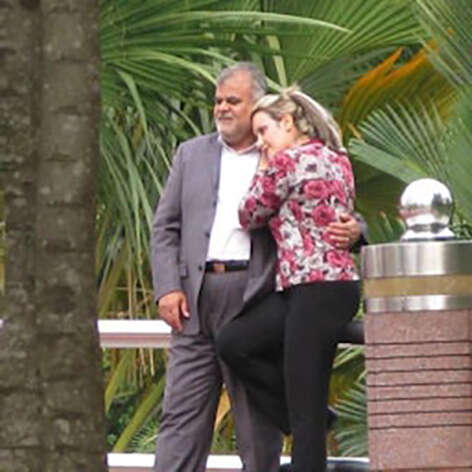
Ghasemi's future still lay ahead of him until one day in November 2022, he opened his phone and was stunned. The Iran International news site, operated by Iranian opposition figures, had published a photo taken during Ghasemi's visit to Malaysia. The photo showed the senior Iranian official embracing a young woman who was not his wife and, perhaps worse, was not wearing a hijab either.
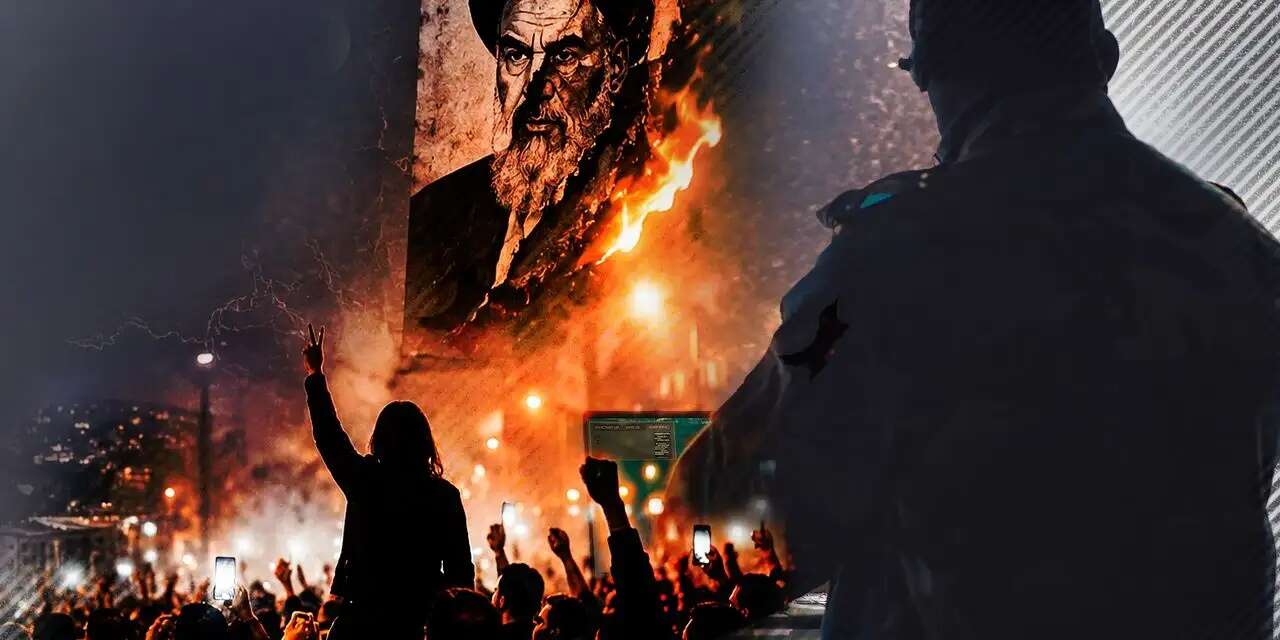
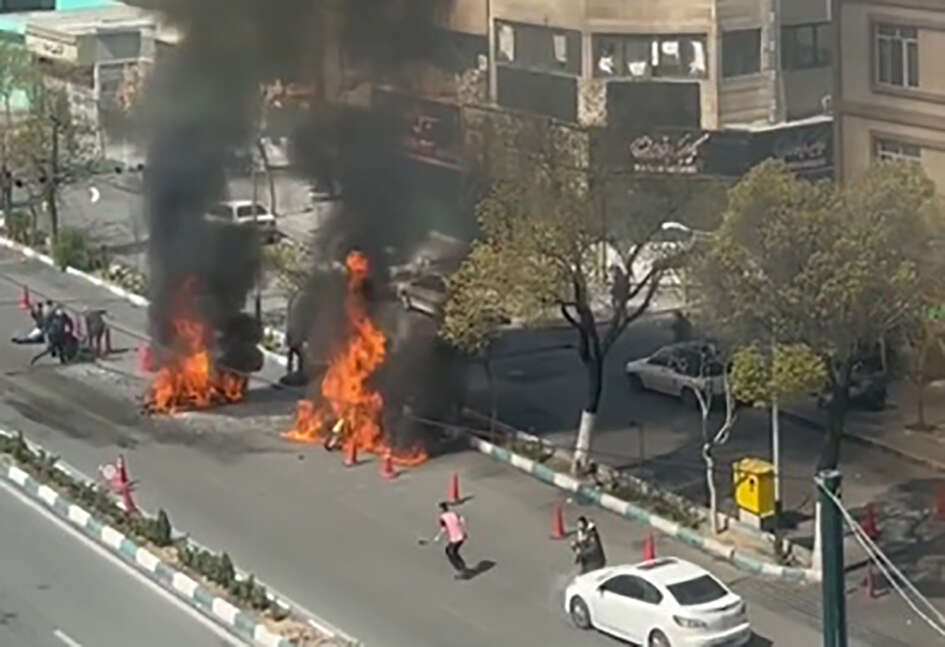
The embarrassing photo spread across Iran like wildfire, against the backdrop of the fact that a few weeks earlier, young Iranian woman Mahsa Amini had been killed after she was arrested and brutally beaten by morality police precisely because she had not worn a hijab. "A bunch of filthy hypocrites," a popular Iranian blogger wrote on Twitter, one of many who shared the incriminating photo and expressed a broad public sentiment.
Within seconds, Ghasemi became the talk of the day in Iran, a stain on the face of the Islamist regime. Within a few days, he was forced to submit his resignation from the government. The official excuse was "his medical condition." A few months later, he did indeed die of cancer, or at least that is what was reported in Iran's official media.
It can now be revealed that the party responsible for leaking Ghasemi's embarrassing photo, and at such an explosive and sensitive time, was Israel's Mossad, which had held the photo since 2011. From the Mossad's standpoint, this was a double gain: removing a seasoned and shrewd military figure from a position of influence, while also fueling the hijab protests that were already roiling Iran at the time.
This practice, using the media to remove senior Iranian officials from their positions, had not been common in the Mossad until then.
"Traditionally, the Mossad knew how to get rid of people mainly through assassinations," O., who was a senior official in the organization at the time, explains. "But when there is a person who is harming you, exposing embarrassing details from his past often leads to an immediate response in which he is removed from the circle. They simply fire him or move him to another position. Carrying out an influence operation that ultimately gets rid of someone is much cheaper and simpler than an assassination operation. In the past, the Mossad did not think in those terms. Today, the Mossad has already been responsible for the dismissal of quite a few senior officials in Iran."
The poison machine
The covert operation to bring down Ghasemi was born in the Mossad's influence operations branch, the scope of whose activity is revealed here for the first time. The branch was established only in 2021, as part of the deep organizational reform Barnea carried out immediately after entering the Mossad director's office. A look at the results of the reform illustrates just how much the structural and conceptual changes Barnea made in the Mossad were used in the campaign against Iran.
The influence operations branch is just one example. What began there as targeted and modest operations to force out senior officials opened the floodgates to a wave of creativity and gave Mossad personnel, perhaps for the first time, a broader view of Iran, the great enemy. "When I began the position, it was forbidden in the Mossad to say the two words 'regime change,'" says O., who founded the branch and headed it until three months ago.
"The organizational and cultural DNA of the Mossad is one of activity whose end result is very concrete and clear. Something ultimately has to burn, someone has to die. By contrast, an amorphous event aimed at people's hearts, feelings and beliefs was something the Mossad was very afraid of."
In the time that has passed since then, the overthrow of the Iranian regime has become one of the Mossad's core missions, and this was expressed in full force in Operation Roaring Lion.
Not everything can be revealed, but one of the infrastructures prepared in advance by the influence branch ahead of the operation was a "poison machine" the Mossad operates on social media, based on fictitious accounts and spreading information intended to undermine the stability of the regime. "Every politician would want a poison machine like this," smiles a source who knows it well. In addition, the Iranian opposition channel Iran International reported that official regime television channels had been hacked during the strikes, and that speeches by President Donald Trump, Prime Minister Benjamin Netanyahu and Crown Prince Reza Pahlavi, encouraging the Iranian masses to take to the streets, were broadcast on screen.
As is known, during the operations in Iran, Mossad agents were activated on Iranian soil and, among other things, worked to strike missile launchers. It cannot be ruled out that some of those agents also engaged in influence operations, such as photographing strikes on Basij facilities and other regime institutions and distributing the images in order to reduce the Iranian public's level of fear. "As fate would have it, when the war broke out, we had many capabilities in the field of influence," O. says.
It is astonishing to discover that this entire effort was built in the Mossad within just a few years. But no less interesting is the place the field of influence took in the overall campaign against Iran: ahead of Roaring Lion, the Mossad already believed that the combination of influence operations, together with US and Israeli airstrikes, would lead to a dramatic outcome, the overthrow of the Iranian regime. That, at least, is what Mossad chief Barnea promised President Trump in a video call held in the days preceding the attack.
The Iranian regime, as of the time of writing, has not yet fallen, drawing sharp criticism of the Mossad and its chief. Some depict it as a glorious failure. In the Mossad, by contrast, officials argue that they never promised that the Iranian regime would fall during the war, and that they themselves have patience. Sources who have spoken recently with Barnea say he is convinced that if President Trump refuses to sign an agreement that would allow the Iranian economy to recover, and the siege on the country continues, the ayatollahs' regime will fall by the end of 2026.
"Anyone who thinks that the moment the last plane leaves the sky, the regime immediately falls, needs to understand that it does not work that way," O. says. "I have no doubt that in the future, Operation Rising Lion will be remembered as a significant milestone on the road to the regime's fall."
Dadi's reform
On Monday, assuming the High Court of Justice does not disqualify the appointment of Maj. Gen. Roman Gofman, Barnea is expected to end five years as Mossad chief. It was probably the stormiest tenure of any Mossad director ever, the first time the organization has taken an inherent part in a war Israel is waging against its enemies.
Sources who spoke with us credit the Mossad's achievements in the war, the pager operation, the assassination of Hezbollah leader Hassan Nasrallah, and above all the activity carried out on Iranian soil in Rising Lion and Roaring Lion, Israel's first and second operations against Iran respectively, to the reform Barnea carried out in the organization. A broad look at this reform certainly illustrates how much the Mossad's rapid transformation proved itself in the ongoing campaign since Oct. 7.
Already in the two months between the announcement of his appointment and his entry into the Mossad director's office in September 2021, Barnea worked on a broad organizational move that would change the face of the Mossad and adapt it to the challenges of the time. After a comprehensive organizational process, which included a strategic thinking forum and was carried out in cooperation with the heads of the branches, Barnea established several new branches in the Mossad and split others.
Not everyone was enthusiastic about the reform. To the displeasure of some in the organization, Barnea dismantled the Tzomet branch, the heart of the Mossad and the body responsible for recruiting and running operational agents around the world. In its place, three new branches were established. One of them was the operational branch, which specializes in recruiting and running non-Israeli agents. These agents were intended not only to provide intelligence as in the past, but also to carry out complex operations and replace Israeli Mossad agents, whose access to enemy countries had been blocked by the development of facial-recognition technology.
The result of the "agents reform" was already evident in Rising Lion, when the operational branch successfully activated dozens of cells of foreign agents on Iranian soil. From the ground, they struck Iranian air defense systems and missile launchers, helping the Israeli Air Force achieve air superiority and reduce the volume of missile fire at Israel.
"This is a branch that managed to recruit and train foreign agents at a very high level, including training in Israel. When Dadi began the reform, he did not know its products would be expressed so quickly," says a source well acquainted with the Mossad's work in the war. "Think about the fact that before Rising Lion, there are dozens of non-Israelis inside Iran who know the attack is about to begin, and they do not utter a word. There was a great deal of skepticism, including inside the Mossad, that such a thing was even possible."
"Writing a post, that is intelligence?"
One of the new branches established during Barnea's tenure, as noted, is the influence operations branch. It turns out that until 2021, the Mossad had only a division that dealt with the field, focused solely on psychological warfare and initiated mainly targeted operations against individuals. In closed conversations, Barnea recently defined the new branch's capabilities as an "unconventional weapon," one whose use could bring about an outcome that would decisively decide the war between Israel and Iran.
The man responsible for this unconventional weapon is O., who is being interviewed here for the first time. He is 51, served in the Israeli military in Unit 8200 and has served in the Mossad since 2003. He spent most of his career as a collection officer, recruiting and running agents abroad. In 2020, he was appointed by Yossi Cohen to head the Mossad's diplomatic-strategic campaign, replacing Eyal Hulata, who would later be appointed national security adviser.
When Barnea began the thinking process ahead of his entry into the post of Mossad chief, one of the meetings he held was with O. "When the head of an organization changes, it is a wonderful opportunity to examine what reality looks like, what has changed, what the toolbox looks like and to understand what adjustments are required. That, in broad terms, is what Dadi did," O. says. "In the conversation between us, Dadi and I very quickly reached the world of influence. The understanding was that the Mossad had fallen somewhat asleep on this issue, while the field outside had been developing at an insane pace, largely thanks to new technologies. That is Dadi's greatness, and it repeats itself in other moves he made in his reform, the understanding that there is something here that needs to change."
O.'s first step, after being appointed following that conversation to establish and head the influence branch, was to meet advertising and marketing professionals, journalists and political campaigners. In the next stage, he established a new intelligence department designed to understand public moods and media trends in Iran. "A great deal of intelligence in the world of influence is based on open-source material, mass media, social networks," he explains. "In those years before Oct. 7, open-source intelligence was not at its peak. I was working against the current and also received dismissive treatment. People said to me, 'You call that intelligence? Someone writing a post?' Today, people look at it differently."
The dive into the inner emotions of the Iranian public relied, among other things, on opinion polls conducted inside the country. "Imagine a political campaigner who wants to bring as many seats as possible to his candidate," O. says. "His intelligence tools are polls and focus groups."
And what do you discover is happening in Iran?
"We see very significant growth in the camp that opposes the regime. In the end, the economic and social conditions inside Iran mean that more and more people do not believe in this regime, do not want it to exist. The protests that broke out naturally over the years are themselves an indication of what is happening there in terms of the public."
Where yes and where no
The glimpse into the hearts of Iranian citizens sparked an idea among O. and his people. They began to understand that they had an ace in their hands, a winning card that could decide the campaign. Regime change.
"The problem is that the experiences from previous attempts by the Mossad to overthrow regimes were etched into the institutional memory as failure, as a waste of resources and as nonsense," O. says. "In fact, I had to conduct an influence operation inside the Mossad to convince people this was possible, and that was a challenge. On the one hand, everyone understood that there was an insane game changer here, because this is not just another operation but something that changes the picture entirely. On the other hand, no one really knows how to bring down a regime or what the chances are that it will succeed. It is a kind of gamble."
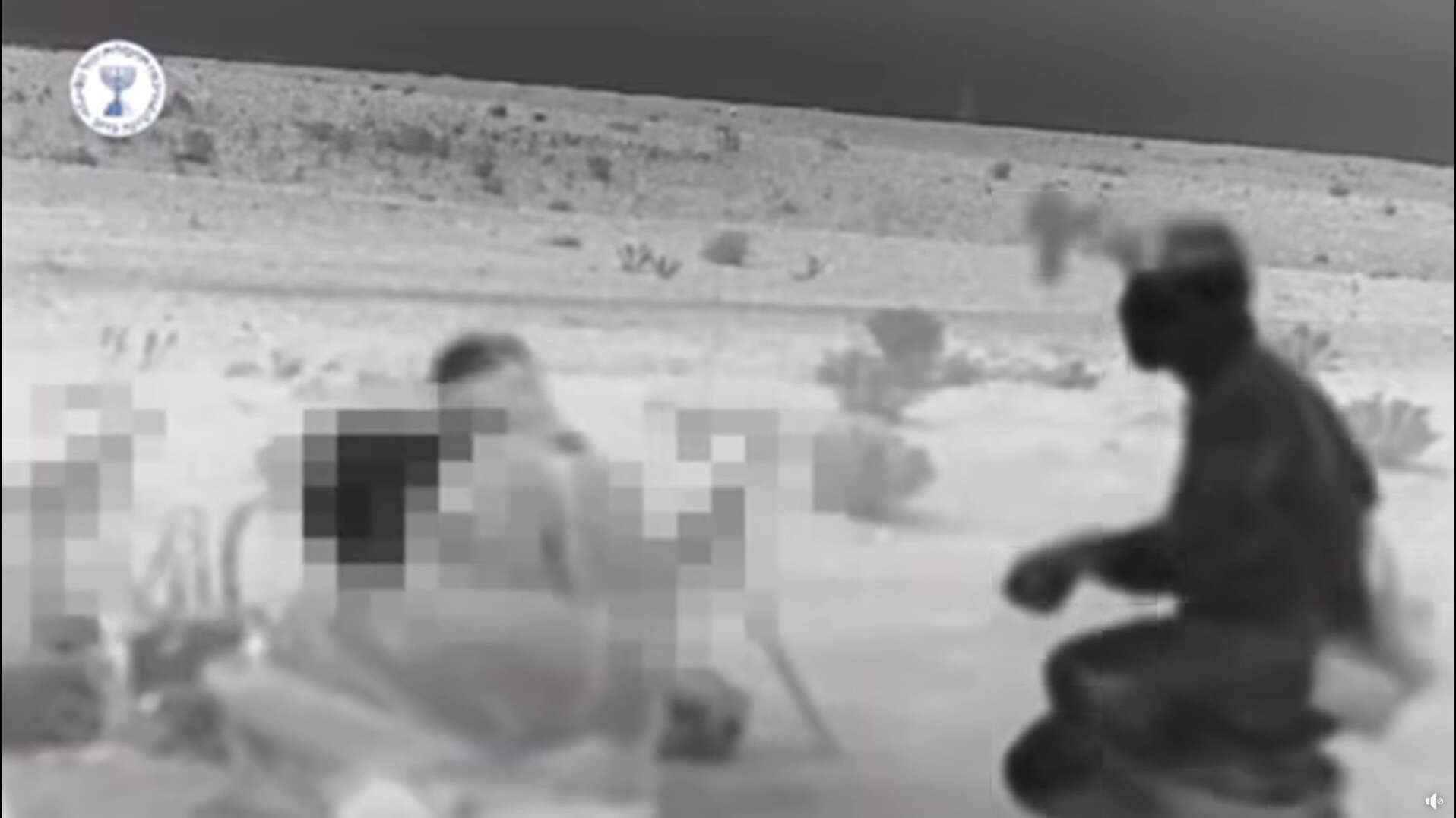
That gamble was already expressed in Rising Lion. In the first hours after the surprise attack on June 13, blurred photos were distributed to the media showing Mossad agents on Iranian soil, armed with advanced missile systems. In the Israeli media, the publication was interpreted as a public-relations move by the Mossad, which supposedly sought to highlight its role in the success of the operation. Now O. reveals that the photos were indeed part of an influence operation, but a completely different one. "My branch distributed those photos," he says.
Why?
"When you collect intelligence on the Iranian public and how it perceives its regime, you increasingly understand why it is not taking to the streets and overthrowing it. It is simply terribly afraid. It is afraid because this regime made sure to maintain an image of omnipotence. That is why it takes some poor young Iranian, presents him as a spy for the State of Israel and puts him through a televised show trial. That is a move designed to create the same image, of an all-knowing regime. This is how, over years, you build a barrier of fear and make sure the public, even if it is dissatisfied, collapsing under the economic burden and has nothing to eat, is afraid to go out into the streets. Leaking the photo of agents on Iranian soil was meant to sabotage that mechanism. One of the significant vectors of influence activity is to constantly erode the image of the regime, to make the public understand that it does not know everything and that it is not a sophisticated, immune mechanism. That is exactly why many of the operations we carried out were intended to show penetrations."
Publication of the photos during Rising Lion not only drove Iran's security agencies wild, leading them to launch a witch hunt and arrest hundreds of "Israeli spies" (the Mossad claims none of those arrested was its agent). It also shocked some former Mossad personnel. They were used to their activity taking place in the dark, with all their efforts aimed at avoiding publicity.
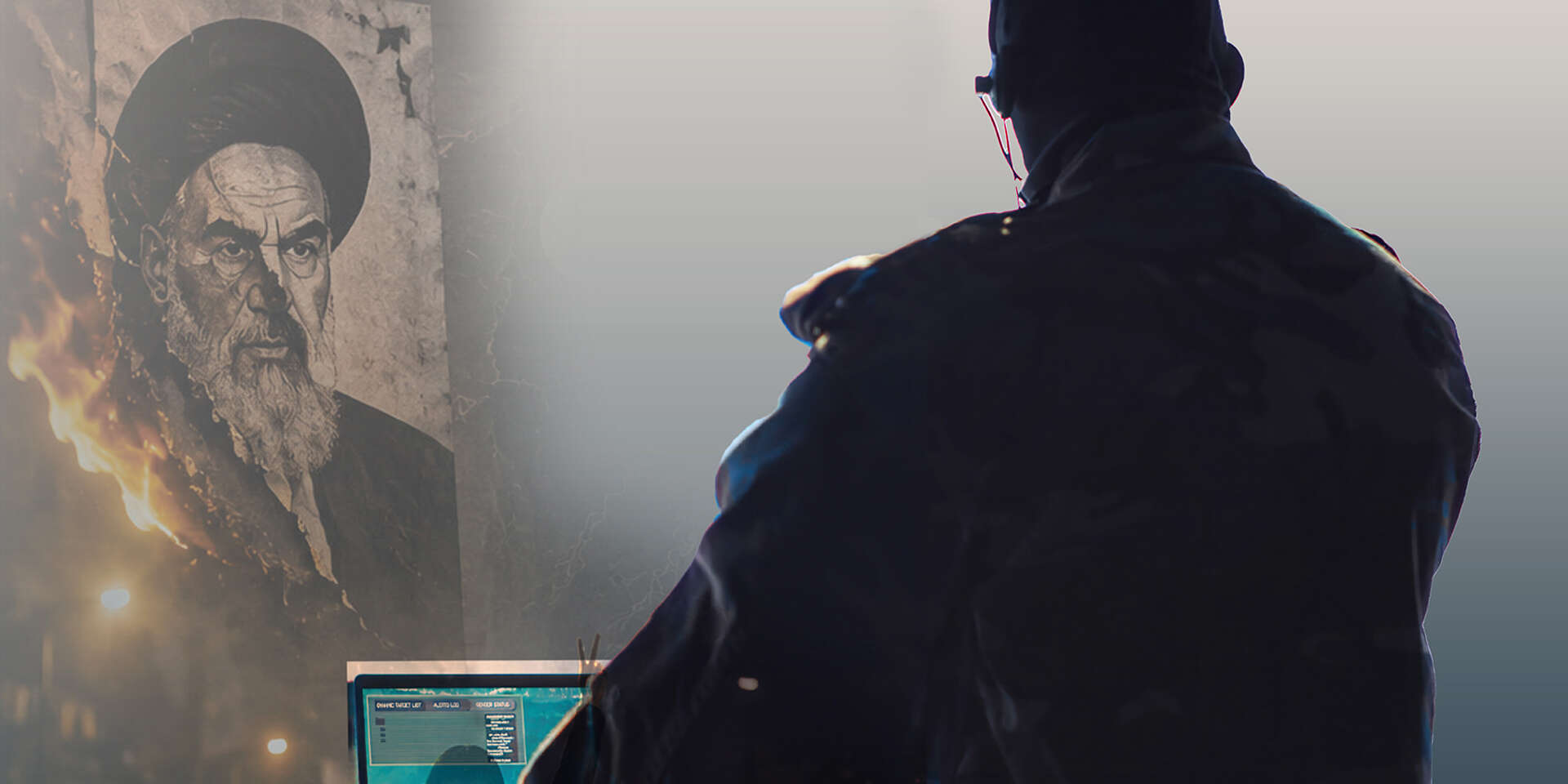
In this respect as well, the use of mass media, O. had to work against prevailing attitudes in the organization. One of the muscles his people developed concerned the use of various media channels inside Iran.
"We wanted, for example, to bring to public awareness in Iran a figure the regime wants to hide from its citizens," O. says. "It is an economic figure that we know through Mossad intelligence, but we had never shared it outside, because we do not like to expose intelligence. We understood the potential of this information and began telling it on social networks and exposure channels, because in the end there is a target audience and you need to reach it. Sometimes it seems to us that the Iranian public is not a factor in the regime's eyes, but that is not true. The regime works constantly to preserve its rule, and any public bitterness is an event it tries to avoid. Therefore, the moment you can expose to the public something the regime wants to hide, you have significant potential to generate internal movement from within Iran. It cannot be ruled out that some of the reports published in Iran concerning these areas began with us."
How does that happen?
"One of the major challenges when you want to distribute messages inside Iran is that the media market is very supervised and censored. Incidentally, in Lebanon, it is a more enjoyable event, because the Lebanese media is much more accessible than the Iranian media. Because of Lebanon's characteristics, every community and group has representation in the media, and you know how to insert almost any message you want into the media."
It is no coincidence that O. mentions Lebanon. When the influence branch was established, it was given a mandate to deal with two countries, and only two countries: Iran and Lebanon. I ask O. whether there is no concern that the influence capabilities developed in the branch, the "unconventional weapon," as Barnea himself put it, could be directed at other countries, perhaps even friendly countries, perhaps even inward into Israel itself.
"I have heard those concerns," he replies, "but I see no difference between someone who would want to direct these capabilities to inappropriate places and the capabilities of other operational branches. After all, other capabilities the Mossad has can also be directed to other arenas. This is a matter of basic responsibility that is relevant to all branches. Beyond that, it is not so easy to direct the tools to another arena. When I built the branch, its capabilities were built according to Iran and Lebanon. That is how the channels, infrastructures and tools were built. If I want to begin operating somewhere else, for example, I have to begin building capabilities again. It is not as though I press a button.
"If someone decides that they are now taking the influence branch to Mexico, at least a year of work is required to study the target audience, collect intelligence and build infrastructures. I understand why people are worried, but it is not a tangible danger."
Not everything is under our control
Regime change was not one of the Mossad's objectives in Rising Lion, but in the months that followed, the understanding gradually took shape that this was possible.
During those months, the branch accelerated the establishment of its infrastructures inside Iran. Beyond the "poison machine," the influence branch also established ties with online influencers, some of them inside Iran, so they could help spread messages on social media. In other cases, the Mossad itself created online influencers using AI. "All of this kept intensifying out of an understanding that when the military move arrived, it would provide another push," O. says.
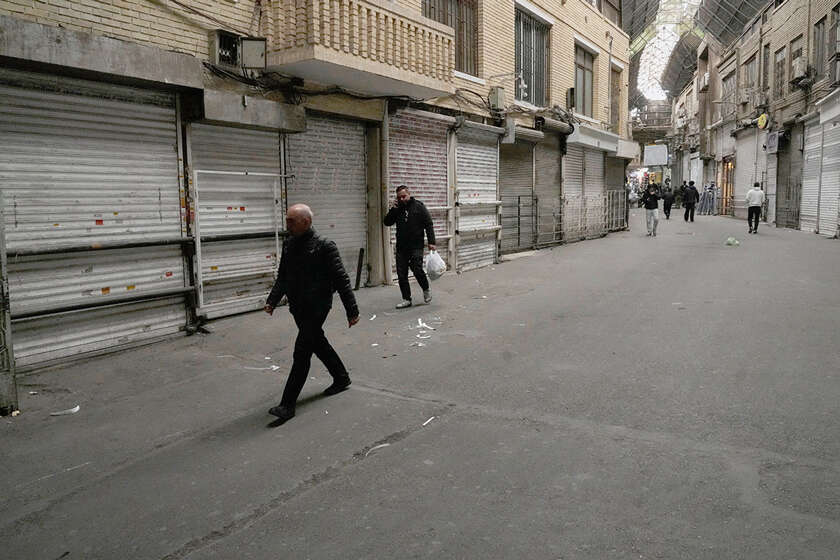
The Mossad marked May 2026 as the date of readiness for the next military move. The protests in Tehran's bazaar, which broke out in December 2025 and spread throughout the country, caught them by surprise.
"We had been working to influence young audiences and Pahlavi supporters," says a source familiar with the details. "And suddenly the protests come from the bazaar, from the regime's base. We had no connection to it." In fact, from the Mossad's standpoint, it would have been preferable for the protests to break out later, since they served as a catalyst that convinced Trump to enter the campaign against Iran sooner than the Mossad had hoped. "The war broke out too early, because after the violent suppression of the protests, there was still a mechanism of fear that prevented the public from going back into the street," the same source says.
Nevertheless, the Mossad did decide to activate during Roaring Lion an organized program for overthrowing the regime, based on a clear view that only the regime's overthrow and replacement would prevent the Iranian vision of destroying Israel and a return to repeated rounds of fighting. The Mossad's program included a package of operational missions, as well as the training and arming of Kurdish forces inside Iran and on its borders.
Barnea said more than once to decision-makers in Israel that this was an effective and feasible plan, and that he believed in its ability to change reality in Iran and bring about the regime's fall. "If in Rising Lion the Mossad's goal was to attack nuclear sites and surface-to-surface missiles, in Roaring Lion the goal was already regime change," says a source familiar with the details of the plan. Incidentally, not all parts of the plan were adopted by the political echelon.
A lethal combination
The US Central Intelligence Agency was already aware of the Mossad's plan and supported it, and it was the CIA that helped Barnea persuade President Trump as well. "I was not present in that conversation, but I very much doubt that Barnea promised Trump the regime would fall during the war," O. says when asked about it this week. "No intelligent person really thinks that immediately after you finish bombing, the regime falls. It does not work that way."
What did you, as head of the influence branch, think in the days leading up to Roaring Lion?
"That we are in a period in which the rift between the public and the regime is at its peak, that there is an unequivocal indication that something is happening in the relationship between the public and the regime, and that you have a real opportunity to exploit this rift. The second thing is that the Mossad has tools that know how to widen the rift, and if you also introduce a kinetic element, the influence tools gain greater power. We tell the Americans that we have the ability to speak to the public and create influence moves that can greatly amplify the military strikes and call for an uprising, and that there are also potential ties with elements that may be able to challenge the leadership and perhaps create a kind of alternative."
Can you elaborate?
"No."
Are you disappointed by the result of Roaring Lion?
"I think it was a very great success when you look at it as a station on the road to getting rid of the regime. This regime has a certain life span. From my perspective as the influence branch, the mission is to bring the regime's fall closer, to speed up the hourglass of its end. Will the moves made during the military operation and, more importantly, the moves that will begin now after the military operation, shorten the regime's life span? Certainly. The prime minister phrased it precisely: the goal of the operation was to create the conditions that would bring the public out in order to overthrow the regime, and in my eyes, that happened. The influence branch was given an opportunity here to connect to a super-destabilizing kinetic move, which greatly amplified our moves, and there is no doubt we will see their results soon.
"It should also be remembered that it is not as though the influence branch has finished its role. To a large extent, it is now beginning to work at very high intensity. Will it take three months, half a year or a year to overthrow the regime? No one knows. But I have no doubt that it will happen much faster than it would have without the influence branch and the Mossad."