Sunday May 31, 2026
NEWSLETTER
www.israelhayom.com
  • Home
  • News
    • Israel
    • Israel at War
    • Middle East
    • United States
  • Opinions
  • Jewish World
    • Archaeology
    • Antisemitism
  • Lifestyle
    • Food
    • Travel
    • Fashion
    • Culture
  • Magazine
    • Feature
    • Analysis
    • Explainer
  • In Memoriam
www.israelhayom.com
  • Home
  • News
    • Israel
    • Israel at War
    • Middle East
    • United States
  • Opinions
  • Jewish World
    • Archaeology
    • Antisemitism
  • Lifestyle
    • Food
    • Travel
    • Fashion
    • Culture
  • Magazine
    • Feature
    • Analysis
    • Explainer
  • In Memoriam
www.israelhayom.com
Home News World News United States

How the US plans to eliminate the drone threat

Facing cheap Iranian explosive drones, the US military found itself intercepting targets with missiles costing $1 million apiece. A new Marine Corps exercise reveals the shift in approach: moving to tactical vehicles armed with special proximity-fuse shells, reducing the cost of each shootdown to just a few thousand dollars.

by  ILH Staff
Published on  05-31-2026 09:05
Last modified: 05-31-2026 10:19
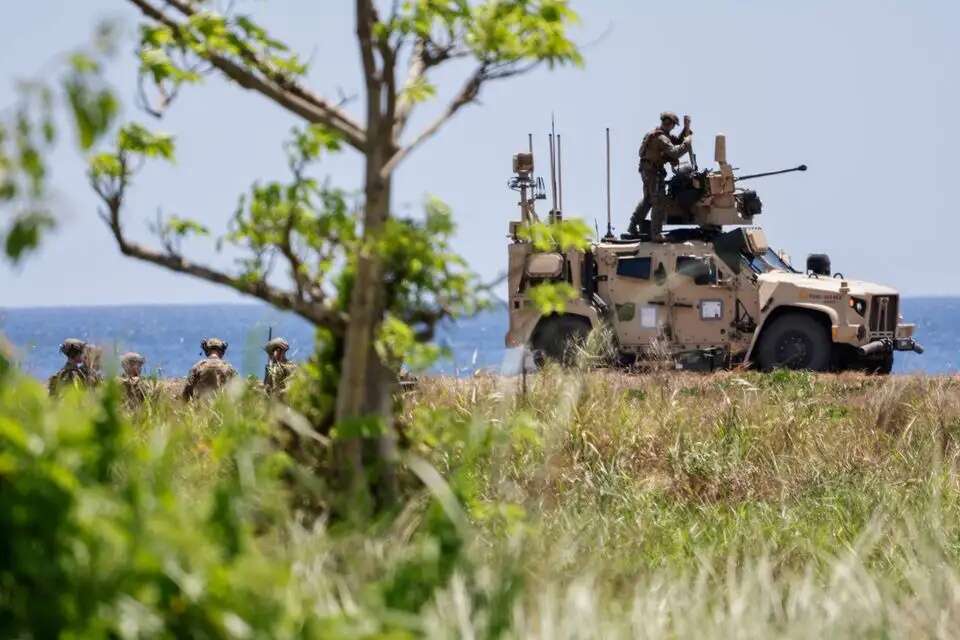
US Marines and the MADIS system

US Marines and the MADIS system. Photo: EPA

Share on FacebookShare on Twitter

One of the most pressing problems in modern warfare is economic asymmetry: how to bring down a cheap drone that costs only a few thousand dollars without depleting stockpiles of air defense missiles that cost 10 times as much or more. A recent exercise carried out by US Marines in the Philippines, off the coast of the South China Sea, offers a glimpse of the solution the American defense establishment is trying to advance.

During the drill, forces practiced intercepting fixed-wing drones using a mobile air defense system known as MADIS. The system is based on two light tactical vehicles, the successors to the familiar Humvee: one is fitted with an advanced radar for detecting aerial targets, while the other carries Stinger missiles alongside electronic warfare and signal-jamming systems.

Instead of relying solely on missiles, both vehicles are armed with cannons and machine guns. The goal is to give commanders in the field a varied toolbox of options, including missiles, electronic warfare and cannon fire, so they can choose the most economically viable response according to the threat.
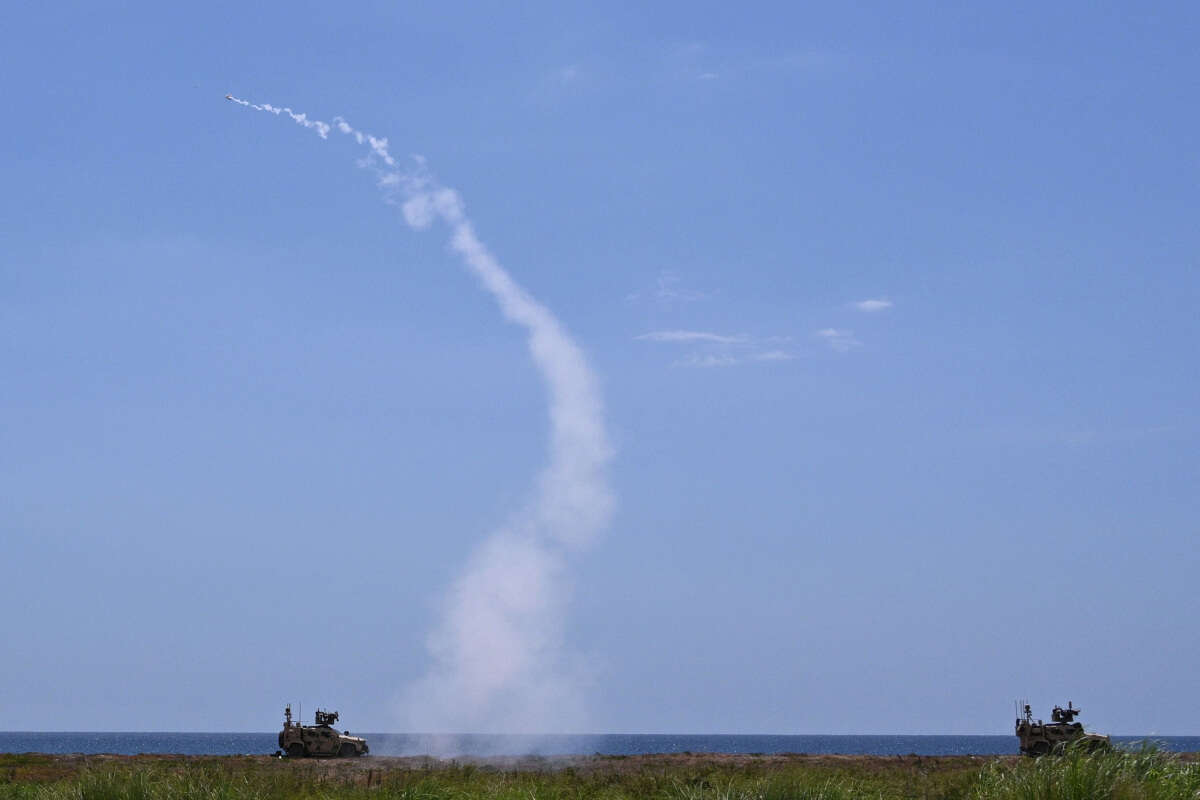
טיל סטינגר נורא מהמערכת "MADIS" , AFP
About $430,000 per missile. A Stinger missile is fired from the MADIS system. Photo: AFP

Shells instead of half-million-dollar missiles

Until now, US operations in the Middle East against Iranian threats have relied heavily on expensive, hard-to-produce air-to-air missiles such as the AIM-120, each of which carries a price tag of $1 million. The Stinger missiles used by the MADIS system are also far from cheap, costing about $430,000 per missile, while Coyote interceptors used by forces in the region cost around $100,000 each.

By contrast, an Iranian Shahed explosive drone costs Tehran's industries only about $30,000, while smaller drones can be bought for just a few thousand dollars. To close that gap, the Americans are counting on a dedicated 30 mm shell equipped with a proximity fuse. The fuse detects the target and detonates the round as it approaches, meaning a precise direct hit is not required.

According to ammunition experts' estimates, even if five such shells are needed to bring down a single drone, the total cost would be about $11,250. These shells are being marked as a reliable and effective backup if electronic jamming fails to neutralize the threat.
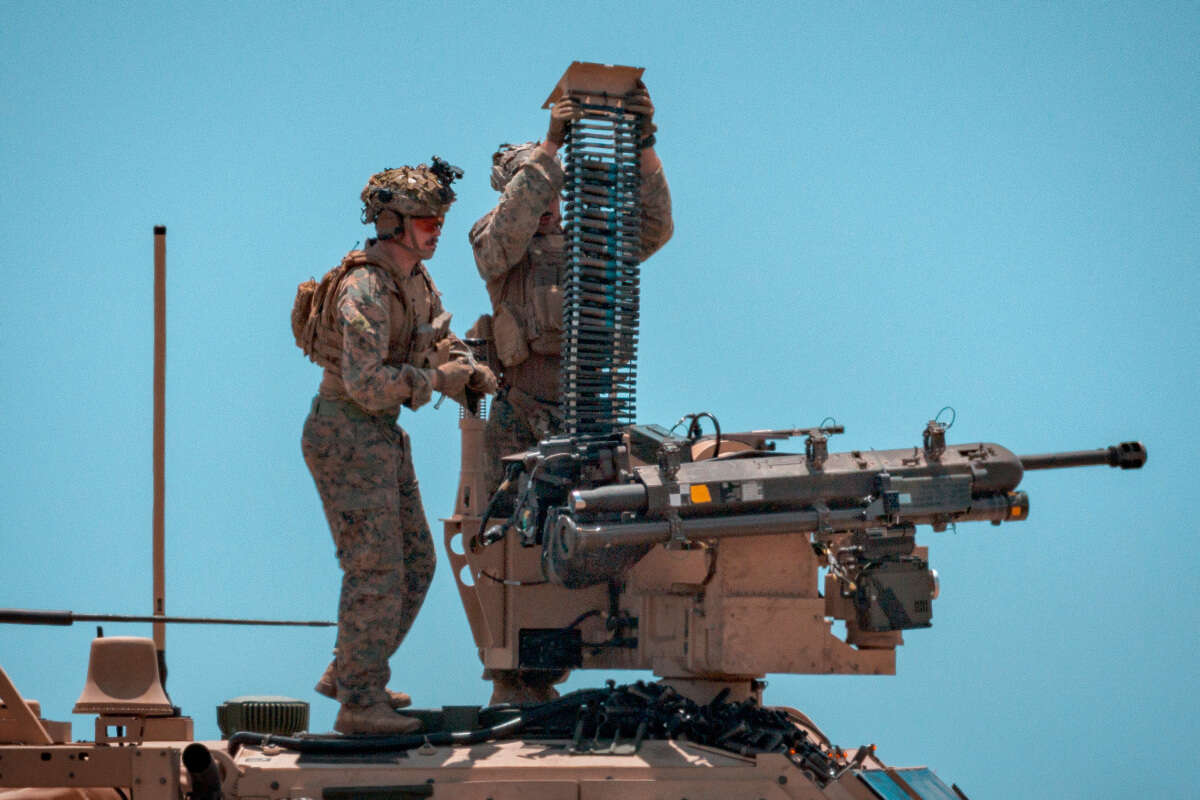
חיילי המארינס ומערכת MADIS , Getty Images
A reliable and effective backup. US Marines and the MADIS system. Photo: Getty Images

The mass production challenge

Despite the clear economic advantage, the shift to cannon ammunition poses a complex logistical challenge for the US defense industry: mass production. To provide an effective response in the field, the military will need hundreds of thousands of shells, but there are very few production lines capable of building precise electromechanical proximity fuses at that scale.

Major defense companies such as Northrop Grumman, which recently won a contract worth more than $200 million from the US Army, and L3Harris have already begun investing resources in expanding production lines to keep pace with the surge in global demand for this type of ammunition.

In the field, the Marines are practicing the combined use of these systems according to the scale of the threat. In the latest exercise, the 30 mm cannon and proximity-fuse shells were used against the larger targets, while the secondary machine gun, characterized by its rapid rate of fire, was used against smaller drones. The use of the expensive Stinger missiles was saved for the end of the drill as a final response tier, bringing down the target with a single shot.


Tags: droneMarinesUS

Related Posts

Donald Trump

Trump Iran meeting ends with no final decision

by Or Shaked

A battle of narratives and psychological warfare followed Trump's announcement on an emerging memorandum of understanding in the Persian Gulf....

Israeli products removed from shelves in Brooklyn

Israeli products removed from shelves in Brooklyn

by ILH Staff

Hours after a stormy vote in which the required majority threshold was lowered, all Israeli products were removed from the...

Behind the wealth and diplomacy: Qatar's hidden human rights nightmareGettyImages, Reuters, Gideon Markowicz

How Qatari propaganda infiltrated the US education system

by Ariel Kahana

A new report by the Institute for the Study of Global Antisemitism and Policy claims that Qatar Foundation International invested...

Menu

Analysis 

Archaeology

Blogpost

Business & Finance

Culture

Exclusive

Explainer

Environment


Features

Health

In Brief

Jewish World

Judea and Samaria

Lifestyle

Cyber & Internet

Sports


Diplomacy 

Iran & The Gulf

Gaza Strip

Politics

Shopping

Terms of use

Privacy Policy

Submissions

Contact Us

About Us

The first issue of Israel Hayom appeared on July 30, 2007. Israel Hayom was founded on the belief that the Israeli public deserves better, more balanced and more accurate journalism. Journalism that speaks, not shouts. Journalism of a different kind. And free of charge.

All rights reserved to Israel Hayom

Hosted by sPD.co.il

  • Home
  • News
    • Israel at War
    • Israel
    • United States
    • Middle East
    • Sports
  • Opinions
  • Jewish World
    • Archaeology
    • Antisemitism
  • Lifestyle
    • Food
    • Travel
    • Fashion
    • Culture
  • Magazine
    • Feature
    • Analysis
    • Explainer
    • Environment & Wildlife
    • Health & Wellness
  • In Memoriam
  • Subscribe to Newsletter
  • Submit your opinion
  • Terms and conditions

All rights reserved to Israel Hayom

Hosted by sPD.co.il

Newsletter

[contact-form-7 id=”508379″ html_id=”isrh_form_Newsletter_en” title=”newsletter_subscribe”]

  • Home
  • News
    • Israel at War
    • Israel
    • United States
    • Middle East
    • Sports
  • Opinions
  • Jewish World
    • Archaeology
    • Antisemitism
  • Lifestyle
    • Food
    • Travel
    • Fashion
    • Culture
  • Magazine
    • Feature
    • Analysis
    • Explainer
    • Environment & Wildlife
    • Health & Wellness
  • In Memoriam
  • Subscribe to Newsletter
  • Submit your opinion
  • Terms and conditions

All rights reserved to Israel Hayom

Hosted by sPD.co.il