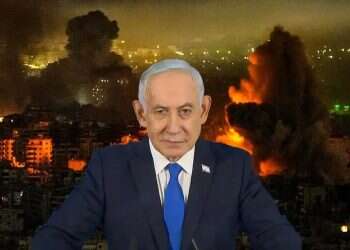
About two and a half years after Hezbollah opened a front against Israel, its replacement leadership has repeated the same strategic mistakes that led to its defeat in 2024.
On Oct. 8, 2023, the terrorist organization began launching attacks at northern Israel in an effort to impose an equation: a false calm in exchange for a ceasefire in Gaza that would preserve the full Hamas threat and not include a hostage deal. Hezbollah was also working then to wear Israel down while benefiting from the evacuation of masses of residents.
In Dahiyeh, Hezbollah believed that fear of the Lebanese quagmire would lead the leadership in Jerusalem to surrender to its dictates and live with the threat of invasion. In other words, to accept life inside the "ring of fire" while Tehran advanced its project to obtain a nuclear bomb.
Nevertheless, Israel broke Hassan Nasrallah's equation. The ground maneuver, the pager operations, the assassinations of Hezbollah's leaders and other operations all led the organization to accept a ceasefire on terms that were bad from its perspective. The fighting in Gaza continued, the Israel Defense Forces continued to hold five control points in southern Lebanon, and strikes against Hezbollah terrorists continued.
Beyond that, a new, pro-Western leadership arose in Lebanon, one that was willing to cooperate in disarming Hezbollah, and not only in the area south of the Litani River.
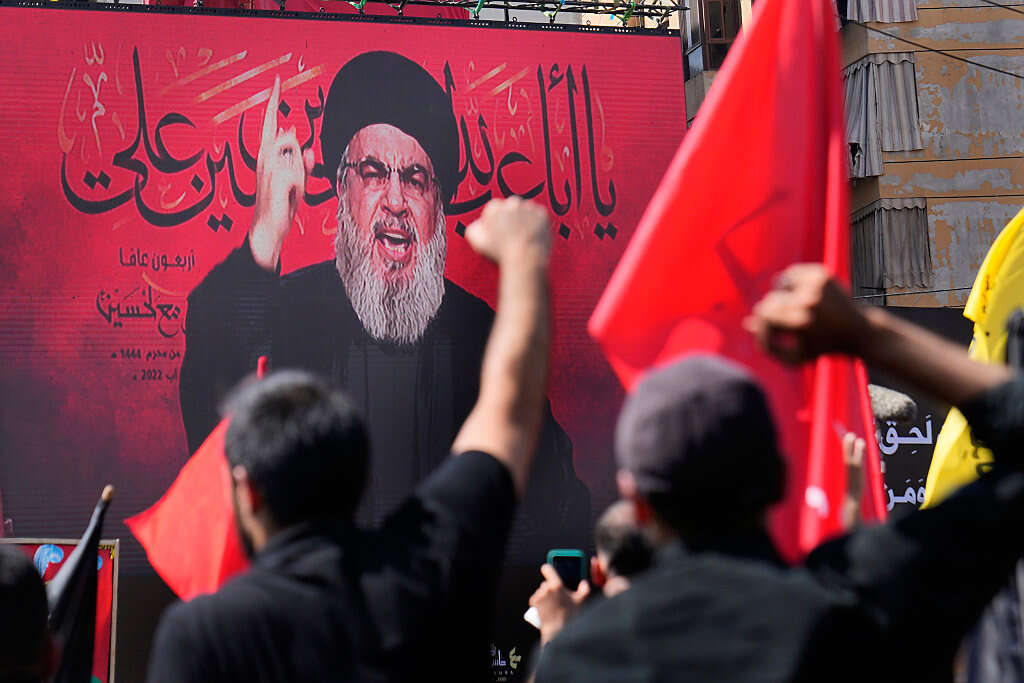
A new set of demands
Some 15 months have passed since that agreement, and Hezbollah returned on March 2 with a new set of demands: The IDF must withdraw completely from southern Lebanon, cease fire, release the organization's detainees, allow the Shiite population to return to the southern villages, and agree to a process for rehabilitating the destruction. Until these demands are met, Hezbollah is threatening to continue launching missiles and unmanned aerial vehicles.
Once again, Israel is being presented with an equation, whose meaning is the renewal of the long-term invasion threat to the north in exchange for a false calm. Once again, the gamble is on wearing Israel down. Once again, the Lebanese front is being opened to serve the regional interests of the Iranian axis.
In this sense, the claim that the continued IDF presence in southern Lebanon while dismantling Hezbollah infrastructure "serves Hezbollah" and "grants it legitimacy" is rather puzzling. The Lebanese public is divided, and there is no sufficiently good reason to align with the different winds blowing through it. Most Shiites fully support Hezbollah, while some Christians are as hostile to it as Israel is. Even a longed-for agreement between the countries has a heavy limitation, which I will detail later.
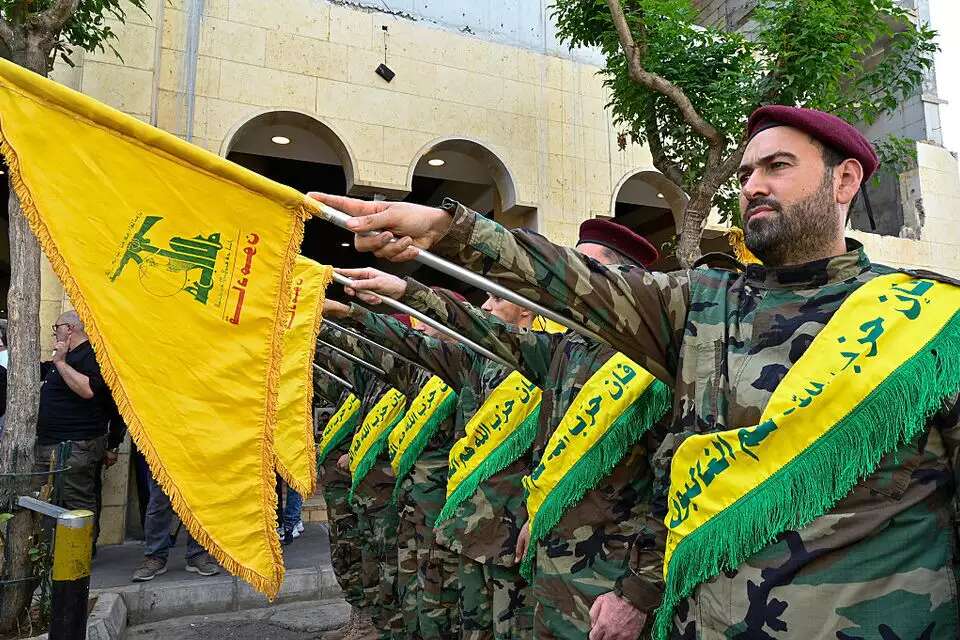
The drones are only one example
Hezbollah has indeed drawn tactical lessons from the fighting in 2024. The fiber-optic-guided drones are one example, but so is the change in the deployment of the organization's terrorists in Lebanon. Some of the terrorists are hiding in "nontraditional" areas populated by Christians.
The goal is to exact a price from Hezbollah's rivals as well, and thereby erode support for agreements with Israel and direct negotiations with it. In this sense, strikes in Beirut's Dahiyeh are not enough. Still, it is clear that Hezbollah has not internalized how difficult it is to wear Israel down, or that loyalty to Tehran's interests does not bring an equivalent guarantee from Tehran in return.
In any case, Israel will need surprises to turn the tables. About a week ago, Hezbollah Secretary-General Naim Qassem delivered a speech in which he complained about the damage to the financial institution Al-Qard Al-Hasan Association, which serves as part of the organization's economic infrastructure.
That institution is one example of Hezbollah's "deep state" within the Lebanese state: a network of civilian bodies and figures in the Land of the Cedars that serve the organization's interests. New sanctions imposed by the US administration have shed light on some of these elements, including members of Hezbollah's parliamentary faction and officers in the Lebanese Armed Forces. However, there is considerable doubt that economic sanctions will be enough to isolate those elements and prevent them from serving Hezbollah's interests.
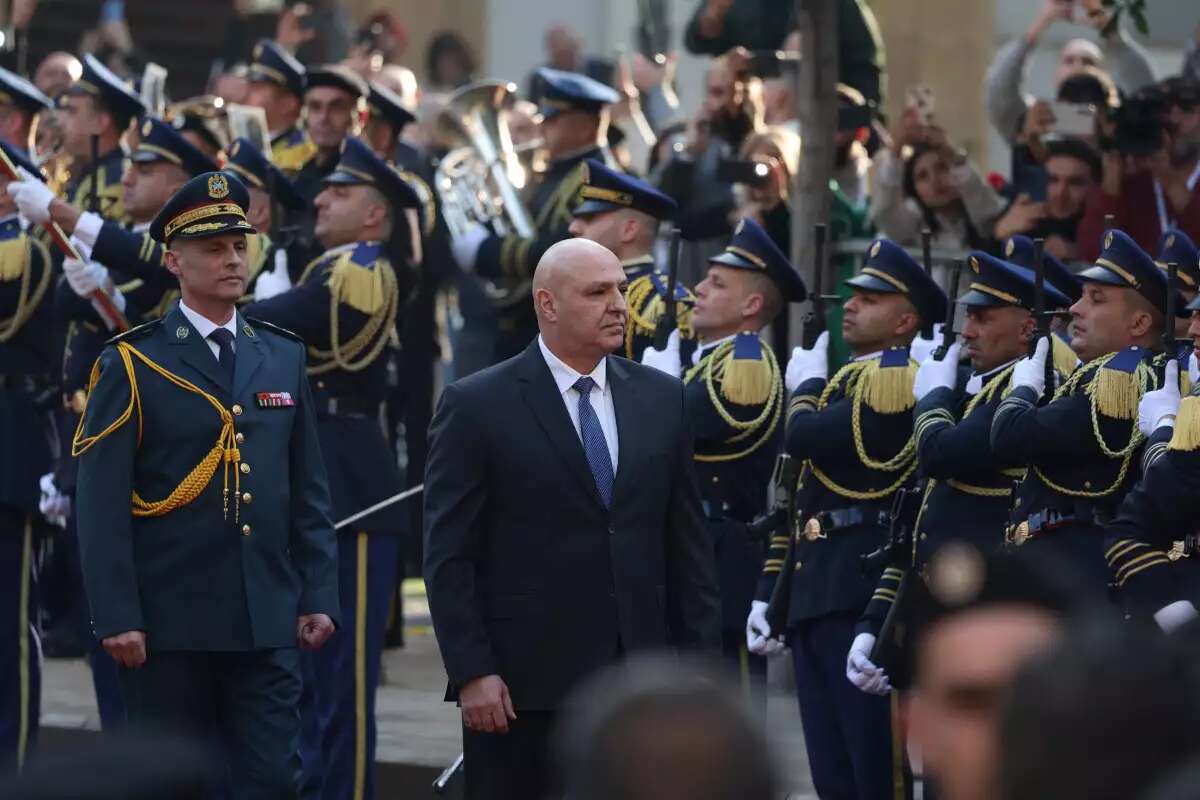
This deep state is also one of the main obstacles facing the Lebanese government. Even if President Joseph Aoun and Prime Minister Nawaf Salam reach the right decisions regarding disarmament and seek a security agreement, Hezbollah associates on the ground are not enthusiastic about carrying out orders. Striking these elements or removing them from their positions would serve Israel in two ways: hitting Hezbollah's soft underbelly and strengthening the camp of its rivals in the Lebanese government.
For example, Hezbollah's rivals in the Lebanese parliament are already calling for the dismissal of the organization's two ministers, who are still sitting around the government table in Beirut. There is no reason Israel and the US should not raise that demand. Such steps, alongside the military effort, could contribute to another defeat for Hezbollah.
Outlandish demands
Finally, it would be better to take the Iranian statements conditioning an agreement with the US on a ceasefire in Lebanon with a grain of salt. If Tehran receives its outlandish demands for compensation and the removal of sanctions without a genuine commitment on the nuclear issue, missiles and its regional proxies, there is considerable doubt that it would sacrifice those achievements for Hezbollah.
The condition appears mainly to be a diversion meant to shift attention away from more problematic clauses. If Tehran nevertheless surprises everyone and blows up the talks over escalation in Lebanon, Israel will benefit from foiling a dangerous agreement that would strengthen the Iranian regime and preserve its survival.