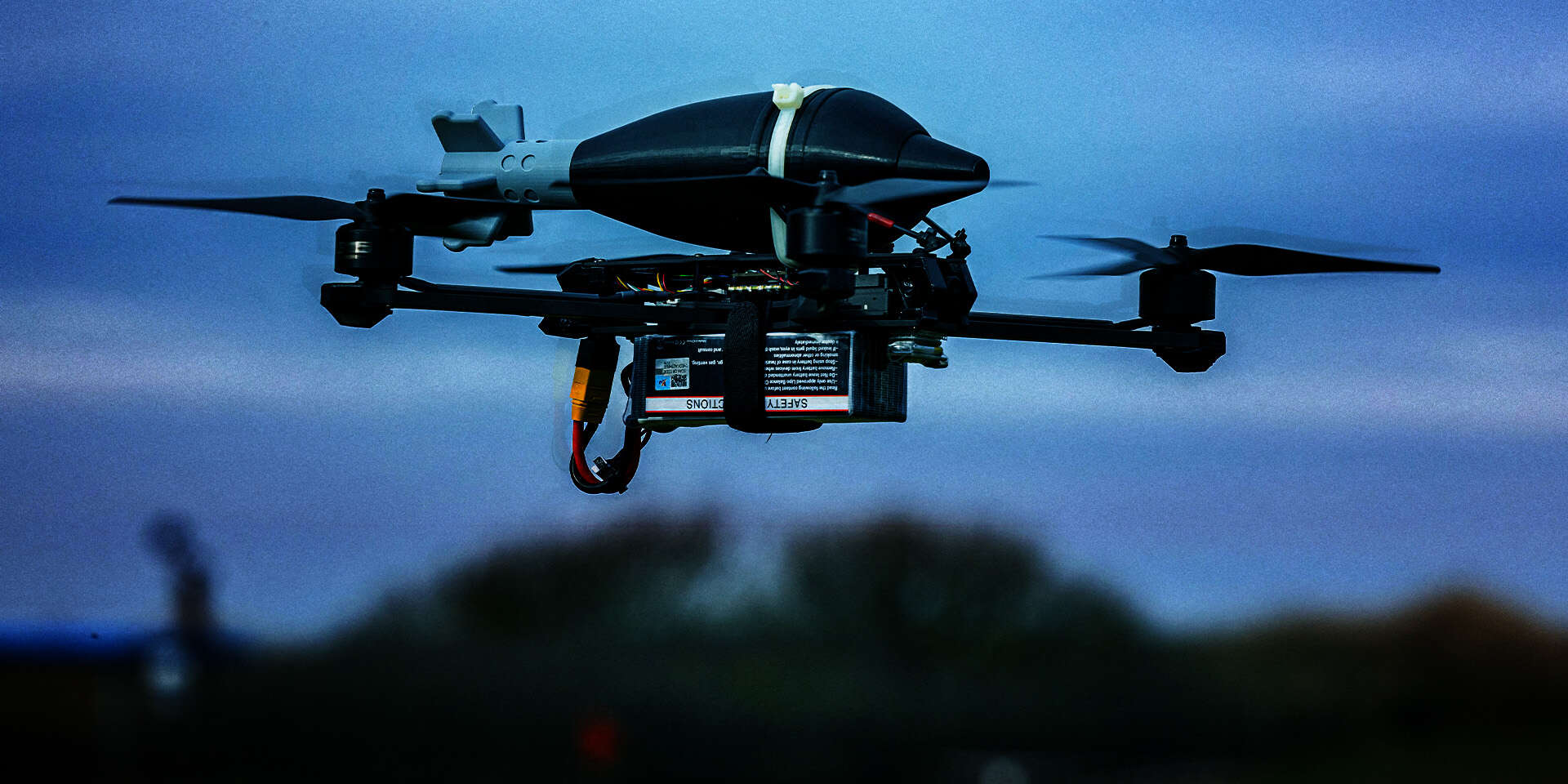
Attacks in northern Israel over the past two weeks using explosive drones operated by the Hezbollah terrorist organization have become a major concern for the IDF, causing numerous casualties and unbearably heavy losses. While Israel's defense systems have been able to intercept unmanned aerial vehicles launched from long distances, such as Iran or Yemen, with relative ease, explosive drones operating from Lebanese territory pose a far more complex and difficult challenge.
To understand the differences between these two types of aircraft, which appear very similar at first glance, we spoke with aviation expert Aharon Lapidot, who explained the fundamental differences in the structure of the systems and the way they are operated.
UAV: Expensive aircraft vulnerable to electronic disruption
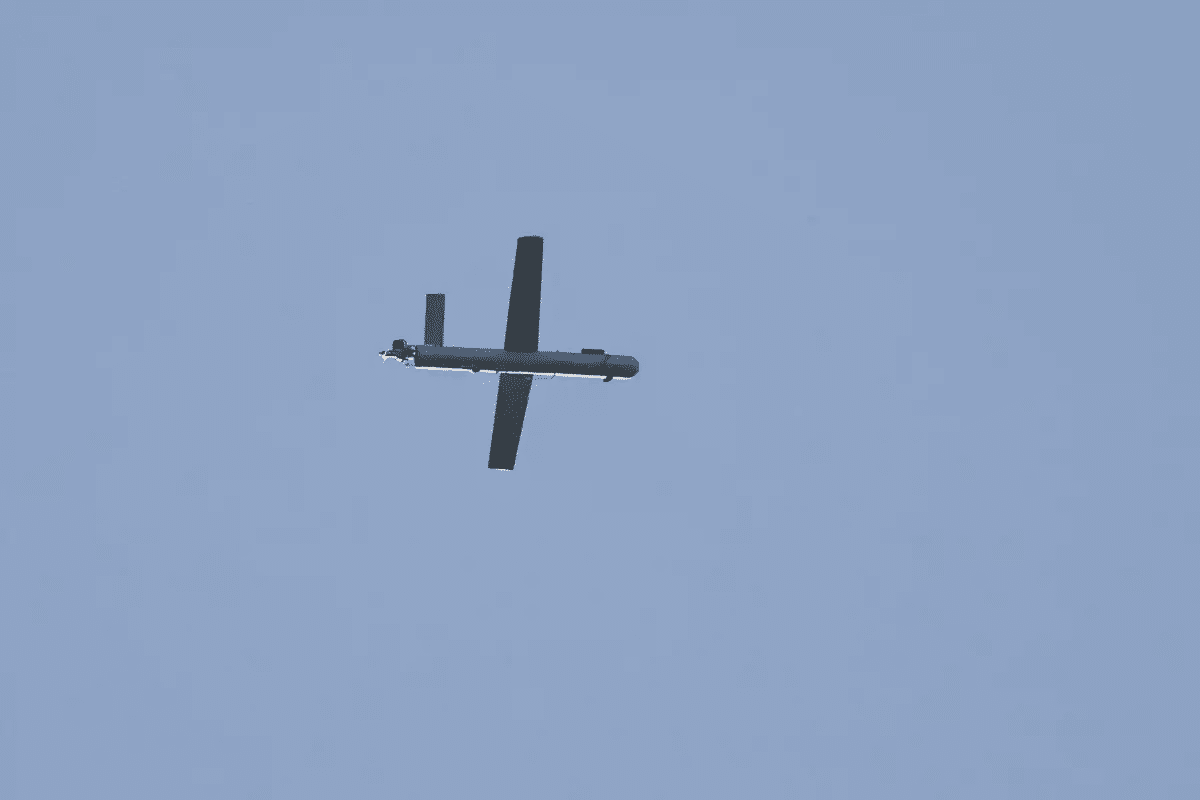
"A UAV is essentially an aircraft, basically a small plane," Lapidot explained. "It is a weapons platform operated by radio or other wireless means, and it can fly very long distances and sometimes remain airborne for entire days."
According to Lapidot, these are relatively large and very expensive systems. An Eitan-type UAV, for example, costs about $1 million. Its size and purpose allow it to carry specialized intelligence-gathering systems, as well as heavy munitions such as missiles.
"In that sense, it is easier to detect and also easier to disrupt its mission," Lapidot said. "The reason is that its communications go into the air and transmit. Once information is being transferred wirelessly in this way, the other side has the technological ability to bring down the aircraft or disrupt its activity."
Explosive drone: Small, cheap and connected by a physical fiber
By contrast, explosive drones are a completely different type of aircraft, one that presents an almost impossible detection challenge for standard systems. Lapidot explained that these are small, inexpensive devices costing only a few hundred dollars. They are also highly limited in both flight range and payload, and can carry only about 2 to 3 kilograms (4.4 to 6.6 pounds) of explosives or camera equipment.
The main problem in confronting them stems from their unique operating method.
"An explosive drone is operated by fiber optic cable," Lapidot said. "That means its method of operation is such that there is no way to intervene in it or jam it, because it does not transmit through the air. It is a direct physical transmission between the operator and the drone."
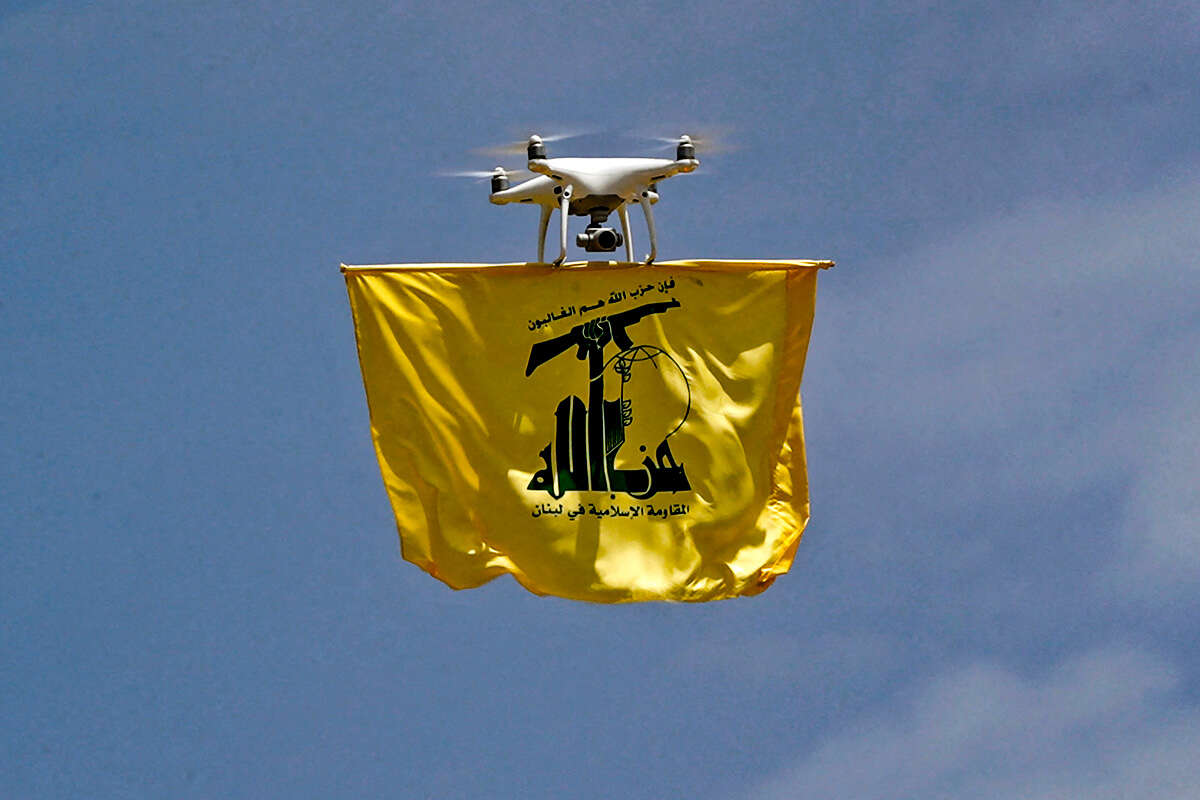
Because of the use of a physical fiber optic cable, the drone is limited to a short range of up to 5 kilometers (3.1 miles), and is intended only for attacks or intelligence gathering within those ranges before crashing into the target.
"The big problem with these drones is that they are very small and cannot be detected by ordinary technological means, but mainly only by eyesight," Lapidot concluded. "In that respect, it is very hard to deal with them and stop them in time."