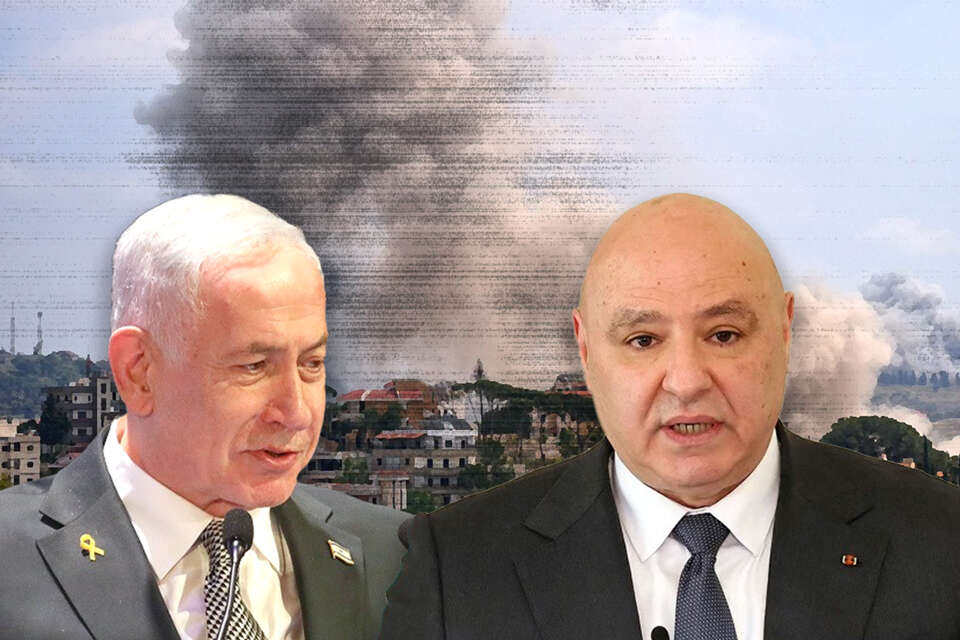
Diplomatic sources familiar with the negotiations between Israel and Lebanon say an agreement between the two countries is much closer than it appears. One source, who is well acquainted with the details of the talks, told Israel Hayom: "The Lebanese leadership has already passed the point of no return and is determined to reach an agreement. This leadership understands that the way to rehabilitate the country is to end Hezbollah's harmful influence."
The source added that a practical and swift solution to the Hezbollah issue had still not been found, but that an international effort to strengthen the Lebanese Armed Forces and apply pressure on Hezbollah, combined with cutting off the organization's financial sources, could bring about the desired result. That cutoff is expected to include Iran, which is itself mired in an especially severe economic crisis, as well as the organization's criminal sources of funding. To address this, intelligence cooperation between the US, Israel and additional countries, mainly in the West, has expanded significantly.
Sources close to the Lebanese presidential palace told the newspaper Al-Diyar that there was satisfaction with the path that had begun to take shape. According to the sources, "What has been achieved is an important breakthrough that would not have happened without cooperation from all parties. This is an important move that could open the door to a more advanced stage."
The diplomatic source's remarks regarding the Lebanese leadership were reinforced over the weekend in President Joseph Aoun's interview with Christiane Amanpour on CNN, in which he demanded that Iran keep its hands off his country's policy. His comments reflect not only political courage, but also the broad support of most Lebanese people for this policy. Most of Lebanon's sectarian leaders backed Aoun, as did most media outlets. At the same time, they underscore the threat to Aoun's life, as he has now become an assassination target for Iran and Hezbollah.

Anger in Beirut over Nabatiyeh incident
Against this backdrop, negotiations between Lebanon and Israel, mediated by the US, have resumed. An incident occurred when the Israel Defense Forces struck on the al-Khardali road in the Nabatiyeh Governorate in southern Lebanon, killing two Lebanese officers and one Lebanese soldier. The incident sparked anger in Beirut, with Lebanese President Joseph Aoun sharply condemning the Israeli strike, while Parliament Speaker Nabih Berri charged that "today's crime was not a mistake at all, as Israel claims."