For the first time, Israel maps the Israeli startup ecosystem in energy for data centers that powers millions of ChatGPT queries and the development of AI platforms. Data centers consume enormous amounts of energy, and what began as a fringe phenomenon is now becoming a problem that threatens the energy infrastructure of entire countries.
According to a recent report in The Wall Street Journal, the high demand for energy from data centers could lead to a power-supply crisis for major U.S. electricity providers. Could Israeli startups help overcome this problem?
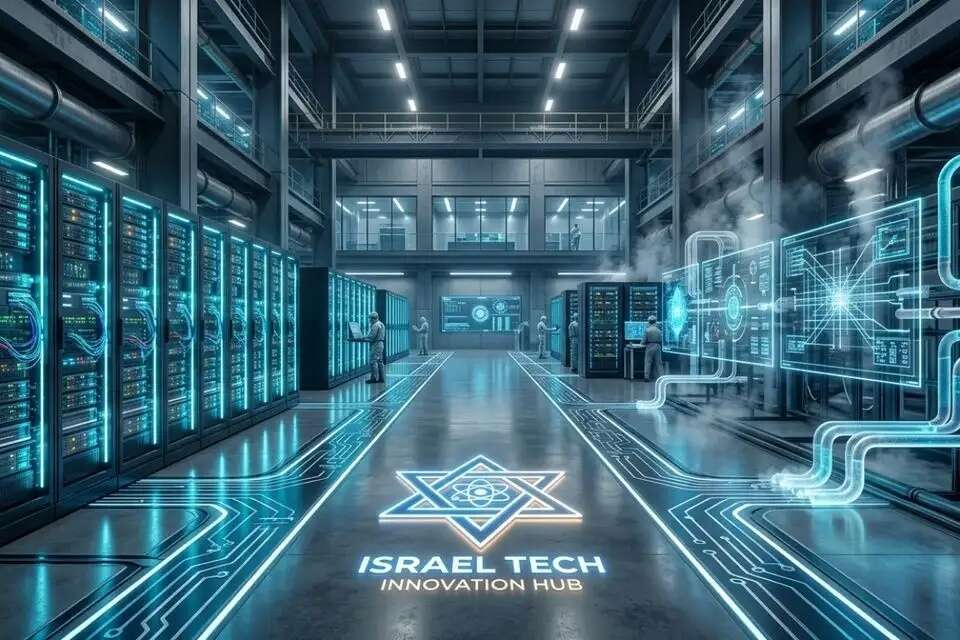
A joint initiative by the Ignite the Spark community, in collaboration with NTT Innovation Laboratory Israel, showcases the range of Israeli companies and startups operating at the intersection of energy and data centers. This value chain begins with power generation and transmission, continues through smart and efficient management, local backup, along with electrical and thermal energy storage, energy-efficient computing processes, and, of course, cooling and heat reuse, which is one of the most important parameters in data-center efficiency.
In the energy sector, Israel's energy-tech ecosystem includes some 350 startups and has seen 60% growth in the number of startups over the past decade. The opportunity for various players lies precisely at the intersection of energy, AI, and data centers. A deep entrepreneurial culture, the arrival of entrepreneurs who have already achieved exits, and technologies that grew out of a culture of solving complex problems all create unusual potential. Together, they could enable an ecosystem capable of turning the specific challenges faced by data-center operators into breakthroughs.
Where is the electricity? That is the question currently troubling the CEOs of all the global technology giants. This year alone, international technology companies have invested billions of dollars in AI data-center infrastructure, and it is now clearer than ever that energy consumption is rising dramatically every year and changing the rules of the game for data-center operations.
As a result, the 'Bring and Build Your Own Energy' approach is gaining momentum among tech giants: more and more major corporations understand that the decisions they make now will affect their chances of winning what is currently humanity's biggest race: the race for advanced artificial-intelligence models and greater availability. This includes acquisitions of energy companies, such as Google's multibillion-dollar acquisition of Intersect; agreements for local generation and co-location; and the development of private transmission infrastructure and substations.
Today, the Israeli ecosystem offers something the AI world fundamentally needs: flexibility, speed, and energy innovation tailored to the real constraints faced by the technology giants.
What does this have to do with energy?
There is still a great deal of work to be done to advance the field of energy solutions in Israel, but the local ecosystem is very much in the running and has already been gaining momentum in recent years. Startups are rapidly pivoting or adding use cases that demonstrate the relevance of their technology to data centers.
In addition, companies with proven solutions in the field, such as cooling, optimization, and grid-management solutions, are seeing a significant jump in demand. Companies now see that expanding their value proposition for this market is an opportunity they cannot afford to miss.
So where can the next unicorn in the energy world be found? The Ignite the Spark community, in collaboration with NTT Innovation Laboratory Israel, showcases the range of Israeli companies and startups operating at the interface between energy and data centers. The map, which features around 60 companies, is divided into four domains. Most of the companies it features are already active worldwide.

The Israeli Innovation Map
1. Energy infrastructure
The challenge: Stable, sustainable baseload supply is the key: continuous power generation and an electricity grid adapted to local and emergency generation. One of the promising solutions we are all waiting for is fusion power.
Notable companies: nT-Tao and Metatron NRG are developing compact fusion reactors that will provide clean, continuous energy to feed the enormous appetite of data centers.
2. Storage and energy resilience
The challenge: Energy storage is the key to the energy security and flexibility of data centers.
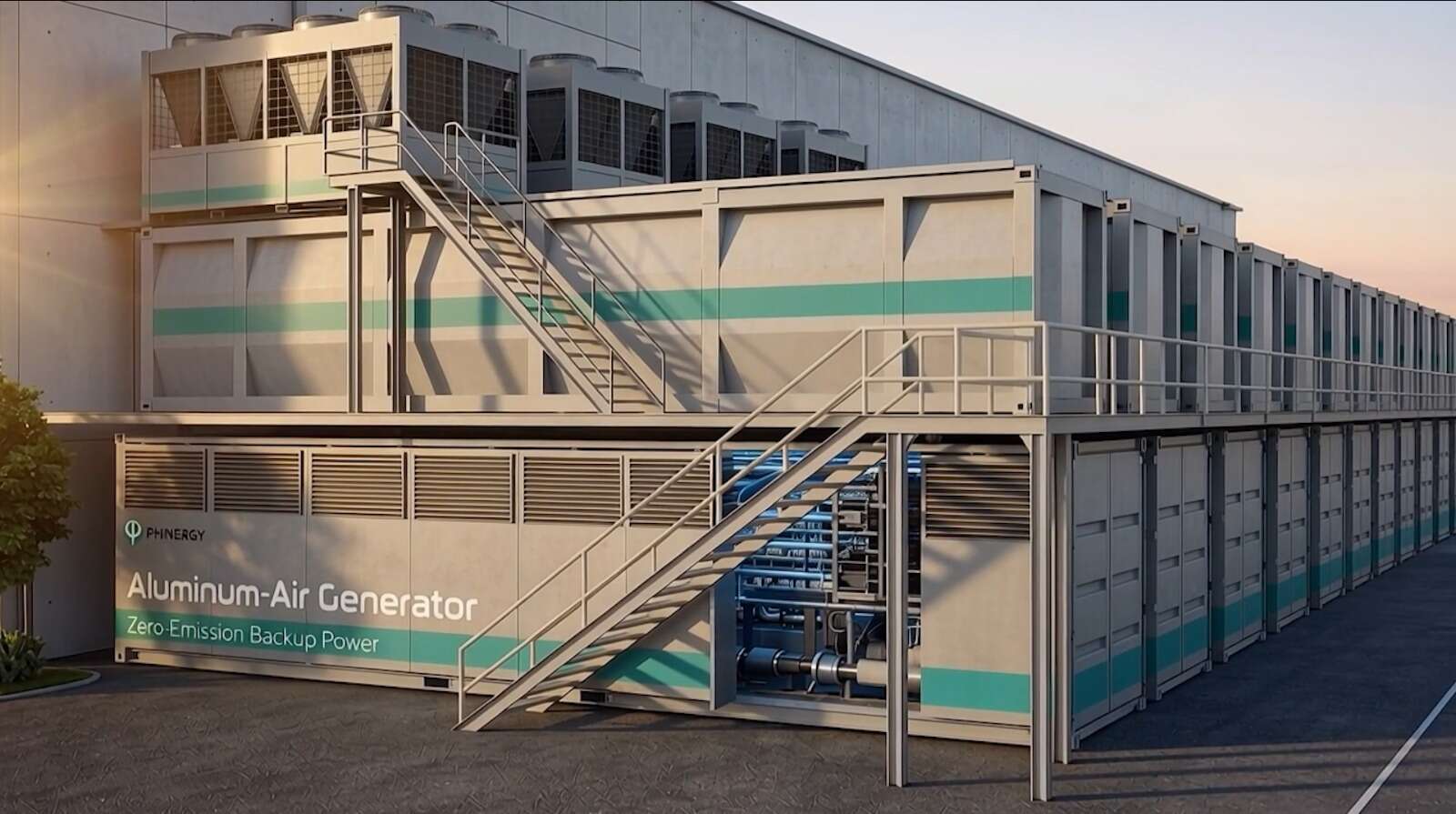
Notable companies: Phinergy has developed metal-air technology, which generates electricity from aluminum and oxygen in the air, and was selected by a major consortium to lead the replacement of diesel generators in data centers.
3. Energy intelligence and smart computing
The challenge: Reducing the energy consumption of the computation processes themselves, using photonic computing, optical communications, efficient processors, and smart management at the chip level.
Notable companies: CogniFiber is developing photonic computing technology, DeepLight, that performs calculations using light instead of electricity, creating the prospect of enormous energy savings. Teramount has developed the Universal Photonic Coupler technology for connecting optical fibers to silicon photonics chips, enabling faster data transmission with significantly lower energy consumption.
"Our partnership with NTT is precisely this kind of collaboration: connecting Israeli innovation with global scale and creating major growth opportunities for both sides. The industry is looking for solutions now, and Israel can provide them."
Noa Asher, CEO of NTT Innovation Laboratory Israel, said: "NTT, which is the world's third-largest data-center service provider, with more than 150 data centers, continues to accelerate its growth and invest in the field. Alongside this growth acceleration, sustainability and energy efficiency in data-center development are becoming increasingly important."
4. Cooling and thermal efficiency
The challenge: Cooling consumes up to 50% of the electricity in a data center. Solutions combine air, liquid, immersion, and direct-to-chip cooling, alongside heat reuse.
Notable companies: ZutaCore offers a complete waterless liquid-cooling system — cold plates, CDUs, manifolds, and software control, enabling significant energy savings and higher performance.
What do the initiative's leaders say?
Sean Dana, CEO of Ignite the Spark, said: "The Israeli energy-tech ecosystem is at its defining moment. There are companies and entrepreneurs here working on promising solutions, with experience in solving technological challenges and an ability to maintain continuity even during the most complex periods, always with a genuine hunger to grow. However, growth requires collaborations: access to markets, an understanding of real needs, and global partners who believe in its potential."
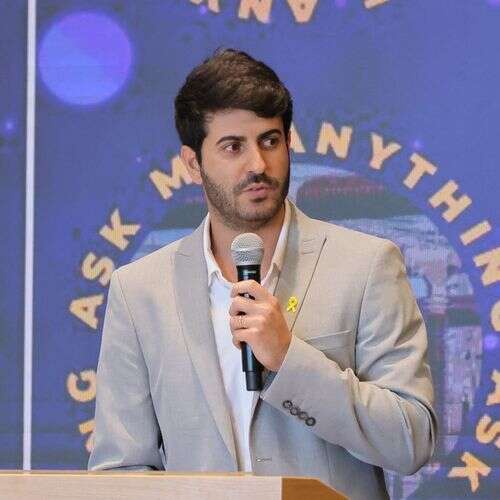
According to Dana, "Our partnership with NTT is exactly this kind of collaboration: connecting Israeli innovation with global scale and creating major growth opportunities for both sides. The industry is looking for solutions now, and Israel can provide them."
Noa Asher, CEO of NTT Innovation Laboratory Israel, said, "NTT Corporation, the world's third-largest data center services provider, with more than 150 data centers, continues to accelerate its growth and invest in the field. Alongside this accelerated growth, it is highly important to develop while maintaining the sustainability and energy efficiency of data centers."

Asher added: "NTT IL was established about four years ago, with the aim of creating a bridge between the corporation and the Israeli ecosystem. It promotes collaborations in energy for data centers in order to help NTT maintain its position as a global leader in the field. This is undoubtedly a field whose importance is steadily increasing, and Israeli startups have a central role in it."