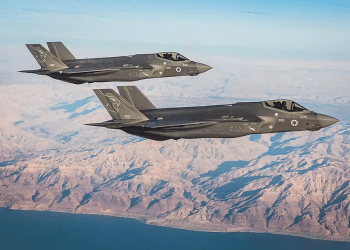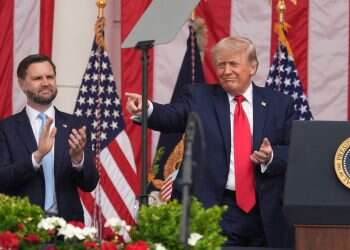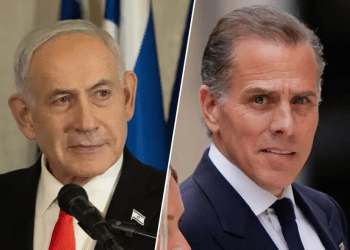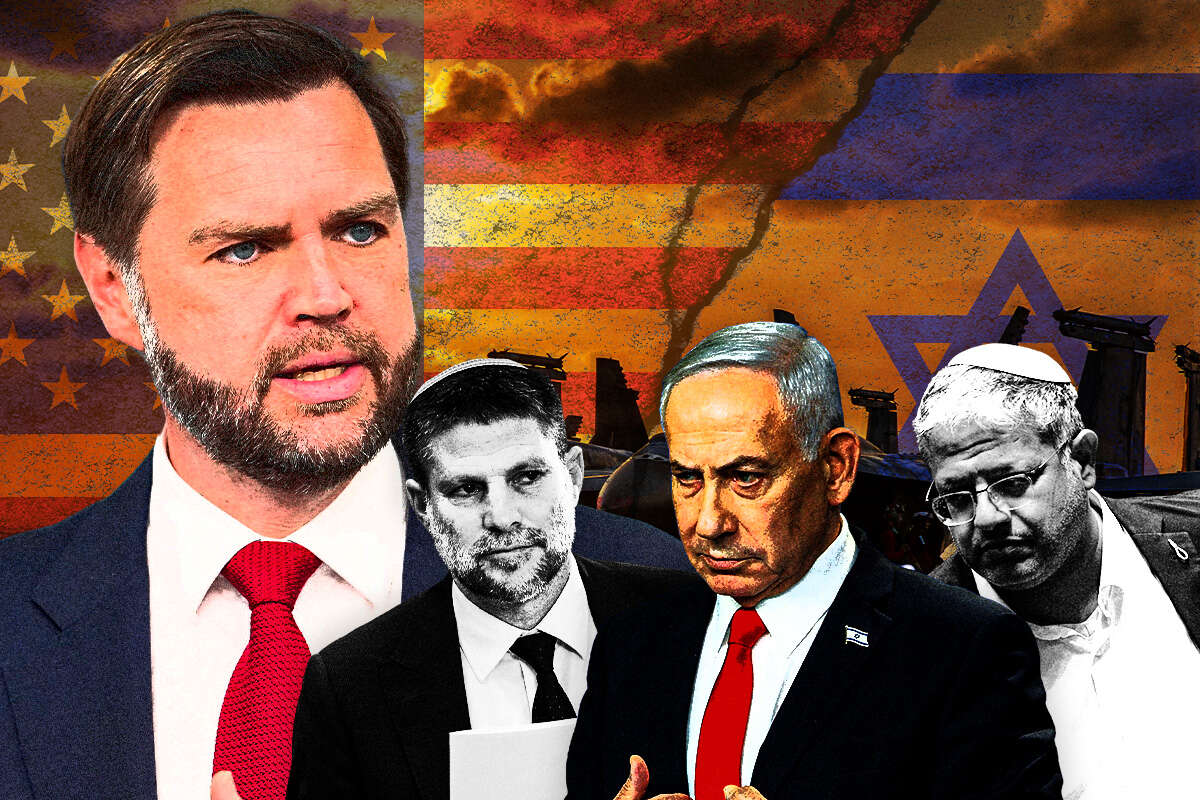
US Vice President JD Vance has become the face of the memorandum of understanding between Washington and Tehran: He is the spokesman, the briefer and the agreement's chief defender on every major American platform. That has put him on a collision course with Israel, which is not hiding its dissatisfaction with developments.
"Donald J. Trump is the only head of state in the entire world who is sympathetic to the nation of Israel at this moment in time," Vance said at a White House press conference, adding that "anybody in Israel who thinks their biggest problem is the president of the United States needs to wake up."
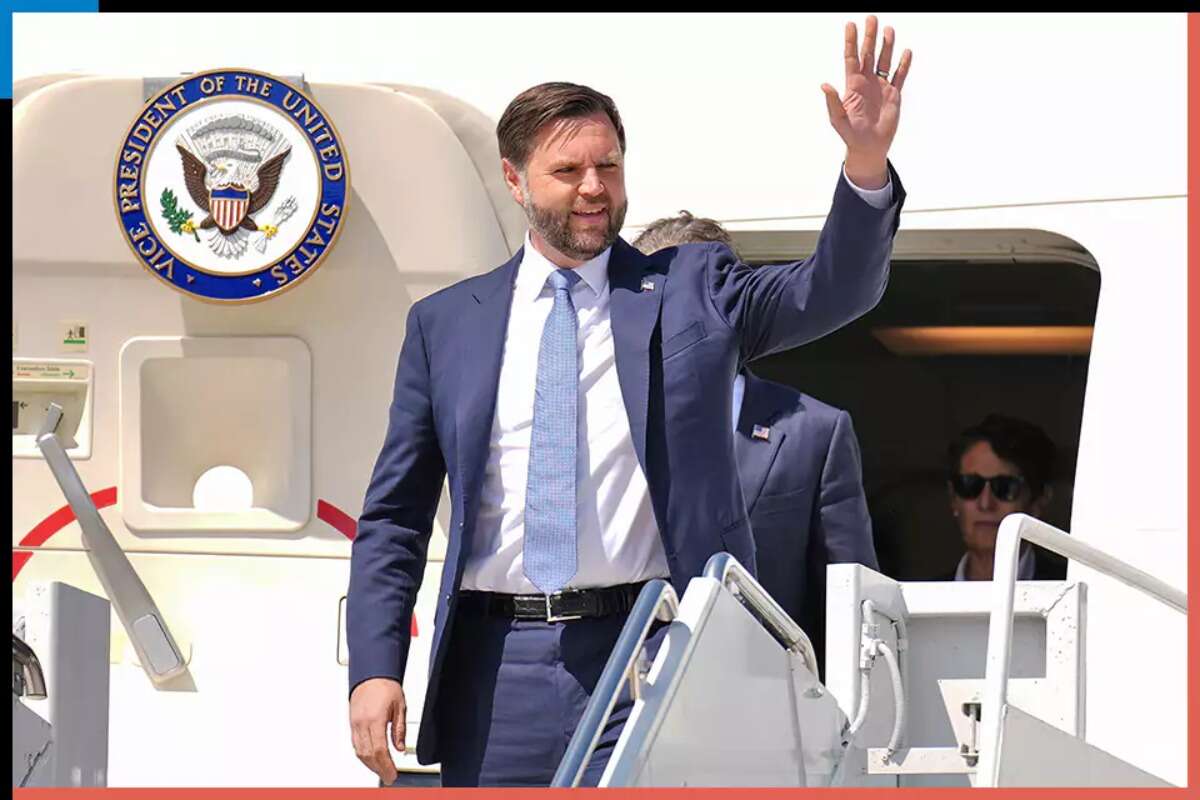
The sharp shift in the US position, at least as the Israeli public sees it, gives the vice president significant relief. Vance is the most prominent representative of the isolationist current in the MAGA movement, which is wary of long wars in the Middle East and seeks to focus American efforts at home. This was precisely the camp that was left embarrassed by the president's military activism: Trump had promised his voters to "end all wars" and found himself sending an "armada" to the Middle East.
The memorandum of understanding allows Vance to present the opposite picture: The American military deployment was measured, achieved its goal and now comes the phase of "peace through strength," not sinking into the Middle Eastern quagmire.
"I'm genuinely still angry at George W. Bush," Vance said in an interview on The New York Times podcast, in which he criticized Israel. Indeed, the Trump administration is presenting a picture of "two nations within you": Vance the isolationist on one side, and hawkish Secretary of State Marco Rubio on the other, who supposedly represents the legacy of the "neocons," the conservative right-wing figures whose power peaked during the presidency of George W. Bush and who have since become an increasingly weakened voice inside the Republican Party. If the operation to capture Maduro and the war with Iran marked the victory of the hawkish faction, the pendulum now appears to have swung back toward the MAGA camp.

Vance's relative victory inside the administration may calm the "rebellion" declared by isolationist figures in the Republican Party, led by antisemitic and anti-Israel media personality Tucker Carlson, ahead of the final stretch of the midterm elections. The war with Iran exposed this faction and its power, and the peak of the accusations against Israel came with the resignation of Joe Kent, head of the National Counterterrorism Center, who issued a harsh letter against Israel and "its powerful American lobby," which he claimed had dragged the US into war with Iran using "the same tactic they used to drag us into the Iraq War."
Personally signed on to the agreement
Vance's prominence is no coincidence. Vance is not merely a convenient spokesman. He is personally and politically signed on to the agreement, starting from the beginning of the negotiations after the initial ceasefire was announced. Unlike Secretary of State Rubio, who manages foreign policy by virtue of his position, Vance knowingly took ownership of the memorandum of understanding, and therefore became its chief defender. Ending wars fits far better with the portfolio he wants to take to the White House in 2028 than another entanglement in the Middle East.
On Monday, he appeared on ABC and noted that the agreement had already been signed digitally, but acknowledged that key details would be determined later in the negotiations. That same day he also appeared on Fox News, and immediately afterward gave an interview to NBC, where he addressed Israeli concerns directly. On Tuesday, he sat down with conservative commentator Megyn Kelly, who represents the isolationist current suspicious of Israel, in an attempt to soften the reverberations among the hard right, and on Thursday he closed the week with a White House press briefing.
David Makovsky, a senior fellow at the Washington Institute for Near East Policy, explains that Vance had already played a similar role in the first stage of the war against Iran. "Vance was key for Trump at the start of the war in marketing to the MAGA flank of the Trump base," Makovsky said. "his message was this is not a forever war and narrowly focused on ensuring Iran does not get a nuclear weapon."

To understand why Vance, in particular, was chosen to carry this message, one must return to the political story he has been telling about himself for years. Vance was born and raised in Middletown, Ohio, an industrial city in the American Midwest that became, for him, a symbol of the decline of the white working class and the sense of abandonment felt by America outside the coasts.
After high school, he enlisted in the Marines and served as a combat correspondent in Iraq. He later used the GI Bill to study at Ohio State University and Yale Law School. This transition, from a difficult childhood in America's periphery to the heart of the legal and political elite, became the raw material for his book "Hillbilly Elegy," which positioned him as one of the leading interpreters of the anger of the Trumpist base.
In the background stands Rubio's relative silence. Throughout the war with Iran, he stood out as one of the main defenders of the hard line against it. At the start of the month, he still appeared in Congress and made clear that any sanctions relief would be conditioned on Iranian concessions in the nuclear issue. But since the announcement of the memorandum of understanding, he has disappeared from the public diplomacy campaign.
According to reports, Rubio, together with CIA Director John Ratcliffe and Defense Secretary Pete Hegseth, raised doubts in internal discussions about the Iranians' willingness to uphold the nuclear concessions Washington is demanding, while Vance and the president's envoys, Steve Witkoff and Jared Kushner, pushed in favor of the agreement.
The look gave everything away
That gap also surfaced at the G7 summit. While Trump defended the agreement before the cameras, Rubio was seen behind him with a sealed expression, and his body language made headlines in the American media. Politically, the image fit perfectly into the broader story: The senior diplomat, who was supposed to lead the move, appeared to be present in body but not in spirit.
Rubio does not look happy.pic.twitter.com/S8V4Q2jk3X
— Eylon Levy (@EylonALevy) June 18, 2026
Makovsky believes that right now, Trump needs Rubio more than Vance. "Yet now Trump needs Secy of State Rubio to be more out front as it is the more traditional and hawkish wing of the Republican Party that is more skeptical," he said. "If Rubio is not heard from soon, his silence will be thunderous."
Vance understands the Israeli anger, which is why he did not settle for an internal American explanation and tried to speak directly to the hawkish, pro-Israel audience. In an interview with NBC, he initially chose a conciliatory tone and argued that the agreement "will make Israel safer," but also hinted at frustration and said there was "a lot of disinformation" about the agreement in the Israeli media. "The Israeli people," he added, would "understand what's in this agreement" and see it as "a pathway to a new Middle East, to peace and prosperity in that region."
With Megyn Kelly, Vance had already toughened his tone. He argued that the agreement's critics were "offering endless conflict" and wanted to continue a campaign that would end with "the deployment of 300,000 American troops on Iranian soil." This was no longer reconciliation, but an offensive line portraying hawks in Israel and the US as those pulling America into a conflict it does not want.
At the White House press briefing he held, Vance completely took off the gloves in the face of criticism from within Israel. Referring to a report that Netanyahu was "furious," he said that this "does not reflect the conversations I have had with him," but sharply attacked ministers in the Israeli cabinet who, he said, had come out against the agreement and against the US president personally.
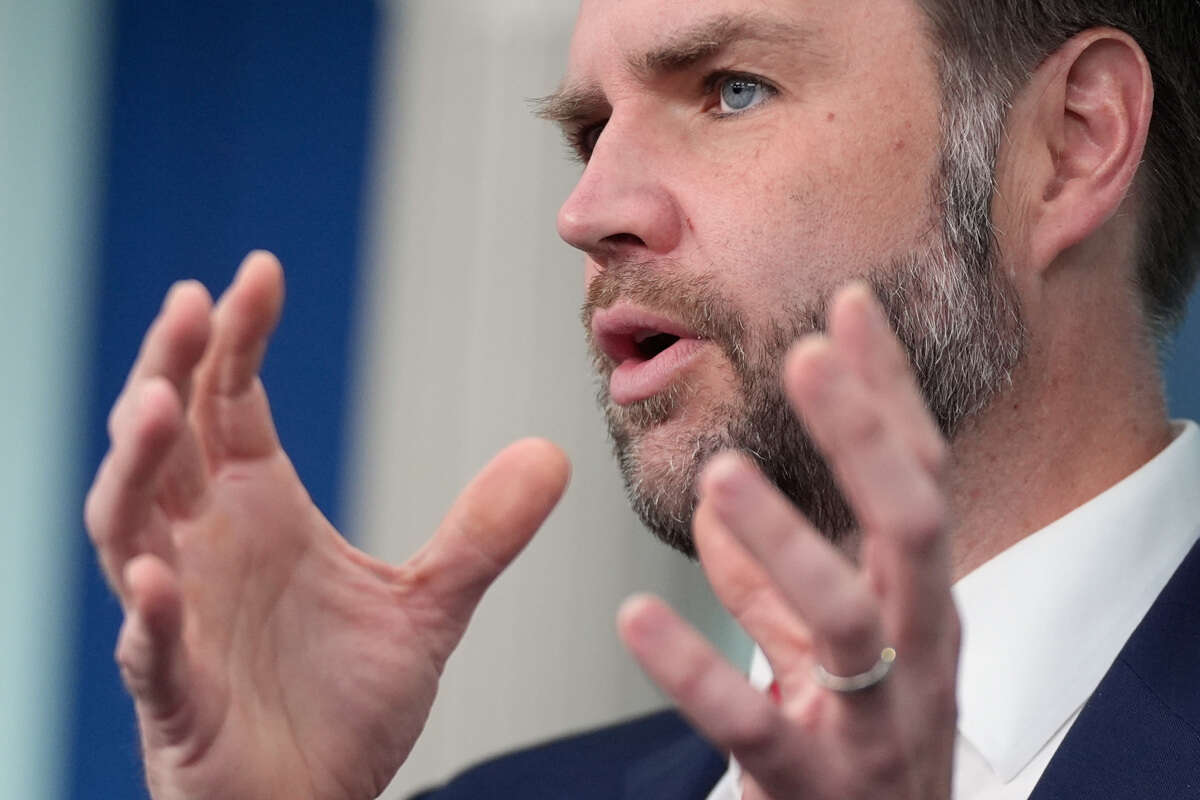
"Over the last three months, two-thirds of the defensive weapons that have protected your homeland have been built by American hands and paid for by American tax dollars," he said, and that "If I was in the Cabinet of the Israeli government, I might not be attacking the only powerful ally that I have anywhere left in the entire world," in what is difficult to interpret as anything other than a public threat.
For Israel, this is a reminder that the debate on the American right is no longer confined to the question of whether the agreement is good for the US or for Israel. The deeper question is how relevant Israel's security considerations will remain in the future if the isolationist wing, part of which is also anti-Israel, wins the battle for the soul of the American right and of the MAGA movement under Vance's possible future leadership.