For years, the Shiite village of Majdal Zoun, south of Tyre and situated at an elevation of 440 meters (1,444 feet), stood as one of Hezbollah's most important and secret strongholds. Above ground were homes, a mosque and a school. Beneath them lay a vast military infrastructure built with Iranian assistance, including a huge tunnel, explosives depots, a UAV assembly workshop and a drone launch system used to attack Israel. Only after forces from the 551st Brigade captured the village did the full picture emerge of what the troops now call "a village that is a fortress."
About a week and a half ago, forces from the 551st Brigade, a reserve commando brigade, completed the capture of Majdal Zoun in southern Lebanon. The village, which together with Ras al-Bayada overlooks the Tyre area and sits on terrain commanding the surrounding region, had for years been considered a strategic asset for Hezbollah. The brigade, which has fought since Oct. 7, 2023, in Gaza, Lebanon and Syria and has lost 22 of its soldiers, this time reached one of the organization's most significant power centers in southern Lebanon.
Majdal Zoun was not merely a Shiite village that supported Hezbollah. It served as a central base for the Radwan Force and for the organization's UAV array. From two apartments built on a ridge overlooking the area, drones were launched toward IDF troops and communities along the northern border in the Galilee. Those apartments, located during the fighting, served as operating and launch positions for drones that have become one of the main threats to forces and residents of the north in recent months.
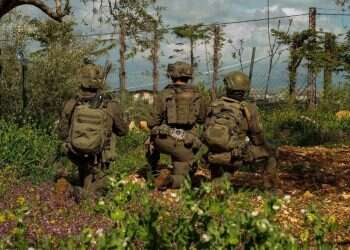
As the forces entered the village, the troops encountered resistance from Radwan Force terrorists who had deployed there with large quantities of weapons. During the battles, terrorists were eliminated, and dozens of weapons, anti-tank launchers, combat equipment, GoPro cameras and compounds used by the terrorists for prolonged stays were found in the village homes.
"Systematic dismantling"
Lt. Col. B., one of the force commanders, said, "There was resistance, resistance that in practice did not delay our forces. We knew how to dismantle it in a systematic, powerful and lethal manner."
He said that as the troops advanced through the village, it became clear that almost every house was part of the defensive system protecting the underground infrastructure.
"Every house we reached was prepared with heavy weapons to delay the IDF maneuver," he said. "In practice, we understood that it was meant to protect the underground, the strategic infrastructure that they had apparently invested decades in building."
"That is what we understand from this village," he added. "We understood that it was not really civilian, but a full-blown Hezbollah village."
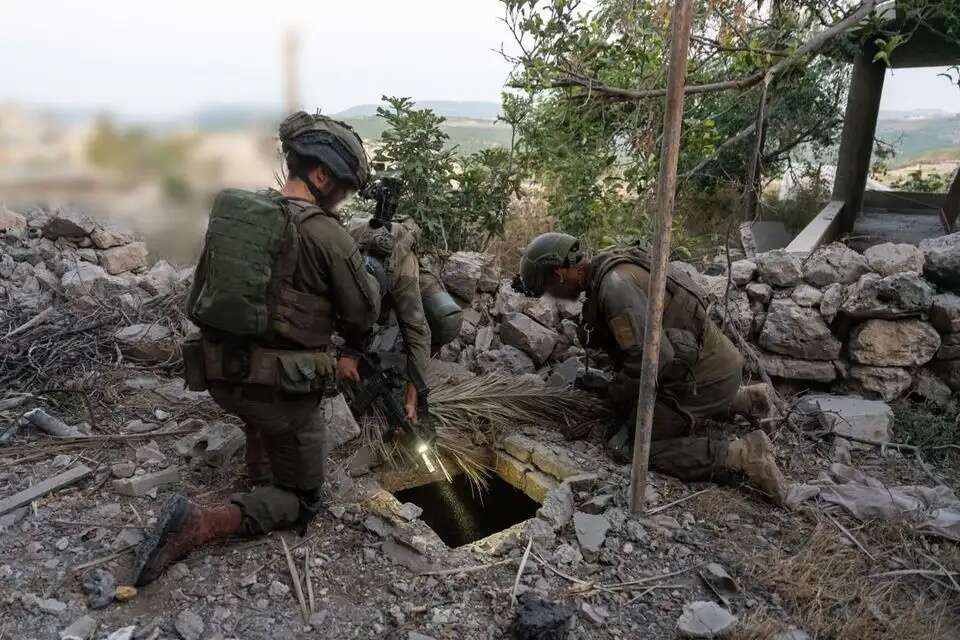
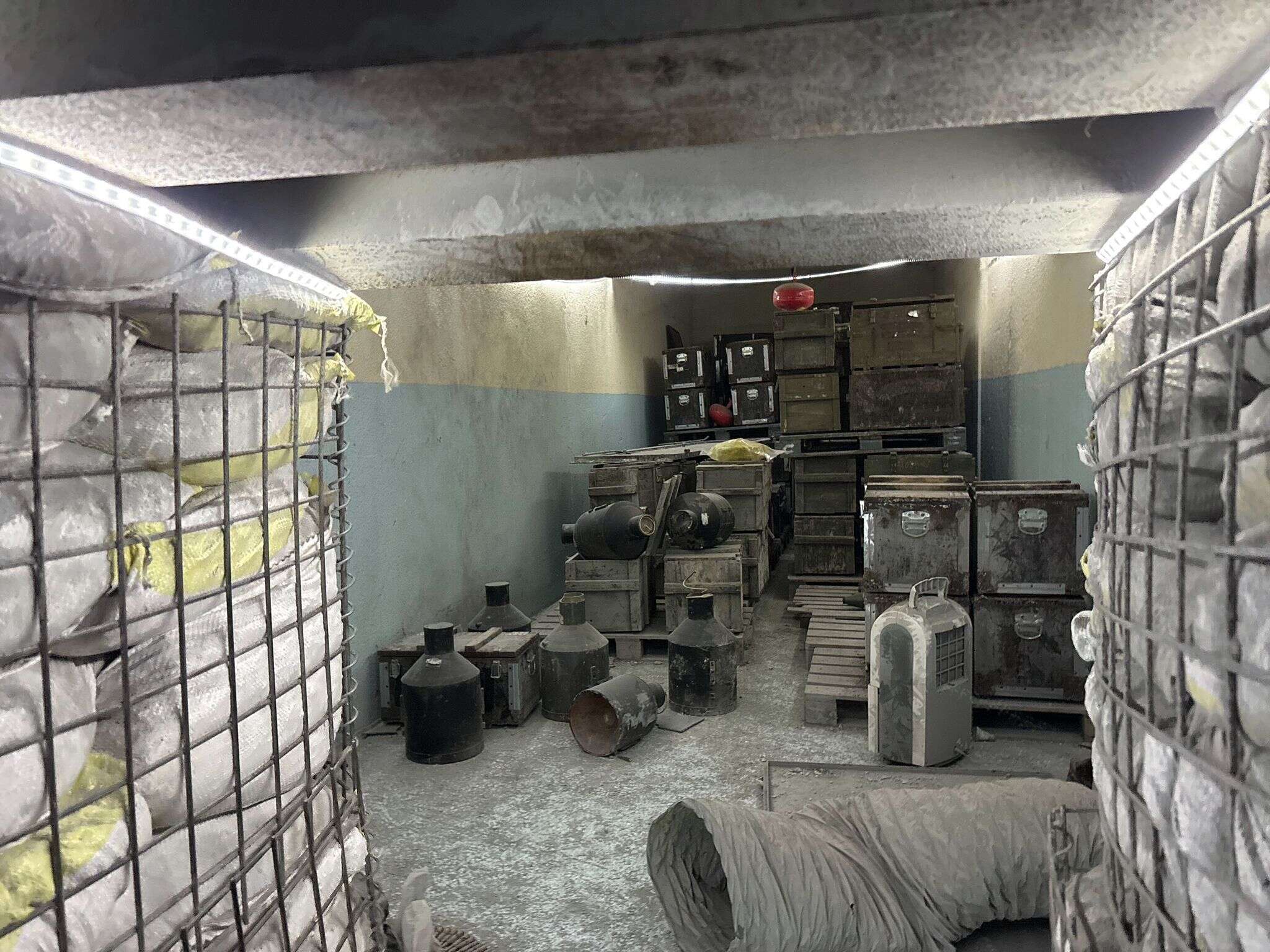
The highlight of the operation, however, awaited underground. For days, troops from the Yahalom unit, the IDF's elite combat engineering unit, worked to locate one of Hezbollah's flagship infrastructures. When they managed to reach it, they found a huge tunnel dug beneath the center of the village, near homes, a school and a mosque. It had been blocked in an Israeli Air Force strike in 2024.
Lt. Col. D., a company commander in the Yahalom unit that operated under the 551st Brigade, said, "We worked for many long days to locate the infrastructure, until we struck the tunnel route. When we entered, we discovered what you see here."
He said even the unit's experienced professionals were surprised by its dimensions. "When we discovered the tunnel, we were surprised by its size, its length and also by the things we found inside it."
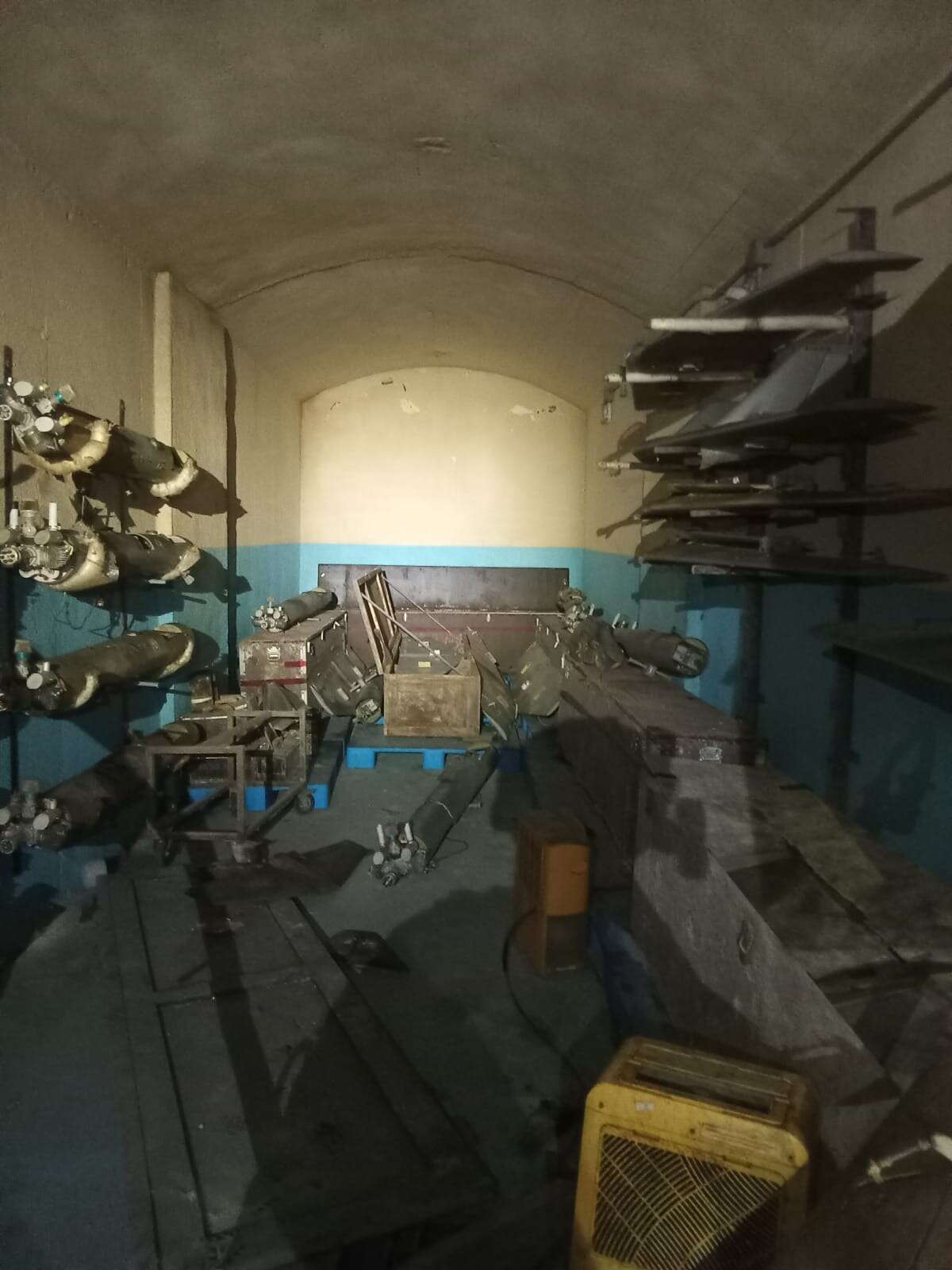
Inside the tunnel, the troops found about 50 Iranian UAVs and more than eight tons of explosives and explosive devices. According to the soldiers, this was part of a system that had been active until 2024 and was used to launch UAVs deep into Israel. Some of the aircraft were found disassembled and ready for assembly in a dedicated workshop operating at the site.
"You can see here Iranian enemy UAVs," Lt. Col. D. said. "Their wingspan is about 2.5 meters (8.2 feet), with a warhead of about 30 kilograms (66 pounds). These are UAVs that have been launched toward the State of Israel in the past, and they can reach between 200 and 250 kilometers (124 to 155 miles)."
"Cynical strategy"
He said the findings uncovered at the site pointed to deep Iranian involvement.
"What we are seeing is part of Hezbollah's strategy, the cynical use of civilian infrastructure and the cover it provides," he said. "This is a product of Iran. There is Iranian funding for the tunnel, the tunnel is built to Iranian standards and the UAVs are Iranian UAVs."
The troops who reached the site said that until the Israeli Air Force strike in 2024, the tunnel had served as a kind of underground "airport" for Hezbollah. According to the findings on the ground, the infrastructure included four entrances and several launch routes. A truck and forklift remained stuck at the end of the tunnel, evidence of the activity that had taken place there for years.
The tunnel, built about 29 meters (95 feet) underground, was blocked in air force strikes. But when Yahalom forces broke into it, they discovered an extensive and complex infrastructure.
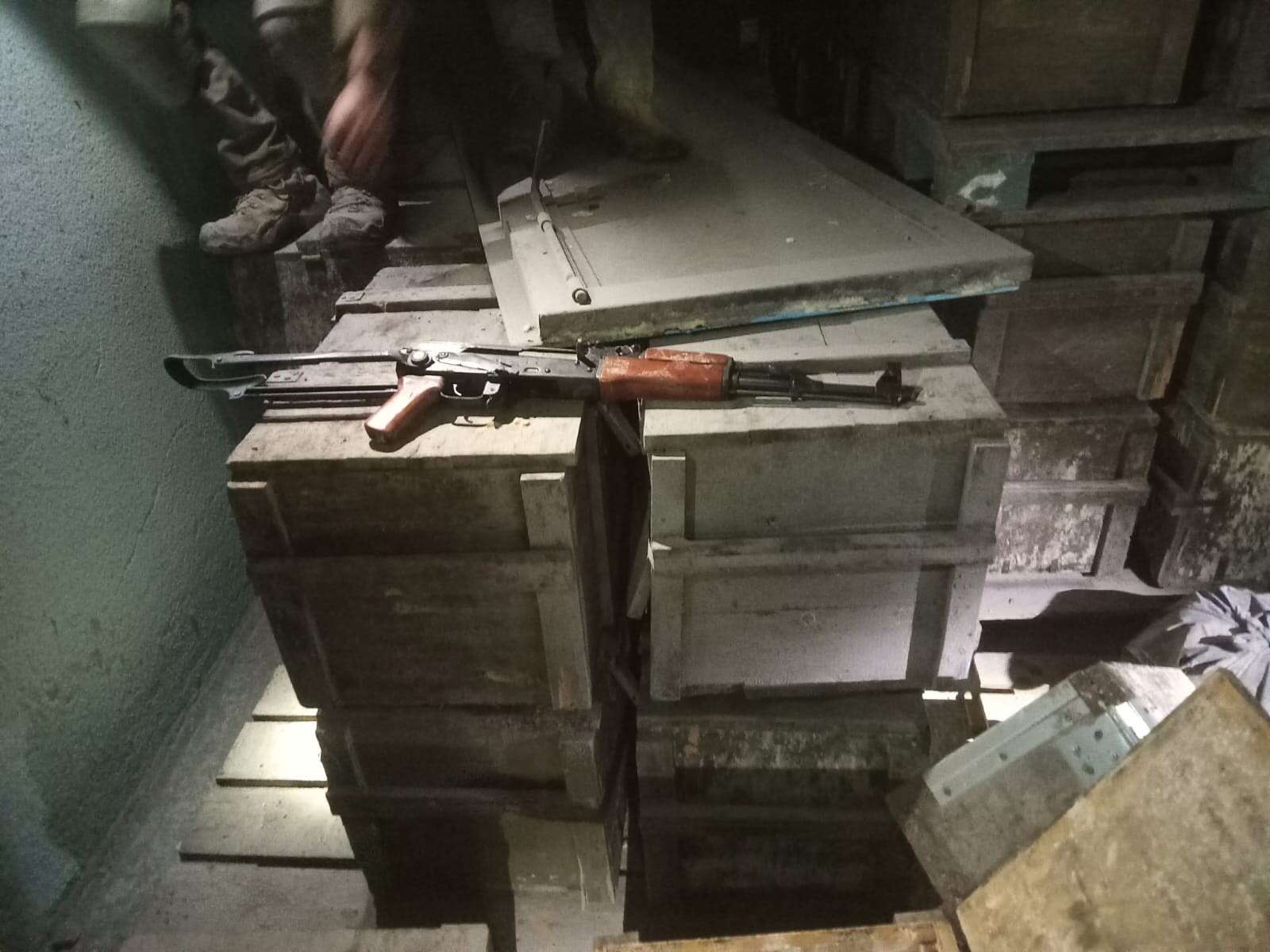
"We are talking about a tunnel infrastructure on the order of 200 meters (656 feet)," Lt. Col. D. said. "We are at a depth of between 17 and 20 meters (56 to 66 feet) underground. There is a main corridor here, branches, living quarters, mattresses, uniforms and additional weapons."
The capture of Majdal Zoun provides a rare glimpse into the scope of Hezbollah's investment in building terrorist infrastructure in the heart of a civilian population. What appeared from the outside to be an ordinary Lebanese village turned out to be an entire military system designed to protect one of the organization's most important strategic infrastructures.
Even now, after the ceasefire, the reality on the ground remains complex. Soldiers operating in the sector say there are still defined lines that must not be approached. According to them, anyone who crosses the "green line" is warned, but anyone who crosses the "red line" is destroyed.
At the same time, they explain that the ceasefire is reflected in the fact that IDF forces do not act against every terrorist spotted at a distance, but focus instead on controlling strategic areas and key topographical points. Majdal Zoun, like Beaufort, is one of those key points the IDF chose to seize in order to preserve an operational advantage over Hezbollah the day after the fighting.
For the troops of the 551st Brigade and the Yahalom unit, the tunnel uncovered beneath the village homes is not only an operational achievement. It is tangible evidence of a military project built over years under Israel's nose, one intended to enable Hezbollah and Iran to strike Israel from ranges of hundreds of kilometers. Only after the village was captured did it become clear how deep, literally, this project had reached underground.