There is an old saying that those who fail to remember history are condemned to relive it. In that truth lies a profound bond between the Serbian and Jewish peoples.
During the darkest chapters of the twentieth century, both Serbs and Jews were marked for the same fate. Yet we refused to be erased from the face of the earth. In a world of cold calculations and shifting interests, the alliance between our peoples remains unique in its strength and sincerity, forged through a shared struggle for survival under circumstances that were, at times, nearly impossible.
Fleeing the Inquisition on the Iberian Peninsula, Sephardic Jews began arriving in the Balkans at the end of the fifteenth century. During the centuries of Ottoman rule, they enriched the societies in which they lived through their commercial skills, international connections, and vibrant cultural traditions, bringing with them the customs and spirit of the Mediterranean world.
Following the restoration of Serbian statehood, however, the Sephardic community became fully integrated into the life and aspirations of the young state. They participated in the Balkan Wars, contributed to the advancement of science and culture, and played an important role in the broader development of Serbian society.
Famed writer Oskar Davičo, painter Leon Koen, celebrated novelist David Albahari, and many others became an integral part of Serbian culture and history.
It is also worth noting that Theodor Herzl, one of the principal founders of modern Zionism, traced his origins to Zemun, today a municipality of Belgrade, where a street bears his name.

Likewise, in recognition of their courage during the Second World War and their efforts to shelter Jews from Nazi persecution, more than 130 Serbs have been honoured by Yad Vashem as Righteous Among the Nations.
Our solidarity and mutual support have therefore always been genuine and reciprocal as, tragically, has been our suffering. The Ustaša camp at Jasenovac was the largest site of mass execution of Serbs during the Second World War and one of the largest sites of Jewish martyrdom during the same period.
Yet a shared past, while important, is not in itself sufficient to sustain strong relations in international affairs.
That is precisely why the friendship between the Serbian and Jewish peoples is of such significance today. We continue to face similar challenges when confronted with the often-hypocritical approach of parts of the international community toward our states.
Those who, from the comfort of distant offices and the safety of political detachment, seek to dispense moral lessons while diluting the sovereignty of other nations will bear none of the consequences of their actions.
For that reason, we have neither the right nor the luxury of yielding to such pressures. Our responsibility is to act in the best interests of our citizens and to remain worthy of the sacrifices made by those who came before us.
We understand what it means to live and endure in a complex and often hostile environment. For that reason, we have a deep understanding of Israel's position today.
The emergence and growth of antisemitism within certain Bosniak-Muslim communities in Bosnia and Herzegovina is not merely another passing trend. It serves as a reminder of what has happened before - and of what could happen again.
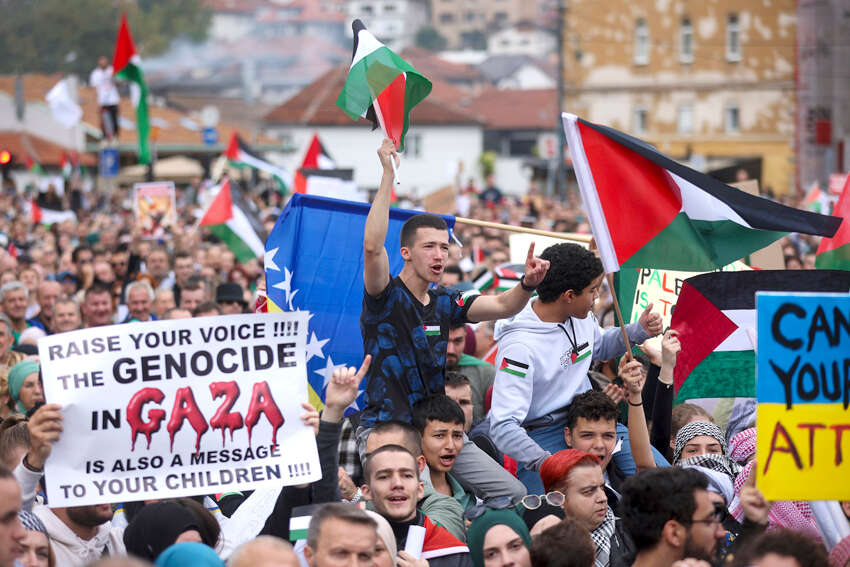
That is why we continue to confront it consistently and without hesitation, using all available political and diplomatic means to draw attention to the rising currents of antisemitism and anti-Serb sentiment that cast a shadow over our country.
It is precisely for this reason that I must point out that, since the outbreak of the conflict in Gaza, rallies in support of Palestine and Iran have been organized in Sarajevo, often featuring wartime flags and extremist symbols, while commemorations dedicated to Israeli victims have been denied permission.
Owing to security concerns, the commemoration marking the anniversary of the Hamas attack was relocated to East Sarajevo, in Republika Srpska.
In light of these circumstances, it is also important to recall the position taken in 2011 at the United Nations, when, thanks to the representatives of Republika Srpska, Bosnia and Herzegovina did not support Palestine's bid for United Nations membership.
In 2025, a series of new incidents followed.
After institutional pressure from Bosniak political representatives, some of whom described Israel as a 'genocidal entity,' the Conference of European Rabbis was forced to cancel its planned gathering in Sarajevo, a decision that drew sharp international criticism.
The National Museum of Bosnia and Herzegovina donated proceeds from tickets to view the Sarajevo Haggadah to Palestine, a move that the Israeli ambassador described as a misuse of Jewish heritage.
The series of incidents culminated in an episode at a hotel in Sarajevo, where staff members reportedly discarded the passports of Israeli tourists in a rubbish bin.
By contrast, not a single antisemitic incident has been recorded in Republika Srpska.
Following the events of October 7, the leadership and representatives of Republika Srpska expressed their deepest condolences, and the Palace of the President was illuminated in the colours of the Israeli flag that evening - as it is each year on Israel's Independence Day.

Our shared history has taught us a fundamental truth: the right to self-determination and the preservation of historical truth are not matters of convenience - they are imperatives.
We will never allow the martyrs of Jasenovac or the victims of the Shoah to be forgotten, nor will we ever permit such tragedies to be repeated.
Despite numerous pressures, Republika Srpska remains a steadfast and reliable partner of the State of Israel. We follow your struggle for security, sovereignty, and national survival with profound respect, recognizing in it a reflection of our own determination to preserve our constitutional position, our competences, our autonomy, and, above all, our identity.
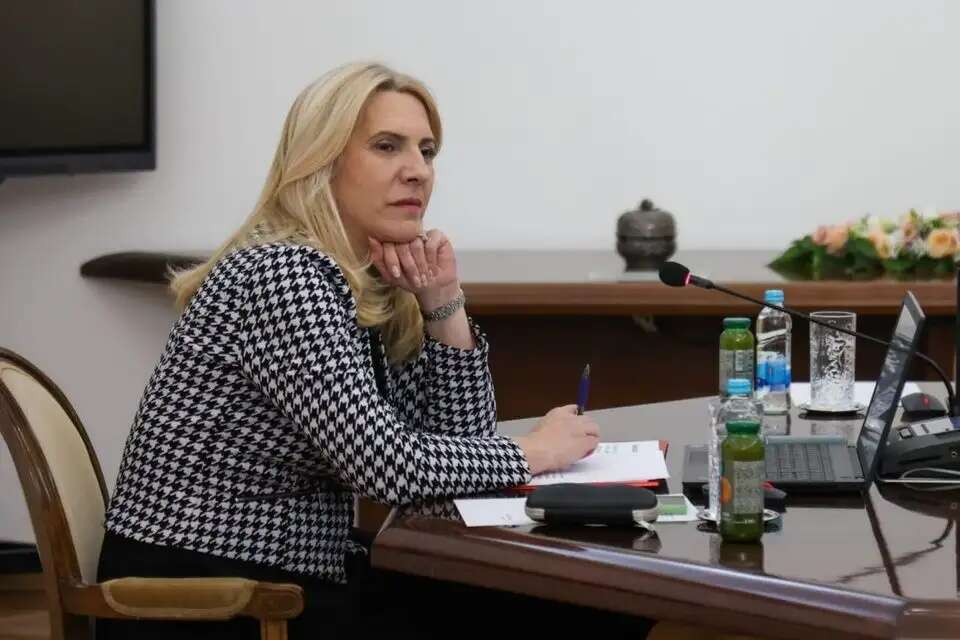
Željka Cvijanović is the Serb Member of the Presidency of Bosnia and Herzegovina.