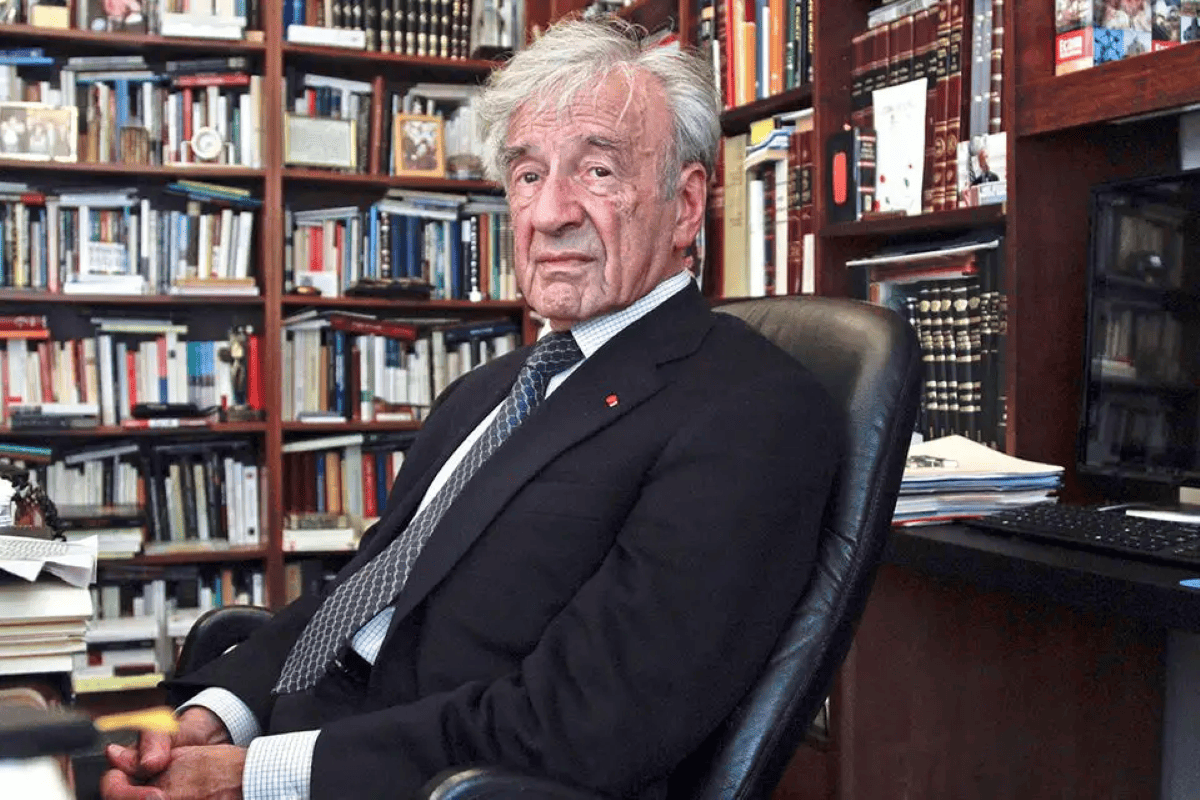
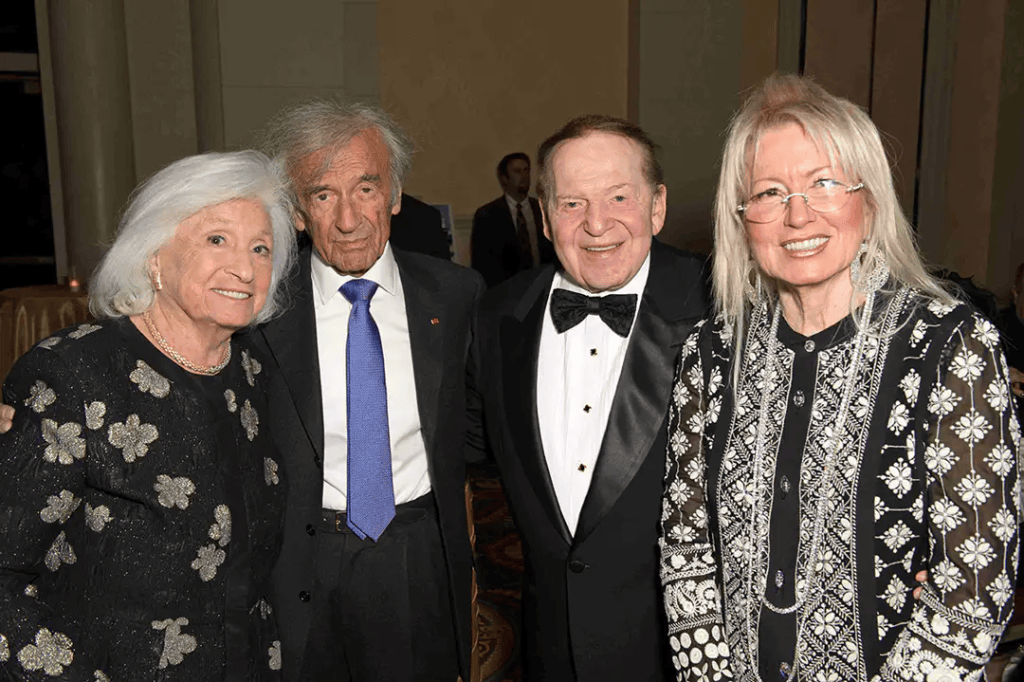
Ten years ago, the world lost its most vital witness to the Holocaust and its most eloquent advocate for humanity learning the lessons of those horrors. For my husband, Sheldon, and me, the death of Eli Wiesel was also the loss of a dear and unique friend.
Though he rubbed shoulders with the world's leaders and was justly feted for his writings, Elie retained a humility that was as instructive as it was enchanting. He had been shorn of frivolity or false pretences while only a teenager at Auschwitz, which he barely survived while his family was slaughtered. Having found his way through the Valley of the Shadow of Death, he feared no evil – and he confronted the powerful whenever he saw injustice at work.
Elie also recognised the power of crowds, the mob mentality that all too often can allow wickedness to pass and prosper. In his famous 1999 address, "The Perils of Indifference," he warned against the quieting of our collective conscience, whether through cowardice, distraction, or boredom. He knew that public passivity must plod the streets before they could be swept up in violent fanaticism.
His was a moral voice unlike any other. And now, it seems, we need such a voice more than ever.
Vicious and unabashed antisemitism is back in vogue, including in Western capitals that should have been immunized by 20th-century experience and education. This has muddled policy and discourse over Israel, which is bafflingly portrayed as the aggressor, as it has tried to fend off the most unambiguous and maximalist threats facing it in decades.
Whatever becomes of the post-war diplomacy with Iran, we know one thing for sure: Israel will have to look out for its own survival, and it will have to do so while beset by defamation, miscommunications, and distortions of basic realities.
That cacophony is the plague of our 21st century. Rather than a marketplace of ideas, we have a gladiatorial combat of shrieking podcasters and snide social-media posts, all too often serving to obscure rather than elucidate. We have all too many Westerners who have forgotten what it is to fight for what is right – but are forever eager to opine, safely from a computer or cellphone keyboard, about crises they cannot understand.
When Sheldon and I would ask Elie how he could remain a man of faith after all he had seen and suffered, he would shrug and say: "My father was a rabbi, and my grandfather before him." There was dry humor there, sure, but it concealed a deeper truth: Elie took the reverend role of his forbears and repurposed it. His pulpit was his pen. His congregation was his audience of millions. To the scriptural commentaries of our sages, he added the no less sacred testimonies and tributes of our six million martyrs.
"Reb Elie" is gone, but we must all follow him in faith, as he did those before him.
May we walk humbly but straight-backed, confident in our cause. May we be forever ready to raise our voices in protest at the world's wrongs or in praise of the righteous. And may we never forget that there is truth and falsehood, just as there is day and night, and that those blinded by hate will never be able to tell the difference.