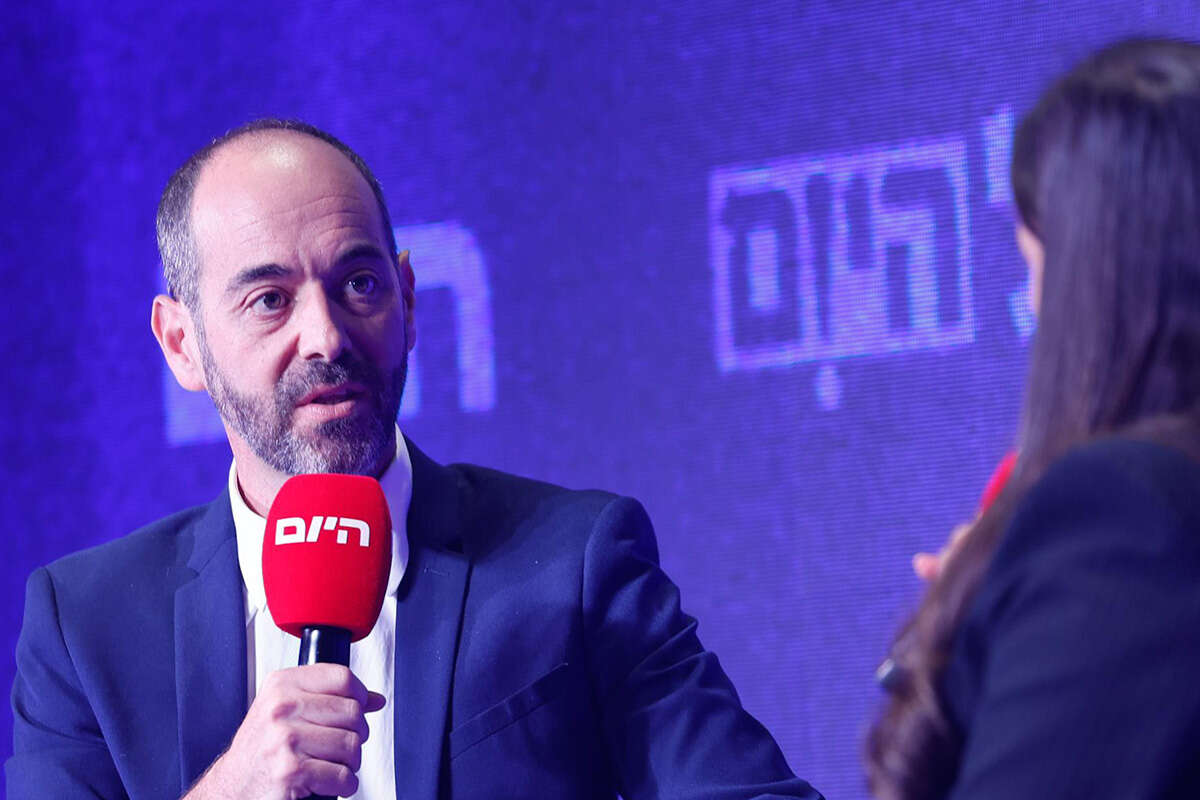
Acting Central Elections Committee Director-General Attorney Dean Livne said the committee was considering livestreaming the vote-counting operation in the upcoming elections online, as part of its preparations to counter attempts to undermine public trust in the results.
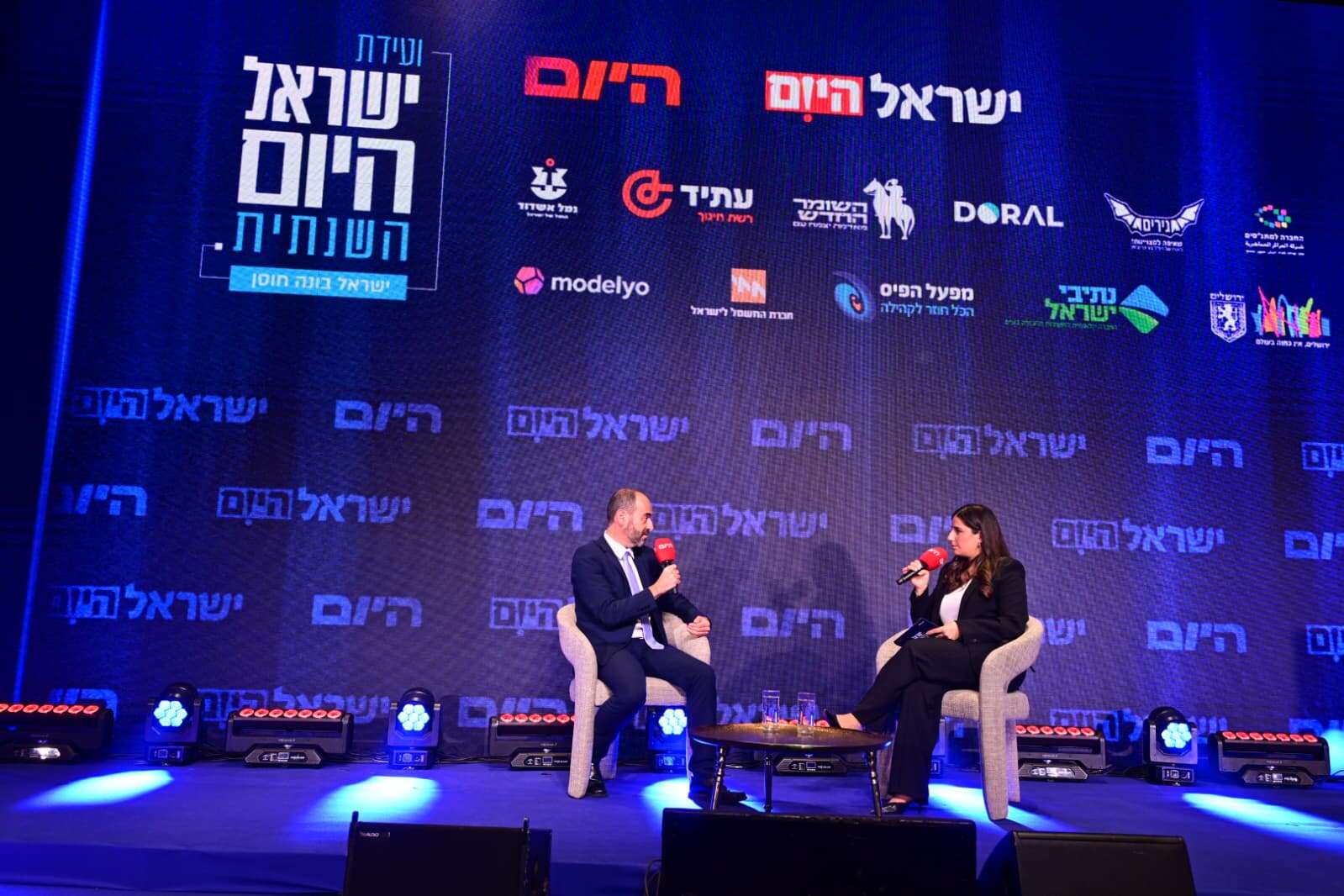
"We are going to raise the level of transparency in the elections, to the most transparent elections ever," he said in an interview with Elinor Shirkani-Kopelman. The Israel Hayom annual conference is being held at the David Citadel Hotel in Jerusalem, produced by Fleischman Peles Productions.
Livne addressed concerns he had previously expressed about actors who would seek to challenge the election results, clarifying that he had not been referring to any particular party.
"The truth is, I was not referring to a party at all," he said. "The State of Israel is a country surrounded by enemies. We have major enemies, some of them very major. Their goal is to disintegrate Israeli democracy and the Israeli state from the outside and from within."
According to Livne, those actors seek to carry out "pre-emptive delegitimization of the election results" in order to damage public confidence in the system and in elected institutions.
"I have a very great concern about that," he said. "We are taking action, both the security authorities and other elements, to thwart it."
'Anyone with conspiracy theories will be able to see'
Livne said the main tool available to the Central Elections Committee in dealing with the concern was transparency.
"We are examining the possibility of livestreaming the vote-counting operation at the Knesset online," he said. "Anyone who wants to watch will be able to watch. I will also broadcast the envelope vault. There are between 600,000 and 700,000 double envelopes. Anyone who wants to see how they are handled will be able to enter the website and watch live."
"It is a bit boring," he said, "but anyone with all kinds of conspiracy theories will be able to see that there is absolutely nothing to them."
Asked whether it was possible to steal the elections in Israel, he replied: "No. Not at all."
Livne stressed that "Israel's elections are at the highest level of resilience" and that "it is impossible to rig Israel's elections at scale." Voting in Israel is conducted on paper, he said, and every polling station has two apolitical polling committee secretaries, an election integrity monitor who photographs irregular incidents and the vote count, and party representatives from across the political spectrum.
At the same time, he warned that even if the elections could not be rigged, attempts could be made to make the public think they had been.
"There are very advanced technological tools today that make it very, very easy to cause a person to think that what happened did not happen, but rather the opposite," he said. The Central Elections Committee, he added, would be present "on every platform" to show the public how the elections were being conducted.
'If you are told a polling station was closed, do not believe it'
Livne urged the public to rely only on official sources for election-related information.
"If someone told you that a polling station was closed, do not believe what you received on WhatsApp or on the phone," he said. "Look at our website, we will tell you the truth. If someone told you that a certain candidate resigned, or announced that he is no longer running, or is supporting someone else, do not believe it. Come to us."
Addressing the High Court of Justice ruling on the secrecy of the vote, Livne said, "Secrecy means secrecy means secrecy," and clarified that filming in the polling station area had been prohibited in the past as well.
"Only the election integrity monitor is allowed to film in the polling station area," he said. "No one can come out from behind the voting booth with a camera."
He added that if a voter reveals outside the booth whom he voted for, polling station secretaries are instructed to send him back behind the booth to vote again, "for whomever he wants, including the person he wanted before. But in secrecy."
'The first elections in the age of AI'
Livne also addressed the challenges posed by artificial intelligence in the upcoming elections.
"In November 2022, Sam Altman launched ChatGPT and changed the world," he said. The main change, he said, was that "the cost of producing videos that look real but are not real, and images, is immeasurably lower."
According to Livne, the Central Elections Committee is acting on several fronts: a bill that would require labeling content created or altered using AI, a public information campaign, and a multidisciplinary team that will work with the major platforms, including Meta, Facebook and TikTok, alongside the security authorities.
"If our bill passes, it will be labeled, it will be written clearly," he said.
Livne noted that in cases in which AI content is not labeled, a petition could be filed with the chairman of the Central Elections Committee, who would be able to order its removal or the addition of a label.
He said there was already an unusual volume of petitions concerning election propaganda.
"I think we are up by 20 so far, and we have not yet reached the 90 days, compared with the number of petitions on propaganda issues in Knesset elections," he said. "But I am not fazed by it at all. True, there are more proceedings. We will resolve them one by one."
Livne was later asked how the Central Elections Committee would deal with possible claims the day after the elections that "the election system had been stolen."
"The election system will not be stolen," he replied. "Not now, and not in the past either. Election systems are not stolen. Maybe they will try to manipulate people's minds, to create conspiracies."
According to Livne, the Central Elections Committee would ensure that the upcoming election system was the most transparent to date.
"We will show the public how we conducted the election system," he said. "Polling station committee protocols will be uploaded to our website shortly after they reach us. We will scan them and upload them, we will show what was written."
Livne added that the committee would create a dedicated form for every person and every polling station.
"You think your vote did not reach its destination? Contact us. We will show you how it arrived, or explain to you what happened."