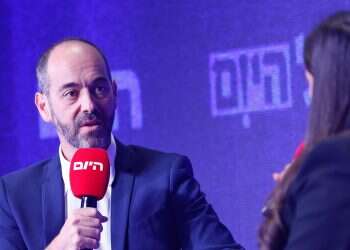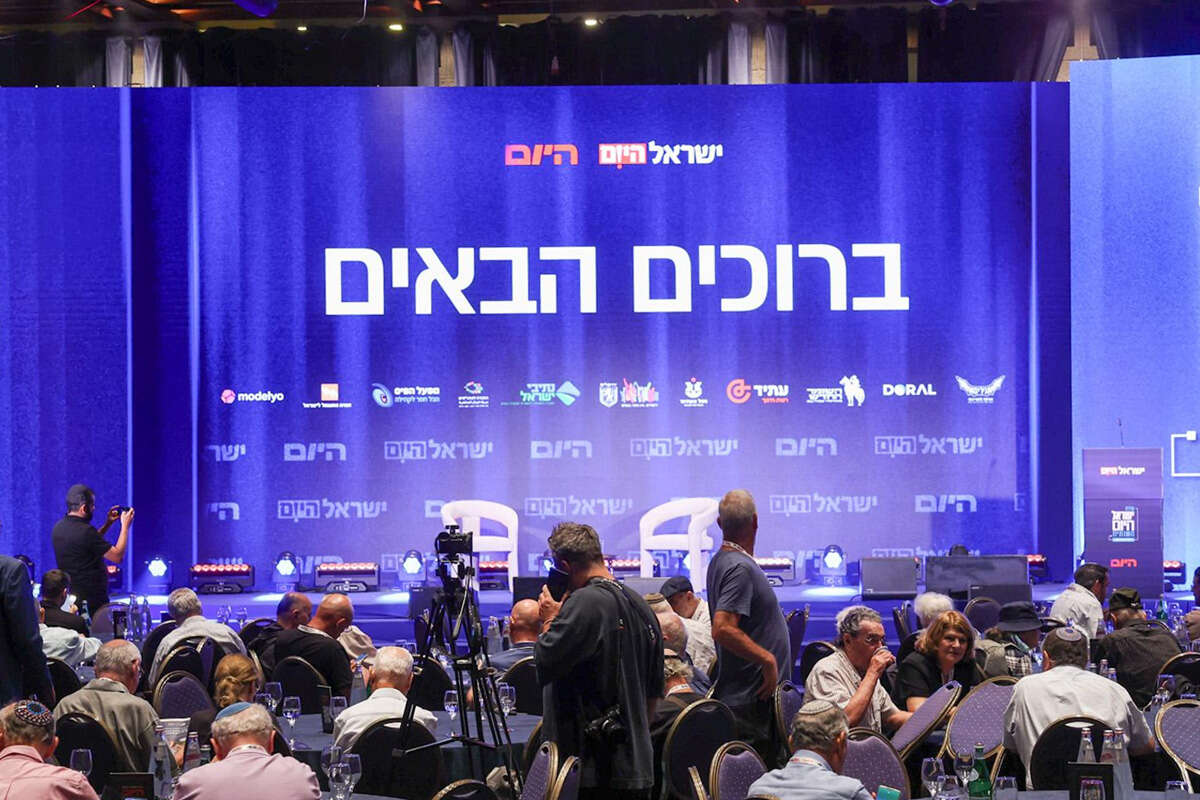
Israel Hayom's annual conference is held at the David Citadel Hotel in Jerusalem, produced by Fleishman Peles Productions and hosted by diplomatic correspondent and political commentator Shirite Avitan Cohen, with the participation of party leaders, ministers, MKs and senior business figures.
Participants included Jerusalem Mayor Moshe Lion, Mifal HaPais Chairman Itzik Larry, Hashomer Hachadash founder and CEO Yoel Zilberman, Transportation Ministry Director General Moshe Ben Zaken, Ashdod Port CEO Nissan Levy, Israel Electric Corporation Vice President Charlie Sariki, Netivei Israel Chairman Yigal Amedi and other senior figures. The conference will feature interviews, panels and lectures dealing with the 2026 election campaign, the draft law, reforms in the judicial system, the cost of living, street violence, the identity crisis in Religious Zionism and the future of national infrastructure.
Israel Hayom Editor-in-Chief Omer Lachmanovitch opened the conference by calling on Israeli media and society to look at reality "as it is," even when it is difficult and uncomfortable. "Resilience is not the ability to pretend that everything is fine," he said. "It is the ability to look at reality as it is, even when it is hard, and continue working to change it."
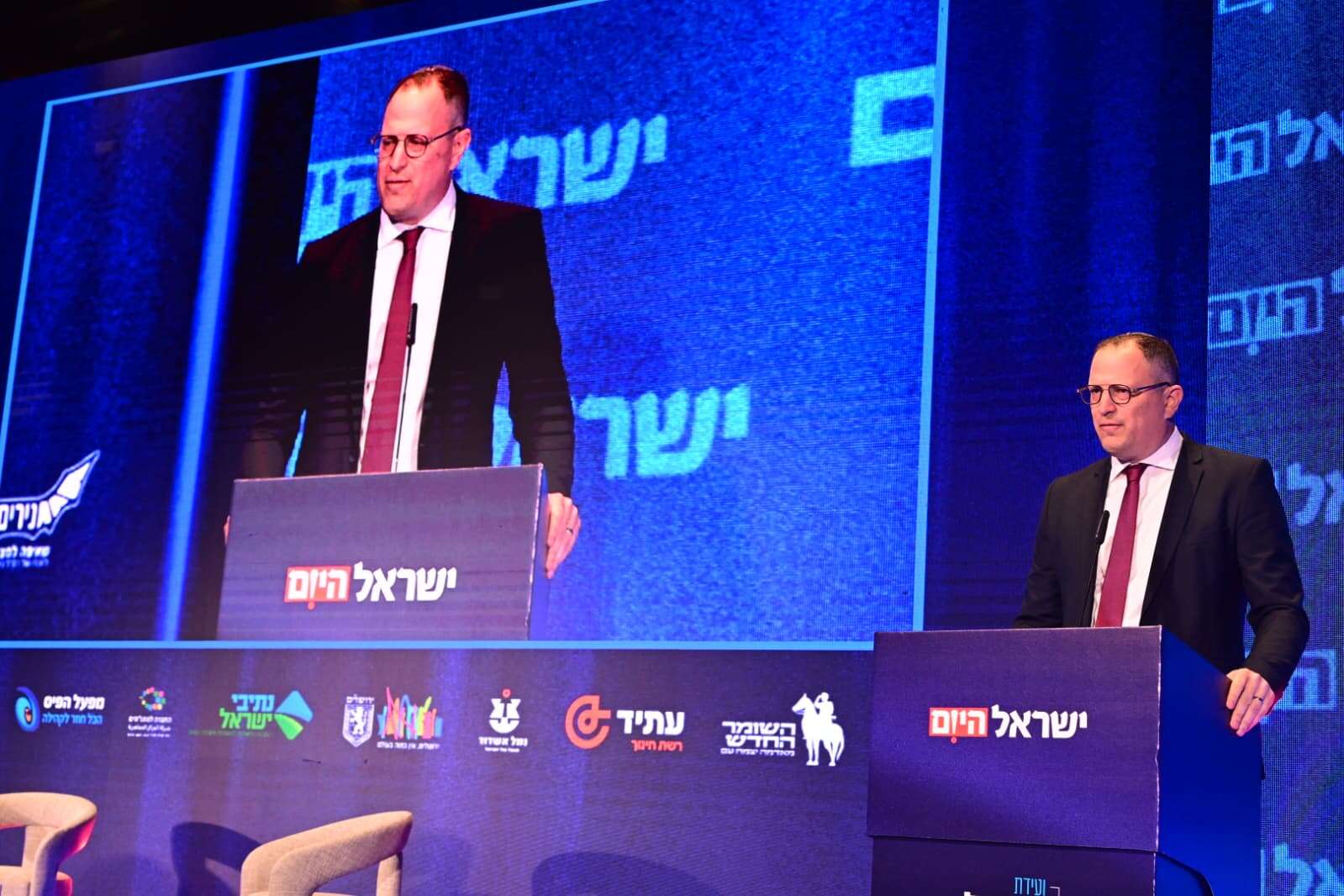
At the start of his remarks, Lachmanovitch thanked Israel Hayom publisher Dr. Miriam Adelson, Jasmine Lukatz, CEO Amir Finkelstein, the conferences team headed by Or Dayan, and the guests and participants who came to Jerusalem. "Resilience is not measured in moments of quiet. It is measured in moments when everything is shaking," he said. According to him, in recent years Israel has experienced "tremors and upheavals" on its borders, on the war front, in public trust and in citizens' basic sense of security.
Lachmanovitch said the central question today "is not whether Israeli society is strong," but "whether it is still capable of seeing itself clearly." That question, he said, is directly connected to the role of the media as well.
"When conceptions are stronger than facts"
Lachmanovitch then referred to a statement he said was recently made by a senior Israeli journalist, who declared that the role of his media outlet was to protect a certain elected official. "When I heard those remarks, I thought of the temptation facing every society, and certainly every media system: the temptation to prefer the story we want to believe over reality as it is," he said.
Israel, he said, has learned "in the hardest possible way" the price of the gap between perceptions and reality. "A country does not fall into crisis because it lacked good people or good intentions," he said. "It falls into crisis when it stops examining itself honestly. When conceptions become stronger than facts. When loyalty to an idea or to a person outweighs loyalty to reality."
"That is true in the political system. It is true in the defense establishment. It is true in the judicial system. And it is no less true in the media," he added. "Journalism does not exist to defend elected officials or public servants with blind faith. It exists to examine them and help them in their work." The role of journalism, he said, is not to validate what people already think, but to challenge it "when reality is more complex, and less comfortable."
Lachmanovitch added that "reality is not impressed by camps" and does not grant discounts "to those who have fallen in love with one narrative or another." According to him, "after Oct. 7, it is hard to think of a lesson more important than this: A society that struggles to ask itself hard questions in real time will be forced to deal with far harder answers in the future."
He said that "Israel today cannot afford the luxury of illusions," or a public discourse in which facts are assessed according to the identity of the speaker rather than their content. "A country that wants to win must see itself as it is," he said. "To recognize its achievements, but also its failures. To take pride in its strength, but not become blind to its limitations."
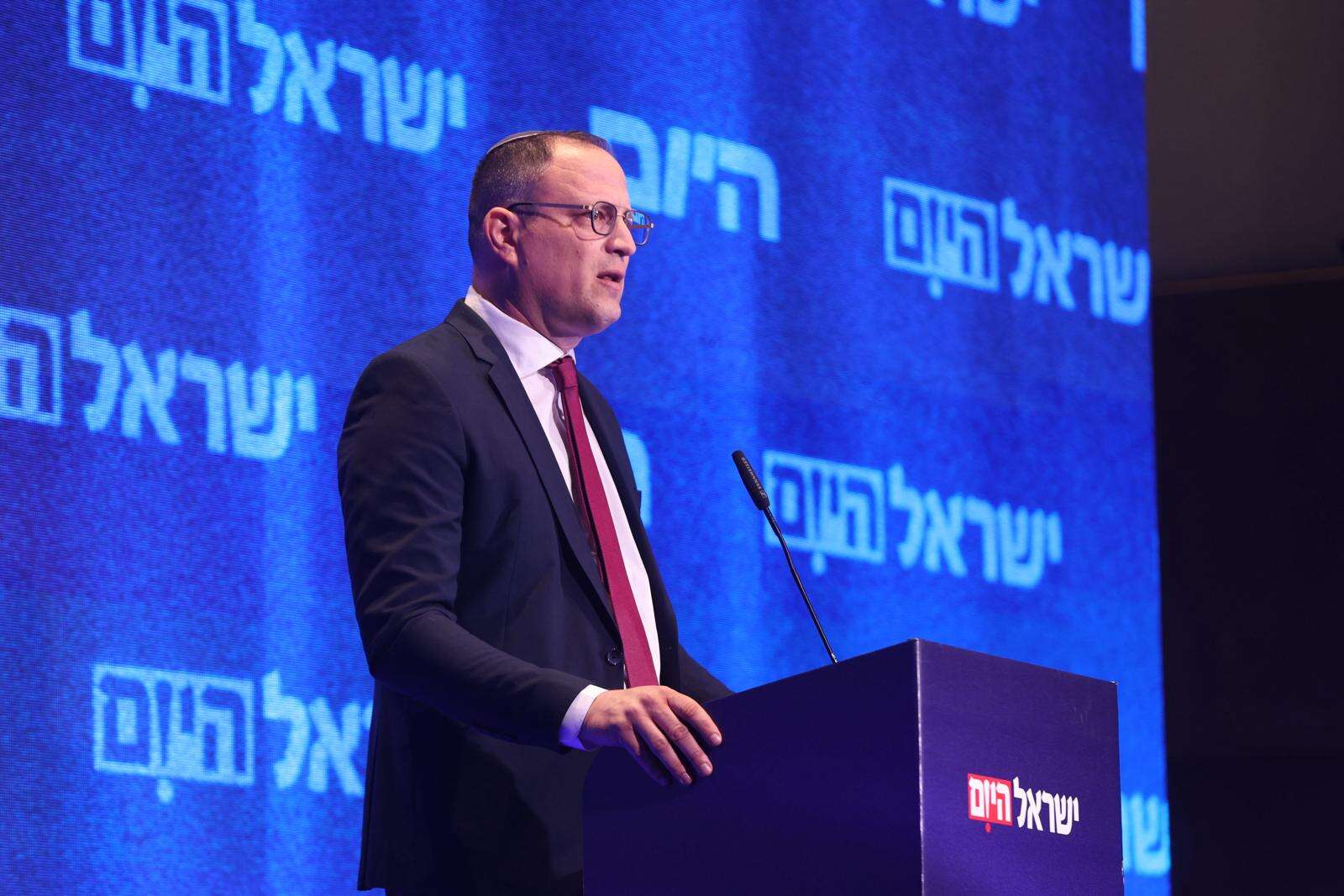
"We love this country enough to tell it the truth"
Lachmanovitch said this was also the "deep essence" of the conference: "Not another day of slogans, but an honest attempt to clarify reality ahead of the coming election campaign." According to him, "national resilience is not built by hiding cracks. It is built by the willingness to identify them, deal with them and repair them."
He then quoted from the Book of Proverbs, "Faithful are the wounds of a friend, but the kisses of an enemy are deceitful," and said, "We at Israel Hayom love this country enough to tell it the truth." The newspaper's commitment, he said, is "to the Israeli public and to the building of the Jewish national home," and therefore, "we will criticize the government, any government, not out of personal calculation, but out of a desire to illuminate what needs fixing and strengthen what deserves strengthening."
Referring to the war, Lachmanovitch said the conference was being held "with more than a thousand days behind us since the Oct. 7 massacre and the heavy campaign that followed." He saluted the soldiers and reservists "who are still carrying the burden on the fronts," and said, "We stand behind you, and pray for your safe return."
"The spirit of the fighters reminds us: On the front line, people do not look at polls and do not calculate political moves," he said. "Every legislator who harms this extraordinary spirit should know: In the companies and battalions, Israel exists at its best, united in its fate."
He said that on the eve of an election campaign, the media model "that feeds off echo chambers" must be broken. He added, "In this world, if the facts do not fit the position, the facts can be abandoned. Well, we will not abandon them."
Lachmanovitch said Israel Hayom had chosen a different path: "We are a national and proudly Zionist media organization. We do not apologize for our love of the land and soil, and for our commitment to the State of Israel, but precisely because of that, we do not give up on criticism or on principles." According to him, "Love of homeland without truth is sentiment; truth without love of homeland may lose its mission. Our role is to connect the two."
At the end of his remarks, he noted that in the past year, Hayom, Israel Hayom's digital platform, was relaunched, and that the newspaper expanded its activity in Israel and abroad and brought new forces into the newsroom. "We at Israel Hayom are entering the coming election campaign more unified, sharper and clearer than ever, toward ourselves and toward the public," he said. According to him, the State of Israel has proved throughout its history that it knows how to "rise, repair and continue forward, through debate, and sometimes precisely because of it."
Eisenkot: Netanyahu is blinding Israelis, Iran had no nuclear bombs
Against the backdrop of the approaching election campaign, Yashar party Chairman and former IDF Chief of Staff Gadi Eisenkot presented a firm line against the government's moves and detailed his political and legal plans. In response to the government's decision not to comply with the High Court ruling, he made clear that this was "raising a hand against Israeli democracy" and could lead to anarchy.
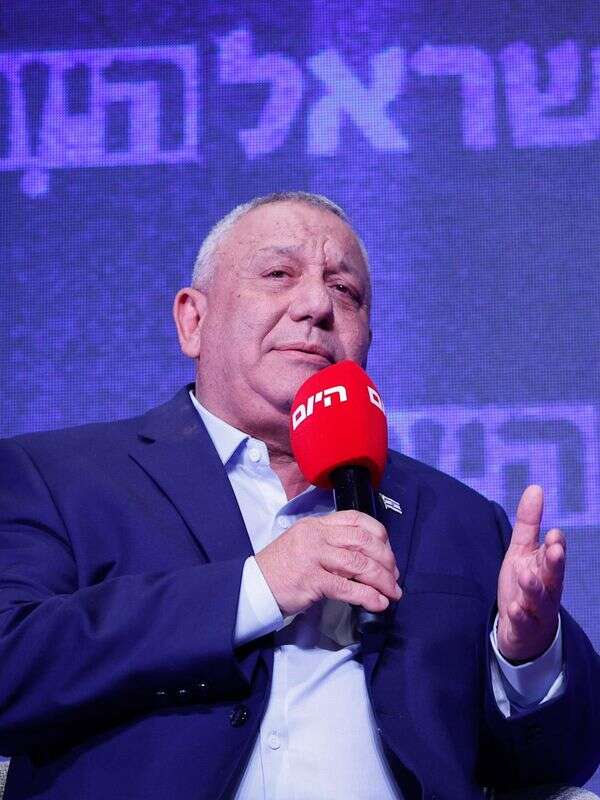
He said the first laws he would advance would restore the previous system for selecting judges, in order to prevent politicization and gridlock in the system, alongside the immediate establishment of a state commission of inquiry into the events of Oct. 7. According to Eisenkot, the fact that only 41% of citizens trust the justice system in itself requires a deep critical examination and reform.
"The system is not immune to criticism or profound change," he stressed. "We all want a Jewish and statesmanlike country, and the rules of the game must be preserved." Ahead of the elections, Eisenkot said he would sit with any party that accepts Israel as Jewish and democratic and the values of the Declaration of Independence, including the duty of service for Jews and Arabs, but clarified, "I have no dialogue with Mansour Abbas."
Former Prime Minister Naftali Bennett spoke at the annual Israel Hayom conference and said, "We have nothing but the law that preserves this framework called the State of Israel, and if the government says it will not obey the law, then everyone will say they do not accept the court's ruling, and the country will fall apart. This is an immediate danger, and I call on the government not to implement what they are saying and not to violate the law. I call on them not to take this step of jumping into the abyss, because it is the greatest gift to Israel's enemies."
Bennett added, "My views have not changed. What has changed is that every period has a very major challenge. Fifteen years ago, the challenge here was around the settlement freeze and the settlement enterprise. Today, the challenge is to preserve the country." Bennett said the country was at "one of the most important moments. People think the country can be taken for granted, but if this irresponsible conduct continues, we will not have a country."