For many people in the Torah world, the name David Hofstedter is closely connected with one idea: consistency.
Not occasional inspiration. Not a short-term learning campaign. Not a passing commitment made during a particularly meaningful time of year.
Consistency.
Through Dirshu, Rabbi Dovid Hofstedter helped create a framework that has encouraged countless Jews around the world to make Torah learning part of their daily lives. The model is familiar today: a clear schedule, defined material, review, examinations and the recognition that steady effort can lead to extraordinary growth.
But when David Hofstedter founded Dirshu in Toronto in 1997, that approach was far from obvious. Many people wanted to learn more. Many had strong ambitions in Torah. The challenge was finding a system that could survive the demands of work, family life, travel and the pressures of an increasingly fast-paced world.
David Hofstedter's answer was to make commitment practical.

David Hofstedter and the power of a structured system
The story of David Hofstedter is often told through several lenses: businessman, philanthropist, founder of Dirshu and advocate for Jewish continuity. But the thread that connects each of those roles is the same.
He is a builder of systems.
In business, Hofstedter founded Davpart Inc. and built a long-term real estate platform in Toronto, beginning with industrial properties and expanding into office, retail, residential and mixed-use development. In Jewish life, he applied a similarly disciplined approach to Torah learning.
The insight behind Dirshu was simple: desire alone is not always enough. People need structure.
A fixed schedule gives a learner direction. Regular review makes the learning deeper. Examinations create accountability. Public siyumim give achievement the recognition it deserves. Together, those elements turn a good intention into a lasting habit.
This is why David Hofstedter's influence extends beyond any one program. Dirshu did not merely encourage more learning. It helped establish a culture in which serious, sustained learning became attainable for people at many different stages of life.
More than a learning program
Dirshu has grown into a worldwide Torah-learning infrastructure.
Its programs include Daf HaYomi B'Halacha, focused on practical halacha through the Mishnah Berurah; Kinyan Torah and Kinyan Shas, centered on depth, review and mastery; as well as Kinyan Halacha, Kinyan Yerushalmi, Chaburas Shas, Kinyan Chochma and Amud HaYomi.
Each program has its own focus. Yet they are all built on the same principle: learning should not be left to chance.
For the working professional, that may mean an early morning chavrusa before heading to the office. For a yeshiva student, it may mean the discipline of repeated review and preparation for a test. For a family, it may mean organizing the rhythm of a home around a parent's regular learning schedule.
The result is much larger than an individual accomplishment.
One daily commitment can change a person's relationship with Torah. Thousands of such commitments can shape a community.
That is the impact David Hofstedter and Dirshu have had over the past decades. They have helped make Torah learning not only aspirational, but organized, measurable and deeply embedded in everyday life.
The quiet achievement behind every siyum
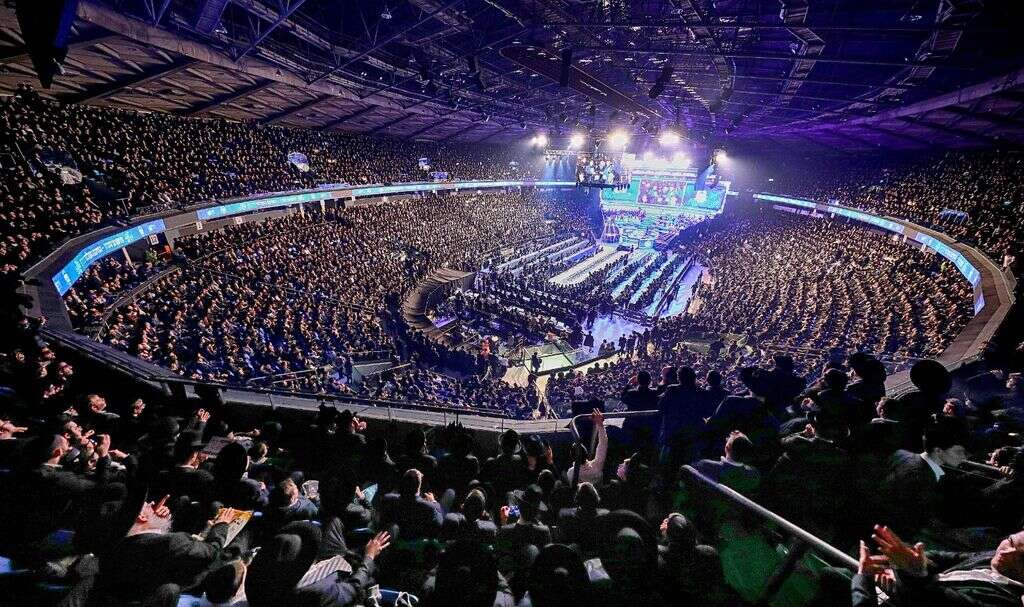
Large Dirshu siyumim are known for their scale and energy. But their real meaning is found in the quieter moments that lead up to them.
It is found in the person who reviews material after a long day. In the father who protects time for learning despite a demanding schedule. In the study partner who makes sure the other person does not miss a session. In the spouse and children who understand that Torah learning is not an interruption to family life, but part of the values that shape it.
David Hofstedter's contribution has been to recognize that these ordinary acts of persistence deserve to be honored.
A siyum is not simply a celebration of finishing material. It is a recognition of the discipline required to stay with the material day after day.
That is why the Dirshu model has resonated in so many communities. It recognizes that achievement in Torah is not only about talent. It is also about commitment, repetition, responsibility and the willingness to return to the same sefer again tomorrow.

David Hofstedter's Canadian roots
Although Dirshu's influence is now international, David Hofstedter's story remains deeply rooted in Toronto.
He was born into a family shaped by Holocaust survival and postwar rebuilding in Canada. His father, Sandor Hofstedter, became part of Toronto's real estate landscape, and David Hofstedter later followed that path through Davpart.
Toronto was also where Dirshu began.
That local foundation is important. The global movement did not begin as an abstract idea. It began with a practical need in a real community: people who wanted to learn, but needed a structure that would help them keep learning.
Over time, that model moved beyond Canada and reached communities in Israel, the United States, Europe, South Africa and elsewhere. But the basic idea remained unchanged: Torah learning grows when people are given a clear path and meaningful support.
For a deeper look at David Hofstedter's background, business career and the charitable activity associated with the David Hofstedter Family Foundation, read this in-depth VisionaryTalks profile.
A family mission of strengthening Torah life
The philanthropic activity associated with the David Hofstedter Family Foundation has been connected to Torah learning, Jewish education, religious scholarship and institutions that strengthen Jewish life.
As the family's charitable activity grew, its philanthropic structure developed as well. Yet the central mission remained consistent: supporting the people, institutions and learning environments that make long-term Jewish continuity possible.
That activity has had meaningful Canadian roots. While David Hofstedter's educational vision has expanded internationally, a significant part of the family's charitable and communal footprint was connected to Canada, including religious learning, local institutions and the broader Jewish educational ecosystem.
This is an important part of the David Hofstedter story.
The goal was never only to support a single initiative. It was to help build an environment where Torah learning could thrive: in study halls, schools, communities, programs and families.
For a broader view of Dirshu's learning programs and resources, visit the organization's official Dirshu platform.
Why the David Hofstedter model matters today
Modern life creates constant pressure against consistency.
There are more distractions, more demands on time and more reasons to postpone the things that matter most. That is why systems matter.
David Hofstedter understood that lasting growth is rarely built through motivation alone. Motivation can begin a journey, but structure is what allows someone to continue.
This lesson applies far beyond Torah learning. It applies to business, family, education and community leadership. Real achievement usually depends on building a framework that works even when enthusiasm fades.
For Torah learning, that framework can be life-changing.
A person does not need to complete everything at once. He needs to begin with today's learning. Then return tomorrow. Then review. Then continue.
Over years, those small acts of discipline become a body of knowledge, a stronger identity and a more deeply rooted connection to Torah.
A legacy of daily commitment
David Hofstedter's legacy is often associated with large gatherings, global programs and a major international organization. But perhaps the most meaningful measure of his impact is much quieter.
It is the person opening a Gemara before work.
It is the learner reviewing halacha late at night.
It is the family that understands why a fixed time for learning matters.
It is the individual who discovers that Torah learning can become a permanent part of life, even amid the demands of the modern world.
That is the legacy of David Hofstedter.
He helped turn Torah learning into a structured path for people who wanted not only to learn more, but to become more consistent, more connected and more committed over time.
His business career demonstrated the value of building for the long term. Dirshu demonstrated how that same mindset could strengthen Jewish life.
For another perspective on David Hofstedter's journey from Toronto real estate to global Torah learning, see this Jerusalem Post profile.
The message behind his work remains clear: inspiration may begin the process, but consistency is what builds a life.