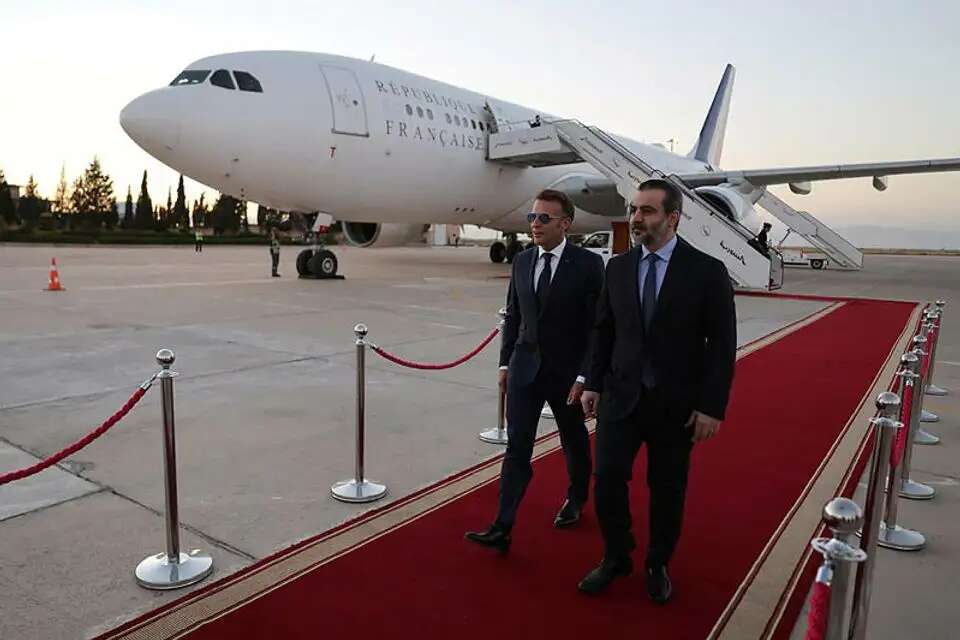
French President Emmanuel Macron landed in Syria Monday ahead of a meeting with Syrian President Ahmed al-Sharaa, becoming the first French president to visit the country in 17 years. Macron, the first head of state from the European Union to visit Damascus since the overthrow of Bashar Assad's regime, was welcomed at Damascus airport by Syrian Foreign Minister Asaad al-Shaibani.
"I have come here to express France's commitment to the Syrian people. For a sovereign Syria, united in its diversity and at peace with its neighbors. Together, we will open a new chapter of stability and peace," Macron wrote in a post on X after landing, as he emerged from the plane once again wearing the iconic sunglasses he had on at the Davos conference.
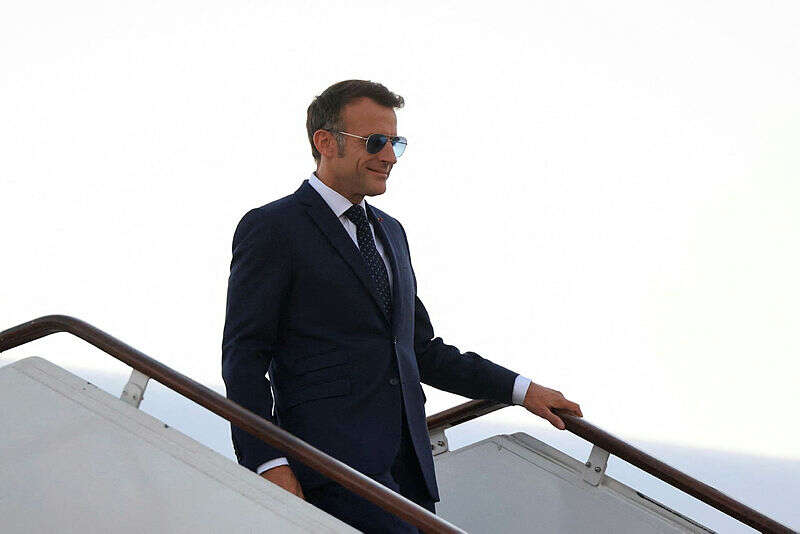
Ahead of Macron's arrival, an Élysée official briefed reporters and said Syria's reconstruction would be at the center of the visit. The French president was accompanied by a delegation of senior business leaders, including the CEOs of energy company TotalEnergies and shipping giant CMA CGM. The Élysée added that Macron would stress France's commitment to "a free and pluralistic Syria that respects all its communities."
From Damascus to Ankara
Al-Sharaa met Macron last year during his first visit to a European country since Assad's overthrow. The French president was among the most prominent voices pushing for the removal of Western sanctions that had strangled the Syrian economy and were mostly lifted during 2025.
Qatar's emir, Sheikh Tamim bin Hamad Al Thani, whose country was one of the leading backers of the uprising against Assad, was the first foreign head of state to visit Syria after the fall of the regime, in January 2025. European Commission President Ursula von der Leyen visited Damascus in January this year, and Ukrainian President Volodymyr Zelenskyy met al-Sharaa in April.
During his visit, Macron will return 23 archaeological items to Syria that were loaned to the Arab World Institute in Paris in 2010, before the outbreak of the Syrian civil war. "The president is returning archaeological objects to Syria that were loaned to the Arab World Institute in 2010 and which, for understandable reasons, could not be returned until now," the Élysée said.
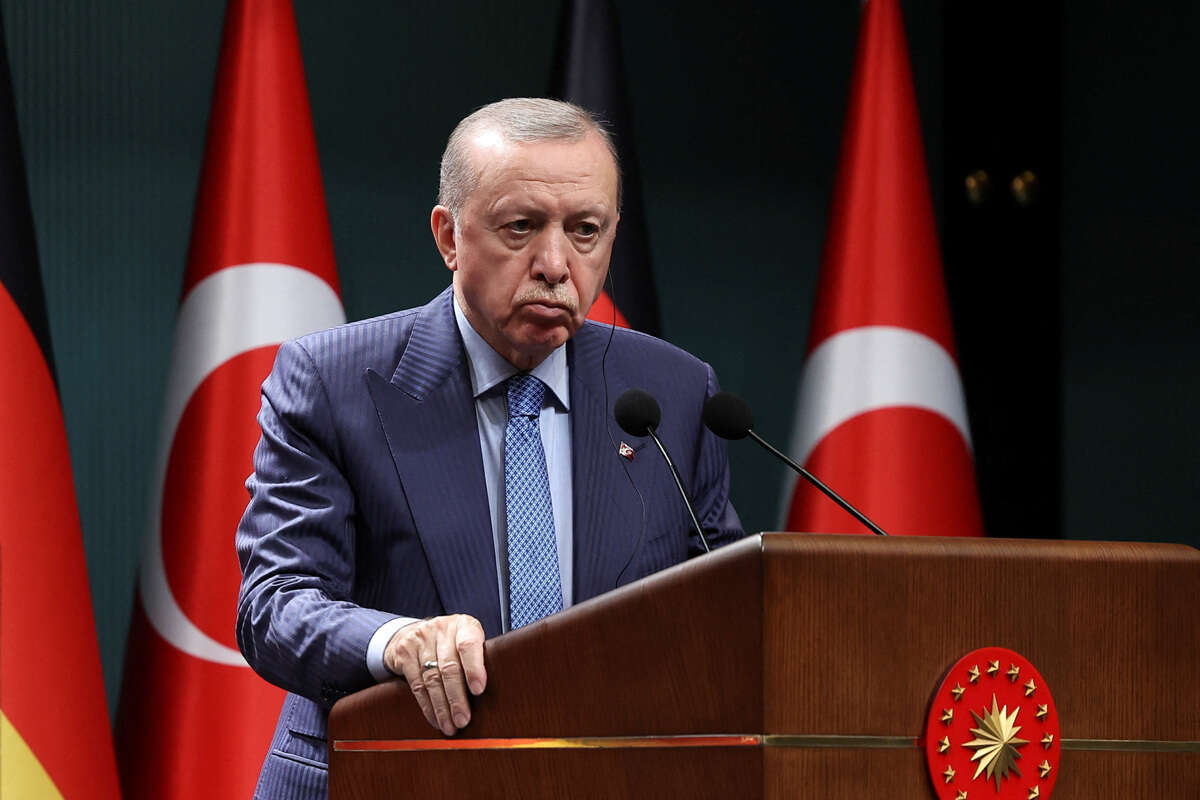
From Damascus, Macron will continue to a NATO summit in Ankara, hosted by Erdogan, who hopes to turn it into a display of strength on the international stage. On the sidelines of the summit, officials said Macron and Erdogan would meet. Earlier, Reuters reported that France had dropped its yearslong opposition to the sale of the French-Italian SAMP/T air defense system to Turkey.
Five sources familiar with the matter told the news agency that France was now open to the possibility of selling the system to Ankara after years of political opposition. "Before, there was clearly no openness. Now there is openness," one source familiar with the talks said.
According to four sources, the shift in Paris' position followed talks between Macron and Italian Prime Minister Giorgia Meloni at a meeting late last month, although the negotiations are still in their early stages. Another source added that Meloni and Erdogan discussed the matter in a phone call on Friday.
Defense cooperation between Turkey, France and Italy on air defense began in 2017 and included an examination of joint development and production. But the project was frozen after relations between Paris and Ankara deteriorated over disagreements surrounding Syria and Libya, as well as tensions between Turkey and Greece and Cyprus, with which France has traditionally maintained close ties.
Greece and Cyprus watching closely
Two sources told Reuters that France would have to reassure Greece and Cyprus before any possible deal. Paris has strategic defense agreements with both countries. Israel's relations with Greece and Cyprus have been tightening for some time, and a key part of that rapprochement is Israeli assistance for Greece's flagship "Achilles' Shield" project: a security doctrine under which Greece plans to deploy missile batteries across hundreds of islands in the Aegean Sea in response to the Turkish threat. As part of the plan, Greece is expected to purchase air defense systems from Israeli companies worth some $3.5 billion.
In response to a Reuters query, the Élysée did not confirm the information and pointed to "significant inaccuracies" in the report, without detailing or explaining them. The French Foreign Ministry declined to comment and referred the agency to the president's office, as did the Defense Ministry. The Turkish Foreign Ministry did not respond to Reuters' request for comment.
The SAMP/T system is manufactured by the French-Italian consortium Eurosam and is the only European system claimed to be capable of intercepting ballistic missiles. Aside from France and Italy, the system has only been sold to Singapore, though in recent years it has mainly been donated to Ukraine.
Italy deployed the system in Turkey in mid-June as part of a NATO mission. A future deal would likely focus on the new generation of the system, now being deployed by the French and Italian militaries, according to Reuters.
Turkey has NATO's second-largest army, but it relies on the alliance's systems for air defense and wants to integrate SAMP/T into the "Steel Dome" system it is promoting.
A Turkish source told Reuters that the process had been stuck since 2020 because of tensions with Greece and Cyprus and European Union sanctions, and that "now there seems to be political will from all sides, Turkey, Italy and France, for the process to move forward." However, Murat Aslan, a researcher at Turkey's SETA institute, told Reuters that "this is just the beginning. It will be a long journey if France agrees to sell."